
Most breakdowns do not happen overnight—they build up from small daily habits that strain motors, seals, and heating elements. Especially during heavy-use months like winter hosting and holiday laundry, those quiet shortcuts can shave years off your machines. Stopping these seven home appliance mistakes takes just minutes a week and helps every major unit in your kitchen and laundry room run longer with fewer costly surprises.
1. Overloading Your Washer, Dryer, and Dishwasher
Stuffing one last towel into the washer or stacking bowls two layers deep in the dishwasher feels like a time-saver, yet excess weight puts heavy torque on drive belts, drum bearings, and spray arms. Packed drums also trap moisture, forcing dryers to run longer and hotter than designed.
- Fill washing machines no more than three-quarters full so clothes tumble freely without rubbing the door boot. Follow our guide on how to load a washing machine properly to protect bearings and suspension rods.
- Keep dryer loads loose enough to fit a spread hand above the laundry so warm air circulates evenly.
- Angle dishwasher plates toward the center spray arm and leave space between tall items so water reaches every surface.
- Keep refrigerator shelves at roughly two-thirds capacity so cold air circulates smoothly past interior vents.
2. Using Too Much Soap or Harsh Cleaners
More detergent does not mean cleaner dishes or fresher laundry. Excess soap creates sticky suds that coat heating elements, clog drain hoses, and leave residue inside pumps and sensors. Abrasive scrubbing powders and straight bleach can also eat away protective coatings on stainless steel, glass cooktops, and rubber seals.
- Measure high-efficiency laundry detergent to the lowest line on the cap—usually one to two tablespoons for a normal load.
- Use one standard pod or the marked fill line in your dishwasher, and skip heavy pre-rinsing so detergent enzymes have food soil to bind to rather than etching glassware.
- Unplug small appliances or confirm stove controls are off and cool before wiping surfaces with warm soapy water or diluted white vinegar instead of harsh scouring pads.
- Run a monthly hot maintenance cycle with plain water or an appliance-safe cleaner to flush hidden soap buildup from hoses and tubs.
3. Skipping Filters, Lint Traps, and Coils
Dust, grease, and food scraps quietly choke airflow and water flow across almost every appliance in your home. When filters clog, motors run hotter, compressors cycle nonstop, and drying times stretch out.
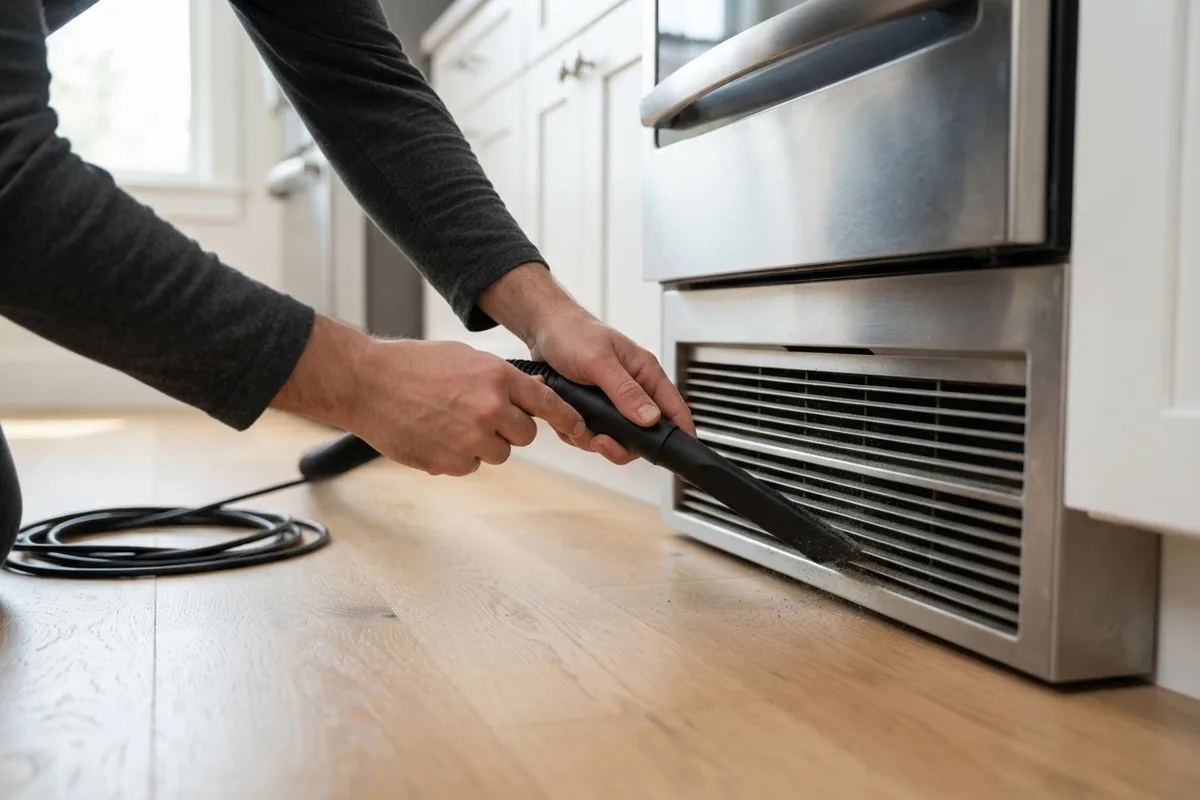
- Unplug any freestanding appliance or turn off its breaker before cleaning exterior vents, rear coils, or bottom access panels.
- Empty the dryer lint screen after every single load, wash the mesh monthly with warm soapy water to remove dryer-sheet film, and vacuum the exhaust duct twice a year.
- Twist out and rinse the dishwasher bottom filter weekly, and clear the washing machine drain pump filter every few months with a shallow pan ready for trapped water.
- Vacuum refrigerator condenser coils under or behind the unit every six months, and soak range hood grease screens in hot soapy water so exhaust fans stay clear.
4. Slamming Doors and Neglecting Rubber Seals
A hard slam knocks door latches out of alignment and flattens magnetic gaskets over time. Once a seal cracks, warps, or collects sticky grime, cold air leaks out of refrigerators, steam escapes ovens and dishwashers, and front-load washers drip onto your floor.
- Guide refrigerator, oven, and laundry doors closed by the handle instead of letting them swing shut on their own.
- Unplug the unit or make sure heating elements are completely cool before wiping door gaskets with a damp microfiber cloth and mild dish soap once a month.
- Check corners and bottom edges for splits, brittle spots, or mold, and act early if you notice steam or puddles—like fixing a torn dishwasher door gasket before moisture warps nearby cabinetry.
- Prop front-load washer doors slightly ajar after cycles so the rubber boot dries completely instead of staying damp and breaking down.
5. Blocking Airflow Around Cooling and Heating Units
Appliances need breathing room to shed heat safely. Pushing a refrigerator flush against the back wall, piling laundry baskets against a dryer exhaust hose, or lining oven racks with solid aluminum foil traps heat where wiring and control boards cannot handle it.
- Unplug the appliance before rolling it forward, and leave at least one to two inches of clearance behind refrigerators and freezers so condenser heat dissipates properly.
- Keep cabinet tops and side vents clear of cereal boxes, paper bags, and folded towels that trap warm air around compressors and microwaves.
- Inspect the flexible vent hose behind your dryer to make sure it is not crushed, kinked, or pressed flat against the wall.
- Never cover oven bottom vents or full racks with foil; place a rimmed baking sheet on a lower rack instead to catch drips safely.
6. Ignoring Unlevel Floors and Power Surge Risks
An appliance sitting even slightly off balance shakes harder during spin cycles, stresses suspension parts, and stops doors from latching cleanly. On the electrical side, plugging high-draw machines into cheap extension cords or ungrounded adapters overheats outlets and damages sensitive control boards.
- Unplug the appliance and shut off any attached water supply valves before tilting or adjusting leveling feet.
- Place a carpenter's level across the top front-to-back and side-to-side, then twist the front adjustable feet with a wrench until the machine sits rock solid with no wobble.
- Plug refrigerators, microwaves, washers, and dryers directly into grounded wall outlets—never into lightweight extension cords or overloaded power strips.
- Keep water hoses neatly routed with gentle curves behind washers and dishwashers so vibration never rubs a line against a sharp cabinet edge.
7. Putting Off Small Leaks, Noises, and Error Codes
A slow drip under the garbage disposal, a faint squeal from the dryer, or an occasional error code on the oven display rarely fixes itself. Running a struggling machine turns a worn seal, belt, or switch into a burned-out motor or water-damaged subfloor.
- Shut off the appliance right away if you hear grinding, scraping, or repeated humming, and unplug it or flip the breaker before looking inside.
- Turn off the cold-water shutoff valve under the sink or behind the washer at the first sign of pooling water, then check hose connections and splash guards for looseness.
- Write down any flashing error code before resetting the power so you or a technician can pinpoint the exact sensor or switch involved.
- Keep grease, fibrous peels, coffee grounds, and hard pits out of your garbage disposal, and run cold water for fifteen seconds before and after grinding food scraps.
Quick-Reference: Everyday Habit Fixes Across Your Home
Use this quick cheat sheet to turn those seven fixes into an easy routine across your kitchen and laundry room.
| Appliance Area | Mistake to Stop | Simple DIY Habit | How Often |
|---|---|---|---|
| Washer & Dryer | Overloading drums and excess soap | Fill 3/4 max, measure detergent, clear lint | Every load |
| Dishwasher | Packing racks tight and skipping filter | Leave spray clearance, rinse bottom screen | Weekly |
| Refrigerator & Freezer | Blocking vents and dusty coils | Keep 2/3 full, wipe gaskets, vacuum coils | Monthly / 6 months |
| Oven & Range | Foil on vents and slamming doors | Catch drips on pans, soak hood filters | Monthly |
| Garbage Disposal | Grinding grease or running dry | Flush with cold water, skip fibrous scraps | Every use |
When to Call a Pro
Routine cleaning, leveling, and smarter loading handle most everyday wear safely at home. Stop immediately and call an appliance pro if you smell natural gas, notice scorched wires or burning plastic, see a breaker tripping repeatedly, or suspect a sealed refrigerant leak in a refrigerator or freezer. Never open gas valves, electrical breaker panels, or pressurized cooling lines on your own.
Minor repair visits—such as replacing a worn drain pump, door latch, heating element, or thermostat—typically run about $150 to $450 in the US, though final costs vary by area, labor rates, and appliance model. When a symptom keeps returning after basic checks, True Appliance Repair can match you with local appliance repair services so an independent technician can diagnose the root cause safely before a small fault becomes a full replacement.
FAQ
How much longer do appliances last with regular maintenance?
Consistent care—like cleaning coils, emptying filters, and avoiding overloads—helps most major home appliances reach the upper end of their typical lifespan, often 10 to 15 years depending on the machine and household use. Skipping basic upkeep forces motors, pumps, and compressors to run hotter, which wears out moving parts much faster.
Is vinegar safe to use on every home appliance?
Diluted white vinegar works well for mineral deposits on stainless steel, glass, and some interior tubs, but it is not right for every surface. Frequent full-strength vinegar can dry out certain rubber hoses and gaskets over time, and it should never touch natural stone countertops nearby or be mixed with bleach. Check your owner's manual before running acidic rinses through internal valves.
Should I unplug appliances when I am not using them?
You do not need to unplug major appliances like refrigerators, ovens, or washers between everyday uses, since constant plugging and unplugging wears out wall outlets. However, unplugging countertop small appliances—such as toasters, air fryers, and blenders—reduces fire risk and protects their controls from power spikes, and you should always unplug any machine before cleaning or inspecting it.
When is it better to repair an appliance versus replace it?
A helpful rule of thumb is to compare the repair quote against the age of the unit and the price of a comparable new model. If an appliance is past the halfway mark of its expected lifespan and a major repair—like a compressor, transmission, or main control board—approaches half the cost of replacing it, putting that money toward a new unit usually makes more financial sense.