
Pulling on your dishwasher handle only to feel it refuse to budge is frustrating, especially when clean dishes are trapped inside right before a big family meal. Before you yank harder and risk snapping the handle or bending the door frame, pause—forcing a stuck latch almost always turns a simple fix into an expensive repair. These six safe DIY steps walk you through releasing the door, identifying what jammed it, and deciding when it is smarter to call a pro.
1. Wait for the Cycle and Cool-Down Lock to Finish
Many modern dishwashers lock the door automatically during high-temperature wash, sanitize, or heated dry phases to protect you from scalding steam and hot water. Even if the machine sounds quiet, it may be paused between stages or holding a thermal lock until the tub cools down.
- Check the front control panel or top-edge status lights to see if a wash, sanitize, or dry indicator is still lit or blinking.
- Wait 10 to 15 minutes after the cycle finishes so the internal temperature drops and any automatic thermal lock disengages on its own.
- If the machine appears paused mid-cycle, press and hold the Cancel button for three to five seconds to end the program safely.
- Listen for the unit to shut down completely, wait two minutes, and gently test the handle again.
Never force a door open while the interior is hot, as trapped steam can scald your hands and face.
2. Reset the Control Panel and Power Cycle the Unit
An electronic glitch or accidental button press can freeze the touchpad and keep an electric door lock engaged even after the tub has cooled. Resetting the electronics often clears a temporary logic error without requiring any tools.
- Look for a padlock icon or Control Lock light on the display, then press and hold the labeled lock button for three to five seconds to turn it off.
- If the panel stays unresponsive, cut power to the dishwasher. Unplug the power cord inside the adjacent under-sink cabinet, or flip the dedicated dishwasher circuit breaker to the off position.
- Leave power disconnected for a full five minutes so the internal control board discharges completely.
- Restore power, wait 30 seconds for the panel lights to settle, and gently pull the handle.
Always keep your hands dry when flipping a breaker, and never remove the electrical panel cover—leave internal panel work to a pro.
3. Clear a Jammed Dish Rack or Tall Utensil
Sometimes the latch works properly, but a shifted dish rack, baking sheet, or tall utensil handle inside the tub has wedged against the inner door panel. That outward pressure pins the latch catch tightly against the metal strike plate so the release handle cannot slide free.
- Place one palm flat against the upper center of the dishwasher door and push firmly inward to relieve outward tension on the latch.
- While keeping steady inward pressure, gently squeeze or pull the handle to disengage the catch.
- If the door feels lightly hooked, ease it a tiny fraction of an inch side-to-side without yanking.
- Once the door swings open, inspect for tall utensils sticking through the silverware basket, pans pressing the upper rack forward, or rack rollers that slipped off their tracks.
Positioning tall items toward the back or sides helps prevent the door from binding on future loads.
4. Check for a Stuck or Swollen Door Gasket
High heat during drying cycles can soften the rubber perimeter seal, causing it to cling tightly to the inner door frame or pinch inside its channel. Over time, worn rubber can also swell or fold over, creating enough friction to hold the door closed.
- Shut off power at the circuit breaker or unplug the dishwasher before working along the door seam.
- Press firmly along the top, left, and right edges of the outer door to break tight seal friction.
- If the seam still holds fast, slide a thin, flexible plastic putty knife gently along the gap to coax a pinched rubber edge loose. Skip metal tools, which scratch stainless steel and slice rubber.
- Once open, inspect the full rubber perimeter for cracks, twists, or flattened spots.
If the rubber seal is split, warped, or pulling out of its groove, read our guide on fixing a torn dishwasher door gasket before running another load.
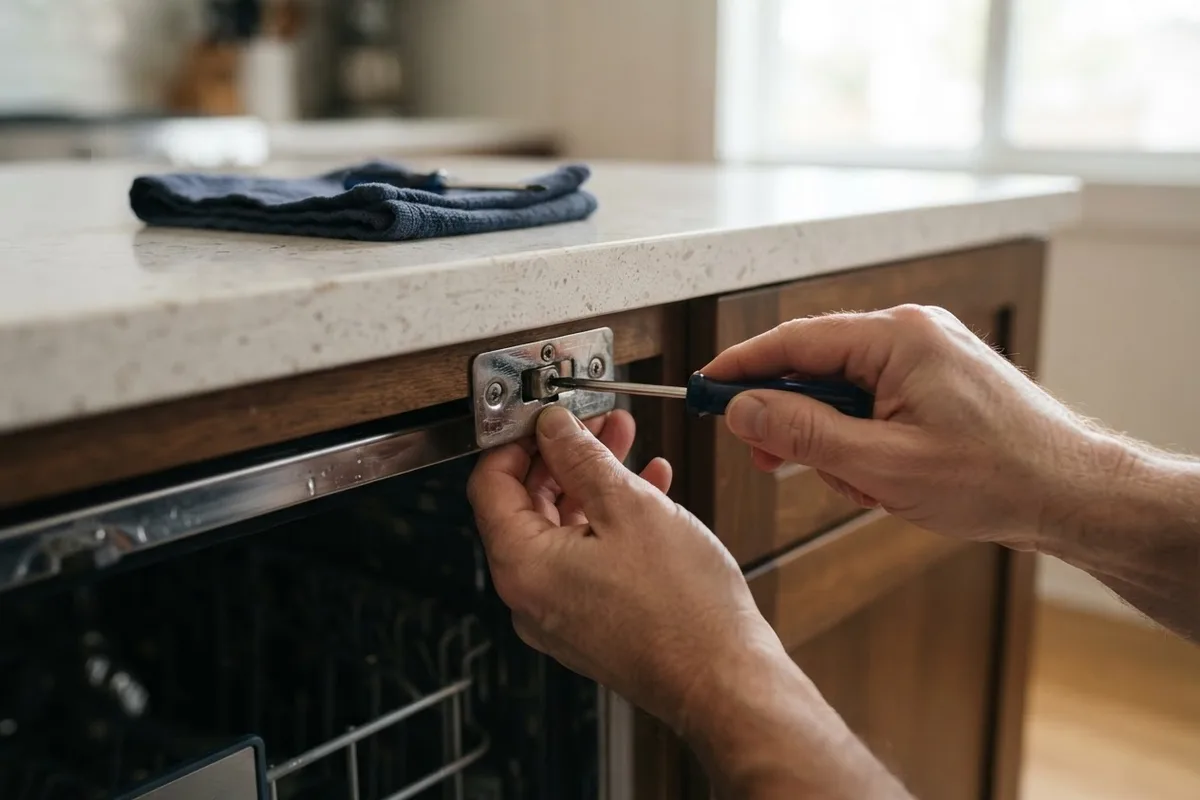
5. Inspect the Door Strike Plate and Alignment
Under-counter dishwashers are anchored to your countertop underside or nearby cabinet frames using small metal mounting brackets. If those screws work loose over time, the machine can tilt or slide forward slightly, jamming the top strike plate crookedly inside the door latch.
- Disconnect power at the breaker or under-sink outlet before checking the frame.
- Look at the narrow gap between the top of the dishwasher door and the underside of the countertop. An uneven gap usually means the unit has shifted out of alignment.
- Apply gentle upward or downward pressure near the top door edge while testing the handle to ease pressure off the misaligned strike plate.
- Once the door opens, check the metal strike plate at the top center of the tub frame for bends, and snug up any loose mounting bracket screws holding the unit to the cabinets.
Keeping the cabinet frame level protects both the latch and the lower door hinges from unnecessary wear.
6. Release or Replace a Broken Door Latch Handle
If you pull the handle and it feels completely limp, floppy, or moves without any clicking resistance, the internal plastic actuator or return spring inside the latch assembly has likely broken. Because the handle no longer lifts the locking hook, the door remains trapped on the strike plate.
- Turn off power at the breaker and shut off the hot water supply valve under the sink before inspecting any door hardware.
- Shine a flashlight into the narrow gap above the door to spot the metal strike plate entering the latch slot.
- On models with an exposed top-mounted strike plate, gently pressing a stiff plastic shim against the plastic latch tongue—never forcing with metal tools—can sometimes release the catch.
- If the latch refuses to release or the handle housing is cracked, stop right there.
Never pry a stuck door with a crowbar or disturb internal door wiring; replacing a broken latch requires safely disassembling the inner door panel.
When to Call a Pro
If these safe checks do not release the door, stop forcing the handle and schedule a service visit. Some stuck-door failures involve hardwired switches, control boards, or locked internal mechanisms that require proper testing tools and careful disassembly.
Quick Stuck-Door Diagnostic and Cost Reference
| What You Notice | Likely Cause | DIY or Pro? | Typical US Repair Cost* |
|---|---|---|---|
| Handle feels solid, lights still on | Active cycle or thermal lock | DIY (wait/cancel) | $0 |
| Buttons frozen, lock icon lit | Control lock or board glitch | DIY reset / Pro if persistent | $180–$380 (control board) |
| Door gives slightly, catches inside | Shifted rack or tall utensil | DIY | $0 |
| Door resists around edges, sticks | Swollen or pinched gasket | DIY | $40–$90 (DIY part) |
| Handle feels limp, no click | Broken latch or internal spring | Pro recommended | $130–$260 |
| Breaker trips when resetting | Wiring or latch switch fault | Pro only | $150–$320 |
Cost ranges reflect typical US parts and labor for common repairs and vary widely by area, brand, and model.
Stop immediately and call a local appliance technician if your dishwasher is hardwired and needs electrical testing, if the circuit breaker trips repeatedly, or if the door is jammed shut with hot water trapped inside. Taking apart an inner door panel exposes sharp metal edges and wiring harnesses connected to the control board, making professional service the safer call.
True Appliance Repair can match you with an independent local pro through our dishwasher repair service page, or you can browse our broader home appliance repair services if other kitchen units need attention too.
FAQ
Can I pry a stuck dishwasher door open with a screwdriver?
No. Prying with a metal screwdriver or crowbar can bend the door frame, crack the control panel, and tear the rubber gasket, creating water leaks later. If gentle inward pressure and a power reset do not free the latch, stop and let a technician release it safely.
How do I unlock a dishwasher door after a power outage?
Restore power first, then press and hold the Cancel or Reset button for three to five seconds to clear any interrupted cycle memory. If your model uses a thermal steam lock, wait 10 to 15 minutes for the interior to cool down before testing the handle again.
Why does my dishwasher door latch feel loose when I pull it?
A limp or floppy handle usually means the plastic latch actuator or small return spring inside the door has snapped. Because the latch sits right beside electrical door switches inside the inner panel, shut off power at the breaker and have a pro replace the assembly if you are unsure.
How much does it cost to fix a broken dishwasher door latch?
In the US, having a pro replace a broken dishwasher door latch assembly typically ranges from $130 to $260 for parts and labor, though pricing varies by area, brand, and model. Replacing a faulty electronic control board or motorized door lock generally costs more, often between $180 and $380.