
A mysterious, musty smell in your kitchen might not be coming from the forgotten leftovers in your fridge. Often, the real culprit is a dirty, moldy refrigerator drain pan hidden underneath or behind your appliance. Learning how to clean a refrigerator drain pan is a simple DIY task that will eliminate foul odors, prevent pest infestations, and keep your kitchen environment healthy. If your kitchen smells off, checking the drain pan should be your first step before assuming you need complex refrigerator repair. If you ever feel overwhelmed by home maintenance, True Appliance Repair can match you with a local appliance pro to keep your kitchen running smoothly.
Safety First
Before you begin any hands-on work on your appliance, always unplug the refrigerator from the electrical outlet and shut off the water supply valve. Never attempt to work on live electrical components, gas connections, or sealed refrigeration systems. If you encounter exposed wiring, gas leaks, or complex mechanical issues, stop immediately and call a professional. Always wear protective gloves and safety goggles when handling cleaning chemicals and cleaning up moldy areas.
1. Locate and access the drain pan
To clean a refrigerator drain pan, you first need to find it. In most modern refrigerators, the drain pan is located at the very bottom of the unit, behind a front kickplate or grille. On some older models or specific brands, it may be located at the back of the refrigerator, near the compressor.
To access a front-located pan, gently pull off the bottom grille. It usually snaps off, though you may need a screwdriver to remove a couple of mounting screws. If your drain pan is at the back, you will need to carefully pull the refrigerator away from the wall. Once you have enough space, use a screwdriver to remove the lower back access panel. If you are dealing with a foul odor and cannot find the source, reading up on why does my refrigerator smell can give you additional troubleshooting tips. Once the panel or grille is removed, use a flashlight to locate the flat, plastic tray beneath the coils.
2. Safely remove the drain pan from the appliance
Once you have located the drain pan, you need to remove it without spilling any stagnant water. Over time, water from the defrost cycle drains into this pan, where it is supposed to evaporate. If the pan is dirty, it can become a breeding ground for mold and bacteria, causing water to pool.
Carefully slide the drain pan toward you. Be extremely cautious, as the pan might be brim-full of sloshing, dirty water. If the pan feels stuck, check for any clips or screws securing it to the refrigerator frame. In some rare cases, the drain pan is fixed to the refrigerator and cannot be removed. If you have a fixed drain pan, do not try to force it out. Instead, use a wet-dry vacuum to remove any standing water, and then use a sponge, warm water, and vinegar to clean it in place. For removable pans, slowly slide the tray completely out of its slot, keeping it as level as possible to prevent spills on your kitchen floor.
Supplies Needed to Clean a Refrigerator Drain Pan
| Supply | Purpose | Notes |
|---|---|---|
| Disposable Gloves | Protect hands | Essential for handling mold and stagnant water |
| Flashlight | Illuminate dark areas | Helps locate the pan under or behind the fridge |
| Screwdriver | Remove access panels | Needed if your grille or back panel is screwed in |
| White Vinegar | Natural cleaner and deodorizer | Breaks down mold, mildew, and mineral buildup |
| Baking Soda | Gentle abrasive | Helps scrub away stuck-on grime and neutralize odors |
| Scrub Brush or Toothbrush | Scrubbing small spaces | Ideal for getting into the corners of the pan |
| Paper Towels or Rags | Wiping and drying | For drying the pan and cleaning the surrounding floor |
3. Empty and rinse the pan
Now that you have safely removed the drain pan, it is time to clean it. Take the pan to your kitchen sink or an outdoor area. Wearing your disposable gloves, carefully pour the stagnant, dirty water down the drain. Be prepared for a strong, unpleasant odor if the water has been sitting for a long time.
After emptying the standing water, run warm tap water into the pan to rinse away loose debris, dirt, and clumps of mold. You can use a hose if you are working outside. Use paper towels to wipe away the initial layer of grime and dispose of them immediately in the trash. Avoid using extremely hot water, especially on thin plastic pans, as this can cause the plastic to warp or crack. Once the loose dirt is rinsed away, you will be able to see the stubborn stains and mold buildup that require deeper cleaning.
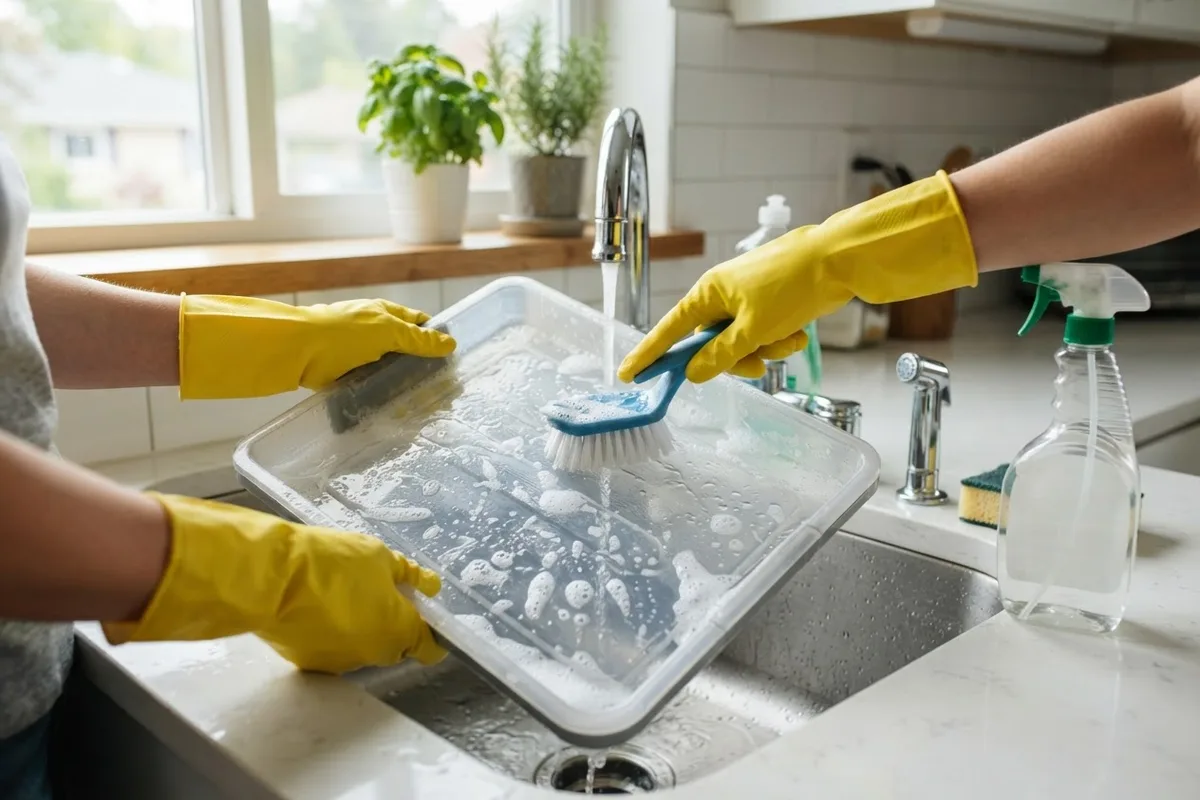
4. Scrub with vinegar and baking soda
To effectively clean a refrigerator drain pan and eliminate mold spores, a combination of vinegar and baking soda works wonders. This natural DIY cleaning method is safe for your household and highly effective at cutting through grime and neutralizing odors.
Start by generously spraying the entire drain pan with undiluted white vinegar. Next, sprinkle a liberal amount of baking soda over the wet vinegar. The two ingredients will react and fizz, breaking down the stubborn mold and mineral deposits. Let the mixture sit for about 10 to 15 minutes. After letting it sit, take your scrub brush or an old toothbrush and vigorously scrub every inch of the pan. Pay special attention to the corners and ridges where mold loves to hide. For extremely stubborn stains, you can create a thicker paste of baking soda and a small amount of water. Once you have scrubbed away all the grime, rinse the pan thoroughly with warm water until it is completely clean.
5. Sanitize and dry the pan completely
After scrubbing, the next step in learning how to clean a refrigerator drain pan is proper sanitization. While vinegar is great for cleaning, sanitizing ensures that all remaining bacteria and mold spores are completely destroyed, preventing them from rapidly returning.
To sanitize the pan, you can use a mild solution of one tablespoon of liquid household bleach mixed into one gallon of warm water. Alternatively, you can use a dedicated kitchen sanitizer spray. Wipe down the entire surface of the pan with the sanitizing solution and let it sit for a few minutes. After sanitizing, rinse the pan one final time with clear water.
Before reinstalling, you must dry the pan completely. Reinstalling a damp pan will immediately create a moist environment where mold can grow back. Use clean towels or paper towels to thoroughly dry the inside and outside of the pan, or let it air dry completely in a well-ventilated area. While you wait for it to dry, take a moment to vacuum and wipe down the floor underneath your refrigerator where the pan usually sits.
6. Check and clear the defrost drain line
Before you slide the clean, dry drain pan back under your appliance, you should inspect the defrost drain line. This is the small tube that drips water down into the pan from inside the refrigerator. If this line is clogged with debris or ice, water will not flow properly, which can lead to leaks inside your fridge or cause the pan to overflow.
Locate the end of the drain line where it empties into the pan area. If you see any visible gunk or blockage at the tip, gently clean it out with a small brush or a pipe cleaner. If you suspect a clog further up the tube, you can use a turkey baster filled with warm water to flush the line from inside the refrigerator (usually located on the back wall of the fresh food or freezer compartment). To learn more about this related issue, you can read our guide on why is my refrigerator drain pan overflowing. Once you are confident the line is clear, carefully slide the clean, dry drain pan back into its original position, making sure it sits level and securely under the drain tube. Finally, reattach the front kickplate or back access panel, plug the refrigerator back in, and turn on the water supply.
When to Call a Pro
While learning how to clean a refrigerator drain pan is a straightforward DIY task, there are times when you should step aside. If you notice that your drain pan is cracked, warped, or severely damaged, it needs to be replaced. Additionally, if water is actively leaking from underneath the refrigerator even when the pan is empty, or if you cannot clear a stubborn clog in the defrost drain line, it is time to call in the experts.
You should also contact a professional if you encounter any exposed or damaged electrical wiring, hear strange noises from the compressor, or suspect a problem with the refrigerator's sealed cooling system. A typical refrigerator repair call in the US ranges from $100 to $400, though costs vary by area and model. If you are uncomfortable with any part of this process or need expert assistance, True Appliance Repair can match you with a local appliance pro who can diagnose and resolve your refrigerator issues safely and efficiently. If you need broader assistance with your kitchen or laundry room, our network also includes appliance repair pros for all your home maintenance needs.
FAQ
How often should I clean my refrigerator drain pan?
You should clean your refrigerator drain pan at least once or twice a year as part of your regular home maintenance routine. However, if you have pets that shed heavily, live in a very humid climate, or have recently experienced a leak, you may want to check and clean it every three months. Frequent cleaning prevents mold buildup and keeps your kitchen smelling fresh.
Why is there always water in my refrigerator drain pan?
It is completely normal to see a small amount of water in your refrigerator's drain pan. During the appliance's normal defrost cycle, frost from the evaporator coils melts and drains down into this pan. The heat generated by the nearby compressor and ambient air flow is designed to evaporate this water. You only need to worry if the water is constantly overflowing, stagnant, or accompanied by a foul smell.
Can I put my refrigerator drain pan in the dishwasher?
It is generally not recommended to put your refrigerator drain pan in the dishwasher. Most drain pans are made of relatively thin, rigid plastic that can easily warp, melt, or crack when exposed to the high heat and harsh detergents of a dishwasher cycle. To avoid damaging the pan and causing future leaks, it is always safest to hand wash it using warm water, vinegar, baking soda, and a gentle scrub brush.
What are the signs that my refrigerator drain pan needs cleaning?
The most common sign that your refrigerator drain pan needs cleaning is a persistent, musty, or foul odor in your kitchen that you cannot locate. Other signs include seeing fruit flies or other pests near the bottom of the refrigerator, noticing water pooling on the floor beneath the appliance, or seeing visible mold and grime around the bottom grille or kickplate. If you notice any of these signs, it is time to inspect and clean the drain pan immediately.