
If your washer is suddenly taking forever to drain, leaving your clothes dripping wet, or making strange noises, the culprit might be a clogged drain pump filter. This small but mighty component catches everything from loose change and pet hair to lint and buttons before they damage your washer's pump. Learning how to clean a washing machine drain pump filter is an essential, easy DIY task that can save you from costly repairs and keep your laundry room running smoothly.
Locate Your Washing Machine's Drain Access Panel
The first step in learning how to clean a washing machine drain pump filter is simply finding it. On most modern front-loading washing machines, the drain pump filter is very easy to access. You will typically find a small, square or rectangular access door located on the bottom right or bottom left corner of the machine's front panel.
- Front-Loading Machines: For most front-loaders, you can gently pry this small door open using your fingers, a flat-head screwdriver, or even a coin.
- Top-Loading Machines: If you have a top-loading washer, locating the filter can be a bit more challenging. Many top-loaders do not have a front access panel. Instead, the filter might be located inside the drum (often under the agitator), or it may be a "self-cleaning" pump with no accessible filter. If your top-loader does have one, it is usually located at the back of the machine near the bottom, which may require you to pull the machine away from the wall.
Safety Warning: Before touching anything or moving your appliance, always unplug your washing machine from the electrical outlet and turn off the water supply valves. Safety first prevents any accidental shocks or unexpected water leaks. Once the machine is completely disconnected from power and water, you are ready to proceed.
Prepare Your Workspace for Water Drainage
Cleaning your drain pump filter is a wet job. When you remove the filter, any water remaining in the machine's drum and internal hoses will immediately rush out. To avoid a messy cleanup and potential water damage to your laundry room floor, you must prepare your workspace properly.
- Gather Supplies: You will need a few old towels, a shallow baking dish, tray, or container (small enough to fit under the access panel), a pair of pliers (sometimes needed to twist a stubborn filter), and a small brush (a toothbrush works perfectly).
- Lay Down Towels: Lay several old towels on the floor directly beneath the access panel to catch any stray splashes.
- Position Your Container: Place your shallow container or baking dish as close to the bottom of the machine as possible, directly under the access panel.
- Open the Panel: Gently pull or pry open the access door to reveal the filter area. Inside, you will likely see two things: a small, dark cylindrical cap (the filter itself) and a small, thin black or gray rubber tube with a plug in the end (the emergency drain hose).
Manually Drain the Remaining Water
Before you actually unscrew the main filter, you should use the emergency drain hose to remove most of the water. If you skip this step and just unscrew the filter, a flood of water will overwhelm your shallow container.
- Retrieve the Hose: Gently pull the small emergency drain hose forward out of its clip inside the compartment.
- Position Over Container: Hold the end of the hose over your shallow container or dish.
- Remove the Plug: Carefully pull the cap or plug out of the end of the emergency drain hose.
- Let It Drain: Water will begin to flow out of the hose into your container. Depending on how much water is stuck in your washer, you may need to plug the hose, empty your container, and repeat the process a few times.
- Replace the Cap: Once the water stops flowing, replace the plug securely back into the emergency drain hose and push it back into its original clip. You have now successfully removed the majority of the water, making it much safer to remove the main filter.
Remove and Inspect the Drain Pump Filter
Now that the bulk of the water is drained, it is time to remove the filter itself. Be prepared, as a small amount of residual water will still spill out when you do this.
- Position the Container Again: Ensure your shallow container and towels are still positioned beneath the filter opening.
- Twist the Filter: Grab the handle of the drain pump filter (the larger cap). Twist it counter-clockwise. It may feel tight, especially if it has never been cleaned before. You can use a pair of pliers gently if you need extra leverage, but be careful not to crack the plastic.
- Pull It Out: As you continue to twist, the filter will begin to unscrew. Once it is fully untwisted, gently pull the filter straight out of the machine.
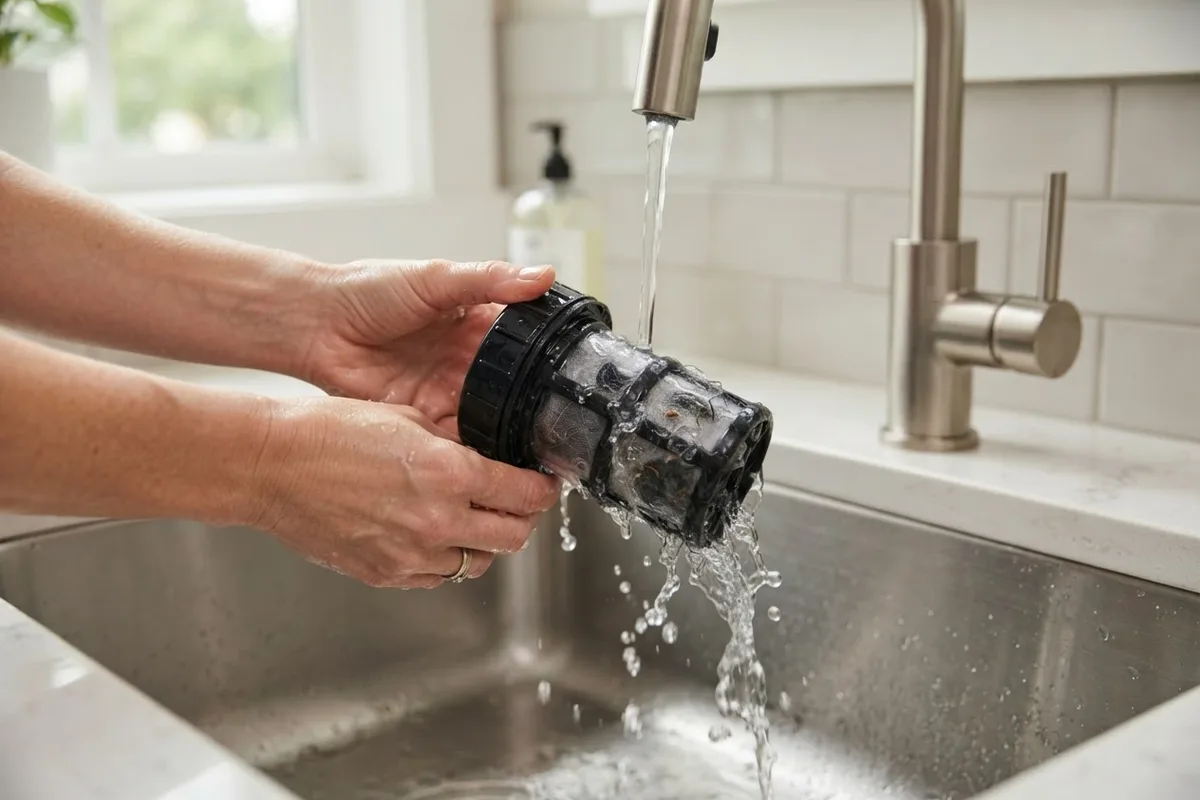
- Inspect the Filter: Take a close look at what you have removed. The filter is typically a cylindrical plastic mesh screen. Inspect it for debris. It is very common to find a collection of wet lint, hair, pet fur, loose coins, hairpins, buttons, and even small pieces of debris like keys or small toys that were left in pockets. These items are exactly what the filter is designed to catch, but when they build up, they block water flow.
Clean the Filter and Pump Housing
Now that you have the filter out, it is time to give it a thorough cleaning. You also need to clean out the chamber it came from, known as the pump housing.
- Rinse the Filter: Take the drain pump filter to a sink. Rinse it thoroughly under warm, running water.
- Scrub Gently: Use your small brush or toothbrush to gently scrub away any stubborn wet lint, mineral deposits, or slime from the mesh screen and the plastic frame. Do not use harsh chemicals or abrasive cleaners; warm water and a little bit of mild dish soap are all you need.
- Clean the Housing: While the filter is drying slightly, look inside the dark cavity where the filter was installed (the pump housing). Use a damp cloth or your fingers to feel around inside the chamber. Remove any remaining wet lint, slime, or foreign objects that might be stuck in there.
- Check the Impeller: At the very back of that dark chamber, you will see a small fan-like piece called the pump impeller. Reach in and gently try to spin it with your finger. It should spin freely. If it is jammed or cannot spin, there may be a piece of debris like a coin or a piece of wire wrapped around it. Carefully remove any obstruction. If the impeller is broken or still won't spin, you may need to seek professional washer and dryer repair services.
Reinstall the Filter and Check for Leaks
The final stage of learning how to clean a washing machine drain pump filter is putting everything back together and making sure your machine is operating correctly without any leaks.
- Insert the Filter: Take your clean drain pump filter and align it properly. Gently push it back into the pump housing.
- Twist Clockwise: Turn the filter clockwise to screw it back in. Make sure it is screwing in smoothly and not cross-threading. You must tighten it securely so it creates a perfect seal, but do not over-tighten to the point of breaking the plastic. Most filters have a definite stopping point or a mark that aligns when it is fully closed.
- Secure the Tube: Double-check that your emergency drain hose is properly capped and clipped back into place.
- Close the Access Panel: Once the filter is securely tightened, you can close the small access door on the front of the machine.
- Test the Machine: Plug your washing machine back into the electrical outlet and turn the water supply valves back on. To test your work, run a short, empty rinse and spin cycle. Watch the access panel closely for any signs of water leaking. If you see any water dripping, immediately stop the cycle, unplug the machine, and check that the filter was tightened correctly and that the emergency drain tube is capped. If it runs smoothly without any leaks, you have successfully completed the task!
| Symptom | Why It Happens | How Often to Clean |
|---|---|---|
| Washer taking too long to drain | A clogged filter restricts water flow, forcing the pump to work harder. | Every 3-6 months. |
| Clothes coming out soaking wet | If the machine cannot drain efficiently, the final spin cycle won't remove enough water. | Clean immediately if this occurs. |
| Foul or musty laundry odors | Trapped wet lint, hair, and stagnant water in the filter breed mold and bacteria. | Every 3 months or if you notice smells. |
| Machine displaying error codes | Many modern washers will show an error code (like "OE" or "Sud") when it cannot drain. | Clean immediately if an error code appears. |
When to Call a Pro
While knowing how to clean a washing machine drain pump filter is a straightforward DIY task, sometimes the problem lies deeper within the appliance. If you have cleaned your filter and are still experiencing draining issues, loud rattling noises, or continuous leaks, it may be time to seek expert help.
You should call a professional if you notice that the pump impeller at the back of the filter housing is broken, damaged, or will not spin even after you have cleared all visible debris. You should also step back and call a pro for any complex electrical issues, problems with the sealed system, or if you suspect a gas line issue in gas-heated dryers. Additionally, if you see water actively leaking from underneath the machine rather than just the access panel, that could indicate a cracked pump housing or a damaged hose. While a simple filter cleaning is free, repairing or replacing a damaged drain pump typically ranges from $150 to $350, though costs vary by area and model.
If your washer continues to show issues after your DIY efforts, it could be one of the signs your washing machine is dying. True Appliance Repair can match you with a local appliance pro who can diagnose and resolve the issue quickly. Don't let a minor drainage problem turn into a major headache—reliable appliance repair is just a call away.
FAQ
How often should I clean my washing machine's drain pump filter?
As a general rule, you should clean your washing machine's drain pump filter every 3 to 6 months. However, if you have pets that shed heavily, frequently wash heavily soiled clothes, or run several loads of laundry every day, you may want to clean it more often—perhaps every 1 to 2 months. Regular maintenance keeps your machine running efficiently.
What happens if I never clean the drain pump filter?
If you never clean your drain pump filter, it will eventually become completely clogged with lint, hair, and debris. This can lead to a host of problems, including your washer not draining properly, clothes coming out soaking wet, bad odors from stagnant water, and the machine displaying error codes and shutting down. In worst-case scenarios, a severe clog can burn out your washing machine's drain pump motor, leading to a much more expensive repair.
My washing machine doesn't have a front access panel. Does it have a filter?
Many top-loading washing machines and some specific front-loading models do not have a convenient front access panel. This does not always mean they don't have a filter. In some top-loaders, the filter might be located inside the drum, underneath the center agitator or along the side of the drum. In other models, the machine may have a "self-cleaning" pump system that does not require regular manual cleaning. If your machine is having trouble draining and has no visible panel, consult your specific model's owner's manual.
Can a clogged drain filter cause my washing machine to smell?
Yes, a clogged drain pump filter is a very common cause of foul or musty laundry room odors. Because the filter catches wet lint, hair, and small pieces of debris, it becomes a breeding ground for mold, mildew, and bacteria when left uncleaned. Furthermore, a clogged filter often causes a small amount of stagnant water to sit in the bottom of the machine and the filter housing. If you notice your machine still smells after cleaning the filter, check out our guide on why your washing machine smells.