
A dying refrigerator rarely quits without warning; it usually drops subtle hints days or weeks before complete breakdown. Recognizing these early warning signs gives you time to save your groceries and decide whether to fix the issue or shop for a replacement. Here are 7 undeniable indicators that your fridge is on its last legs and how to respond safely.
1. Food Spoils Before Expiration Dates
When milk sours days before its sell-by date or leafy greens turn to sludge within 48 hours, your refrigerator is failing its primary job. Refrigerators should maintain a steady internal temperature between 37°F and 40°F. When the compressor or temperature control board starts degrading, internal temperatures fluctuate unpredictably.
To test this, place an appliance thermometer in a glass of water on the middle shelf for 24 hours. If the reading stays above 40°F despite setting the thermostat colder, your cooling system is struggling. If you notice temperature issues isolated to the fresh food compartment while the freezer remains ice-cold, review our guide on what to do when your fridge is not cold but the freezer is for targeted troubleshooting steps before assuming the entire cabinet is dead.
2. Excessive Frost and Ice Buildup in Freezer
Modern frost-free refrigerators run automatic defrost cycles multiple times a day to prevent ice accumulation on evaporator coils. If you open your freezer and find walls covered in thick frost or food packages encased in ice sheets, the defrost system has failed.
First, inspect the rubber door gasket for cracks, tears, or gaps that let warm, humid room air leak inside. Unplug the refrigerator before wiping down the seal with warm soapy water to clear debris. If the seal is tight, the culprit is likely a failed defrost heater, thermostat, or control timer. While replacing a door gasket is an easy DIY project, internal electronic defrost failures often indicate a deeper system failure that worsens over time.
3. Loud Buzzing, Humming, or Clicking Noises
Refrigerators make mild background hums, but sudden changes in sound signal mechanical stress. A loud buzzing or clicking sound coming from the back bottom area usually means the compressor motor is overheating or attempting to start against high pressure. A failing start relay will click every few minutes as it tries—and fails—to engage the compressor.
Another common noise is a rhythmic squeaking or rattling inside the freezer compartment. This occurs when an evaporator fan blade strikes ice buildup around failing coils. Always disconnect power from the wall outlet before removing interior panels to inspect fan blades. If the compressor produces a continuous high-pitched whine or harsh grinding noise, internal bearings are failing, which almost always requires replacing the unit.
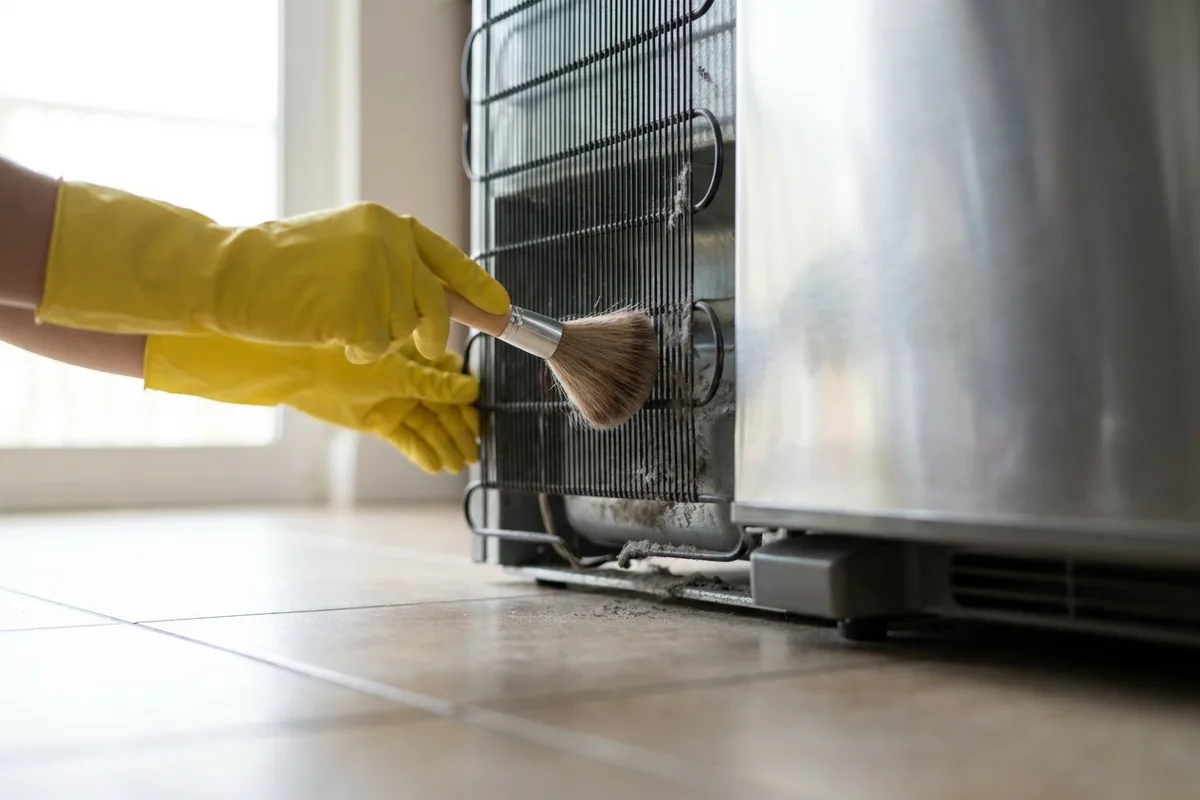
4. Hot Exterior Walls and Warm Condenser Coils
It is normal for the exterior side walls or rear cabinet of a refrigerator to feel slightly warm to the touch because the unit pushes heat out from the inside. However, if the sides feel hot enough to cause discomfort or you smell burning dust, the system is working dangerously hard.
Unplug the appliance and pull it away from the wall to examine the condenser coils located at the bottom or back. Heavy accumulation of pet hair, dust, and debris prevents these coils from shedding heat. Clean them thoroughly using a coil brush and vacuum hose attachment. If exterior heat remains high after cleaning coils and ensuring a 3-inch gap from the wall, the motor or compressor is drawing excessive electrical current and approaching mechanical failure.
5. Water Pooling Inside or Underneath the Cabinet
Water puddle beneath the front grille or accumulating under crisper drawers is a classic cry for help. While minor leaks are sometimes caused by a clogged defrost drain tube, recurring water buildup can damage your kitchen flooring and subfloor.
To address simple causes, disconnect power and inspect the drain tube located behind the lower service panel. Clear ice or algae clogs using warm water flushed through a turkey baster. However, if water leaks directly from the bottom of the sealed cabinet shell, or if condensation constantly coats the outer cabinet doors (known as "sweating"), the cabinet insulation has broken down or the internal drain pan has cracked beyond simple surface repair.
6. Energy Bills Spike Without Explanation
An unexpected rise in your monthly electric bill often traces back to a malfunctioning kitchen appliance. When a refrigerator's seals deteriorate, refrigerant charge leaks, or internal sensors fail, the compressor runs continuously 24 hours a day to keep up with cooling demand.
A properly functioning refrigerator motor should cycle on and off throughout the day. If your unit runs continuously without stopping, it consumes up to three times its normal electricity output. Unless corrected immediately by clearing airflow obstructions or replacing worn gaskets, continuous operation rapidly burns out the motor windings.
7. The Refrigerator Is More Than 10 Years Old
Standard home refrigerators have an average lifespan of 10 to 13 years. If your unit is approaching or past its tenth birthday and exhibits two or more of the symptoms described above, investing in major repairs is rarely cost-effective.
Follow the general 50% rule: if the appliance is over 8 years old and the estimated repair bill exceeds 50% of the cost of a comparable new model, replacement is the smarter financial choice. Newer appliances also offer significantly higher energy efficiency, saving you money on monthly operating costs compared to a struggling decade-old model. For more general advice on diagnosing unit issues before deciding, check our troubleshooting guide on how to fix a refrigerator.
Repair vs. Replace: Quick Decision Guide
Use this simple comparison table to evaluate whether your current appliance issue warrants a simple fix or complete replacement:
| Issue Observed | Average Equipment Age | Recommended Action | Typical US Repair Cost Range |
|---|---|---|---|
| Torn Door Gasket | Any Age | DIY Replace Seal | $50 – $150 (varies by model) |
| Clogged Defrost Drain | Any Age | DIY Flush Drain | $0 – $100 (varies by model) |
| Defrost Thermostat Failure | Under 8 Years | Professional Repair | $150 – $300 (varies by area) |
| Failed Evaporator Fan | Under 8 Years | Repair or Replace Part | $120 – $250 (varies by area) |
| Failed Sealed System / Compressor | Over 8-10 Years | Replace Appliance | $400 – $900+ (varies by model) |
When to Call a Pro
Basic maintenance tasks—like vacuuming condenser coils, leveling cabinet feet, or clearing a clogged drain line—are safe DIY projects for most homeowners. Always remember to unplug the refrigerator from the wall outlet and turn off any connected water supply lines before performing any hands-on inspection or maintenance.
However, if your inspection points to sealed refrigerant leaks, compressor relay failures, or complex electrical circuit board issues, stop immediately. Sealed system repairs require specialized recovery equipment and technical training. Attempting to puncture refrigerant lines or bypass safety controls poses safety risks and can permanently ruin the appliance. When troubleshooting gets complex, True Appliance Repair can match you with a local pro to inspect your machine. If you decide to keep an older unit running, using a reliable refrigerator repair service ensures your cabinet is diagnosed correctly without unnecessary expenses.
FAQ
How long do modern refrigerators usually last?
Most standard residential refrigerators last between 10 and 15 years. Built-in units may last slightly longer with regular condenser cleaning, while compact or budget models often show significant wear after 7 to 10 years of continuous use.
Is it worth replacing a compressor on an older fridge?
Replacing a compressor on a unit older than 8 years is rarely recommended. The labor and parts cost often ranges from $400 to $900 or more depending on location and model, which approaches the cost of a brand-new, energy-efficient refrigerator.
Why is my fridge running constantly but not getting cold?
This condition usually points to a failing compressor, a refrigerant leak in the sealed system, or severe frost blockage over the evaporator coils preventing cold air circulation. Clean the condenser coils first; if the issue persists, a professional diagnostic is required.
Can dirty condenser coils destroy a refrigerator motor?
Yes. Dirt and pet hair act as insulation on condenser coils, preventing heat from escaping. This forces the compressor motor to run hotter and work twice as hard, leading to premature motor burnout and premature appliance failure.