
Opening a dishwasher only to find cold water and wet, greasy dishes is incredibly frustrating. When your dishwasher is not heating water properly, your kitchen routine grinds to a halt. Fortunately, you can troubleshoot and resolve this common issue with a few simple DIY steps.
Check the Heating Element for Damage
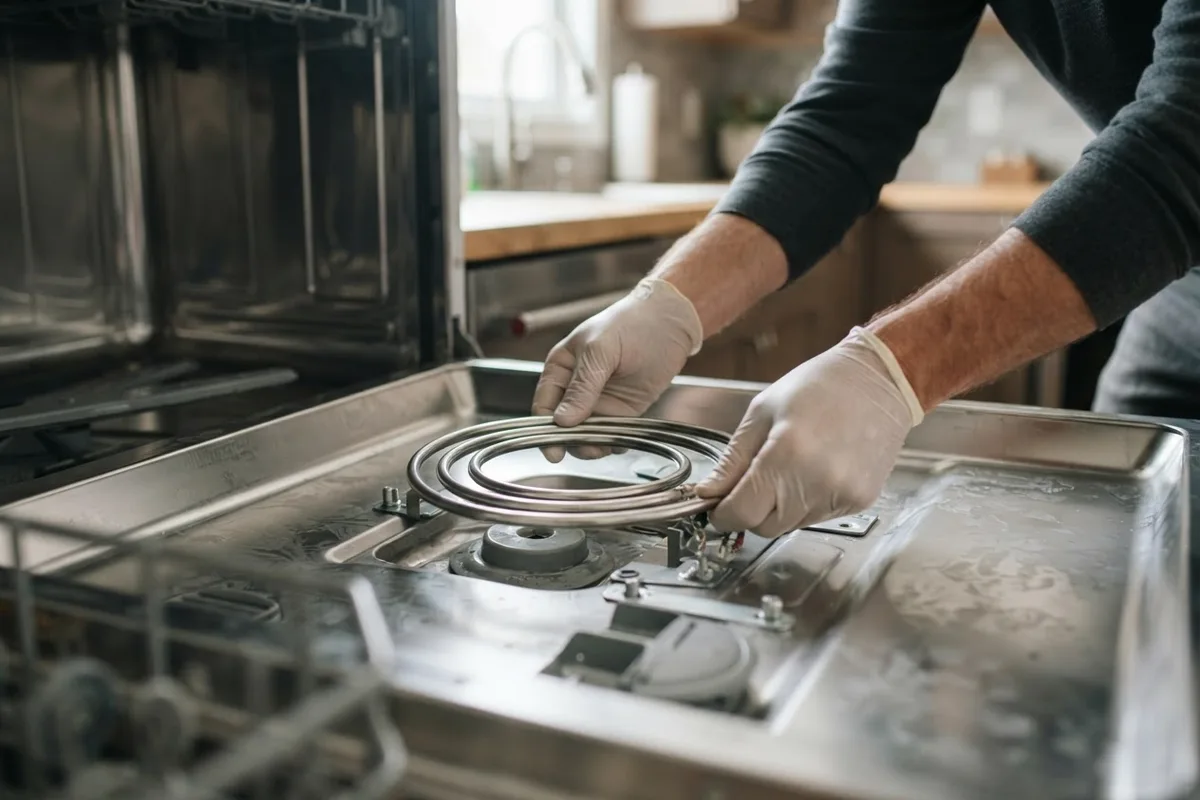
The heating element is usually a thick, circular metal loop at the bottom of the dishwasher tub. Over time, it can wear out, crack, or burn. To inspect it, you must first unplug the appliance and turn off the water supply.
- Open the dishwasher door and remove the bottom rack.
- Visually examine the heating element for any signs of damage, such as dark spots, blisters, or visible breaks in the loop.
- If you see visible damage, the heating element must be replaced.
- If it looks fine, you can test it for continuity using a multimeter. To access the terminals, you will need to remove the lower access panel underneath the door.
- Disconnect the wires from the heating element terminals (remembering where they go) and touch the multimeter probes to the terminals.
- A reading of infinity (no continuity) means the element is broken inside and needs replacement. A reading between 10 and 30 ohms usually indicates it is working correctly.
Failure of the heating element is also a common culprit when your dishwasher is not drying dishes properly.
Inspect the High-Limit Thermostat
The high-limit thermostat is a safety device designed to prevent the dishwasher from overheating. If it fails, it may shut off power to the heating element entirely, even when heat is needed. Before you begin, ensure you unplug the dishwasher and turn off the water supply.
- Access the thermostat, which is typically located under the dishwasher tub. You will need to remove the lower kickplate or access panel.
- Look for a small, round component attached to the bottom of the tub, often with two wires connected to it.
- Some high-limit thermostats have a small red reset button in the center. If yours has one, try pressing it firmly. If you hear a click, it may have simply tripped.
- To test a thermostat without a reset button, or if resetting does not work, disconnect the wires and use a multimeter to test for continuity.
- At room temperature, the thermostat should show continuity (a closed circuit). If the multimeter reads infinity, the thermostat is defective and requires replacement.
Test the Water Inlet Valve
Sometimes, the issue isn't the heating element itself, but a lack of water. If your dishwasher does not fill with the proper amount of water, the heating element may not activate, or the water will not circulate enough to heat up. This mechanism protects the appliance from running dry and damaging the tub. Disconnect the power and shut off the water supply before inspecting the water inlet valve.
- The water inlet valve is usually located behind the bottom access panel, where your home's water line connects to the dishwasher.
- Check the valve for any signs of leaks, rust, or mineral deposits.
- Ensure the screen inside the valve is clean and free of debris. You can gently clean it with a soft brush if necessary.
- If the valve is damaged or clogged, it might not let enough water into the machine. If you suspect this is the case, you may find that your dishwasher is not filling with water correctly.
- If the valve fails to open mechanically or electrically, it needs to be replaced.
Examine the Control Board and Wiring
The control board is the brain of your dishwasher. It sends electric signals to the heating element and thermostat, telling them when to turn on and off. If the control board is faulty, or if there is a break in the wiring between the board and the heating element, your dishwasher will not heat water. As always, unplug the dishwasher from the wall or turn off the circuit breaker before attempting to inspect electrical components. Safety should always be your top priority.
- The control board is typically located inside the dishwasher door panel or behind the main bottom access panel, depending on the model. To access it, you will need to remove the screws holding the door panel together.
- Be careful not to let the door panel fall or strain the internal wires when removing the screws.
- Once you have access to the control board, visually inspect it for any signs of burns, scorched areas, or blown components.
- Check the wiring harnesses connected to the control board. Look for loose, frayed, or disconnected wires, especially those leading down toward the heating element. Set any loose connections back in place.
- If you find burn marks on the control board or damaged wires that you cannot easily reconnect, the control board or wire harness will need to be replaced.
Verify Your Home's Water Supply
Occasionally, the problem is not with the appliance at all, but with the water entering it. Most dishwashers do not heat cold water from scratch; instead, they rely on your home's hot water heater to provide warm water, which the dishwasher then boosts to higher temperatures.
- Check your home's water heater settings. For a dishwasher to clean effectively, the water heater should be set to at least 120°F (49°C). Be cautious when adjusting your water heater to avoid scalding. Set it no higher than 140°F (60°C).
- Before starting your dishwasher, turn on the kitchen sink faucet and let it run until the water comes out very hot. This clears the cold water out of the pipes, ensuring the dishwasher receives hot water right from the start of its cycle.
- Check the water pressure in your kitchen. Low water pressure can prevent the dishwasher from filling quickly enough, which can interfere with the heating cycle.
- Inspect the hot water supply hose under your sink leading to the dishwasher. Ensure it is not kinked, pinched, or restricted in any way.
- If your kitchen sink also lacks hot water, the issue is likely your home's plumbing or water heater, not the dishwasher itself.
Quick-Reference Troubleshooting Guide
Use this table to quickly identify why your dishwasher is not heating water and determine the next steps.
| Symptom | Potential Cause | Recommended Action |
|---|---|---|
| Visible burn marks on the metal loop in the tub | Damaged Heating Element | Replace the heating element. |
| Multimeter shows no continuity on the thermostat | Defective High-Limit Thermostat | Replace the thermostat. |
| Little to no water filling the tub | Faulty Water Inlet Valve | Inspect and clean or replace the valve. |
| Burned circuits or loose wires in the door panel | Failed Control Board or Wiring | Repair wiring or replace the control board. |
| Kitchen sink water takes a long time to get warm | Home Water Heater Issue | Adjust water heater to 120°F and purge lines. |
When to Call a Pro
While many of the steps outlined above involve simple visual checks and straightforward part swaps, some dishwasher repairs require more advanced expertise. If you have gone through this guide and your dishwasher is still not heating water, or if you are uncomfortable testing live electrical components with a multimeter, it is time to call in the experts.
You should always stop and call a professional for any work involving your home's main electrical panel, sealed system issues, or complex internal wiring. A professional can safely diagnose complex electrical failures, pinpoint control board issues, and ensure your appliance is repaired safely and correctly. For fast, reliable help, True Appliance Repair can match you with a local appliance pro who will get your dishwasher back to peak performance. Don't let a malfunctioning appliance disrupt your home—let a qualified technician handle the heavy lifting.
FAQ
How do I know if my dishwasher heating element is burned out?
A burned-out heating element often has visible signs of damage, such as dark scorch marks, splits, or blisters on the metal loop at the bottom of the tub. If there are no visual signs, you can test it for continuity using a multimeter. A lack of continuity means the internal circuit is broken and the element needs to be replaced.
Can I run my dishwasher if it's not heating the water?
You can physically run the dishwasher, but your dishes will likely not get clean or sanitized. Without hot water, the dishwasher detergent cannot dissolve or activate effectively, leaving grease, food particles, and wet spots on your dishes. It is best to fix the heating issue before running another cycle to ensure proper hygiene.
What temperature should a dishwasher reach?
Most modern dishwashers should reach temperatures between 130°F and 150°F (54°C to 65°C) during the main wash and final rinse cycles to effectively clean and sanitize dishes. Some specialized sanitizing cycles may reach up to 155°F (68°C).
How much does it cost to fix a dishwasher heating issue?
The cost to repair a dishwasher that is not heating water can vary significantly depending on your location, the appliance model, and which part needs replacement. Generally, a simple thermostat replacement might range from $100 to $200, while replacing a heating element or a main control board can cost between $200 and $450 or more. Prices depend on parts and local labor rates.