
A dryer that won't spin can quickly derail your laundry routine, leaving you with a wet heap of clothes. As the winter months approach and air-drying becomes less practical, a broken dryer is the last thing you need. Fortunately, a dryer not spinning is a common problem that you can often diagnose and resolve yourself. With a few basic tools and this step-by-step guide, you can find out why your dryer drum is not turning and get it back in motion.
Safety First: Before You Begin
Before attempting any hands-on inspection or repair on your clothes dryer, it is vital to prioritize safety. Always unplug the dryer from its electrical outlet and shut off the gas supply valve (if you have a gas dryer) before removing any panels or touching internal components. If your dryer issue involves complex electrical panel work, gas connections, or sealed system components, stop immediately and contact a professional. For your safety, always call a pro if you are uncomfortable with any step.
1. Check the Door Switch and Latch
The door switch is a crucial safety feature designed to prevent your dryer from spinning when the door is open. If the switch is broken or the door latch is not engaging properly, the dryer will not run at all. This is one of the easiest fixes to check before disassembling your appliance.
How to inspect it:
- Ensure the dryer is completely unplugged.
- Locate the door switch, which is typically a small plastic peg or button near the door frame.
- Visually inspect the switch for any obvious physical damage, cracks, or broken pieces.
- Press the switch manually with your finger. You should hear a distinct, crisp click. If it does not click, or if it feels stuck or loose, the switch is likely faulty and needs to be replaced.
- If the switch seems physically fine but the dryer still will not run, it may have failed internally, which you can test with a multimeter if you have one. If you are noticing other symptoms, check out these signs your dryer is dying.
2. Inspect the Drive Belt for Damage
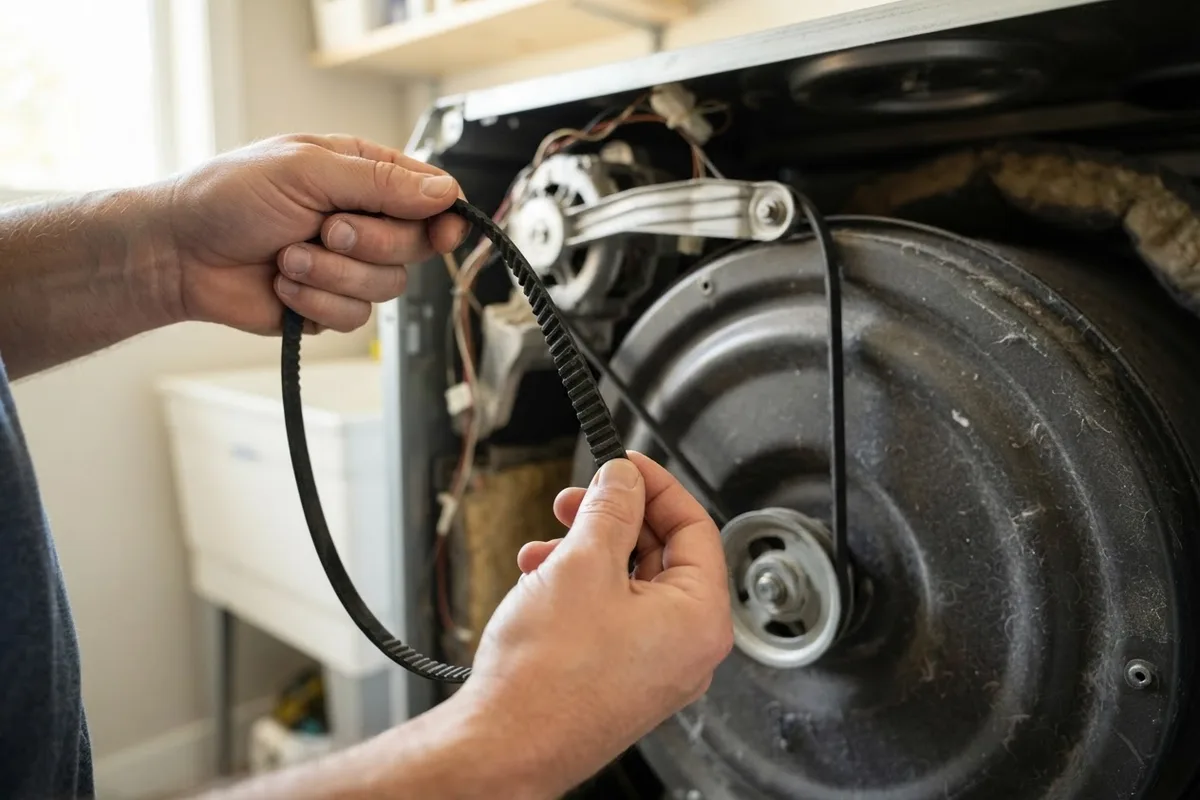
The drive belt is a long, narrow piece of rubber that wraps all the way around the dryer drum, the idler pulley, and the drive motor. Over time, this belt can become brittle, fray, slip off, or snap completely. If the motor is running but the dryer is not spinning, a broken drive belt is the most likely culprit.
How to inspect it:
- Unplug the dryer and carefully pull it away from the wall. Shut off the gas valve if applicable.
- Depending on your dryer model, you will need to remove the top panel or the front panel to access the drum. Refer to your manufacturer's guide for panel removal.
- Look for the black rubber belt wrapped around the middle of the drum. If the belt is hanging loose, shredded, or lying at the bottom of the dryer cabinet, it must be replaced.
- Another quick way to test this without full disassembly is to try turning the dryer drum manually while the dryer is unplugged. If the drum spins very easily with almost no resistance, the belt is likely snapped. A properly connected belt will create noticeable resistance when you try to turn the drum by hand.
3. Examine the Idler Pulley
The idler pulley is a small, spring-loaded wheel that maintains proper tension on the drive belt. It prevents the belt from slipping off the drum or motor shaft. If the idler pulley gets stuck, wears out, or its bearings fail, it can cause the drive belt to slip or snap, resulting in a dryer not spinning.
How to inspect it:
- With the dryer unplugged and the main panels removed, locate the idler pulley near the drive motor at the bottom of the cabinet.
- Check the pulley wheel for wear, melting, or buildup of lint and debris.
- Try to spin the idler pulley wheel with your hand. It should spin smoothly and freely on its bracket.
- If the pulley is stuck, wobbly, squeaks loudly when turned, or shows signs of heat damage, it needs to be replaced. A failing idler pulley often emits a high-pitched squeaking or screeching noise before it completely stops the drum from turning.
4. Test the Drum Rollers and Axles
Most clothes dryers rely on two or more drum rollers located at the rear (and sometimes front) of the cabinet to support the weight of the spinning drum. Over years of use, these rollers can wear down, lose their lubrication, or become gummed up with lint and hair. When the rollers fail, they create too much friction, preventing the drum from turning and potentially straining the motor.
How to inspect them:
- Ensure the dryer is unplugged and disassembled enough to access the drum rollers. In many models, you must remove the drum entirely to inspect the rear rollers.
- Locate the rollers (small wheels) mounted on metal axles.
- Remove the drive belt from the motor and try to spin each roller by hand. They should spin easily and quietly.
- If a roller is difficult to turn, wobbles on its axle, or makes a rough, grinding noise, the rollers and their axles should be replaced. It is best practice to replace all drum rollers at the same time, even if only one is visibly worn, to ensure even wear and smooth operation. If your dryer has no power at all, read our guide on what to do when your dryer won't start.
5. Check the Drum Support Bearings
Depending on the design of your dryer, the drum is supported either by a center rear spindle with a ball-and-socket bearing or by plastic glides/slides along the front and rear rims. If these bearings or glides wear out, the drum will sag, creating immense friction that can stop it from spinning entirely.
How to inspect them:
- With the dryer unplugged and disassembled, inspect the rear drum support bearing or the perimeter glides.
- Look for signs of severe wear, torn plastic glides, metal-on-metal grinding, or missing pieces.
- If your dryer uses a rear bearing, check for rust, lack of lubrication, or physical damage to the bearing ball and socket.
- If your dryer uses drum slides or glides (usually found on the front bulkhead or drum rim), check if they are worn down to the metal or completely missing.
- If you try to turn the drum manually (with the belt removed) and it takes massive effort or makes a loud screeching noise, worn bearings or glides are likely the problem and must be replaced.
6. Inspect the Drive Motor and Blower Wheel
The drive motor is the heart of your dryer, responsible for turning both the drum and the blower wheel that circulates hot air. If you have checked the door switch, belt, pulleys, rollers, and bearings, and the dryer still will not spin, the drive motor may be burned out or the blower wheel may be jammed.
How to inspect them:
- Ensure the dryer is unplugged and shut off from gas/electricity.
- Listen closely to the dryer when you try to start a cycle. If you hear a distinct humming sound but the drum does not move, the motor may be under tension but unable to turn, or it may have a failed start winding.
- Check the blower wheel (typically located at the bottom of the dryer near the exhaust). Remove the blower housing cover and inspect for any obstructions like stray socks, small garments, or heavy lint buildup that might be jamming the wheel.
- If the blower wheel is clear and turns freely by hand, but the motor only hums or does not respond at all when the door switch is engaged, the drive motor itself may have failed and will require replacement.
Dryer Not Spinning Quick-Reference Guide
| Component | Common Sign of Failure | DIY Difficulty | Repair or Replace? |
|---|---|---|---|
| Door Switch | No click when door closes; dryer silent | Easy | Replace switch |
| Drive Belt | Drum spins too freely by hand; motor runs | Medium | Replace belt |
| Idler Pulley | Squeaking noise before drum stops; worn wheel | Medium | Replace pulley |
| Drum Rollers | Thumping or rumbling noise; drum hard to turn | Hard | Replace rollers & axles |
| Drum Bearings | Screeching/grinding noise; drum stuck | Hard | Replace bearings/glides |
| Drive Motor | Loud hum but no movement; blower wheel jammed | Hard | Call a pro |
When to Call a Pro
While many dryer not spinning issues can be diagnosed with a little patience, basic tools, and safety precautions, some repairs require advanced assembly and technical skill. If your diagnosis points to a failed drive motor, complex drum bearing replacements, or if you simply prefer not to disassemble your appliance, it is time to seek expert help.
Remember, you should always stop and call a professional for any work involving gas lines, internal electrical wiring, or if you are unsure of any step in the process. The cost of replacement parts like belts or pulleys is generally low, ranging from $10 to $50, though overall repair costs vary by area and model.
True Appliance Repair can match you with a local pro for washer and dryer repair services. If you need help getting your laundry room back in order, True Appliance Repair can connect you with a qualified, local technician who can safely and efficiently complete the repair.
FAQ
Why is my dryer making a noise but not spinning?
If your dryer is humming, clicking, or squeaking but the drum is not spinning, it usually points to a broken drive belt, a seized idler pulley, or worn drum rollers. It could also mean the drive motor is receiving power but cannot turn because it is burned out or the drum is physically jammed by an obstruction in the blower wheel.
How do I know if my dryer belt is broken?
The easiest way to check for a broken dryer belt without opening the cabinet is to try turning the drum manually while the dryer is unplugged. If the drum spins very easily with almost no resistance, the belt has likely snapped or slipped off. If you feel normal resistance, the belt may still be intact.
Can overloading a dryer cause it to stop spinning?
Yes, consistently overloading your dryer can strain the drive belt, idler pulley, and drive motor, eventually causing them to fail. The excessive weight can also wear out the drum rollers and bearings prematurely. Always follow the manufacturer's capacity guidelines for your specific model to extend its lifespan.
Is it worth fixing a dryer that won't spin?
In many cases, yes. Fixes like replacing a door switch, drive belt, or idler pulley are relatively inexpensive and can extend the life of your dryer by several years. However, if your dryer is very old and requires a new drive motor or extensive drum bearing replacements, you might want to compare the total repair cost against the price of a new unit.