
One week your lettuce turns into a frozen brick, and the next your milk feels barely cool. A refrigerator that swings between warm spells and icy blasts wastes groceries and forces the compressor to work overtime—especially during busy holiday cooking or shifting winter room temperatures. Follow these six safe DIY checks to pinpoint why your fridge temperature is fluctuating and get your cooling steady again.
1. Check Actual Temps With a Fridge Thermometer
Built-in refrigerator dials and digital displays can drift over time, making it hard to tell whether your cooling is truly swinging or the readout is off. Confirm the real temperature before changing any parts.
- Place a standalone refrigerator thermometer in a glass of water on the center shelf—water reflects food temperature better than open air.
- Leave the door closed for at least four to six hours, then record the reading.
- Check again the next morning and evening to track highs and lows.
- Set the fresh-food compartment between 37°F and 40°F and the freezer near 0°F.
Small swings of two to four degrees are normal during defrost cycles. Drops below 33°F or spikes above 42°F point to an airflow, seal, or sensor issue that needs attention.
2. Clear Blocked Air Vents and Balance Shelf Loads
Cold air travels from the freezer into the refrigerator through small vents along the rear or top wall. Blocking those vents—or running a nearly empty fridge—creates uneven hot and cold pockets that trigger erratic cooling cycles.
- Pull milk jugs, tall pitchers, and holiday leftovers at least two inches away from rear air vents and temperature sensors.
- Aim to keep shelves roughly two-thirds to three-quarters full so chilled items help stabilize interior temperatures when the door opens.
- Cool hot soup pots and baked dishes to room temperature before putting them inside, since steam and heat force long compressor runs.
- Check crisper humidity sliders so produce drawers stay balanced without trapping excess cold.
Poor airflow is also a leading reason you may see your fridge spoiling food fast, so a five-minute shelf reorganization often solves both problems at once.
3. Inspect and Clean the Door Gaskets
A sticky, cracked, or warped rubber door seal lets warm kitchen air seep inside all day. Each leak raises the interior temperature, prompting the compressor to blast cold air to catch up and creating a frustrating warm-then-freezing cycle.
- Slide a dollar bill halfway into the closed door and gently pull it out; if it slips freely with no resistance, that section is leaking air.
- Repeat the test along the top, sides, and bottom of both the fridge and freezer doors.
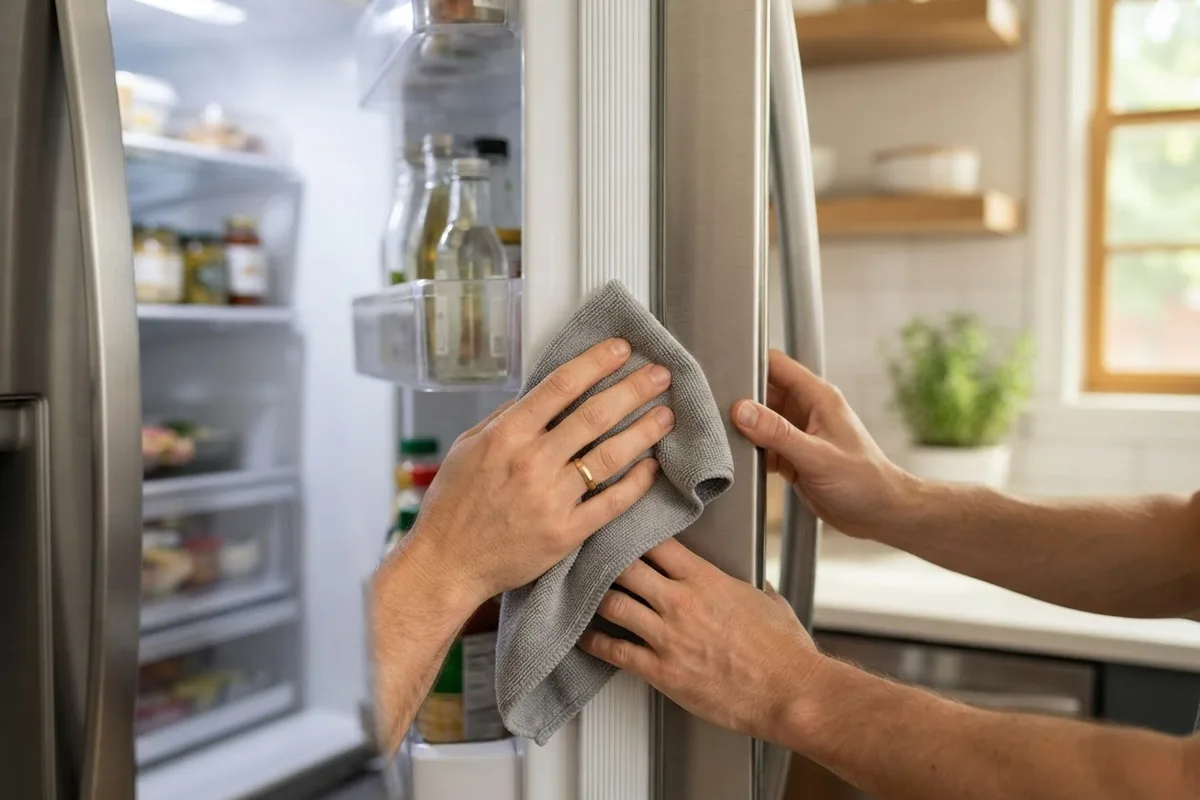
- Scrub the rubber folds with warm water and mild dish soap using a microfiber cloth, then dry completely so crumbs and spills do not hold the door ajar.
- Inspect the hinges and front leveling legs so the doors swing shut cleanly on their own.
If the rubber gasket is torn or brittle, replacing the seal stops air leaks and steadies internal temperatures.
4. Vacuum Dusty Condenser Coils and Check Clearance
Condenser coils release heat pulled from inside your refrigerator. When dust, pet hair, and kitchen grease blanket those coils, heat cannot escape efficiently, causing the fridge to overheat, shut down early on thermal protection, and swing wildly in temperature.
- Unplug the refrigerator from the wall outlet before doing any hands-on work.
- If your fridge has an ice maker or water dispenser, turn off the water shut-off valve behind or under the cabinet before rolling the unit forward so the supply line does not kink or tear.
- Remove the bottom toe grille or rear lower access panel to expose the coils.
- Use a coil brush and a vacuum crevice tool to gently remove lint and dust from the coils and around the condenser fan blade.
- Reinstall the panel, restore water and power, and leave one to two inches of airflow clearance behind the fridge.
5. Check Evaporator Vents for Hidden Frost Buildup
Modern frost-free refrigerators rely on an automatic defrost system to keep the hidden evaporator coils behind the freezer wall clear. When that system struggles, ice builds up and chokes airflow, leaving the fridge warm until the ice partially melts and lets a burst of cold air rush through.
- Open the freezer and look closely at the back interior panel for thick frost, snow-like buildup, or ice blocking the vents.
- Listen for the evaporator fan running smoothly when the door switch is pressed; silence or grinding noises suggest a fan or ice-obstruction issue.
- If you spot heavy ice, unplug the refrigerator, shut off the water supply, move food to coolers, and leave the doors open with towels underneath for 12 to 24 hours to defrost completely.
If ice returns within a week or two, review our guide on why a freezer frosts up and plan to have the defrost components tested.
6. Reset the Control Board and Check Ambient Temps
Electronic control boards and internal temperature sensors can fall out of sync after a brief power flicker, while extreme room temperatures can fool a thermostat into running too rarely or too hard.
- Unplug the refrigerator for five full minutes to perform a safe hard reset, then plug it back in and verify your target temperature settings.
- Check the room temperature around the appliance; most standard kitchen refrigerators are built to operate reliably in indoor spaces between roughly 55°F and 100°F, though exact ranges vary by model.
- Move the unit away from direct radiator heat, sunny windows, or unheated garage walls where winter cold snaps can shut down the compressor early.
- Allow a full 24 hours after any reset or setting change before judging the new temperature reading.
Keeping the kitchen environment steady helps the sensor read interior air accurately without false cycles.
Quick Reference: Fridge Temperature Swing Causes
| Symptom | Most Likely Cause | Safe First Step |
|---|---|---|
| Warm afternoons, cold mornings | Frequent door openings or weak door seal | Run the dollar-bill gasket test and clean seals |
| Freezing near back wall, warm door | Blocked rear air vents or overpacked shelves | Clear 2 inches around vents and rebalance loads |
| Gradual warming over several days | Heavy frost on evaporator coils or dirty condenser coils | Check rear freezer wall for frost and vacuum coils |
| Random swings after a power blink | Glitched electronic control board | Unplug for 5 minutes to reset and recheck in 24 hours |
| Wild swings in a chilly winter garage | Ambient room temperature outside operating range | Verify model's minimum room temp or add a garage kit if supported |
When to Call a Pro
If your refrigerator still swings more than five degrees after clearing vents, cleaning seals, vacuuming coils, and resetting the controls, an internal part is likely failing. Common culprits include a drifting thermistor (temperature sensor), a sticking air damper door between the freezer and fridge, a faulty defrost heater or thermostat, a weakening compressor start relay, or a failing main control board.
Stop DIY troubleshooting and call an appliance technician for any sealed-system refrigerant issue, compressor failure, internal electrical diagnostics, or breaker and electrical panel problems. Never attempt to cut into refrigerant tubing or test live high-voltage circuits yourself.
Typical US refrigerator repair costs vary widely by area, brand, and model. Replacing a thermistor, damper, or defrost component often falls in the $150 to $350 range, while main control board or sealed-system repairs commonly run $300 to $800 or more. If your fridge is over 10 to 12 years old and faces a major compressor repair, comparing repair quotes against replacement cost makes sense. When you are ready for hands-on diagnostics, True Appliance Repair can connect you with an independent local technician through our refrigerator repair service.
FAQ
How much temperature fluctuation is normal in a refrigerator?
A healthy refrigerator typically fluctuates by about two to four degrees Fahrenheit as the compressor cycles on and off and runs periodic defrost cycles. Swings wider than five degrees—especially readings that dip below 33°F or climb above 42°F—usually signal blocked airflow, a worn gasket, or a failing sensor.
Why does my fridge freeze food at night and feel warm during the day?
Daytime door openings and warm room air push the interior temperature up, forcing the compressor into long cooling runs. Once the kitchen quiets down overnight and the door stays shut, a sticking air damper, blocked vent, or drifting thermostat can keep pumping cold air until items near the back wall freeze.
Can a faulty thermistor make a refrigerator swing between hot and cold?
Yes. The thermistor monitors interior air temperature and signals the control board when to turn the compressor and damper on or off. When a thermistor starts sending erratic readings, the fridge may overcool one hour and fail to kick on the next.
How long should a fridge take to stabilize after adjusting the temperature?
Give your refrigerator at least 24 hours to reach and hold a new temperature setting. Adjusting the dial or digital control repeatedly within a few hours often triggers overcorrections that make temperature swings feel worse than they are.