
A gap in your oven door lets precious heat escape into your kitchen, leading to undercooked dinners, skyrocketing energy bills, and melted control knobs. When an oven door refuses to shut flush against the frame, the problem usually stems from a worn seal, stuck hinges, or a misaligned latch mechanism. With a few simple tools and basic troubleshooting, you can get your door sealing tight again before your next baking session.
1. Inspect and Reseat the Oven Door Gasket
The rubber or woven fiberglass gasket running along the perimeter of the oven cavity creates an airtight seal that traps heat inside. Over time, food spills, repeated opening, and high cooking temperatures cause the gasket to harden, tear, or pull loose from its mounting channel. When the seal bunches up in one corner, it creates a physical barrier that stops the door from closing completely.
- Let the oven cool completely, then disconnect power at the circuit breaker.
- Inspect the rubber or silicone seal along the front frame and inside door edge for rips, flattened sections, or baked-on grease.
- Feel along the channel to see if the gasket has slipped out of its mounting clips or groove.
- Gently press loose sections back into their track using your fingers or a flat wooden craft stick.
- If the gasket is stiff, cracked, or fraying, pull the old seal out of the retaining clips and press a manufacturer-matched replacement into place starting at the top center.
2. Clean Around the Door Frame and Hinges
Grease splatters, charred crumbs, and caramelized sugar can accumulate in the narrow gaps around the bottom door frame and hinge pockets. Even a small buildup of hardened debris can wedge the hinge mechanism open by just a fraction of an inch, preventing the door from pulling flush against the front chassis.
- Open the door fully to expose the bottom edge and hinge wells.
- Make a paste using warm water and baking soda to soften hardened grease without scratching the enamel.
- Use an old toothbrush or a soft nylon detailing brush to scrub out the hinge pockets, latch openings, and lower frame corners.
- Wipe away residue with a damp microfiber cloth and dry thoroughly with a towel.
- Test the swing to verify that the hinge arms pivot freely into their slots without resistance.
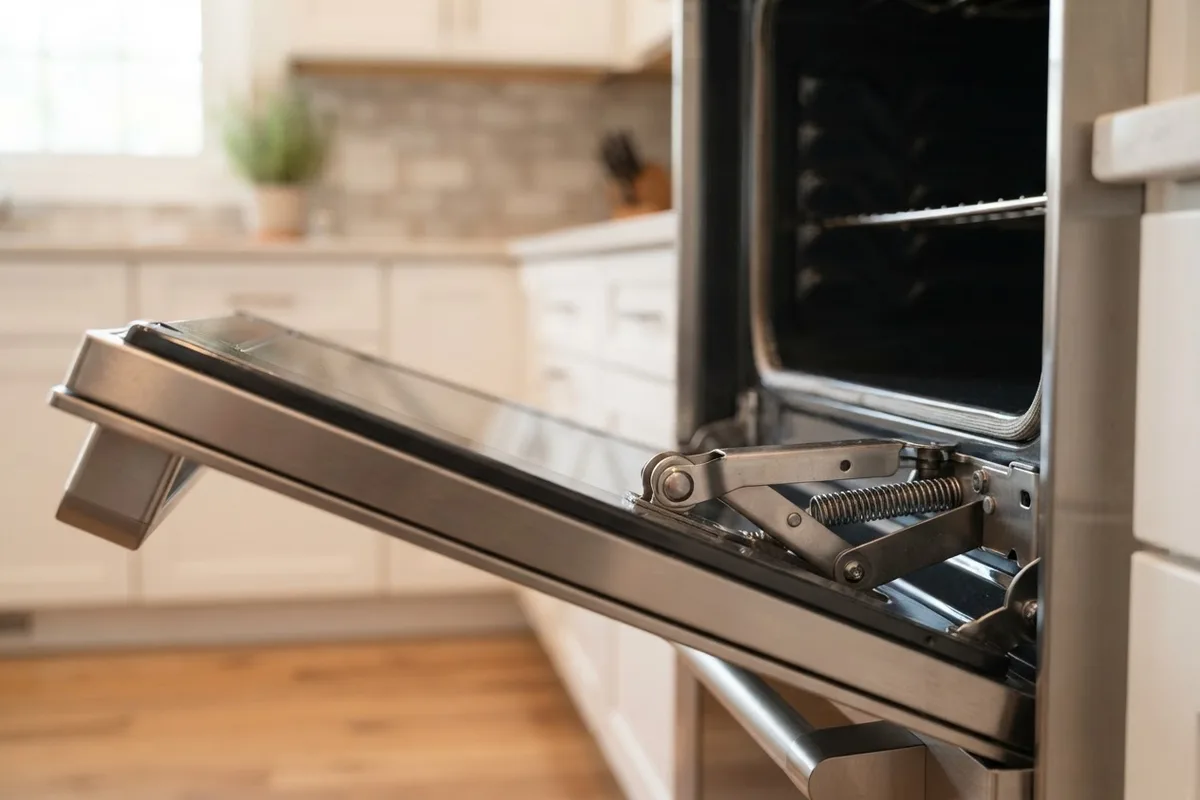
3. Realink or Reset the Removable Door Hinges
Most modern ovens feature removable doors that lift out for easy cleaning. If someone bumped or cleaned the door recently, the hinge brackets may have slipped out of their locking receivers in the oven frame. When one hinge sits slightly higher than the other, the door hangs crooked and leaves an obvious gap at the top corner.
- Open the oven door to its full horizontal position.
- Locate the small metal hinge locking tabs on both sides near the hinge pivot points.
- Flip the locking levers upward into the release position using your thumb or a flathead screwdriver.
- Grasp the sides of the door firmly, raise it to about a 45-degree angle, and lift straight up to unhook it from the chassis.
- Realign both hinge arms simultaneously, slide them back down into the frame slots at a 45-degree angle until they seat firmly, push the door open flat, and flip the locking tabs down to secure them.
4. Replace Worn or Broken Hinge Springs
Oven doors rely on heavy-duty internal tension springs or integrated hinge assemblies to pull the door firmly against the gasket. Over years of daily cooking, these springs stretch out, snap, or lose their tension, resulting in a door that drops slightly open or refuses to stay closed without manual pressure.
| Issue Sign | Likely Component | Typical Action Required |
|---|---|---|
| Door sags at top corner | Misaligned hinge arm | Reseat door in chassis slots |
| Door falls open easily | Broken hinge spring | Replace hinge assembly pair |
| Heat escapes around edges | Flattened gasket seal | Push seal in track or replace |
| Door bounces back open | Stuck latch or strike | Clean and adjust latch lock |
- Disconnect the oven power supply and verify the unit is cool.
- Remove the door from the oven frame as outlined in the previous step.
- Place the door face-down on a soft towel on a sturdy table to protect the outer glass.
- Remove the screws holding the inner and outer door panels together to access the internal hinge mechanisms.
- Unbolt the worn hinge assemblies and install matching replacements on both sides to maintain balanced closing tension.
5. Adjust or Free a Stuck Door Latch
Ovens equipped with self-cleaning cycles use a motorized or mechanical latch mechanism at the top center of the door frame. If the latch becomes jammed during a cycle or knocked out of alignment, the metal hook can catch on the door trim before the door shuts all the way. This issue frequently causes uneven baking results and can prevent the oven from starting.
- Check the motorized latch hook at the top edge of the oven cavity to ensure it rests in the open, unlocked position.
- If the latch is stuck closed, perform an electronic reset by switching off the oven's circuit breaker for five minutes.
- Restore power to allow the latch motor to cycle back to its home position automatically.
- Check the strike plate on the door itself to make sure the mounting screws have not worked loose.
- Tighten the strike plate screws so the latch pin glides smoothly into the receiver opening without catching.
When to Call a Pro
Basic maintenance like replacing a rubber gasket, clearing hinge debris, or reseating a door takes less than an hour and requires only common hand tools. However, if your oven frame is warped, the internal chassis hinge receivers are stripped, or the motorized self-clean latch motor is mechanically seized, professional diagnostics are the safest route.
Working with internal electrical wiring or gas line connections near the oven cabinet requires specialized tools and expertise. When you want quick, dependable help restoring your kitchen, oven and stove repair services can quickly solve structural alignment problems. If an older unit has compounding mechanical failures, understanding when to repair vs replace appliances will help you make the best financial choice. True Appliance Repair can match you with a local appliance pro to get your oven working safely and efficiently.
FAQ
Can a loose oven door increase my electric or gas bill?
Yes, significantly. When an oven door does not seal tightly, the heating elements or burners must run constantly to maintain your set baking temperature. This constant heat loss wastes energy, heats up your living space, and places extra strain on internal components.
Why does my oven door pop open while baking?
An oven door usually pops open when the hinge springs lose tension or when thermal expansion shifts a misaligned hinge bracket. As heat builds inside the cavity, the expanding air pushes against weak hinges that lack sufficient spring resistance to keep the door sealed.
Is it safe to use an oven if the door doesn't close completely?
No, cooking with a gap in your oven door is a safety hazard. Escaping heat can scorch cabinets, melt control dials, ruin electronic control boards, and cause severe burn injuries if hands come in contact with the top venting area.
How do I know if my oven hinges need replacement?
If the door drops down abruptly when unlatched, feels loose on its pivot points, or leaves a visible gap at the top while fully seated, the internal springs or hinge pivots are worn and require replacement in pairs.