
Finding puddles of water under your produce or water droplets on your fridge walls is always frustrating. When your refrigerator is sweating inside, it is more than just a minor annoyance. Excess condensation can lead to spoiled food, mold growth, and wasted energy. Fortunately, you can fix most causes of fridge condensation yourself with just a few basic tools and a little bit of time.
Safety first: Before performing any hands-on maintenance or checking internal components, always unplug your refrigerator from the wall outlet and shut off its water supply line. For your safety, stop and call a professional for any issues involving the gas lines, sealed refrigerant systems, or the main electrical panel.
Here are 6 easy DIY fixes to stop your refrigerator from sweating inside and keep your food fresh.
1. Check and Clean the Door Gaskets
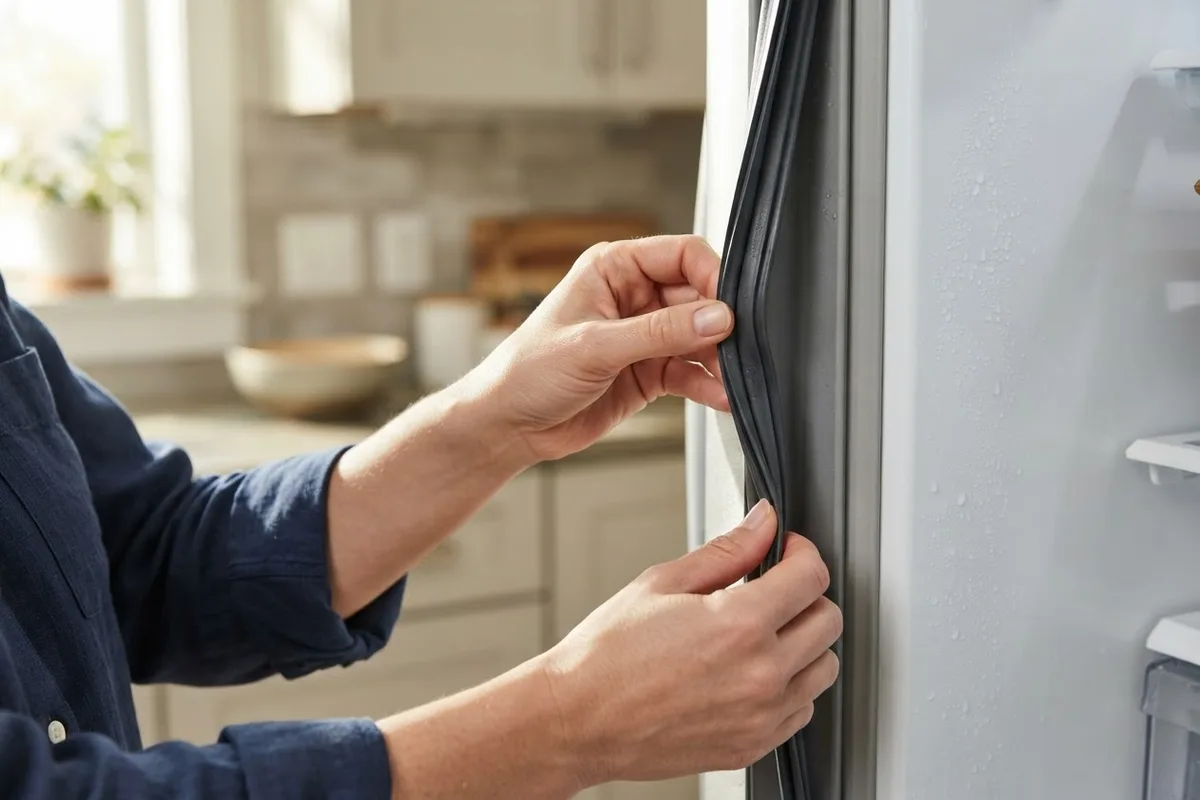
The most common cause of a refrigerator sweating inside is a faulty or dirty door gasket. The gasket is the rubber seal that runs along the edge of your fridge and freezer doors. When this seal is damaged or dirty, warm, humid ambient air from your kitchen leaks into the cool refrigerator. As the warm air meets the cold interior, it creates condensation, much like a cold drink on a hot day.
To address this, follow these steps:
- Inspect the rubber gasket all the way around the door for any visible tears, cracks, or gaps. If you notice significant damage, you will need to replace the seal. You can learn more about identifying and addressing this issue in this guide on what to do when your refrigerator door gasket is torn.
- If the gasket looks intact but dirty, mix warm water with a few drops of mild dish soap. Use a soft cloth to thoroughly wipe down the gasket, removing any food particles, sticky spills, or debris.
- Wipe the gasket dry with a clean towel.
- To check the seal's effectiveness, perform the dollar bill test. Close the refrigerator door on a dollar bill so that half of it sticks out. Gently pull the bill. If it comes out easily without any resistance, your gasket is not sealing properly and needs to be replaced.
2. Inspect and Unclog the Defrost Drain
Your refrigerator has a defrost drain system designed to collect and divert excess moisture and frost melt away from the interior compartment. If this drain becomes clogged with debris, food particles, or ice, the water has nowhere to go and will eventually back up, overflowing into the bottom of your fridge and causing ambient humidity levels to skyrocket. This often manifests as water droplets on the walls and puddles under the crisper drawers.
To fix a clogged defrost drain, follow these steps:
- Locate the defrost drain hole. It is typically found at the bottom back wall of your refrigerator compartment or behind a panel in the freezer section. Consult your owner's manual if you cannot find it.
- Clear any visible debris or ice away from the drain hole using a small, soft brush or a piece of flexible wire. Be careful not to puncture any internal components.
- Mix a solution of warm water and a tablespoon of baking soda. Using a turkey baster or a small funnel, slowly flush the warm water solution down the drain hole.
- You should hear water trickling down into the drain pan below the refrigerator. Continue flushing until the water runs clearly and freely. For more detailed instructions on this process, see this article on how to unclog a refrigerator defrost drain.
3. Adjust the Refrigerator Temperature Settings
Sometimes, a refrigerator sweating inside is simply a matter of incorrect temperature settings. If your refrigerator is set too cold, the interior surfaces become extremely cold. Every time you open the door, the rush of warm kitchen air hits those freezing surfaces, causing immediate condensation. Conversely, if the fridge is too warm, moisture cannot effectively be removed from the air.
To optimize your temperature settings:
- Check your refrigerator's internal thermometer. The ideal temperature for a fresh food compartment is between 37°F and 40°F (3°C to 4°C). The freezer should be set to exactly 0°F (-18°C).
- If your fridge does not have a digital display, use a standalone appliance thermometer placed in a glass of water on the middle shelf to get an accurate reading.
- Adjust the temperature dials accordingly. Make small adjustments and wait 24 hours for the temperature to stabilize before checking again.
- Avoid frequently adjusting the temperature, as this can confuse the appliance's control board and cause fluctuations. If you find your fridge is still struggling to maintain consistency, review this guide on refrigerator temperature fluctuating for more solutions.
4. Organize Food to Improve Airflow
Proper airflow is essential for moisture control inside your refrigerator. If your fridge is packed too tightly, or if large items are blocking the internal vents, cool air cannot circulate effectively. This creates uneven temperature zones and pockets of trapped, humid air, leading to a refrigerator sweating inside. Furthermore, placing hot or warm food directly into the fridge introduces a significant amount of moisture and heat, which immediately condenses on the cold walls and shelves.
To improve airflow and reduce moisture:
- Ensure there is at least an inch of space between food items and the interior walls of the refrigerator.
- Locate the air vents (usually on the back wall of the freezer and fridge compartments) and make sure no large containers, milk jugs, or boxes are blocking them.
- Adopt good fridge organization habits. Store items loosely so air can move freely between them.
- Never put hot leftovers directly into the refrigerator. Allow warm foods to cool to room temperature on the counter before placing them in airtight containers and storing them in the fridge.
- Consider using moisture-absorbing crisper drawer liners to help manage humidity around fresh produce.
5. Examine the Door Closure and Hinges
Even if your door gaskets are in perfect condition, your refrigerator may still be sweating inside if the doors are not closing properly. Loose hinges, an unlevel refrigerator, or doors that are slightly misaligned can allow a constant stream of warm ambient air to enter the appliance. This constant exchange of air forces the refrigerator to work harder, increasing energy use and creating a breeding ground for condensation.
To inspect and adjust the door closure:
- Check if your refrigerator is level. Place a carpenter's level on top of the appliance. A refrigerator should actually tilt very slightly toward the back. This slight backward tilt helps the doors swing shut automatically under their own weight.
- If it is not level, you can adjust the leveling legs at the bottom front of the refrigerator. Use a wrench to extend or retract the legs until the fridge is properly positioned.
- Inspect the door hinges at the top and bottom. Ensure the screws are tight and there are no signs of wear or damage. If a hinge is bent or loose, tighten the screws or replace the hardware.
- Check the door alignment. The doors should be flush with each other and with the refrigerator frame. If they are sagging, you may need to adjust the hinge brackets or add hinge spacers, following the manufacturer's guidelines.
6. Monitor Ambient Kitchen Humidity
The environment outside your refrigerator plays a major role in how much it sweats inside. If your kitchen is naturally very humid—perhaps due to frequent cooking, running a dishwasher, or living in a warm, coastal climate—your refrigerator will be more prone to internal condensation. Additionally, some refrigerators feature an "Energy Saver" or "Anti-Sweat" switch. While the energy saver mode reduces electricity use by turning off internal heaters around the door frame, it can actually cause the refrigerator to sweat inside when kitchen humidity is high.
To manage the ambient environment:
- Use a kitchen exhaust fan while cooking or running the dishwasher to vent steam and humid air outdoors.
- Consider placing a dehumidifier in or near your kitchen if your home consistently has high humidity levels (above 50%).
- If your refrigerator has an "Energy Saver" mode, look for the switch (often located near the top of the fridge interior or on the control panel) and turn it OFF during humid months. Turning it off activates small, low-wattage heaters along the door frame that prevent exterior and interior condensation.
- Ensure your refrigerator has adequate clearance around the outside (top, sides, and back) as recommended by the manufacturer. This allows the compressor and condenser coils to shed heat efficiently, which helps regulate internal temperatures and humidity.
Quick Reference: Fridge Condensation Troubleshooting Table
| Symptom / Area | Likely Cause | DIY Fix | Difficulty |
|---|---|---|---|
| Water droplets on walls | Poor airflow or bad gasket | Reorganize fridge; clean door gasket | Easy |
| Puddles under crisper drawers | Clogged defrost drain | Flush drain with warm water | Moderate |
| Condensation on all shelves | Temp set too cold/warm | Adjust thermometer to 37°F - 40°F | Easy |
| Moisture near door seal | Damaged or dirty gasket | Clean gasket or replace it | Easy |
| Wet spots near air vents | Blocked vents | Move large items away from vents | Easy |
| Constant internal humidity | High kitchen humidity | Use kitchen exhaust; turn off Energy Saver mode | Easy |
When to Call a Pro
While the 6 fixes outlined above will resolve the majority of instances where a refrigerator is sweating inside, some issues require advanced diagnostic equipment and expertise. If you have thoroughly checked your door gaskets, cleared the defrost drain, adjusted the temperatures, and optimized airflow, but your fridge continues to build up heavy condensation, there may be an underlying mechanical failure.
Typical repair costs for advanced refrigerator issues generally range from $200 to $600, though this varies by area and your specific appliance model. You should stop and call a professional technician if you suspect any of the following:
- A failing thermostat, thermostat control board, or ambient temperature sensor.
- An issue with the sealed refrigerant system, such as a refrigerant leak or a failing compressor.
- Damaged or exposed wiring, or issues with the main electrical panel.
- A broken defrost heater, defrost timer, or terminator thermostat that requires electrical testing.
If you encounter complex electrical issues, a failing compressor, or sealed system problems, it is time to call in the experts. True Appliance Repair can match you with a local appliance pro to diagnose and repair your refrigerator safely. Attempting to fix advanced components like the compressor or refrigerant lines yourself can lead to further damage or safety hazards.
FAQ
Why is there water under my crisper drawers?
Water under your crisper drawers is almost always a sign of a clogged defrost drain. When the drain becomes blocked with debris or ice, water from the defrost cycle cannot flow into the drain pan beneath the fridge. Instead, it backs up and overflows into the bottom of the refrigerator compartment. For a complete guide on addressing this specific issue, see our article on water under refrigerator drawers.
Is it normal for a new fridge to have condensation inside?
It is common for a new refrigerator to experience temporary condensation during the first 24 to 48 hours after installation. Because the appliance starts at room temperature, it has to work hard to cool down, and any humid air trapped inside will condense on the cooling surfaces. However, if your new refrigerator continues to sweat inside after a few days of consistent use, you should check the door seals, temperature settings, and airflow, or contact the manufacturer.
How do I stop my fridge from sweating on the outside?
Sweating on the outside of a refrigerator, often called "sweating" or "sweating cabinets," occurs when warm, humid room air hits the cold exterior surfaces of the appliance. To stop exterior sweating, make sure your kitchen's ambient humidity is managed (use a dehumidifier or air conditioner). If your fridge has an "Energy Saver" or "Anti-Sweat" switch, turn it OFF. This will activate small internal frame heaters designed specifically to prevent exterior condensation. Additionally, check that your door gaskets are sealing properly, as cold air leaking out can cool the exterior frame and trigger sweating.
Can a dirty condenser coil cause fridge sweating?
Yes, dirty condenser coils can indirectly cause your refrigerator to sweat inside. The condenser coils are responsible for releasing heat from the refrigerator. When they are coated in dust, pet hair, and grime, the refrigerator cannot shed heat efficiently. This forces the compressor to run longer and harder to maintain cool temperatures, which can lead to uneven cooling, temperature fluctuations, and increased internal condensation. We recommend cleaning your refrigerator's condenser coils at least once every six months using a coil brush and vacuum.