
Pulling greasy towels or heavy winter bedding out of a cold wash cycle is frustrating, especially when you selected the hot setting. A washer not getting hot water usually comes down to a restricted supply line, a clogged mesh screen, an energy-saving setting, or a failing inlet valve. Before assuming the worst, walk through these six safe DIY checks to pinpoint the cause and get hot water flowing again.
1. Check the Hot Water Supply Valve and Hose
Before touching anything behind your machine, unplug the washing machine from the wall outlet and keep a dry towel nearby. Restricted water flow from a partly closed shut-off valve or pinched hose is one of the simplest reasons hot water never reaches the drum.
- Slide the washing machine forward a few inches so you can clearly see the wall connections.
- Locate the hot water shut-off valve, which is typically on the left side or marked with a red handle.
- Turn the handle counterclockwise until it stops to confirm the valve is fully open.
- Trace the full length of the hot water supply hose from the wall to the back of the washer, feeling for kinks, sharp bends, or crushing caused by pushing the machine too close to the wall.
- Straighten any bends and leave at least four inches of clearance behind the cabinet when sliding the washer back.
If the braided hose looks bulging, rusted, or cracked, turn off the water valve and swap in a fresh stainless-steel braided hose before running another load.
2. Clean the Clogged Hot Water Inlet Screen
Hard water minerals, rust flakes, and sediment from your household pipes gradually collect on the tiny mesh filter tucked inside the hot water inlet port. When that screen clogs, cold water enters normally while hot water slows to a trickle.
- Unplug the washing machine and turn both the hot and cold wall supply valves completely off.
- Place a shallow bucket and an old towel under the back connections.
- Unscrew the hot water hose from the back of the washer using slip-joint pliers wrapped in a cloth to protect the fitting.
- Shine a flashlight into the inlet port and inspect the recessed mesh screen for chalky buildup or grit.
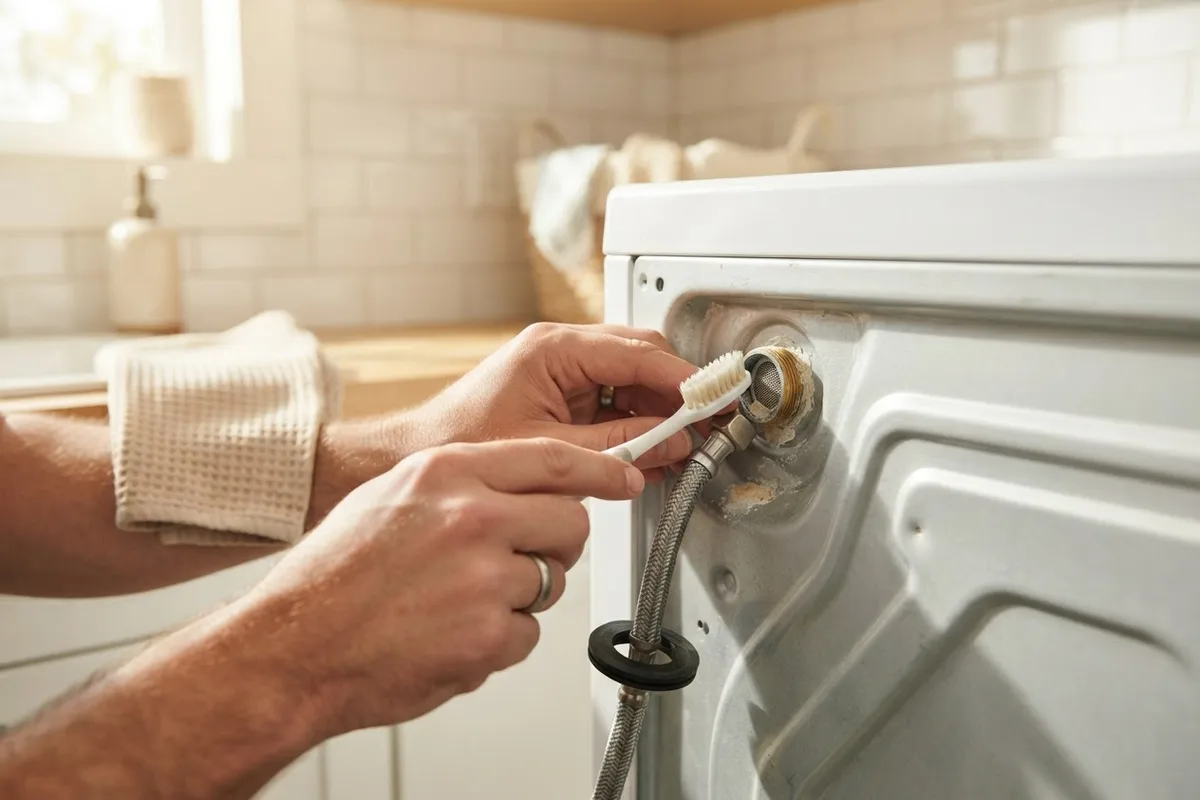
- Gently scrub the screen in place with a soft-bristled toothbrush and warm water, or lift it out carefully with needle-nose pliers if it is removable, then rinse it thoroughly.
Never discard the mesh screen or run the machine without it, as stray pipe debris can jam the internal valve seals and trigger a washing machine stopping mid-cycle. Reattach the hose snugly by hand plus a quarter turn with pliers, turn the water back on, and check for drips.
3. Verify Your Cycle Settings and Eco Mode
Modern high-efficiency washers often override a hot selection automatically to cut utility bills or protect delicate fabrics. What feels like a mechanical failure is frequently a built-in temperature cap or a cycle default.
- Review the active cycle on your control panel. Quick Wash, Delicates, Activewear, and Eco Warm cycles commonly blend cold water with hot or limit peak temperatures well below tap hot.
- Look for an Eco, Cold Boost, or Energy Saver toggle light and switch it off when testing.
- Select Heavy Duty, Whitest Whites, or Sanitize, set the temperature to Hot, and start a small test load.
- Keep in mind that many front-load and top-load machines intentionally begin filling with a splash of cold water to prevent protein stains from setting before introducing hot water.
- Check your load size as well; overloading blocks proper sensor readings and hampers water circulation, so sticking to proper washing machine loading habits helps the machine regulate temperature accurately.
Wait three to five minutes into the fill stage before opening the lid or feeling the glass door to judge the actual wash temperature.
4. Test Your Home Water Heater Temperature
When outdoor temperatures plunge in late fall and winter, incoming municipal or well water enters your plumbing significantly colder. If your water heater is turned down too low, or if your laundry room sits far from the tank, hot water may cool off in the pipes before the washer finishes filling.
- Walk to the sink closest to your laundry room and run the hot tap on full blast for two minutes.
- Hold a digital kitchen thermometer under the stream; most washing machines perform best when household hot water arrives around 120 degrees Fahrenheit.
- If the sink water stays lukewarm, the problem is your home plumbing or water heater rather than the washer.
- Flush the cold water sitting in a long laundry line by running the nearest utility sink hot tap for 30 seconds right before starting a hot wash cycle.
- If your water heater is electric or gas and fails to heat water across the whole house, stop there and call a plumber instead of adjusting gas valves or electrical elements yourself.
Insulating exposed hot water pipes in unheated basements or garages also reduces heat loss on the way to the laundry room.
5. Inspect for Swapped Hot and Cold Hoses
If you recently moved into a new home, replaced your hoses, or had flooring installed in the laundry room, the hot and cold supply lines may simply be reversed. When hoses are crossed, choosing Hot pulls straight from the cold pipe while choosing Cold pumps hot water into your darks.
- Unplug the washing machine and confirm both wall supply valves are closed before loosening any fittings.
- Check the labels stamped on the back panel of your washer—usually marked H for hot and C for cold—and follow each hose back to the wall.
- If you are unsure which wall spigot is hot, disconnect one hose, aim the open end into a five-gallon bucket, and crack the wall valve open briefly to feel the water temperature.
- Reconnect the confirmed hot wall spigot directly to the H inlet port on the washer and the cold spigot to the C port.
- Open both valves slowly, inspect for leaks, plug the washer back in, and run a brief hot fill test.
Swapped hoses can also confuse machines equipped with internal temperature sensors, causing unexpected error codes or unusually long fill times.
6. Spot a Failing Water Inlet Valve or Sensor
If hot water reaches the back of the machine with strong pressure yet the drum still fills cold, an internal component is likely at fault. Inside the cabinet, the water inlet valve uses electrically controlled solenoids to open the hot and cold channels on command, while a thermistor or temperature switch tells the control board how hot the incoming water is.
- Unplug the washer and turn off both water valves before inspecting any wiring harnesses.
- Listen closely during a normal hot fill test (with the machine plugged in and fully reassembled): a healthy hot solenoid emits a steady hum as water rushes in, whereas silence during a hot-only fill points to a burned-out coil.
- Check your display panel for flashing temperature or water-fill error codes and look up the exact code in your owner manual.
- Notice whether the drum fills very slowly on Warm and not at all on Hot, which strongly points to a failed hot inlet valve solenoid.
- If your washer includes an internal water heater element (common on front-load sanitize cycles), a tripped thermal fuse or defective thermistor can disable heating altogether.
Quick Symptom-to-Fix Reference
| What You Notice | Most Likely Cause | First Safe Check |
|---|---|---|
| Washer fills slowly on Hot, fast on Cold | Partly closed valve, kinked hose, or clogged inlet screen | Inspect hose, open valve fully, and clean mesh filter |
| Hot setting runs cold, Cold setting runs hot | Swapped hot and cold supply hoses | Trace hoses to wall spigots and swap connections |
| Water feels barely lukewarm on every setting | Eco mode active or cold incoming winter plumbing | Turn off Eco mode and test nearby sink tap temperature |
| No water enters on Hot, normal flow on Cold | Failed hot water inlet valve solenoid | Listen for solenoid hum and check display error codes |
| Sanitize cycle stays cool while tap water is hot | Faulty thermistor, heater element, or control board | Stop DIY disassembly and schedule a diagnostic check |
When to Call a Pro
Checking shut-off valves, cleaning mesh inlet screens, verifying hose placement, and adjusting cycle settings are safe, zero-cost steps any homeowner can handle. However, stop and bring in a technician if you need to open the cabinet to test live electrical components, replace an internal heating element, diagnose a main control board, or troubleshoot a gas water heater or breaker panel issue.
Typical US repair costs for replacing a washing machine water inlet valve or temperature sensor generally fall between $150 and $350 for parts and labor, while control board replacements can run $250 to $500, though exact pricing varies by area and machine model. When basic supply checks do not solve the problem, True Appliance Repair can match you with local washer and dryer repair pros who can pinpoint the failed part safely without guesswork.
FAQ
Does a washing machine heat its own water?
Most standard top-load washing machines rely entirely on your home water heater for hot water. Many front-load washers also draw from your home hot water line but include a small internal heating element to boost temperatures for Sanitize or Allergen cycles.
Why is my washing machine only filling with cold water on the warm setting?
On a Warm cycle, the machine blends both hot and cold water to hit a target temperature, often between 85 and 105 degrees Fahrenheit. If your hot supply valve is closed, the hot mesh screen is clogged, or the hot solenoid has failed, only the cold side enters the drum.
Can cold winter weather affect my washer water temperature?
Yes. Incoming groundwater drops significantly in winter, which forces your water heater to work harder and cools water sitting in uninsulated laundry room pipes. Running a nearby hot tap briefly before starting the wash clears cold water from the line.
Is it safe to run my washing machine if the hot water stops working?
Using cold water for everyday clothing will not damage your machine as long as there are no leaks or burning smells. Still, if you suspect a failed inlet valve or wiring issue—or if the washer stops mid-fill—unplug it and have a technician inspect it before running more loads.