
A washing machine is one of the hardest-working appliances in any home, quietly powering through hundreds of loads of laundry each year. However, like any major mechanical device, washers have a finite lifespan—typically lasting between 8 and 12 years under normal household use. Catching the early warning signs that your unit is failing can save your laundry room from severe water damage and prevent a sudden breakdown right when you need clean clothes the most.
Recognizing when a washer is nearing the end of its useful life allows you to plan ahead financially instead of scrambling during an emergency. Here are the seven clearest indicators that your washing machine is dying, along with actionable steps to troubleshoot the issues and decide on your next move.
1. Loud Grinding or Thrashing Noises During Spin
While every washing machine produces a hum during operation, loud grinding, squealing, or metal-on-metal thrashing noises during the spin cycle indicate serious mechanical distress. These harsh sounds typically mean the main tub bearings are worn out, the drive pulley is damaged, or the motor is failing under high torque loads.
To check your drum bearings safely:
- Press the power button to turn off the washer and unplug the power cord from the wall outlet.
- Open the door or lid and spin the inner drum manually by hand.
- Listen closely for a rough, rumbly, or grinding sound as the drum rotates.
If manual rotation feels gritty or noisy, the inner tub bearings have likely lost their lubrication due to a breached tub seal. Replacing tub bearings on an older machine is a labor-intensive repair that often approaches the cost of a brand-new unit.
2. Water Leaking onto the Laundry Room Floor
Puddles accumulating beneath or behind your washing machine should never be ignored. While a simple leak might stem from a loose supply hose, recurring water on the floor often points to a cracked outer tub, a compromised main shaft seal, or a cracked drain pump housing.
When inspecting a leaky washer, always prioritize safety:
- Unplug the machine from the electrical outlet immediately.
- Turn off the hot and cold water supply valves behind the appliance.
- Check the rubber inlet hoses for cracks or loose connections.
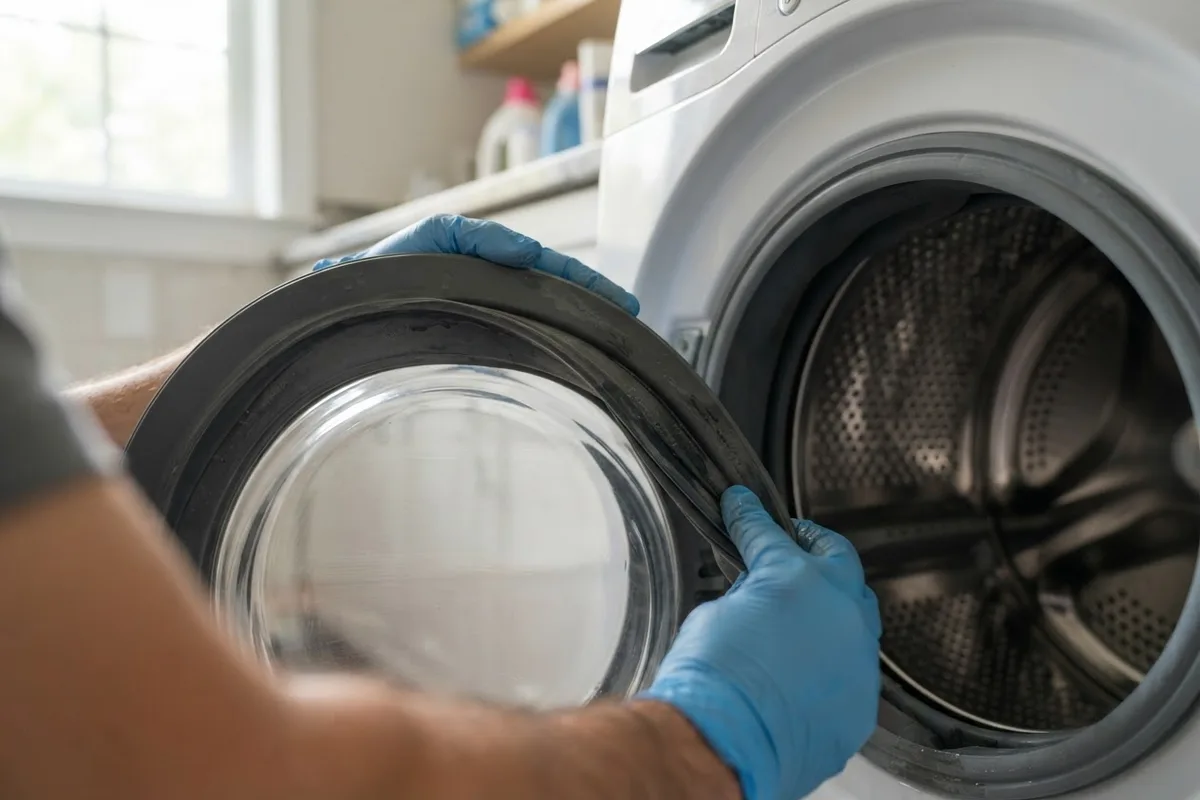
- Inspect the front door boot gasket if you own a front-load washer (see our guide on how to clean a front-load washer to check for hidden gasket tears).
If the hoses and door boot are intact, the leak is likely internal. Water leaking onto internal electrical components or structural frames causes severe rust and short circuits, making internal tub leaks a primary reason to consider replacing the unit.
3. The Drum Fails to Fill, Agitate, or Drain
When a washing machine repeatedly leaves clothes soaking wet or stops mid-cycle without completing its cycle steps, key internal drive components are slipping or failing. If the motor runs but the drum refuses to spin or agitate, the drive belt may have snapped, or the transmission coupler has stripped out.
Before assuming the machine is dead, perform these quick DIY checks:
- Disconnect power to the appliance before touching any internal parts.
- Inspect the drain hose for severe kinks or physical clogs.
- Clean out the drain pump filter located near the bottom front access panel on front-load models.
- Reset the machine by leaving it unplugged for 10 minutes, then re-plugging it and starting a simple drain-and-spin cycle.
If basic filter maintenance and resets fail to restore proper agitation or draining, the electronic control board or primary drive motor is likely failing. For more troubleshooting steps on common laundry breakdowns, review our guide on how to fix a washing machine.
4. Excessive Vibration or Machine Walking
It is normal for a washing machine to vibrate slightly during high-speed spin cycles, but severe shaking that causes the machine to walk across the laundry floor points to structural failure. When shock absorbers, suspension springs, or counterweights wear out, the heavy tub slams violently against the outer cabinet frame.
To address severe machine vibration:
- Unplug the machine and shut off water connections.
- Verify that all four leveling feet are resting firmly on the floor and locked with their retaining nuts.
- Ensure the laundry load is balanced inside the drum; avoid washing a single heavy blanket alone.
- Inspect the suspension rods on top-load models or shock absorbers on front-load models for signs of cracked plastic or leaking hydraulic fluid.
When the internal suspension framework degrades on an older washer, every spin cycle places massive stress on the motor and cabinet, rapidly accelerating the breakdown of the entire machine.
5. Foul Mildew Smells That Will Not Go Away
Persistent mold and mildew odors that remain despite deep cleaning cycles often signal an internal structural defect. Over years of use, soap scum, hair, and hard water minerals accumulate in the hidden space between the inner spin basket and the outer plastic tub.
When rubber seals deteriorate inside the machine's hidden plumbing, stagnant water settles in areas that cannot drain completely. This trapped moisture breeds bacterial bio-films that transfer unpleasant odors directly onto your clean laundry. If multiple deep cleaning treatments with specialized washing machine cleaner or vinegar fail to clear the smell, trapped moisture behind the outer tub structure has permanently compromised the appliance.
6. Constant Clothes Damage or Excess Lint
If your clothes consistently come out of the wash with mysterious small tears, pulled threads, or covered in thick lint residue, your washing machine drum is likely damaged. Over time, plastic agitator vanes can crack, exposing sharp plastic edges, or stainless steel drum perforations can develop subtle burrs that catch delicates.
Additionally, an aging drive clutch or failing motor speed sensor can cause the machine to shift gears violently, ripping delicate fabrics during agitation. When an appliance begins destroying expensive wardrobe items, continuing to run it becomes costly beyond just energy and repair bills.
7. Soaring Utility Bills and Frequent Breakdowns
An aging washing machine operates far less efficiently than modern units. As internal motors, pumps, and heating elements wear out, they pull significantly more electrical current to achieve the same mechanical output. Furthermore, an inefficient spin cycle leaves clothes dripping wet, forcing your clothes dryer to run twice as long and double your overall laundry energy consumption.
If you find yourself calling for repairs every few months or paying high monthly water and electric bills, the cumulative cost of keeping an old unit alive quickly surpasses the price of a modern replacement.
Repair vs. Replace: Quick Reference
Deciding whether to repair or replace your washing machine comes down to age, repair cost, and component severity. Use this quick reference guide to evaluate your options:
| Issue / Indicator | Machine Age: Under 5 Years | Machine Age: 5 to 8 Years | Machine Age: 8+ Years |
|---|---|---|---|
| Drain Pump or Valve Clog | Repair immediately | Repair | Repair if inexpensive |
| Worn Drive Belt / Door Seal | Repair immediately | Repair | Consider replacing unit |
| Failed Tub Bearings or Seal | Evaluate repair quote | Replace unit | Replace unit |
| Cracked Outer Tub / Frame Rust | Contact manufacturer | Replace unit | Replace unit |
| Control Board Failure | Repair | Evaluate repair cost | Replace unit |
A helpful industry rule of thumb is the 50% rule: if a repair costs more than 50% of the price of a new washing machine and your unit is over halfway through its expected lifespan, replacement is generally the smarter financial choice. Typical repair costs vary by area and model, generally ranging from $150 to $400 for standard parts, while major structural repairs like tub bearings can exceed this range.
When to Call a Pro
While homeowners can clear simple pump filter clogs or level uneven machine legs, major mechanical and electrical diagnostic work requires professional evaluation. You should stop and call an expert if:
- The washer trips your home's main circuit breaker upon starting.
- You smell burning plastic or electrical wiring coming from the cabinet.
- You need to disassemble the outer cabinet frame, drive transmission, or motor assembly.
Safety always comes first. Always unplug the power cord and shut off water supply valves before attempting any hands-on inspection. When you need an expert opinion on whether your machine can be saved, True Appliance Repair can match you with a local appliance pro to evaluate your washer and keep your laundry room running smoothly.
FAQ
How many years should a washing machine last?
Most top-load and front-load washing machines last between 8 and 12 years with regular maintenance. Factors such as hard water buildup, overloading the drum, and neglecting tub cleaning cycles can shorten the lifespan closer to 5 to 7 years.
Is it worth replacing the tub bearings on an older washing machine?
In most cases, replacing tub bearings on an older washer is not cost-effective. The repair requires completely disassembling the outer frame and drum assembly, resulting in high labor demands. If the washer is more than seven years old, investing those funds toward a replacement machine is usually recommended.
Can an unbalanced, shaking washing machine damage my house?
Yes. Severe vibration from an unbalanced or failing washer can crack tile floors, wear down subflooring, and loosen plumbing connections behind the wall. If your machine walks or vibrates intensely despite leveling the feet, stop using high-speed spin cycles until it is inspected.
What should I do if my washer stops spinning mid-cycle?
First, turn off and unplug the machine. Check if the laundry load is clumped to one side and rebalance it manually. Check the drain filter for coins, hair, or small objects blocking the pump. If the drum still refuses to spin after restoring power, the drive belt or door latch switch may need replacement.