
Opening your dishwasher after a full wash cycle only to find a hard, unreleased detergent pod stuck inside the dispenser door is frustrating. When the soap door remains closed, water cannot properly dissolve the detergent, leaving dirty plates and cloudy glassware behind. Fortunately, a dishwasher soap dispenser not opening is usually caused by simple mechanical obstructions, detergent buildup, or basic component wear that you can troubleshoot at home.
Clear Blocking Dishes and Tall Utensils
The most frequent cause of a closed soap dispenser door is physical interference inside the tub. Dishwashers rely on a spring-loaded door that flips upward or slides open during the main wash cycle. If tall cookie sheets, oversized cutting boards, or long utensil handles are loaded near the front left corner of the lower rack, they can block the dispenser door from swinging outward.
- Open the dishwasher door fully and locate the soap dispenser cup on the interior panel.
- Slide the lower dish rack all the way into the machine to visually trace the exact path the detergent door takes when opening.
- Reposition large platters, baking pans, and high-profile items toward the back or sides of the rack.
- Ensure silverware handles in front-facing baskets do not lean forward past the edge of the rack.
Before starting your next load, manually press the release catch on the soap cup to verify that the door pops open freely without striking any dishware. Catching loading errors early prevents re-washing entire loads and avoids unnecessary strain on the door release mechanism.
Scrub Away Hardened Soap Scum and Residue
Over time, concentrated liquid detergent, powdered soap, and gel pods leave behind a sticky layer of residue around the dispenser hinges and catch latch. This buildup hardens under heat, effectively gluing the small spring latch shut during the cycle. Regular cleaning prevents sticky residue from locking the door mechanism shut.
- Mix a solution of warm tap water and a few drops of mild dish soap or white vinegar.
- Dip a soft-bristled toothbrush into the cleaning solution and gently scrub around the hinge pins, latch recess, and rubber gasket seal.
- Wipe away dissolved debris using a clean microfiber cloth.
- Open and close the latch several times by hand to ensure the spring releases smoothly without catching.
- Dry the inside of the detergent cup thoroughly before adding fresh soap or a tablet.
Moisture trapped inside the cup before adding dry detergent can cause powdered soap or pod coatings to dissolve prematurely and stick to the plastic walls. Incorporating this quick wipe-down into your routine helps keep components operating smoothly, much like following a broader preventative appliance maintenance checklist for your kitchen.
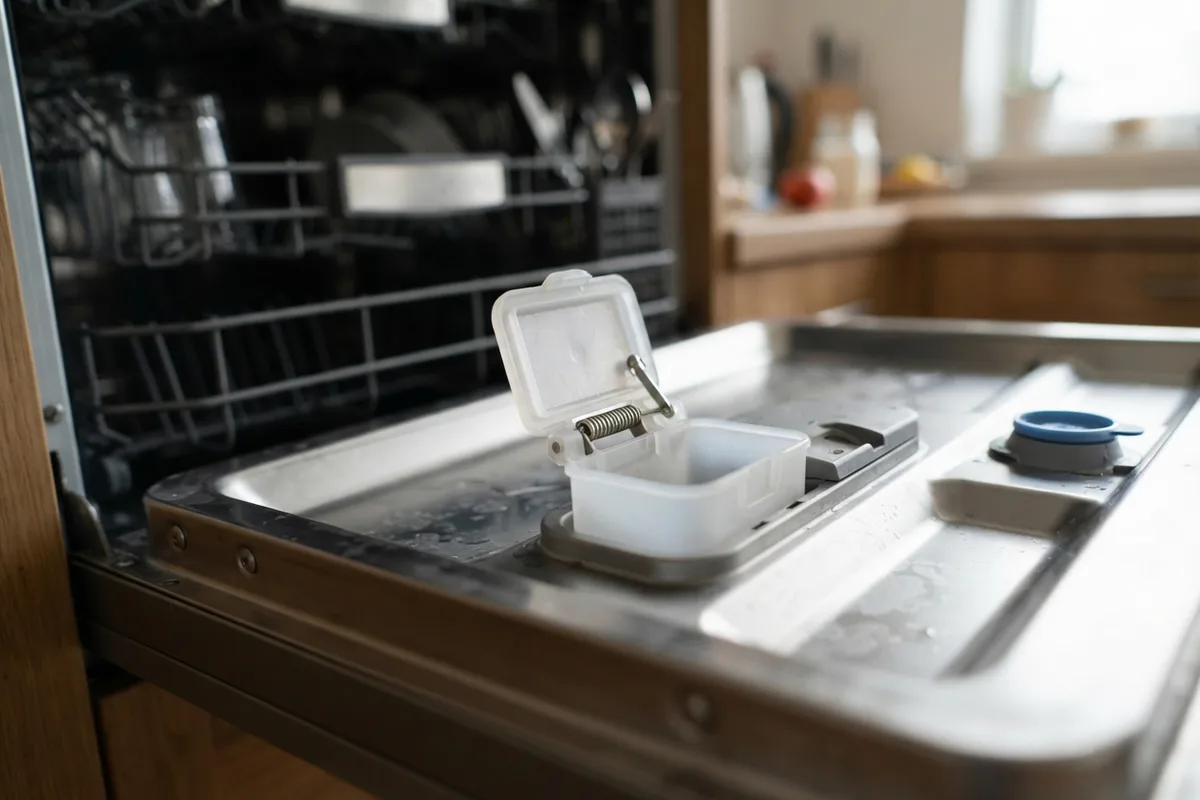
Inspect and Replace a Damaged Door Spring
Dishwasher soap dispenser assemblies rely on small torsion or tension springs to pop the door open when the latch catch releases. If the spring breaks, corrodes, or pops out of its alignment slot, the door may unlock during the cycle but remain resting closed due to gravity and water pressure.
- Disconnect power to the dishwasher at the main circuit breaker panel or unplug the unit under the sink for safety.
- Open the door and examine the small hinge point where the dispenser lid attaches to the housing.
- Look for a tiny metal coil spring. Check if it is cracked, rusted, stretched, or missing entirely.
- If the spring is damaged, purchase a replacement spring kit compatible with your appliance brand and model number.
- Use needle-nose pliers to carefully unhook the damaged spring from its retaining tab and snap the new spring into place.
If the plastic retaining tabs on the dispenser cover itself are snapped or worn down, replacing the individual spring may not hold. In that situation, replacing the entire plastic dispenser cover door is often the quickest fix.
| Problem Symptom | Likely Cause | Suggested Action |
|---|---|---|
| Soap pod untouched inside cup | Tall dish blocking door path | Rearrange lower rack items away from front door panel |
| Latch button feels sticky or stiff | Hardened detergent buildup | Clean latch and hinges with warm water and toothbrush |
| Door unlocks but does not spring open | Broken or missing torsion spring | Replace door spring or dispenser cover assembly |
| Door remains latched during entire cycle | Solenoid failure or wax motor issue | Test solenoid continuity with multimeter; replace if faulty |
| Multiple door or cycle errors present | Main control board or door switch | Inspect door latch wiring; consult a professional |
Test and Replace a Faulty Dispenser Solenoid
Modern dishwashers use an electronic actuator—either an electric solenoid coil or a wax motor—to trigger the soap dispenser latch at the exact moment in the wash cycle. When the control board sends electrical current to the actuator, it pulls a pin that releases the door catch. If the actuator fails, the door will remain closed regardless of rack clearance.
- Shut off the electrical breaker supplying power to the dishwasher before touching internal components.
- Remove the outer door panel screws using a screwdriver to access the interior wiring harness behind the door skin.
- Locate the back of the soap dispenser assembly mounted inside the door structure.
- Disconnect the two wire leads attached to the dispenser solenoid or wax motor terminals.
- Set a digital multimeter to the ohms (Ω) setting and place the test probes on the actuator terminals.
- A reading of infinity (open circuit) or zero resistance indicates a failed coil that requires replacement.
Replacing a dispenser actuator involves unscrewing the mounting bracket, swapping the failed component with a manufacturer-approved part, and reconnecting the wire leads securely. If you notice other performance issues like poor wash coverage while examining the interior, you may also want to investigate dishwasher top rack issues to ensure spray arms are supplying adequate water volume.
Check the Control Board and Door Latch Switch
If the soap dispenser solenoid and mechanical spring both check out, the issue may stem from the dishwasher control board or door latch safety switch. The control board relies on signal inputs from the door switch to confirm the door is securely closed before signaling the detergent actuator to open. Damaged wiring harnesses or burnt control board relays will prevent the signal from arriving.
- Ensure power remains completely disconnected at the circuit breaker panel.
- Visually inspect the wire harness running from the main control board down to the dispenser assembly for frayed, pinched, or burnt wires.
- Examine the door latch switch assembly for melted plastic casing or loose terminal connectors.
- Check the main control board for visible black scorch marks or swollen capacitors near the dispenser relay outputs.
Repairing damaged wiring harnesses or replacing control boards requires working with high-voltage electronics. If visual checks reveal scorched circuit boards or complex wiring faults, stop hands-on work and consult a service specialist.
When to Call a Pro
Clearing blocked dish racks, wiping away caked detergent residue, or snapping a simple door spring back into place are manageable DIY tasks for most homeowners. However, troubleshooting internal wiring harnesses, testing live control board circuits, or replacing sealed electronic components requires specialized knowledge and tools. Always shut off power at the breaker panel and turn off the water supply valve before attempting any internal component repairs. If your diagnosis points to an electrical panel issue, shorted control board, or gas line connection on adjacent home equipment, stop immediately and contact a qualified technician. When DIY troubleshooting reaches its limits, True Appliance Repair can match you with a local appliance pro to diagnose and repair your dishwasher safely. Typical replacement parts for soap dispenser assemblies range from $30 to $120, while professional service call fees generally range between $100 and $250 depending on your area, dishwasher brand, and model complexity.
FAQ
Can I just throw a detergent pod into the bottom of the dishwasher?
Tossing a detergent pod directly into the bottom of the dishwasher tub allows it to dissolve during the initial pre-rinse cycle. Because the pre-rinse water is drained out before the main wash begins, the soap gets washed down the drain prematurely, leaving no detergent for the main wash cycle. Always use the dispenser cup for pods and detergent.
Why does my dishwasher soap door open on normal cycles but stay shut on quick wash cycles?
Quick wash or express cycles use shorter run times and slightly different water heating profiles. If your detergent pod has a thick outer casing, it may require higher water temperatures to trigger the wax motor actuator in time. Swapping to liquid detergent or a quick-dissolving tablet often resolves dispenser timing issues on shorter wash cycles.
How much does it cost to replace a dishwasher soap dispenser assembly?
A complete replacement soap dispenser part typically costs between $40 and $110. If you hire a professional to replace the unit, total costs usually range from $120 to $250 including labor, though exact pricing varies by area, machine brand, and model accessibility.
Can caked detergent damage the dispenser door latch permanently?
Over time, hardened soap scum can corrode small metal tension springs or cause plastic latch pins to crack under pressure. Regularly cleaning the dispenser housing with warm water prevents chemical corrosion and preserves the plastic latch mechanism.