
A sour smell wafting from your kitchen sink usually means food particles, grease, and biofilm have coated the inside of your garbage disposal. Learning how to clean a garbage disposal with pantry staples takes under 15 minutes and restores fresh drainage without harsh drain chemicals. Follow these six safe DIY steps to scrub hidden grime, clear buildup from the impellers, and keep sink odors away.
Use this quick guide to gather safe cleaning supplies and set a simple maintenance routine that fits your kitchen habits.
| Cleaning Task | Pantry Supplies Needed | Recommended Frequency | Key Safety Rule |
|---|---|---|---|
| Scrub splash guard | Dish soap, long bottle brush | Once a week | Cut power at breaker first |
| Scour grinding chamber | 2 cups ice, 1/2 cup coarse salt | Every 2 weeks | Run cold water throughout |
| Deodorize buildup | 1/2 cup baking soda, 1 cup vinegar | Once a month | Never mix with bleach |
| Freshen drain line | Small lemon peel wedges | Weekly or as needed | Avoid thick rinds and seeds |
1. Cut Power and Inspect the Grinding Chamber
Before you touch the sink opening, safety comes first. Flip the wall switch to off, then unplug the unit under the sink or shut off its circuit breaker at the electrical panel so it cannot turn on accidentally.
- Shine a bright flashlight down through the rubber baffle to inspect the metal turntable and side walls for trapped scraps.
- Put on rubber gloves and use long-handled kitchen tongs—never your bare fingers—to pull out stray bones, fruit pits, utensils, or fibrous peels.
- Check the bottom center of the motor housing under the sink if the turntable looks stuck; turning the manual hex socket gently with a 1/4-inch Allen wrench frees minor jams.
Once the chamber is clear of solid objects, remove the hex wrench and restore power before moving to the next steps.
2. Scrub the Rubber Splash Guard Flap
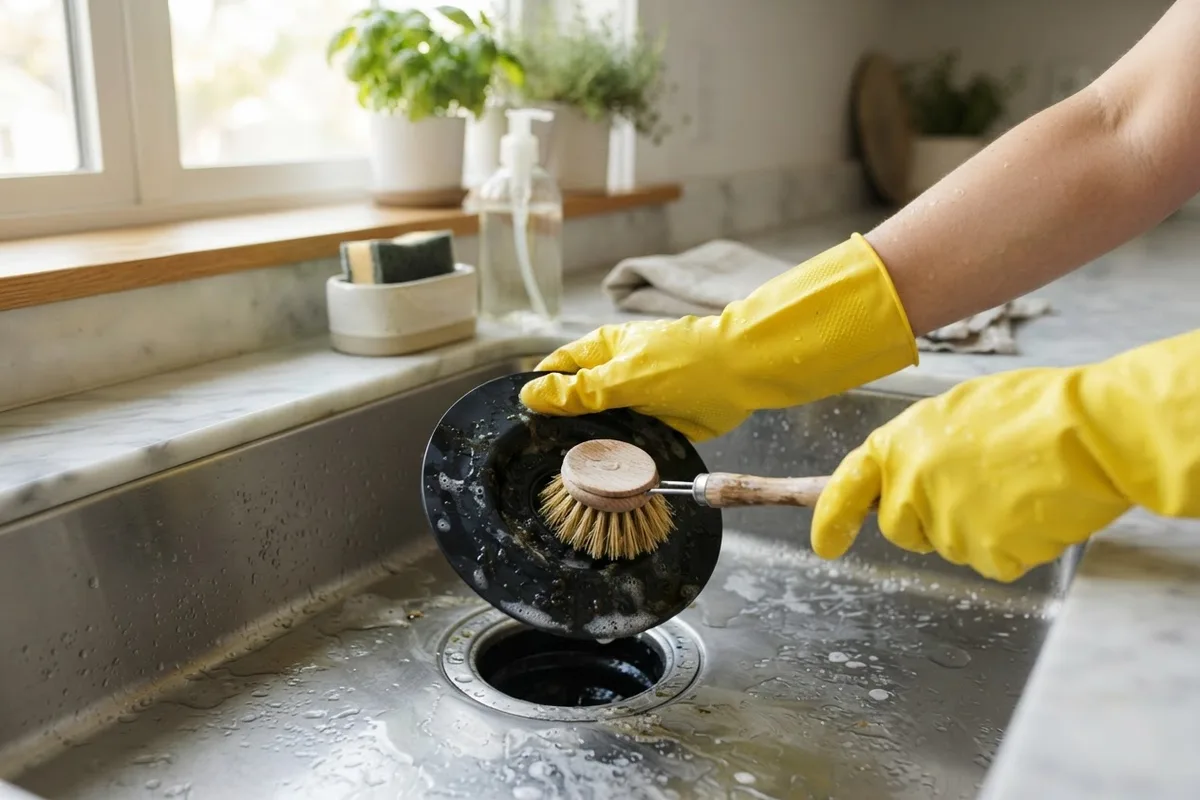
The dark rubber splash guard at the sink opening traps more odor-causing sludge than the metal chamber below it. Most foul sink smells start on the hidden underside of those flexible flaps where splashes of grease and food cling daily.
- Confirm the disposal power is still switched off at the breaker or wall plug before cleaning near the opening.
- Lift the rubber flaps gently or pull out a removable splash guard if your model twists free.
- Dip an old toothbrush or long-handled bottle brush into warm water mixed with a few drops of liquid dish soap.
- Scrub the underside of every flap and the rim beneath the sink flange until no dark residue remains, then rinse with warm tap water.
Reinstall removable baffles snugly and switch power back on at the breaker.
3. Flush Grease With Dish Soap and Warm Water
Oily residue from pans and plates coats the upper housing and traps fine food bits against the chamber wall. A quick soapy flush breaks down light grease films before you scour the grinding ring.
- Place a flat rubber sink stopper over the drain opening, or hold a damp cloth tightly over the top.
- Fill the sink basin about three inches deep with warm tap water and squirt in two tablespoons of grease-cutting dish soap.
- Pull the stopper quickly so the sudden rush of soapy water floods the entire grinding chamber at once.
- Turn on cold tap water and switch the disposal on for 15 seconds to push loosened oil down the main drainpipe.
Avoid pouring boiling water into the drain, as extreme heat can soften plastic plumbing joints and melt residual grease into downstream clogs.
4. Scour Impellers With Ice and Coarse Salt
Ice cubes knock stuck debris off the spinning impellers, while coarse kosher or rock salt acts as a gentle abrasive along the metal grinding ring. Together they scrub surfaces a brush cannot safely reach.
- Pour two cups of ice cubes into the empty disposal chamber—skip oversized freezer blocks that could jam the flywheel.
- Add half a cup of coarse kosher salt or rock salt on top of the ice.
- Turn the cold water tap on to a steady, brisk stream.
- Flip the disposal switch on and let it run for 20 to 30 seconds until the crunching sound turns smooth and quiet.
- Keep cold water running for another 15 seconds after turning the switch off to wash melted slurry cleanly into the sewer line.
This mechanical scrub works best every two weeks in busy kitchens.
5. Fizz Away Residue With Baking Soda and Vinegar
Once solid bits are gone, a natural acid-base reaction lifts sticky biofilm and neutralizes sour smells inside the housing and upper drain trap. For more whole-home odor tips, check out our guide on how to deodorize home appliances.
- Turn the disposal and faucet completely off so dry powder settles into the chamber.
- Sprinkle half a cup of baking soda directly onto the rubber baffle and metal turntable.
- Slowly pour one cup of plain white vinegar over the baking soda and watch the mixture foam up.
- Let the fizz sit undisturbed for 10 to 15 minutes while it loosens film on the walls.
- Run cold water and switch the unit on for 10 seconds to flush everything clear.
Never substitute bleach or commercial drain cleaners here, because mixing them with vinegar creates dangerous fumes and eats away internal seals.
6. Freshen the Drain With Citrus Peels and Cold Water
Citrus oils leave a clean scent inside the sink, provided you use peels carefully so they do not clog the flyweights or bog down the motor.
- Slice a small handful of lemon, lime, or orange peels into bite-sized wedges, removing thick white pith and large seeds first.
- Run a full stream of cold tap water into the sink.
- Drop in two or three peel pieces at a time while the disposal is running, waiting until each batch clears before adding more.
- Let cold water continue flowing for 20 seconds after shutting off the switch so pulp does not settle in the trap.
If your sink still smells sour right after running a cycle, check the corrugated dishwasher drain hose under the counter; a sluggish kitchen drain or backing-up hose may point to a dishwasher drain issue rather than the disposal itself.
When to Call a Pro
Stop DIY troubleshooting and turn off power at the breaker if you notice leaking water underneath the housing, a burning electrical smell, or a red reset button that keeps tripping seconds after the motor cools. Never open the electrical junction plate, splice hardwired cables, or work inside your main electrical panel yourself—those jobs require trained hands.
A failing bottom seal leak or burned-out motor usually means replacement makes more sense than a major teardown, while minor flywheel jams or loose drain fittings are quick repairs. Depending on your area and model, hiring a local repair technician typically runs around $100 to $250 for labor, plus replacement parts if needed. When a stubborn humming motor, housing leak, or electrical fault stops you cold, True Appliance Repair can match you with a local appliance pro to inspect the setup safely.
FAQ
Can I use dishwasher tablets to clean a garbage disposal?
No—most dishwasher pods contain concentrated detergents and foaming agents meant for high-temperature wash cycles, not short disposal flushes. Thick suds can back up through the sink air gap or overflow beneath the counter, so stick with mild liquid dish soap, baking soda, and white vinegar instead.
Does grinding ice actually sharpen garbage disposal blades?
Garbage disposals do not have sharp knife blades; they use blunt rotating impellers to force food against a stationary shredder ring. Crushing ice cubes with coarse salt does not sharpen metal, but it effectively knocks sticky grease and hardened food particles off those spinning parts.
How often should you clean a garbage disposal?
Wipe and scrub the rubber splash guard once a week, since that flap traps the most odor-causing grime. Run the ice-and-salt scrub every two weeks and do a full baking soda and vinegar soak once a month—or more often during heavy holiday cooking seasons.
Why does my garbage disposal still smell after cleaning?
Lingering odors usually hide in the ribbed discharge pipe, P-trap, or dishwasher drain loop rather than the grinding chamber itself. If thorough scrubbing does not clear the smell, check under the sink for sagging drain hoses or slow-draining kitchen plumbing that traps standing water.