
Nothing ruins a freshly cleaned home faster than opening your dishwasher, washing machine, or fridge to a wave of sour mildew or stale food odors. Spraying air fresheners only masks the issue while hidden grease, hard water deposits, and trapped food particles continue breeding bacteria inside seals and drain lines. Use these seven natural, step-by-step deodorizing methods to break down hidden buildup and leave every major appliance smelling clean.
1. Steam-Clean Microwave Odors With Lemon and Vinegar
Burnt popcorn, splattered sauces, and reheated fish bake onto the ceiling and vent grilles of your microwave, releasing old smells every time the unit heats up. Acidic steam loosens baked-on grease while neutralizing trapped odor molecules without harsh chemical sprays.
- Pour 1 cup of water and 2 tablespoons of white vinegar into a microwave-safe glass bowl.
- Slice one fresh lemon in half, squeeze the juice into the bowl, and drop both halves inside.
- Microwave on high for 4 to 5 minutes until the liquid boils and coats the interior walls in steam.
- Leave the door closed for 5 minutes so the trapped steam softens stubborn food splatters. Do not open it right away.
- Unplug the microwave before wiping near the vents, carefully remove the hot bowl with oven mitts, wash the glass turntable in the sink, and wipe every interior surface clean with a damp microfiber cloth.
2. Banish Dishwasher Smells With Vinegar and Baking Soda
Warm, dark, and damp conditions make dishwashers prime spots for sour, swampy smells caused by trapped food bits and greasy detergent scum. Before running a deodorizing cycle, check the bottom basin—thick buildup here can also slow water flow and leave your dishwasher taking too long to finish.
- Turn off the dishwasher and pull out the bottom rack so you can reach the drain basin.
- Twist out the cylindrical drain filter, rinse it under hot tap water, and scrub away greasy film with a soft toothbrush and dish soap.
- Reinstall the filter and rack, then place a dishwasher-safe mug filled with 1 cup of white vinegar upright on the top rack.
- Run a normal hot-water wash cycle with no dishes and no detergent, skipping the heated dry option.
- Once the cycle ends, remove the mug, sprinkle 1 cup of baking soda across the bottom tub, and run a short hot rinse cycle to leave the interior fresh.
3. Refresh Musty Washing Machines and Rubber Gaskets
Musty laundry smells almost always trace back to mold spores, body oils, and fabric softener residue hiding inside the rubber door boot or detergent drawer. Wipe and flush these hidden damp zones once a month so sour smells never transfer onto clean towels.
- Unplug the washer or turn it off at the breaker before reaching inside tight drum crevices.
- Mix equal parts warm water and white vinegar, fold back the rubber door gasket on a front-loader, and wipe out slimy lint, hair, and mildew with a cloth.
- Pull out the detergent dispenser drawer, soak it in hot soapy water for 10 minutes, scrub the corners clean, and slide it back in.
- Plug the washer back in, pour 2 cups of white vinegar directly into the empty drum, and run the hottest, longest wash cycle available.
- Prop both the washer door and detergent drawer open for a few hours after every load so moisture evaporates completely.
4. Scrub Garbage Disposal Splash Guards and Grinding Chambers
When a kitchen sink smells rotten even when empty, the culprit is rarely deep in the plumbing—it is usually decaying food sludge clinging to the underside of the rubber sink baffle. Always prioritize safety before touching anything near the drain opening.
- Unplug the garbage disposal under the sink or flip its dedicated circuit breaker off at the electrical panel. Never put your hand near the opening while power is connected.
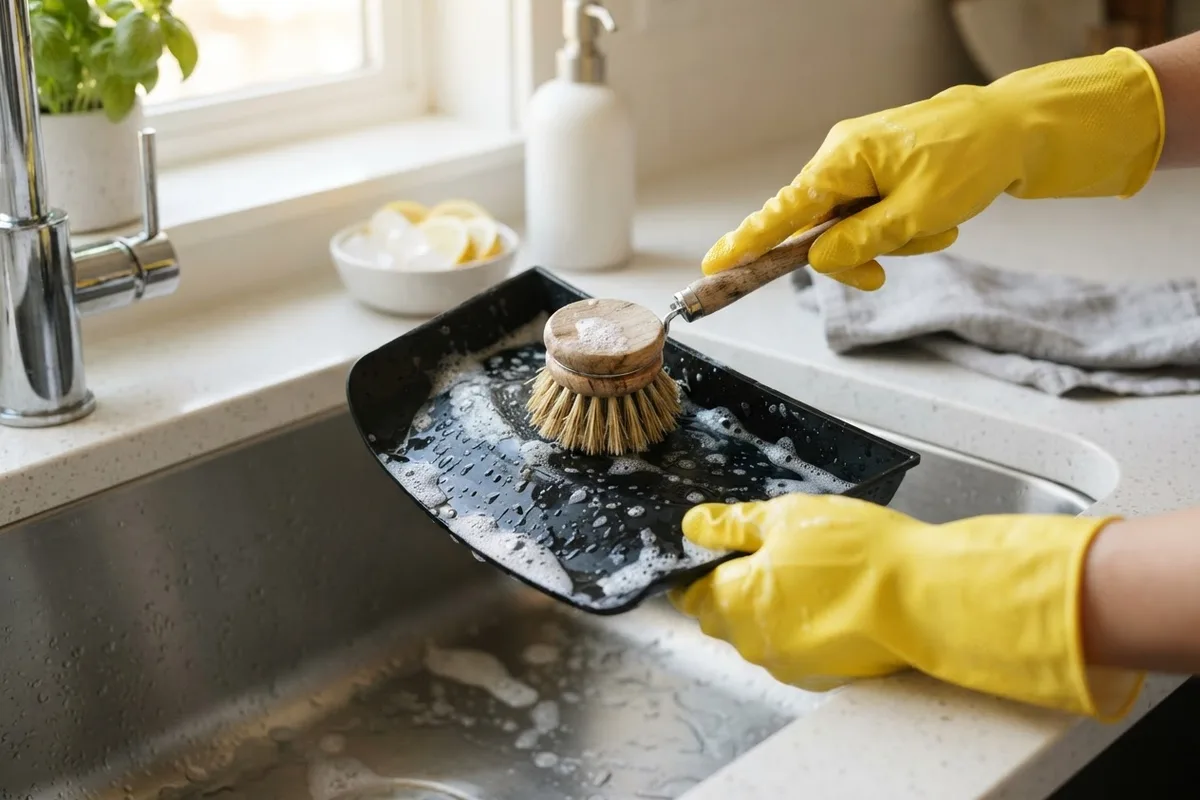
- Pull out the removable rubber splash guard—or fold back the attached flaps—and scrub the greasy underside thoroughly with hot water, dish soap, and a stiff dish brush.
- Reinstall the clean splash guard and drop 2 cups of ice cubes plus 1/2 cup of coarse salt into the grinding chamber to scour residue off the impellers.
- Restore power, turn on a strong stream of cold tap water, and run the disposal for 30 seconds until the ice clears.
- Toss in a handful of lemon or orange peels and grind for 15 seconds with cold water running to release natural citrus oils.
5. Neutralize Stale Refrigerator and Freezer Air
Open condiment jars, forgotten produce, and minor spills seep into plastic shelf seams and rubber door gaskets, lingering long after you toss the spoiled food. If you notice persistent odors even after wiping shelves, doing a seasonal deep clean of your refrigerator ensures hidden drip channels stay clear too.
- Unplug the refrigerator or switch off its interior cooling controls so the compressor does not overwork while the doors stand open.
- Empty one section at a time, placing perishables in a cooler, and slide out removable crisper drawers and glass shelves.
- Let cold glass shelves come to room temperature so they do not crack, then wash them in warm soapy water.
- Dissolve 2 tablespoons of baking soda in 1 quart of warm water and wipe down interior walls, shelf tracks, and folded door gaskets, then dry thoroughly.
- Plug the fridge back in, reload your food, and spread fresh baking soda or dry coffee grounds on a shallow plate on the middle shelf for 48 hours—offering far more surface area than a small open box.
6. Degrease Smelly Range Hood Filters and Oven Interiors
Stale frying odors and smoky smells during preheating come from oxidized cooking oils trapped inside metal range hood baffles and pooled along the oven floor. Avoid the high-heat self-clean cycle right before guests arrive, as it often fills the kitchen with acrid smoke and strains electronic boards.
- Turn off the stove, oven, and range hood completely and make sure all surfaces are cool; shut off the breaker before removing metal hood parts near fan wiring.
- Pop out the aluminum or stainless mesh range hood filters and place them in a sink or deep baking pan filled with boiling hot water, a squirt of degreasing dish soap, and 1/2 cup of baking soda.
- Soak the filters for 15 minutes, scrub gently with a non-scratch brush, rinse clean, and air-dry completely before reinstalling.
- Mix baking soda and water into a thick paste, spread it over greasy spots inside the cool oven—steering clear of heating elements, gas burner ports, and fan vents—and let sit for several hours.
- Wipe away the paste with damp cloths, spritz light white vinegar to lift chalky residue, wipe dry, and restore power.
7. Clear Damp Lint Odors From Dryers and Moisture Sensors
If freshly washed clothes come out of the dryer smelling damp, sour, or faintly scorched, trapped wet lint or waxy dryer sheet film is holding onto odors and blocking airflow. Keeping the exhaust path clean removes smells while preventing overheating hazards.
- Unplug the electric dryer—or unplug a gas dryer and never disturb the gas supply line; stop immediately and call a professional if you ever smell gas.
- Pull out the lint screen and scrub it under warm water with dish soap and a soft brush until water runs straight through the mesh without pooling, then let it air-dry completely.
- Attach a narrow crevice tool to your vacuum and clear compacted, musty lint from deep inside the lint trap housing.
- Wipe the metal drum interior with a damp microfiber cloth dipped in mild soapy water, and take a moment to clean the dryer moisture sensor bars with rubbing alcohol so loads dry fully instead of sitting damp.
- Leave the dryer door cracked for an hour so the drum dries completely before plugging the machine back in and running an empty 10-minute air-fluff cycle.
Natural Appliance Deodorizer Quick-Reference Guide
Use the right pantry staple for each surface—and never mix vinegar and baking soda in the same step unless you want fizzing action at a drain, since they neutralize each other's cleaning strength when combined early.
| Appliance | Best Natural Deodorizer | What to Avoid | Ideal Frequency |
|---|---|---|---|
| Microwave | Water, white vinegar, and fresh lemon steam | Abrasive scouring pads on door screens | Every 2–4 weeks |
| Dishwasher | White vinegar wash, followed by baking soda rinse | Bleach inside stainless steel tubs | Monthly |
| Washing Machine | White vinegar drum flush and gasket wipe | Excess liquid detergent or heavy fabric softener | Monthly |
| Garbage Disposal | Dish soap on baffle, ice and salt grind, citrus peel | Chemical drain openers or bleach | Every 1–2 weeks |
| Refrigerator | Baking soda solution wipe and open tray of baking soda | Scented chemical sprays near food | Every 1–3 months |
| Range Hood & Oven | Dish soap + baking soda soak; baking soda oven paste | Coating heating elements or gas igniters | Every 2–3 months |
| Clothes Dryer | Dish soap screen scrub and damp drum wipe | Spraying liquid cleaners into heating vents | Monthly |
When to Call a Pro
Food, mildew, and grease odors respond well to pantry cleaners, but certain smells are urgent mechanical or electrical warning signs. Stop using the appliance immediately, unplug it or turn off the circuit breaker, and do not attempt DIY repairs if you notice burning plastic, scorching electrical odors, pungent chemical or ammonia-like smells from a refrigerator sealed system, or rotten-egg gas odors near a stove or dryer. If you smell gas, leave the area right away without flipping switches and contact your gas utility.
Persistent sewer smells from a dishwasher or washer after cleaning filters can also point to a failing drain pump or blocked internal hose. Diagnostic visits and common odor-related component repairs across the US typically range from $120 to $350, though exact pricing varies by area, appliance type, and model. When deep cleaning does not clear the smell—or you run into a burning odor or drainage issue—True Appliance Repair can connect you with an independent local appliance repair technician to inspect the unit safely.
FAQ
Why do my appliances still smell right after I clean them?
Lingering odors usually hide in flexible rubber seals, underside baffles, or stagnant drain hoses rather than the main interior tub. Double-check folded front-load washer boots, refrigerator door gaskets, the underside of your garbage disposal splash guard, and dishwasher drain filters where wet biofilm collects out of sight.
Is white vinegar safe to use on rubber appliance seals and hoses?
Occasional cleaning with diluted white vinegar once a month is gentle enough for most household cleaning, especially when wiped or rinsed away afterward. Avoid soaking rubber gaskets in undiluted vinegar every week, as heavy, repeated acid exposure over years can gradually dry out soft rubber components.
Can I mix vinegar and baking soda together to clean appliances faster?
Mixing them directly in a bowl creates salty water and carbon dioxide fizz, canceling out both the grease-cutting acidity of the vinegar and the scrubbing alkalinity of the baking soda. For dishwashers and ovens, always use them in separate steps so each ingredient works at full strength.
What does a burning or fishy plastic smell coming from an appliance mean?
A sharp burning rubber smell often points to a slipping drive belt or seized motor bearing, while a sudden fishy odor near an appliance outlet or control panel is a classic sign of overheating electrical wiring or melting plastic insulation. Shut off power at the breaker right away and schedule a professional inspection before turning the unit back on.