
Modern energy-efficient dishwashers naturally take their time, with standard cycles averaging two to two-and-a-half hours. However, when you have a dishwasher taking too long—stretching past three or four hours—something is forcing the internal timer to stall or extend heating stages. Walk through these seven practical DIY fixes to troubleshoot marathon wash cycles and get your kitchen routine back on schedule.
Before troubleshooting hardware, compare your unit's run time against typical ranges for modern US models. Unlike older machines that blasted dishes with heavy water volume for an hour, newer models alternate gentle spray intervals with thermal soaking stages:
| Cycle Setting | Typical Run Time | Why It Takes This Long |
|---|---|---|
| Express / Quick Wash | 30 – 60 minutes | Uses extra water and rapid heating without extended soaking pauses. |
| Normal / Auto Sensor | 120 – 160 minutes | Balances lower water volume with longer thermal soak intervals. |
| Heavy / Pots & Pans | 150 – 210 minutes | Adds extra wash stages and sustained heat holds for baked-on messes. |
| Sanitize + Heated Dry | +30 – 60 minutes | Pauses the countdown clock until internal water hits roughly 150°F. |
1. Purge Cold Water at the Kitchen Sink First
During late fall and winter, household plumbing pipes cool down quickly between uses. Because your dishwasher taps into the same hot water supply line as your kitchen sink, the first gallon entering the tub is often frigid. Most dishwashers pause their countdown timer until an internal heating element warms that water to target temperature, easily tacking 20 to 35 minutes onto a load.
- Turn on your kitchen sink's hot water faucet right before loading the final dish.
- Let the tap run for 30 to 60 seconds until the stream feels noticeably hot on your hand.
- Catch the cool initial water in a pitcher for houseplants or pet bowls if you want to avoid waste.
- Shut off the faucet and press Start on the dishwasher immediately while hot water sits ready in the pipe.
2. Deselect High-Temp and Sanitize Add-Ons
Stacked cycle modifiers are one of the most common reasons a wash stretches past three-and-a-half hours. Combining Heavy Wash with High-Temp Boost, Steam, Sanitize, and Extended Heated Dry forces the machine to reach elevated temperatures across multiple fills. Many electronic touchpads remember your previous modifiers automatically, repeating marathon settings on everyday tableware.
- Wake up the dishwasher control panel before pressing Start and scan every illuminated option light.
- Turn off Sanitize, Steam, and High-Temp Wash unless you are sanitizing cutting boards or canning jars.
- Select the standard Normal cycle rather than Heavy or Pots & Pans for routine daily meals.
- Skip Extended Heated Dry when you aren't in a rush, and crack the door open a few inches after the final rinse so steam escapes naturally.
3. Disable Smart Grid or Utility Delay Modes
Many newer Wi-Fi and smart-enabled dishwashers include utility demand-response or eco-pause features. When enabled, the appliance automatically throttles its heating element or pauses mid-run during afternoon and early-evening peak electricity hours. From the outside, a scheduled utility hold looks just like a stuck four-hour wash cycle.
- Check the control panel for indicator lights labeled Eco-Pause, Smart Grid, Peak Shift, or Demand Response.
- Open the manufacturer's companion app on your phone if your dishwasher is connected to home Wi-Fi.
- Disable peak-rate scheduling or energy-saver pause modes, or use the keypad override combination listed in your owner's manual.
- Run a standard load outside peak evening hours to verify the timer counts down smoothly from start to finish.
4. Reset a Glitched Electronic Control Board
Brief power flickers and minor household voltage drops can confuse a dishwasher's main control board, causing the timer to repeat wash intervals or stall on a single minute mark. Performing a hard power reset clears temporary memory errors—a smart first move if you have also noticed your dishwasher stopping mid-cycle from time to time.
- Press Cancel on the keypad and wait one full minute for internal pumps and spray arms to come to a rest.
- Unplug the dishwasher power cord inside the neighboring sink cabinet, or flip its dedicated circuit breaker off at your home electrical panel.
- Leave power disconnected for five full minutes so the control board capacitors discharge completely.
- Restore power, allow the display a minute to boot up, and test an Express cycle to confirm normal countdown timing.
5. Check Your Home Water Heater Temperature
Residential dishwashers are engineered around incoming water arriving near 120°F. For every degree below that target, the internal booster heater typically runs one to two extra minutes per fill stage. If your household water heater was turned down for summer travel or struggles during cold weather, every wash and final rinse phase drags out.
- Run your kitchen hot tap for two full minutes so the water reaches peak tank temperature.
- Fill a heat-safe mug and check the water right away using an instant-read kitchen thermometer.
- Inspect your water heater thermostat dial if the mug reads below 115°F, and nudge it carefully toward 120°F (avoid exceeding 120°F to prevent scalding at household faucets).
- Give your water heater tank an hour or two to recover before running a test load.
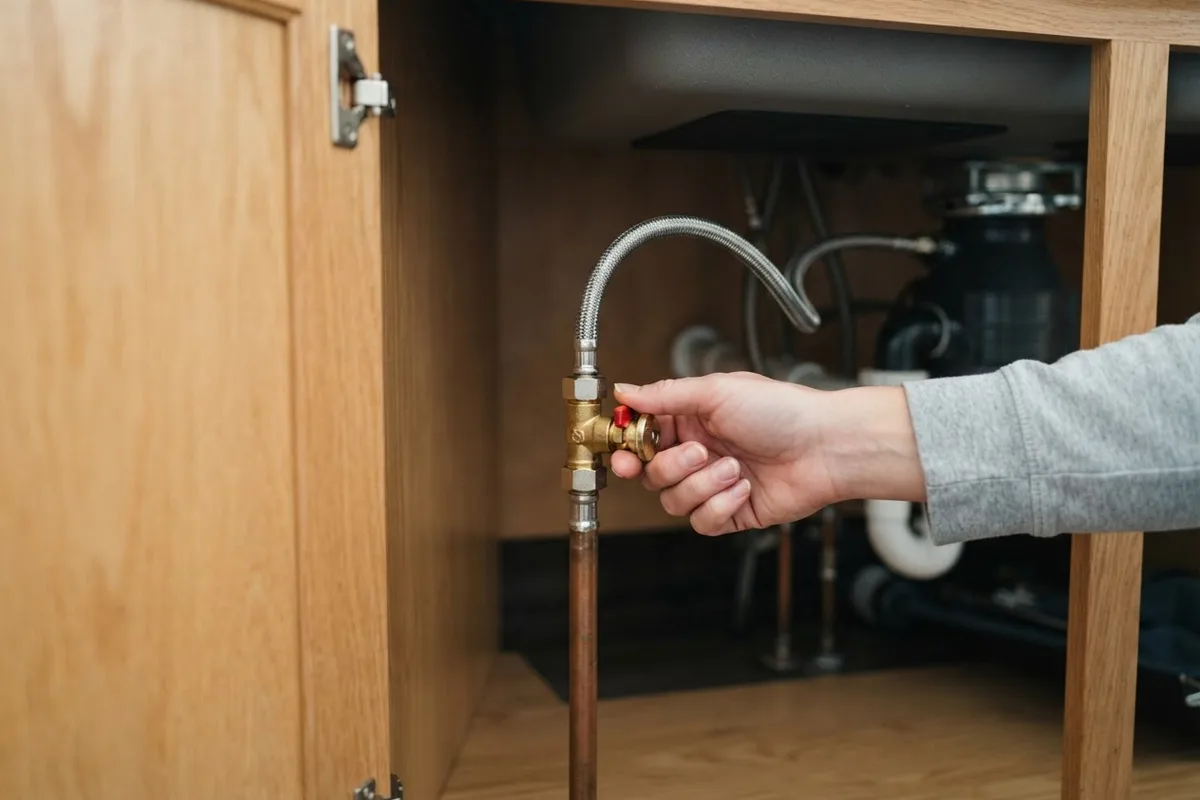
6. Inspect the Water Supply Line and Inlet Valve
When water trickles into the tub too slowly, the control board waits longer to register proper fill volume or repeats fill intervals, stretching total run time. Always unplug the dishwasher or shut off its circuit breaker, and turn off the under-sink water valve before inspecting supply plumbing.
- Open the cabinet beneath your kitchen sink and locate the hot water shut-off valve feeding the dishwasher line.
- Check whether stored items bumped the handle partially closed; once your inspection is done, make sure the valve is turned fully open.
- With electricity and water shut off, trace the braided supply hose inside the cabinet to check for sharp kinks or pinched bends.
- Suspect a mineral-restricted water inlet valve at the bottom of the dishwasher if the supply hose is straight and kitchen faucet pressure is strong.
7. Check for a Failing Heating Element or Sensor
If a normal load runs close to four hours and the interior feels cool or barely lukewarm right as the cycle ends, a burned-out heating element or faulty thermistor is likely to blame. Without working heat, the timer stalls in maximum-length heating holds before forcing the cycle ahead—a telltale symptom of a dishwasher not heating water properly.
- Switch off the dishwasher circuit breaker or unplug the machine, and wait until the interior is completely cool.
- Slide out the bottom rack and locate the circular metal heating ring along the base of the tub (note that many sleeker models hide an inline flow-through heater underneath instead).
- Inspect visible heating loops closely for blisters, splits, charred spots, or breaks in the outer metal sheath.
- Stop and bring in an appliance repair technician for multimeter testing or part replacement if you spot element damage or suspect a hidden heater or sensor issue.
When to Call a Pro
Purging cold water at the tap, trimming extra heat settings, checking your water heater dial, and resetting the breaker are quick DIY steps that resolve most long-cycle frustrations. However, you should stop and call an experienced technician when troubleshooting points underneath the dishwasher tub—including swapping a burned-out heating element, replacing a water inlet valve, testing a faulty thermistor, or diagnosing a failing control board. Never open your home's electrical panel beyond flipping a standard breaker, and keep power and water turned off if you notice any moisture near wiring.
Repair pricing varies by area, brand, and model, so use typical US ranges as broad ballpark estimates: replacing a heating element or temperature sensor commonly runs $150 to $300, installing a new water inlet valve typically falls between $140 and $260, and swapping a main electronic control board generally costs $250 to $450. On a well-kept dishwasher under seven or eight years old, fixing a single part usually costs far less than buying and installing a replacement unit. If your cycles are still dragging on, True Appliance Repair can connect you with an independent local dishwasher repair service for a thorough checkup.
FAQ
Is it normal for a modern dishwasher to run for 3 hours?
Yes, a three-hour cycle can be completely normal on modern energy-saving dishwashers when you pair Heavy or Auto modes with High-Temp Wash, Sanitize, and Heated Dry. Newer machines rely on longer soaking intervals rather than heavy water usage to do the job. Without extra heat add-ons, though, a standard Normal load should usually wrap up in two to two-and-a-half hours.
Does an Express or 1-Hour cycle save electricity?
Counterintuitively, Express and 1-Hour wash cycles typically consume more water and electricity than a two-hour Normal cycle. Because the machine skips slow thermal soaking, it compensates with extra water fills and continuous heater demand to hit temperature targets fast. Reserve quick cycles for lightly used dishes when you are pressed for time.
Why does my dishwasher take longer to finish in the winter?
Municipal tap water enters your home significantly colder during winter months, and supply pipes running through basements or exterior walls lose heat between uses. Your dishwasher pauses its countdown clock while its internal heater brings cold fill water up to target temperature, often adding 20 to 35 minutes per cycle.
Can a bad temperature sensor make a dishwasher run for 4 hours?
Yes, a drifting thermistor (temperature sensor) can send false low-temperature readings to the control board even when the water inside is plenty hot. The dishwasher stays stuck in extended heating holds until built-in safety time limits finally advance the cycle, turning a standard wash into a four-hour marathon.