
If you are like many homeowners, you love the sleek look and fast, efficient heating of your induction cooktop. However, keeping that pristine glass surface clean can be a challenge, especially when faced with burnt-on grease and stubborn spills. Using the wrong cleaning method can easily lead to permanent scratches, dulling the beauty of your kitchen. Fortunately, learning how to clean an induction cooktop safely is straightforward when you use the right techniques. In this guide, we will walk you through six easy, safe DIY steps to remove tough stains, eliminate grease, and restore your cooktop's brilliant shine without damaging the surface.
1. Gather Your Non-Abrasive Cleaning Supplies
Before you begin, it is important to gather the correct tools. Avoid any harsh abrasives, steel wool, or coarse scouring pads, as these will permanently scratch the glass-ceramic surface of an induction stove. Instead, assemble the following gentle cleaning supplies: several soft microfiber cloths, a spray bottle filled with a 1:1 solution of white vinegar and water, household baking soda, a specialized cooktop scraper designed for glass surfaces, a gentle cooktop cleaner or polish, and a pair of cleaning gloves. Having everything ready ensures a smooth, uninterrupted process. If you are also doing a broader kitchen cleanup as part of your seasonal routine, check out our guide on how to clean a refrigerator drain pan or our comprehensive winter appliance maintenance checklist to keep your other home appliances running smoothly.
2. Wait for the Cooktop to Cool Completely
Safety is paramount when working with any kitchen appliance. Before you start any hands-on work, always turn off the cooktop and, if possible, unplug the appliance or shut off the circuit breaker before hands-on steps. This eliminates any risk of accidental burns or electrical issues. Stop and call a pro for gas, sealed-system, or electrical panel work. For cleaning an induction cooktop, you must wait until the surface has cooled down completely. Most modern induction cooktops have a 'hot surface' indicator light that remains illuminated until the glass is safe to touch. Do not attempt to clean the cooktop while it is still warm, as applying liquids or cleaners to a hot surface can cause them to burn and bake onto the glass, creating an even bigger mess and potentially damaging the appliance. Once the surface is completely cool to the touch, you can safely proceed to the next step.
3. Wipe Down Loose Spills and Daily Grime
With the cooktop safely powered off and completely cool, you can begin the initial cleaning phase. Start by using a soft, dry microfiber cloth to gently wipe away any loose debris, crumbs, or fresh spills from the surface. For light, daily grime, take your spray bottle containing the 1:1 vinegar and water solution and lightly mist the entire cooktop. Then, use a clean, damp microfiber cloth to thoroughly wipe down the entire surface. This gentle solution works effectively to break down light grease and water spots without leaving behind harmful residues. Avoid using common household glass cleaners, as many contain ammonia or other harsh chemicals that can leave behind unsightly streaks or even damage the cooktop over time. If you notice your cooktop still looks a bit dull or hazy after this step, you might be dealing with hard water buildup. You can learn more about addressing this in our guide on why is glass stove top cloudy.
4. Treat Tough Burnt-On Stains With Baking Soda
For tougher, burnt-on food, grease, and stubborn stains, a gentle abrasive like baking soda is your best solution. To clean an induction cooktop with this method, liberally sprinkle a generous layer of household baking soda directly over the stained and burnt areas. Next, gently mist the baking soda with your spray bottle containing the 1:1 white vinegar and water solution. The mixture will immediately begin to fizz and bubble, which helps to lift and break down the baked-on residue. To maximize the effectiveness of this technique, soak a clean towel or several microfiber cloths in warm water, wring them out so they are just damp, and lay them flat over the fizzing baking soda mixture. Leave the damp cloths in place for about 15 to 20 minutes. This traps moisture and allows the baking soda and vinegar to soften the grime. After the time has passed, remove the cloths and use them to gently scrub the surface in circular motions, wiping away the loosened residue and most of the baking soda.
5. Use a Specialized Cooktop Scraper Correctly
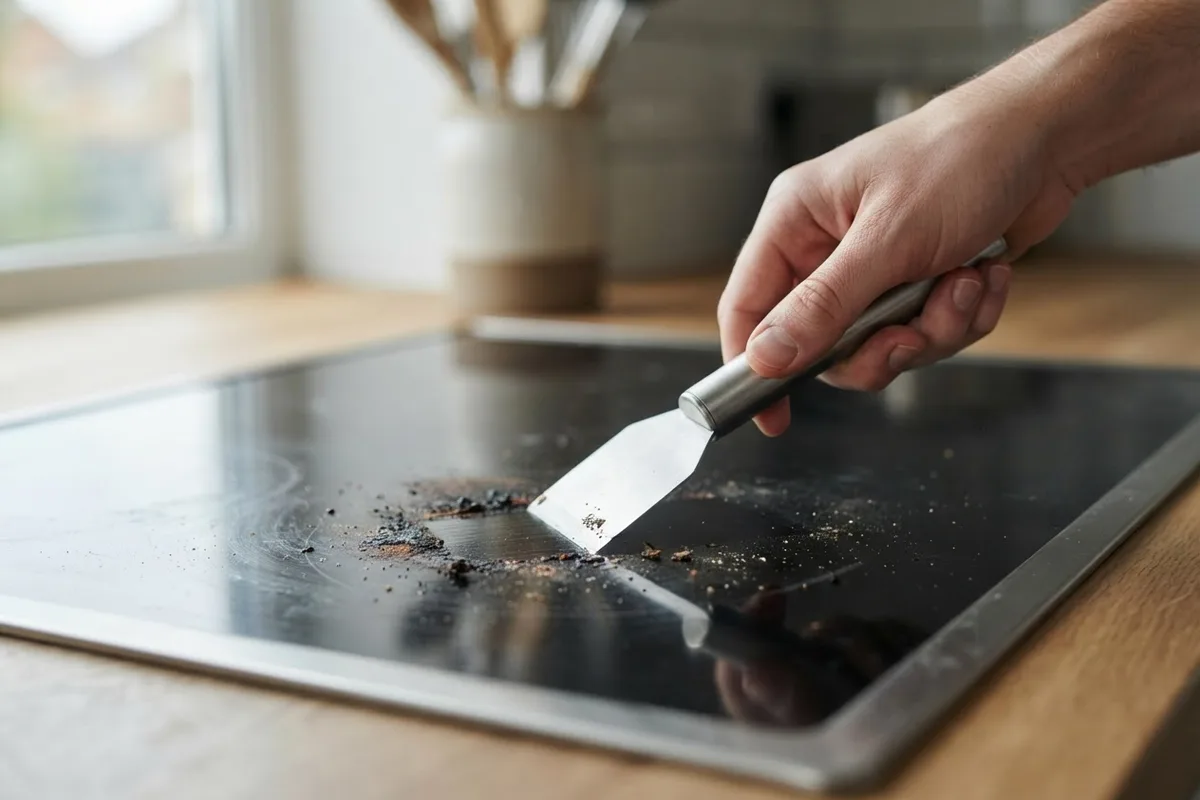
If you still have stubborn, heavily burnt-on residue after the baking soda treatment, it is time to use a specialized cooktop scraper. It is crucial to use a scraper specifically designed for glass or ceramic cooktops, typically featuring a sharp, single-edged razor blade securely held in a handle. Never use an ordinary knife, putty knife, or steel scraper, as these will easily scratch the surface. To use the cooktop scraper safely, hold the tool at a precise 30-degree angle against the wet cooktop surface. Applying gentle, steady pressure, carefully push the blade forward under the edge of the burnt-on food. The angle is critical; keeping it low at 30 degrees ensures the blade slides under the residue rather than digging into the glass. You will see the burnt-on material scrape away in thin curls or flakes. Work in small, controlled strokes, keeping the surface slightly damp with your vinegar solution as you work. Once all the residue is removed, wipe the surface clean with a damp microfiber cloth.
6. Buff and Polish for a Streak-Free Finish
The final step in learning how to clean an induction cooktop is to buff and polish the surface for a flawless, streak-free finish. After removing all the grease, grime, and burnt-on stains, thoroughly wipe the entire surface with a clean, damp microfiber cloth to remove any remaining baking soda, vinegar, or loose particles. Next, take a dry, clean microfiber cloth and apply a small, dime-sized drop of a specialized cooktop cleaner or polish directly to the cloth. Gently rub the polish onto the cooktop in small, circular motions, covering the entire surface. Allow the polish to dry slightly into a faint, hazy film, which usually takes just a few minutes. Finally, use a separate clean, dry microfiber cloth to buff the cooktop, using brisk, circular motions. This will remove the haze and leave your induction cooktop with a brilliantly shiny, mirror-like, and streak-free finish that also helps to repel future spills and stains.
Quick Reference: Induction Cooktop Cleaning Dos and Don'ts
| Cleaning Method | Best For | What to Avoid |
|---|---|---|
| Vinegar & Water | Daily spills, dust, light grease | Ammonia-based glass cleaners |
| Baking Soda & Vinegar | Burnt-on food, stubborn stains | Abrasive scouring powders |
| Cooktop Scraper | Heavily baked-on residue, sugary spills | Using at a steep angle, improper tools |
| Cooktop Polish | Final shine, repelling future stains | Applying to a dirty surface |
When to Call a Pro
While cleaning an induction cooktop is a task most homeowners can successfully handle themselves, there are times when you should consult an expert. If you notice deep scratches, cracks, or chips in the glass-ceramic surface, you should stop using the appliance immediately, as this can be a serious safety hazard. Additionally, if your cooktop is experiencing electrical problems, such as a control panel that will not respond, error codes, or burners that fail to heat properly, it is time to seek professional help. For these complex issues, True Appliance Repair can match you with a local appliance pro who can safely diagnose and resolve the problem. Remember, always stop and call a pro for gas, sealed-system, or electrical panel work. If you find you need assistance with other kitchen or laundry appliances, don't hesitate to reach out for appliance repair or specialized oven and stove repair services.
FAQ
Can I use steel wool on an induction cooktop?
No, you should never use steel wool, abrasive sponges, or metallic scouring pads on an induction cooktop. These materials are far too harsh for the glass-ceramic surface and will cause permanent scratches and swirl marks. Instead, always stick to gentle tools like microfiber cloths, non-abrasive sponges, and specialized cooktop scrapers designed for glass surfaces.
How do I prevent sugary spills from damaging the cooktop?
Sugary spills, such as jam, syrup, or caramel, require immediate attention because sugar can pit and permanently damage the glass surface as it cools and bakes on. If a sugary spill occurs, safely use your specialized cooktop scraper to carefully remove the molten spill while the cooktop is still warm (or immediately after turning it off, using extreme caution). Once the surface cools completely, follow up with the standard baking soda and vinegar cleaning method to remove any remaining residue.
How often should I clean my induction cooktop?
For the best results and to prevent the need for heavy scrubbing, you should wipe down your induction cooktop after every use with a damp microfiber cloth and a mild solution of vinegar and water. This prevents light grease and daily grime from getting baked onto the surface during subsequent cooking sessions. For a deeper clean and to restore its shine, using the baking soda and polish method once a week or once every two weeks will keep your cooktop looking pristine.