
Fingerprints, hard water drips, and cooking splatters can turn sleek kitchen surfaces cloudy within a single afternoon. Store-bought stainless steel sprays often leave behind a greasy film that attracts even more dust and smudges. With a few common pantry staples and the right wiping technique, you can clean stainless steel appliances safely and keep every door streak-free.
1. Lock Controls and Wipe With the Grain
Before you touch a damp cloth to any appliance, take a quick safety pass. Unplug small countertop units, confirm stove burners and ovens are completely cool, and turn on the control lock for dishwashers or ranges so you do not accidentally trigger a cycle. Never spray liquids directly onto digital panels, vents, or electrical seams—always spray your microfiber cloth instead.
- Look closely under bright kitchen light to spot the fine brushed lines running horizontally or vertically across the metal.
- Dry-wipe the surface with a clean microfiber cloth first to clear crumbs and grit that could scratch the finish.
- Check your manual for a factory fingerprint-resistant coating, which needs milder care than bare brushed steel.
- Work around door edges carefully—pairing this routine with our guide on how to clean appliance seals and gaskets keeps grime from creeping back onto the metal.
2. Lift Daily Fingerprints With Dish Soap
Mild liquid dish soap is the safest everyday cleaner for both bare stainless steel and factory-coated finishes. It breaks down skin oils from fridge handles and dishwasher doors without stripping protective top layers or leaving heavy fumes in the kitchen.
- Mix two drops of clear or mild liquid dish soap into two cups of warm water inside a clean bowl or spray bottle.
- Dip a fresh microfiber cloth into the mix and wring it out until it feels barely damp, never dripping wet.
- Wipe smoothly from top to bottom, following the direction of the metal grain without scrubbing in circles.
- Dampen a second clean cloth with plain warm water to remove all soap residue, because leftover detergent dries into faint streaks.
- Buff the surface completely dry right away using a third dry microfiber towel.
3. Dissolve Hard Water Spots With Vinegar
Chalky rings below refrigerator water dispensers and cloudy drips along dishwasher doors come from dissolved minerals left behind when tap water evaporates. Mild acid cuts through that mineral crust quickly on standard uncoated stainless steel.
- Mix equal parts white distilled vinegar and distilled water in a labeled spray bottle. Skip vinegar if your appliance has a fingerprint-resistant clear coat or sits directly against unsealed natural stone countertops.
- Mist a clean microfiber cloth lightly rather than spraying the appliance door directly.
- Wipe along the grain over the chalky spots, letting the dampness sit for about 30 seconds on thicker mineral buildup.
- Rinse with a plain-water damp cloth and buff dry immediately so no streaks remain.
If a dispenser drip keeps coming back every day, check our refrigerator repair page before persistent moisture damages nearby trim or valves.
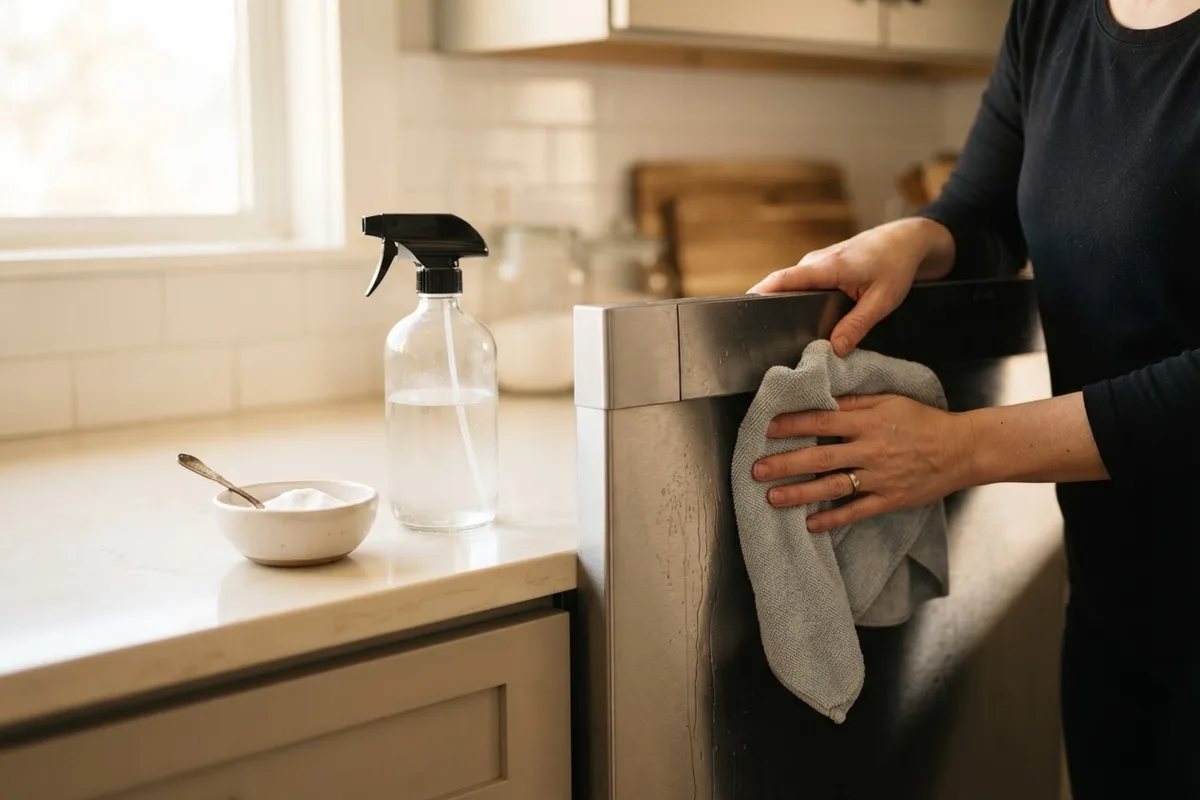
4. Cut Baked-On Grease Using Baking Soda
Range hoods, oven doors, and microwave fronts collect sticky aerosolized cooking oil that soap alone struggles to lift. A gentle baking soda paste softens polymerized grease without scouring away the brushed metal finish.
- Make sure range knobs are off, oven surfaces are cold, and overhead exhaust fans are switched off before you start.
- Stir two tablespoons of baking soda with one tablespoon of warm water in a small dish until it forms a smooth, spreadable paste. Never rub dry baking soda powder onto steel.
- Dab a small amount onto a damp microfiber cloth and glide gently in straight strokes with the grain over greasy spots.
- Wipe away every trace of paste using a clean, wet microfiber cloth, rinsing the cloth often so grit does not linger.
- Dry the surface thoroughly with a lint-free towel for an even, grease-free sheen.
5. Buff Out Streaks With a Drop of Olive Oil
Once bare brushed stainless steel is clean and bone-dry, a tiny amount of oil restores a uniform satin glow and slows down fresh fingerprints. Both olive oil and food-grade mineral oil work well, though mineral oil resists going tacky longer in warm kitchens.
- Verify the surface is completely clean and dry first—applying oil over grease or crumbs traps dull smudges underneath.
- Put two or three drops of olive oil or food-grade mineral oil onto one corner of a dry microfiber cloth. Do not pour oil directly onto the appliance.
- Rub lightly in long, straight passes following the grain across the entire panel.
- Flip to a clean, dry section of the towel and buff firmly to lift all excess oil so dust does not stick.
Skip this step on matte, black stainless, or fingerprint-resistant coated appliances, which only need soap and water.
6. Use Club Soda for a Fast Mirror Polish
When you want kitchen appliances gleaming before holiday hosting or weekend guests, plain club soda delivers a crisp polish with zero soap film. Its mild carbonation lifts faint water marks and everyday haze in under a minute.
- Pour unflavored, unsweetened club soda into a clean spray bottle—tonic water contains sugar and leaves a sticky residue.
- Spray the club soda onto a folded microfiber cloth rather than aiming at door seams, ice chutes, or control buttons.
- Wipe top to bottom in smooth strokes aligned with the brushed grain, working one panel at a time so it does not air-dry first.
- Follow immediately with a second dry microfiber towel to lock in a bright, streak-free shine.
This quick touch-up works best between deeper cleans and is gentle enough for daily use around busy kitchen handles.
Avoid Cleaners That Scratch or Cloud Steel
Even tough kitchen metal loses its brushed finish quickly when paired with harsh chemicals or rough pads. Keep this quick reference handy before reaching under the sink:
| Cleaner or Tool | Best For | Safe on Bare Steel? | Watch Out For |
|---|---|---|---|
| Mild dish soap + water | Daily fingerprints, light dust | Yes | Soap streaks if not rinsed and buffed dry |
| White vinegar + water | Hard water mineral spots | Yes | Can dull clear-coated or black stainless steel |
| Baking soda paste | Sticky grease near ranges | Yes | Rinse fully so gritty residue does not dry |
| Olive or mineral oil | Restoring shine on bare steel | Yes | Attracts dust if you skip dry buffing |
| Bleach or chlorine sprays | Not recommended | No | Pits metal and causes permanent rust spots |
| Steel wool or abrasive pads | Not recommended | No | Scratches brushed grain permanently |
Always test any new cleaning mix on a low side panel first. If you own black stainless or smudge-proof coated appliances, stick strictly to mild dish soap and water.
When to Call a Pro
Wiping exterior panels is safe homeowner maintenance, but stop right away if cleaning reveals an underlying mechanical or electrical problem. Unplug the unit or switch off its circuit breaker—and shut off the water or gas valve if accessible—if you notice moisture behind a digital touchpad, sparks, a burning smell, or an appliance that trips the breaker when touched. Never open electrical panels, tamper with gas lines, or touch sealed refrigeration components yourself.
You should also bring in a technician if constant water leaks from a refrigerator dispenser, ice maker, or dishwasher door keep staining your stainless steel front. Typical service visits and minor part replacements run roughly $100 to $350 depending on the appliance, issue, and your local area or model. When a persistent leak or electrical fault needs attention, True Appliance Repair can match you with an independent local appliance repair pro to diagnose it safely.
FAQ
Does cleaning stainless steel with vinegar ruin the finish?
Diluted white vinegar is safe on traditional uncoated brushed stainless steel when rinsed and dried right away. However, it can slowly cloud factory fingerprint-resistant coatings, black stainless steel, or nearby natural stone counters. When in doubt about your finish, stick with mild dish soap and warm water.
Can I use glass cleaner on stainless steel appliances?
Avoid ammonia-based glass cleaners on stainless steel appliances. Ammonia can streak heavily, strip protective clear coats, and dry out nearby rubber door gaskets over time. Ammonia-free spray works in a pinch on bare steel, though dish soap and club soda clean just as well without harsh fumes.
How do I remove light rust spots from stainless steel?
Mix baking soda and water into a gentle paste, apply it with a damp microfiber cloth along the grain, and let it sit for 10 minutes before wiping clean and drying thoroughly. Never use steel wool, which embeds tiny iron particles that trigger even more rust.
How often should I clean stainless steel appliances?
Wiping high-touch handles and dispenser trays with dish soap once or twice a week prevents oil and mineral buildup from setting. A fuller top-to-bottom wipe-down once a month—and a quick club soda buff before hosting—keeps appliances looking fresh with minimal effort.