
Stacking dishes wherever they fit might clear the sink fast after busy weeknights or big holiday meals, but careless loading quietly damages your machine from the inside out. Jammed spray arms, strained rack rollers, and melted items can turn an ordinary wash into a pricey repair. Follow these six practical rules to learn how to load a dishwasher properly so every cycle runs smoothly and your appliance lasts longer.
1. Keep Tall Items Clear of Both Spray Arms
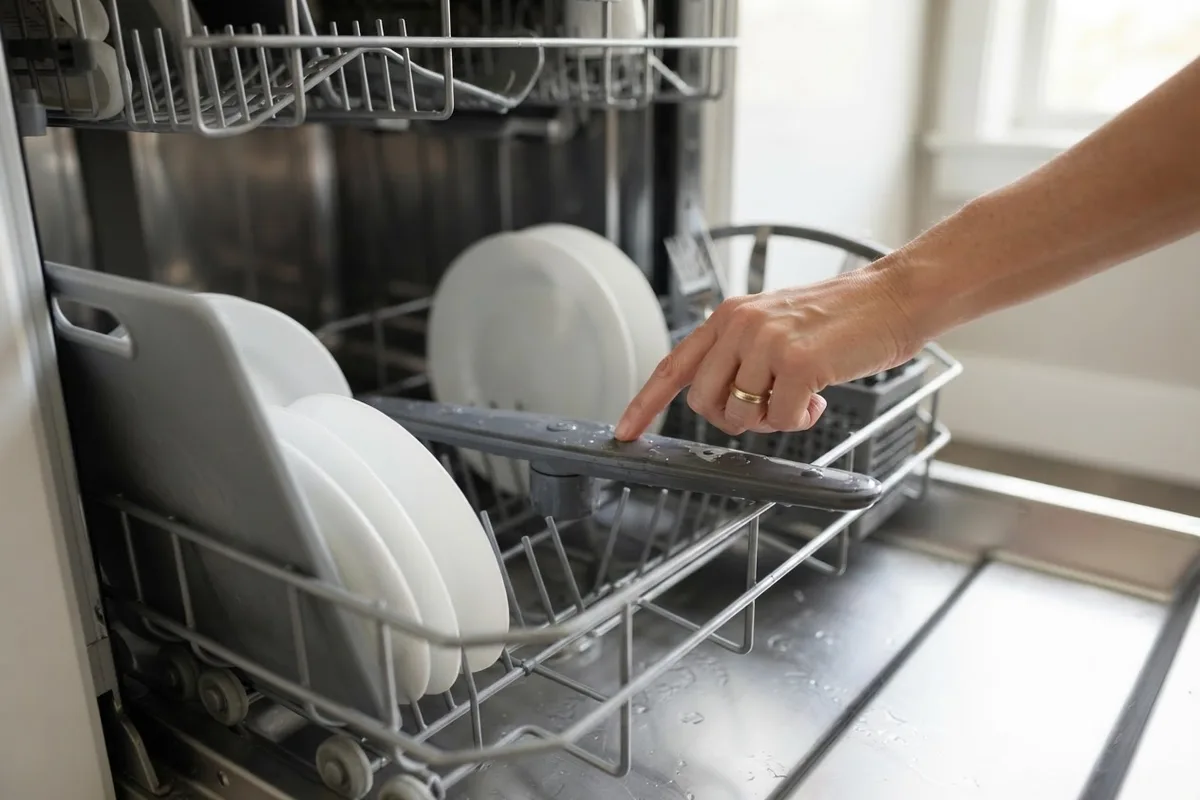
When a tall baking sheet, cutting board, or oversized platter blocks a spray arm, the arm stalls mid-cycle and pushes water pressure back against the wash pump. Over time, repeated impacts can crack plastic spray arms or loosen the central hub.
- Place tall cutting boards, baking pans, and serving platters along the outer left, right, or back edges of the lower rack rather than across the center.
- Check that long utensil handles in the silverware basket do not poke through the bottom slats where they can snag the lower spray arm.
- Give both the lower and middle spray arms a gentle manual spin with your fingers before closing the door to verify a full, unobstructed rotation.
- If an arm feels stiff or wobbles after a jam, switch off power to the dishwasher at the circuit breaker and shut off the under-sink water valve before inspecting the mounting nut.
2. Angle Bowls and Plates Toward the Center
Dishwasher spray arms rotate from the center outward, shooting angled jets upward and across each rack. Nesting plates tightly together or facing bowls outward deflects high-pressure spray straight into the door seams and causes dishes to rattle violently against one another.
- Load dinner plates on the lower rack facing inward toward the center hub, leaving one open tine gap between heavy stoneware pieces.
- Place bowls on the upper rack tilted downward at roughly a 45-degree angle facing the middle of the tub so water runs off instead of pooling inside.
- Position mugs and drinking glasses between the tines rather than directly over them to cut down on rattling and help prevent your dishwasher from chipping dishes.
- Set sturdy saucepans face-down on the bottom rack at a slight slant so water runs off the rims without shielding the upper rack from spray jets.
3. Keep Plastics Away From the Bottom Heating Element
Many American dishwashers use an exposed heating coil on the tub floor that gets extremely hot during wash and dry cycles. Loading lightweight plastics on the lower rack lets them tumble onto that coil, melting plastic onto the metal and creating a smoke or scorch hazard.
- Load all plastic food storage containers, travel lids, kids' cups, and nylon spatulas exclusively on the upper rack.
- Wedge lightweight plastic lids upright between sturdy mugs or behind tine clips so spray jets cannot flip them onto the tub floor.
- Check the bottom of every plastic container for a top-rack-safe label before loading, and hand-wash thin single-use takeout tubs.
- If a piece of plastic falls onto the heating element, cancel the cycle, switch off the circuit breaker, let the coil cool completely, and gently lift away the hardened plastic without scraping the metal sheath.
4. Balance Rack Weight to Save Rollers and Tracks
Dishwasher racks glide on small plastic wheels, nylon track stops, and metal rails built to carry balanced loads. Piling heavy stoneware plates, ceramic baking dishes, or stacked bowls onto one front corner bends slide rails, snaps wheel clips, and causes the rack to derail when pulled forward.
- Spread heavy dinnerware evenly between the left and right sides of the lower rack instead of packing one side full.
- Set extra-heavy items like ceramic casserole dishes toward the rear half of the lower rack, where the side rails stay supported inside the tub.
- Pull racks straight out using the center handle rather than yanking from one corner, which twists the side glides.
- Before snapping a loose roller back into place or adjusting a track stop, shut off power at the breaker and close the under-sink water supply valve so the unit stays completely inactive while your hands are inside.
5. Leave Clear Space Behind the Door Latch and Vent
Forcing the dishwasher door shut against a sticking-out pot handle or tall pan puts constant torque on the door hinges, bends the inner door liner, and keeps the latch strike from seating properly. Blocking the upper door vent also traps hot steam inside the door panel, which can warp nearby cabinets and stress control electronics.
- Slide both racks all the way back to their rear stops by hand before closing the door—never use the door itself to shove a loaded rack inward.
- Angle skillet handles, ladle tips, and tall cookie sheets away from the front edge of the lower rack so nothing presses against the inner door.
- Leave a couple of inches of open room in front of the upper-corner steam vent so moisture exits smoothly during the dry phase.
- Listen for a clean, single click when latching the door; if closing takes extra force, open the tub and shift the front row right away.
6. Keep Sharp Blades and Fragile Materials Out
Some everyday kitchen tools harm the dishwasher itself just as much as the dishwasher harms them. High heat, strong water pressure, and snug rack spacing turn sharp edges and loose materials into hidden hazards for internal hardware.
- Hand-wash chef's knives and serrated blades instead of placing them in the silverware basket, where sharp points slice the protective vinyl coating on rack tines and expose bare metal to rust.
- Keep wooden cutting boards, wooden spoons, and glued wood-handled tools out of the tub, since wood swells, splits, and sheds splinters that can jam the internal wash impeller.
- Peel paper jar labels, produce stickers, and loose aluminum foil off items before loading so torn scraps do not wrap around moving mechanical parts.
- Keep raw cast iron, copper pans, and delicate crystal out of the machine to prevent thermal shock, shattered glass on the tub floor, and staining on stainless walls.
Quick-Reference Loading Zone Guide
Use this quick-reference chart when clearing the counter after a big meal to match every item with the safest zone in your machine.
| Dishwasher Zone | Best Items to Load Here | Appliance Part Protected | Common Mistake to Avoid |
|---|---|---|---|
| Lower Rack (Center) | Dinner plates, salad plates, sturdy cookware | Lower spray arm and wash pump | Nesting plates tight or blocking the center hub |
| Lower Rack (Outer Edges) | Tall platters, plastic cutting boards, baking sheets | Middle spray arm and door liner | Placing tall items across the front or center |
| Upper Rack | Bowls, mugs, glasses, top-rack-safe plastics | Bottom heating element | Laying light lids flat so jets flip them down |
| Silverware Basket / Third Rack | Forks, spoons, butter knives, flat spatulas | Lower spray arm and rack tine coating | Loading sharp blades tip-down or nesting spoons |
| Hand-Wash Only | Chef's knives, cast iron, wood, delicate crystal | Door gasket, vinyl rack coating, wash impeller | Placing wood or foil-wrapped pans in the tub |
When to Call a Pro
Smart loading prevents most everyday mechanical wear, and regular habits from a home appliance safety checklist help catch minor trouble early. Even so, some hardware problems need an appliance repair pro rather than another rack adjustment. Stop running the machine and switch off its circuit breaker if the door refuses to latch when empty, the heating element looks blistered or cracked, a spray arm stops spinning despite having full clearance, or water pools on the kitchen floor.
Never open the inner door control housing, work inside an electrical panel, or take apart a sealed motor assembly yourself. Typical US dishwasher repairs—such as replacing a worn door latch, bent hinge, or damaged heating element—generally cost between $150 and $350, though pricing varies by area and model. When careful loading is not enough to fix the issue, True Appliance Repair can connect you with an independent local dishwasher repair pro to diagnose the problem safely.
FAQ
Should silverware go handles up or handles down in a dishwasher?
Load forks and spoons with handles down so water reaches the eating surfaces, alternating a few handles up if spoons tend to nest together. Always place butter knives handles up for hand safety, and wash sharp chef's knives by hand so they do not slice the basket or rack coating.
Can overloading a dishwasher actually break it?
Yes. Cramming dishes too tightly jams spray arms, strains rack rollers and metal slide rails, and forces door hinges to absorb pressure when you push the door closed. Running two properly spaced loads puts far less wear on internal parts than forcing everything into one packed cycle.
Should bowls go on the top rack or bottom rack?
Small and medium bowls belong on the upper rack, tilted downward toward the center so spray jets reach inside and water runs off cleanly. Large mixing bowls can go on the lower rack along the sides or back as long as they stay angled and do not block water from reaching the upper rack.
Why shouldn't I use the dishwasher door to push the bottom rack in?
Pushing a loaded lower rack inward with the door slams the plastic rollers into the rear rail stops and twists the door hinges out of alignment. Over time, that habit loosens the latch strike and stops the door gasket from sealing tightly around the tub.