
Pulling a freshly washed dinner plate or wine glass from the dishwasher only to feel a jagged rim is frustrating—especially when you are hosting family meals or unpacking your favorite dishware for the holidays. In most homes, chipped plates and cracked glassware come down to physical jostling inside the tub, worn rack hardware, or sudden temperature spikes rather than fragile tableware. Walk through these six safe DIY checks to pinpoint what is damaging your dishes and stop future chips for good.
Safety first: Before doing any hands-on checks or part swaps inside or around the machine, turn off the dishwasher's dedicated circuit breaker or unplug it, and shut off the hot water supply valve under the sink.
1. Space Dishes to Prevent Water-Jet Collisions
High-pressure water jets push lightweight bowls, mugs, and thin-rimmed glasses much harder than most homeowners realize. When dishes touch even slightly on the rack, that steady spray makes them tap together hundreds of times during a single cycle, leaving tiny half-moon chips along the edges.
- Leave at least half an inch of air between plates, bowls, and drinking glasses so water pressure cannot rock them into their neighbors.
- Place heavy stoneware and dinner plates in the lower rack, keeping delicate wine glasses and thin tumblers upright on the upper rack.
- Clip stemware into the fold-down stem holders or angle glasses gently against coated tines rather than wedging them between two ceramic mugs.
- Lay lightweight plastic lids flat or tuck them securely beneath heavier bowls so they cannot fly loose and knock into glassware mid-cycle.
2. Replace Worn Rack Tine Caps and Loose Clips
Your dishwasher's steel racks are coated in soft vinyl or nylon to cushion ceramic and glass edges. Over years of daily heat, those protective tips crack, peel back, or fall off completely, leaving hard bare wire that chips glaze the moment a plate shifts or slides onto a tine.
- Unload both racks and run your fingers carefully along every tine tip and corner weld to feel for missing caps or peeling coating.
- Dry any exposed metal thoroughly with a microfiber towel so repair sealants adhere properly.
- Dab food-safe rack repair sealant onto small nicks, and press replacement vinyl tine caps onto bare tips until they sit flush.
- Snap loose fold-down tine row clips back into place—or replace cracked clips—so a whole row of plates cannot collapse sideways.
If exposed wire has already turned orange, follow these dishwasher rack rusting fixes before the damage spreads.
3. Swap Out Broken Rack Rollers and Track Stops
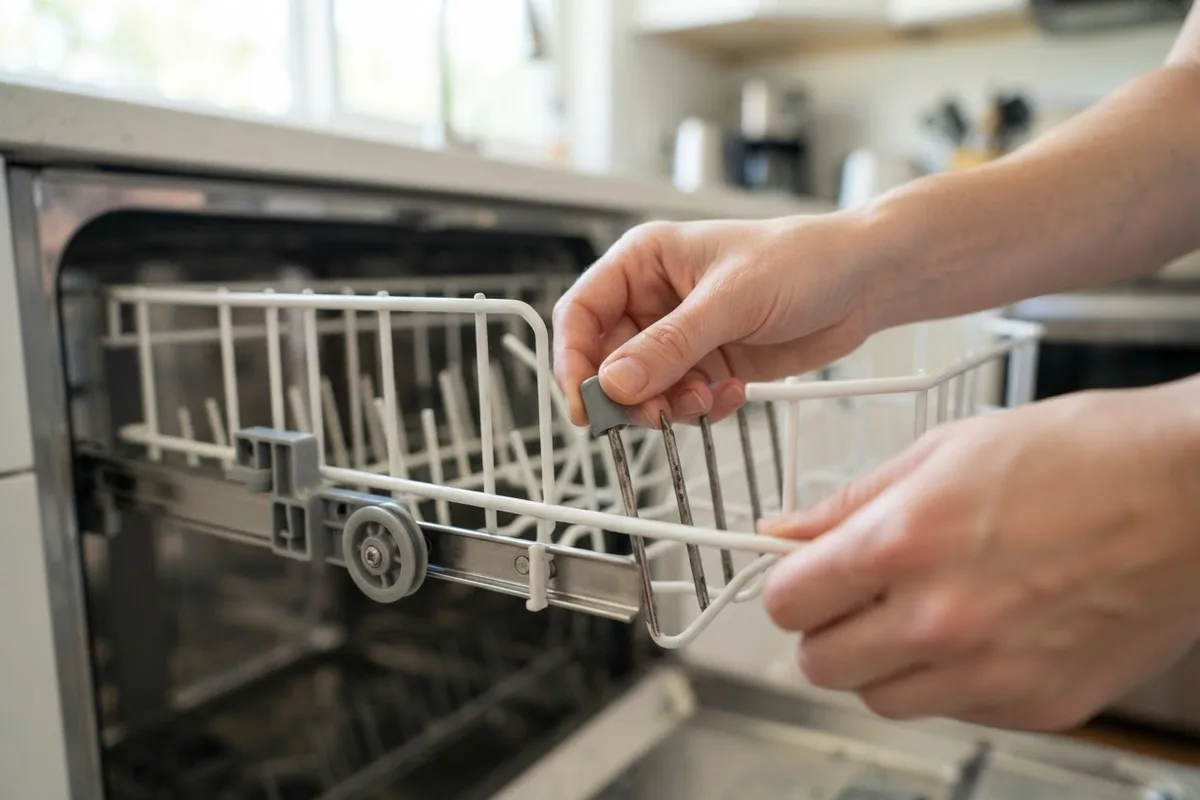
A rack that jolts, drops an inch on one side, or rolls crookedly slams dishes together every time you load or unload—and tilts glassware toward the tub wall during the cycle. Worn plastic wheel hubs and cracked front rail stops are inexpensive parts that fail quietly over time.
- With the power off at the breaker, pull each rack fully forward and examine the plastic wheels along both sides.
- Spin each roller with your thumb; any wheel that feels flat-spotted, cracked, or wobbly should be replaced.
- Check the plastic end stops at the front of the upper track rails so the rack cannot slide off the rail under a heavy holiday load.
- Unclip damaged roller assemblies and snap in model-matched replacement wheels, which typically cost $15 to $45 per set, though prices vary by area and model.
4. Check Spray Arm Clearance and Hub Stability
When a spinning spray arm clips a tall platter, baking sheet, or protruding utensil handle, the impact sends a sharp jolt through the entire rack. A worn center hub or heat-warped plastic arm can also wobble off-axis and tap nearby rims on every rotation.
- With the breaker still off and dishes loaded as you normally arrange them, reach inside and spin both the lower and upper spray arms by hand.
- Watch closely for any spot where an arm tip brushes a plate rim, silverware handle, or hanging mug.
- Gently wiggle each spray arm up and down at its center mounting nut; excessive play signals a worn hub bushing or loose retaining cap.
- Re-seat a loose arm firmly, or replace a cracked, warped spray arm with a model-specific part before running your next load.
5. Level the Dishwasher and Tighten Brackets
An unlevel or poorly anchored dishwasher rocks slightly as the circulation motor starts, stops, and shifts water weight inside the tub. That subtle vibration causes dishes to chatter against neighboring bowls and rattle against the rack rails throughout the wash.
- Confirm the circuit breaker is off and the under-sink water valve is closed before adjusting the cabinet unit.
- Open the door, set a carpenter's level across the bottom tub rim from side to side and front to back, and check for any tilt.
- Adjust the front leveling legs with a wrench or pliers until the machine sits flat and solid on the kitchen floor without rocking.
- Inspect the mounting brackets securing the top or sides of the frame to the underside of the countertop or adjacent cabinets, tightening any backed-out screws snugly without stripping the wood.
6. Lower Water Heat to Stop Thermal Shock
Not every cracked glass comes from a physical bump. Sudden temperature swings—known as thermal shock—create hairline fractures and popped rims when chilled glasses meet scalding water, or when intense drying heat stresses delicate stoneware.
- Let cold glasses straight from the refrigerator or ice water sit at room temperature for a few minutes before loading them into a hot cycle.
- Check your home water heater temperature dial; around 120°F works well for dishwashers, while settings above 130°F to 140°F increase glass stress and scald risk.
- Switch from Sanitize or High-Temp Wash to Normal or Delicate cycles when washing thin stemware, vintage china, or handmade pottery.
- Turn off Heated Dry for fragile glassware and crack the door slightly once the cycle ends so steam vents gradually.
If the interior feels abnormally scorching even on a Normal cycle, a faulty thermostat may be overheating the water.
Match the Dish Damage to the Likely Cause
Looking at where and how your dishes break narrows down the culprit quickly. Use this quick reference before ordering replacement parts:
| Damage Pattern | Most Likely Cause | First DIY Step |
|---|---|---|
| Small half-moon chips on plate rims | Plates knocking together or hitting bare tines | Increase spacing and add vinyl tine caps |
| Clean vertical cracks in tall glasses | Thermal shock from scalding water or cold glass | Verify 120°F water heat and skip High-Temp cycles |
| Chips on tall platters or lower-rack bowls | Lower spray arm striking tall items | Spin spray arms by hand before every load |
| Cracked mugs on upper rack edges | Broken rack rollers or missing track stops | Replace worn wheel assemblies and rail clips |
| Random chips across the entire load | Unlevel tub vibrating during operation | Level front feet and tighten mounting brackets |
When to Call a Pro
Simple hardware swaps—like vinyl tine tips, snap-on rollers, spray arms, and leveling adjustments—are manageable weekend fixes for most homeowners. Stop and call a repair technician, however, if you suspect an electrical or heating malfunction. Never open the main control housing, work near your electrical panel, or test live heating-element or high-limit thermostat circuits yourself, and bring in a pro for any gas or electrical water-heater repairs.
Professional repairs for a failing high-limit thermostat, control board, misaligned tub frame, or full rack-track replacement generally run $150 to $350 in the US, though parts and labor vary by area and model. You can review typical dishwasher repair costs to weigh a repair against replacement. If you want an experienced technician to inspect an overheating or vibrating unit safely, True Appliance Repair can match you with local dishwasher repair pros in your area.
FAQ
Can high water pressure in a dishwasher chip dishes?
Yes, strong spray jets can shift lightweight glasses, ramekins, and thin plates enough to knock them against neighboring items or metal tines. Leaving half an inch of space between pieces and placing fragile glassware securely on the upper rack prevents water-jet impacts during normal operation.
Why do only my wine glasses crack in the dishwasher?
Thin-walled stemware is far more vulnerable to both rattling and thermal shock than thick everyday stoneware. Secure stems in dedicated fold-down clips so they cannot lean against mugs, keep water heater settings near 120°F, and choose a Delicate or Normal cycle without high-heat sanitizing.
Are some ceramic or stoneware plates more likely to chip?
Porous earthenware and low-fired ceramics expand faster under sudden heat, making their rims prone to chipping when bumped. Even sturdy porcelain will chip, though, if rack tine coatings have peeled off to expose bare steel wire underneath.
How much does it cost to replace dishwasher rack rollers or tines?
Snap-on vinyl tine cap kits and rack repair sealants typically cost $10 to $25, while replacement wheel assemblies generally run $15 to $45 per set. Full replacement dish racks cost more—often $90 to $220—and final prices vary by area and model.