
Moving heavy household equipment without proper preparation is one of the fastest ways to cause flooded floors, cracked drums, and ruined cooling systems. A little advance planning prevents expensive transit damage and saves hours of scrambling on moving morning. Follow this moving home appliances checklist to safely disconnect, drain, secure, and reset every major unit in your home.
1. Shut Off Power, Water, and Gas Lines First
Never pull an appliance away from the wall while utilities are still live. Tugging on a plugged-in cord or pressurized hose can rip out an outlet, burst a supply line, or crack a gas fitting.
- Turn off the dedicated circuit breaker in your electrical panel before unplugging heavy 240-volt units, or switch off and unplug standard 120-volt cords from the wall.
- Close every local water shutoff valve behind laundry and kitchen units by turning the handle clockwise until it stops.
- If you have a gas range or gas dryer, turn the inline gas shutoff valve perpendicular to the pipe, and stop there—do not disconnect the gas line yourself.
- Coil each unplugged power cord neatly and secure it to the back panel with painter's tape so movers cannot trip over it.
2. Defrost and Dry Cooling Appliances 24 Hours Early
Starting this step the day before movers arrive keeps hidden meltwater from soaking your moving truck and prevents sour mildew smells from building up in transit.
- Empty all perishable food, ice cubes, and removable bins from your refrigerator and freezer at least 24 to 48 hours ahead of schedule.
- Unplug the unit, prop the doors wide open, and lay thick bath towels around the base to catch water as hidden evaporator frost melts.
- Slide out the bottom drain pan if accessible, dump any standing water, and wipe the tray dry with a clean cloth.
- Check that the interior walls and gaskets are bone-dry before closing the doors, as trapped moisture and improper prep can contribute to cooling issues later, similar to the causes covered in our guide on why a fridge temperature fluctuates.
3. Drain Water Lines, Hoses, and Sump Areas Completely
Even a unit that looks dry on the outside can hold several cups of trapped water inside its pump, hoses, or internal valves. Tilting it during a move spills that water straight onto hardwood floors or cardboard boxes.
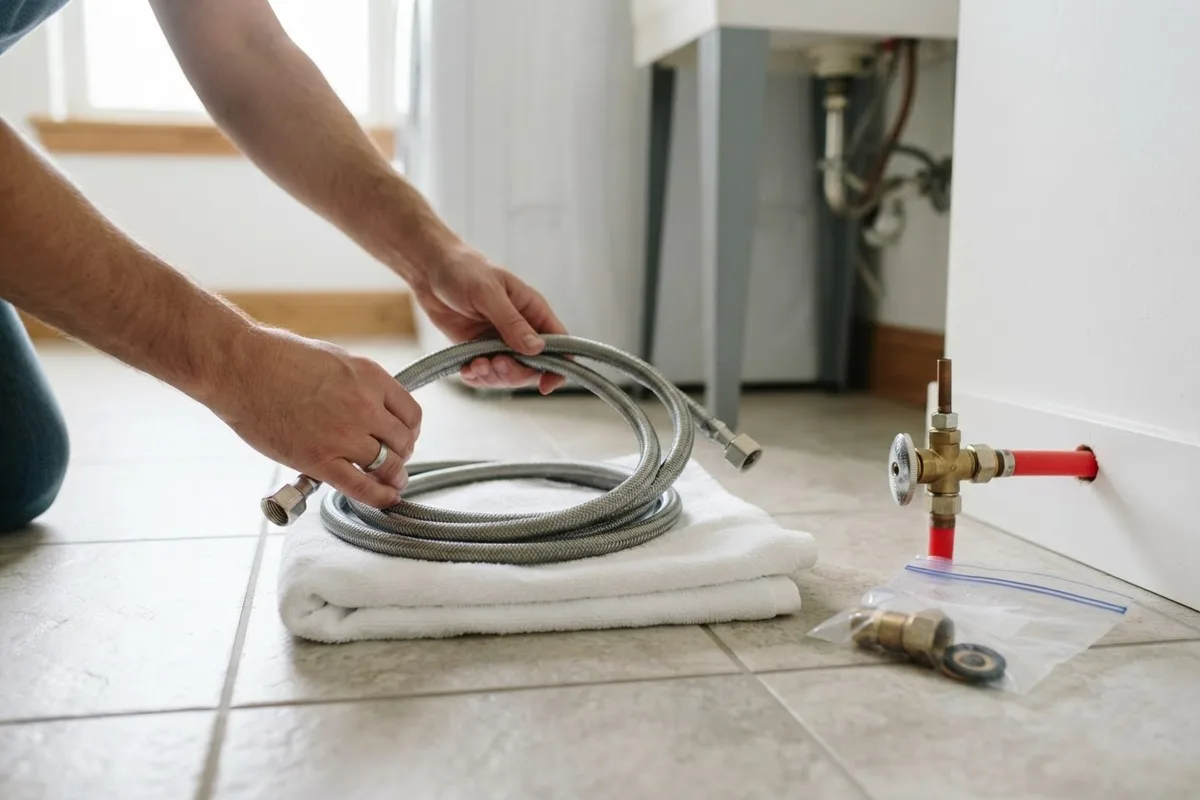
- Place a shallow pan and old towels under water valves before unscrewing braided supply hoses from washing machines, dishwashers, and ice makers.
- Lower drain hoses into a bucket to let leftover water flow out, then empty the washer's front drain pump filter if your model has one.
- Run a short drain-only cycle on your dishwasher if possible, then blot remaining water out of the bottom sump filter with a dry sponge.
- Dry each detached hose thoroughly, seal the ends in a zip-top bag, and label the bag with the matching appliance name.
4. Install Shipping Bolts and Secure Loose Parts
Unsecured internal drums and loose glass shelves take the brunt of bumps on the road. Securing moving parts takes ten minutes and prevents some of the costliest moving-day repairs.
- Reinstall the factory transit or shipping bolts on the back of front-load washing machines to lock the suspended drum in place.
- Remove glass refrigerator shelves, crisper drawers, oven racks, burner grates, microwave turntables, and loose control knobs.
- Wrap each removable piece individually in bubble wrap or packing paper and pack them in a clearly labeled box rather than leaving them loose inside the cabinet.
- Tape appliance doors shut using low-residue painter's tape or stretch wrap over moving blankets—never stick duct tape directly onto painted or stainless steel finishes.
5. Clean, Deodorize, and Protect Doors and Seals
Residual food grease, detergent buildup, and damp rubber seals turn foul fast once an appliance sits sealed inside a moving van or storage unit.
- Wipe interior shelves, drums, and racks with a mild solution of warm water and dish soap, then rinse with a damp cloth and dry completely.
- Place an open box of baking soda or a small mesh pouch of activated charcoal inside cooled, dry cabinets if the units will sit in storage for more than a day.
- Inspect rubber door seals for dirt or sticky residue, wipe them gently, and avoid pinching them with tight straps, since damaged seals can cause leaks down the road like those explained in our torn dishwasher door gasket guide.
- Wrap exterior corners and control panels with thick quilted moving blankets secured by straps so hallway bumps will not dent doors or crack display boards.
6. Measure Pathways and Settle Units After Moving
Rushing the final haul or plugging everything back in the second it hits the new kitchen floor can undo all your careful prep work.
- Measure every doorway, tight hallway turn, stairwell, and the new alcove width before moving day; remove appliance doors only if the manual shows safe hinge removal.
- Keep refrigerators, freezers, washers, and dryers upright on an appliance dolly with heavy-duty straps whenever possible.
- Once placed in your new home, remove shipping bolts from the washer immediately before running any cycle, and adjust leveling feet so every machine sits flat without rocking.
- Let refrigerators and freezers sit upright and unplugged for at least 4 hours—or up to 24 hours if tilted during transit—so compressor oil settles back where it belongs.
| Appliance Type | Start Prep | Most Important DIY Step | Safe Transport Rule |
|---|---|---|---|
| Refrigerator & Freezer | 24-48 hours before | Defrost, empty drain pan, dry fully | Keep upright; settle before plugging in |
| Washing Machine | 12-24 hours before | Drain hoses/pump; install transit bolts | Keep upright; remove bolts before use |
| Clothes Dryer | 2-4 hours before | Clean lint trap/vent; cap gas via pro | Protect control panel; keep upright |
| Dishwasher | 24 hours before | Drain sump and disconnect supply line | Keep upright; protect door gasket |
| Range, Oven & Microwave | 2-4 hours before | Remove grates, racks, knobs, glass tray | Keep upright; pad glass doors heavily |
When to Call a Pro
Most cleaning, draining, and packing steps are safe DIY jobs, but utility connections and sealed components are not worth the risk. Stop and call a qualified technician if you need to disconnect or cap a natural gas or propane line for a stove or dryer, unhook a hardwired 240-volt range or dishwasher circuit, or troubleshoot a cooling unit that refuses to chill after a move. Attempting gas work or electrical panel modifications yourself can cause dangerous leaks, shock hazards, or fire risks.
In the US, hiring a technician for a basic gas disconnect, reconnect, or post-move appliance inspection typically ranges from $100 to $300, though exact pricing varies by area, model, and local code requirements. If you need dependable help disconnecting complex units or checking an appliance that acts up after moving day, True Appliance Repair can match you with a local appliance pro in your area.
FAQ
How long should a refrigerator sit upright before plugging it in?
If the refrigerator stayed completely upright during the move, waiting 2 to 4 hours before plugging it in is usually plenty. If it was tilted or laid down at any point, wait a full 24 hours so compressor lubricant can drain back out of the cooling lines before the motor starts.
What happens if you move a washing machine without shipping bolts?
Front-load washers have heavy drums suspended on springs and shock absorbers. Without shipping bolts locking the drum still, road vibrations can slam the tub against the cabinet, snapping suspension rods, cracking the outer tub, or damaging nearby wiring.
Can you transport major appliances on their side?
It is best to keep every major appliance upright on an appliance dolly. Laying units down can push compressor oil into refrigerant lines, bend leveling brackets, crack glass cooktop panels, or allow residual water to leak onto sensitive electronic control boards.
How much does it cost to have a pro disconnect or reconnect appliances?
Typical US service visits for professional gas or hardwired appliance disconnection and reconnection fall around $100 to $300 per appointment. Costs vary by area, appliance model, and whether new braided hoses, gas flex lines, or shutoff valves are needed at the new home.