
When your oven bakes normally from the bottom but the top broiler refuses to heat, weeknight dinners and holiday roasts grind to a halt. Whether an electric coil stays dark or a gas burner will not ignite, most broiler trouble traces back to a few common parts. Walk through these six safety-first checks to spot the issue before booking a repair.
1. Check Oven Settings and Door Position
Before pulling tools out, verify that the range is actually commanding the broiler to turn on. Modern digital ranges often require you to press Start after choosing Broil Hi or Broil Lo, and a locked control panel or active delay-start timer will block heating altogether. Door position also trips up many homeowners. Most newer ovens automatically shut off the broil element if the door is cracked open, whereas older mechanical models often require leaving the door propped at the first broil stop.
- Cancel any active cooking cycle and check the display for a Lock or Delay icon.
- Select Broil, choose Hi, and press Start firmly.
- Close the oven door completely and listen for a faint relay click within 15 seconds.
- Gently press the door switch plunger along the upper frame to make sure it springs back freely instead of sticking in the open position.
2. Reset a Tripped Double-Pole Breaker
Electric ranges run on a 240-volt double-pole circuit—two 120-volt legs working together. If just one leg of that breaker trips, your oven clock, interior light, and touchpad will still glow normally, fooling you into thinking the appliance has full power while leaving the broil element dead. Gas ovens run on standard 120-volt power, yet a tripped breaker will still prevent an electric igniter from heating up.
- Turn the oven dial or control panel completely Off.
- Walk to your main electrical panel—never remove the panel cover or touch any internal wiring.
- Locate the double-pole breaker labeled Range or Oven.
- Push the handle firmly to the Off position, then flip it solidly back to On.
- Test Broil for two minutes; if the breaker trips again right away, stop and call an appliance pro or electrician.
3. Inspect the Electric Broil Element
On an electric range, the upper broil element endures intense thermal cycling and eventually burns out. Before touching anything inside the cavity, turn off power to the range at the main breaker or unplug the unit, and confirm the oven is completely cool.
- Remove the upper oven racks so you have a clear view of the ceiling element.
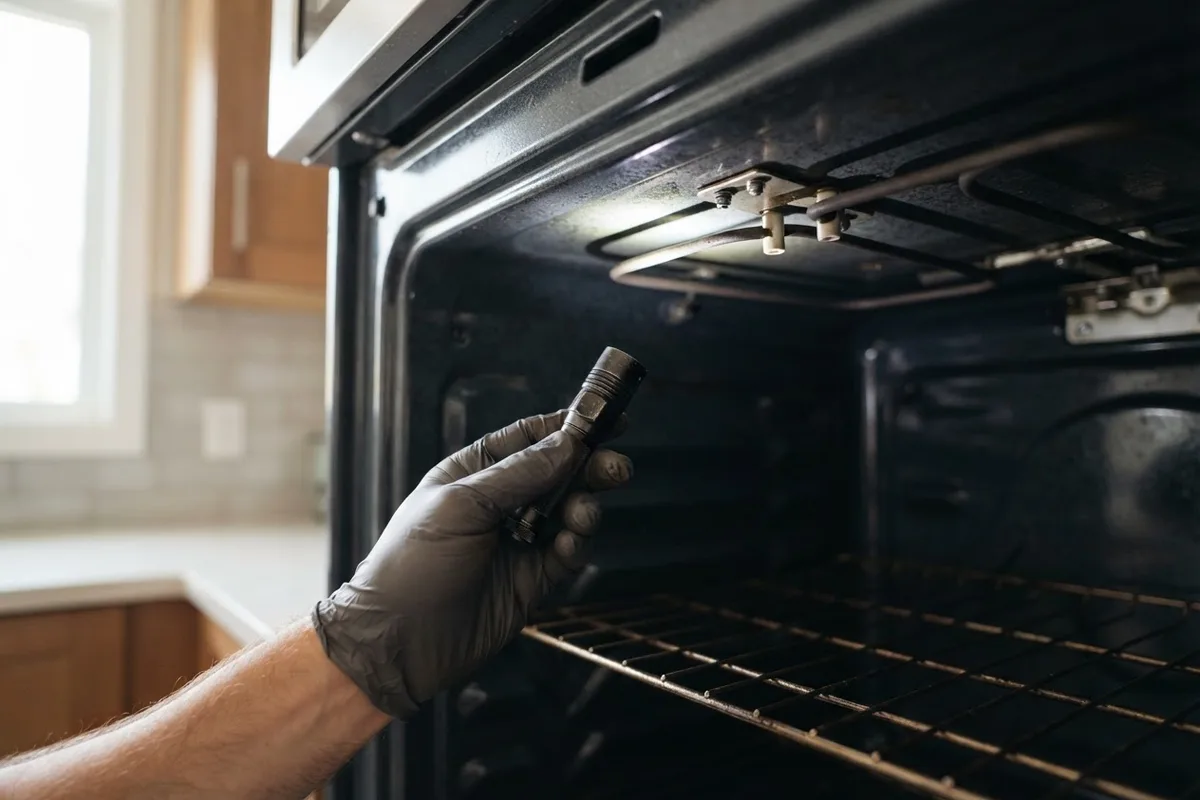
- Shine a bright flashlight along the entire loop of the metal coil.
- Look closely for dark burn marks, blisters, pitting, cracks, or a visible separation in the metal sheath.
- Check the two mounting brackets and rear wall terminals for scorched ceramic insulators or loose push-on connectors.
- Note your oven's model number (usually printed on the frame inside the door) if you see physical element damage; a visibly blistered coil cannot be repaired and needs a direct replacement.
4. Check the Gas Broiler Igniter and Ports
Gas ovens rely on a fragile silicon-carbide igniter next to the upper broiler burner tube. Over time, igniters weaken: they may still glow bright orange yet fail to draw enough current to open the gas safety valve. Grease buildup can also block the tiny burner ports. Never disassemble gas lines yourself—if you smell raw gas at any point, shut off the valve, air out the room, and call a pro.
- Turn the oven off, switch off the range breaker or unplug the cord, and let the cavity cool.
- Inspect the upper burner tube with a flashlight for clogged ports or a cracked, chalky igniter.
- Gently sweep soot off the metal ports with a dry soft brush, without touching the brittle igniter.
- Restore power, start Broil, and watch through the window. If the burner takes over 90 seconds to light—or shows yellow or orange flames instead of crisp blue—shut it off and book service.
5. Inspect the High-Limit Thermal Fuse
Many ovens include a high-limit thermostat or thermal fuse mounted behind the rear panel to stop runaway temperatures. These safety cutoffs frequently blow right after a high-heat self-clean cycle, cutting power to the heating elements while leaving the digital clock powered. Never bypass or jump a thermal fuse—doing so creates a serious fire hazard.
- Turn off power at the circuit breaker and shut off the gas valve if your range uses gas.
- Check your owner's manual or the wiring diagram taped to the rear panel to see if your model uses a resettable high-limit switch or a one-time fuse.
- Slide the range forward carefully to check the back access panel only if you feel comfortable moving a heavy appliance safely.
- Look for a small red reset button on the high-limit switch (select models only) or scorched wire leads.
- If a one-time fuse has blown, replace it with an exact factory-rated part or call a technician to find out why the cavity overheated.
6. Test Bake Mode and the Temp Sensor
If the broiler stays cold while every visible wire looks intact, testing Bake mode helps narrow down whether the problem is shared across the oven or isolated to the broil circuit. When Bake heats normally but Broil does nothing, the main control board's broil relay, the broil element itself, or a dedicated broil igniter is usually at fault rather than the shared temperature sensor.
- Switch the oven to Bake at 350°F for five minutes and check whether the bottom burner or element heats steadily.
- Shut off power at the breaker and let the oven cool completely.
- Locate the thin metal temperature sensor rod near the upper rear corner of the cavity.
- Wipe away baked-on grease with a damp cloth, since heavy buildup insulates the probe and causes premature shutoffs.
- Check the display for stored F-codes or error alerts, which point directly to a failing sensor or control board.
When to Call a Pro
DIY troubleshooting stops at visual checks, breaker resets, and basic cleaning. Any repair involving live 240-volt wiring, electrical panel faults, gas safety valves, or internal control board relays belongs in trained hands. Calling a technician right away is especially smart if you notice burning electrical odors, scorched rear terminal blocks, repeated breaker trips, or any raw gas smell.
| Broiler Symptom | Likely Culprit | DIY or Pro? | Typical US Repair Cost* |
|---|---|---|---|
| Clock works, no heat on Broil | Tripped 240V breaker leg or broil relay | DIY reset / Pro board repair | $250–$550+ (board) |
| Blistered or broken top coil | Burned-out electric broil element | Advanced DIY or Pro | $120–$280 |
| Gas igniter glows, won't light | Weak gas broiler igniter | Pro recommended | $150–$320 |
| Dead heat right after self-clean | Blown high-limit thermal fuse | Pro recommended | $140–$260 |
| No gas flow or lingering odor | Faulty gas safety valve | Call a pro immediately | $250–$450 |
Ranges reflect broad US parts-and-labor estimates and vary by area, range brand, and model.
When a part needs testing with a multimeter or gas-line handling, True Appliance Repair can connect you with an independent local technician through our oven and stove repair service. If you want help scheduling an inspection, you can also request a local pro match quickly.
FAQ
Why does my oven bake fine, but the broiler won't work?
When baking works normally, your main power supply and temperature sensor are usually doing their job. The issue is almost always isolated to the broil circuit—most often a burned-out upper broil element on an electric range, a weak dedicated broil igniter on a gas unit, or a stuck broil relay on the control board.
Can you use a broiler with a weak igniter?
No—avoid running a gas broiler if the igniter glows slowly or hesitates before lighting. Delayed ignition allows unburned gas to build up inside the oven cavity, which can cause a loud bang or flare-up when it finally catches. Shut the oven off and have the igniter replaced before broiling again.
Should the oven door be open or closed when broiling?
Check your owner's manual because designs vary by age and brand. Most modern digital ovens require the door to stay fully closed during broiling and automatically cut power to the element if the door opens. Older mechanical ovens often use a slight broil-stop gap to keep the thermostat from cycling the element off too soon.
How long does an oven broiler element or igniter usually last?
Most electric broil elements and gas silicon-carbide igniters last several years under normal household use, depending on how often you broil and run high-heat self-cleaning cycles. Heavy grease splatter and frequent self-clean runs shorten part life fastest, so wiping spills regularly and reserving self-clean for rare occasions helps protect your range.