
Seeing a lazy yellow or bright orange flame on your gas range instead of a crisp blue ring is more than a cooking annoyance—it means the burner is not getting the right fuel-to-air mix, which coats your pans in black soot and wastes heat. Especially during winter heating and holiday cooking season, simple culprits like an ultrasonic humidifier or boiled-over gravy are often to blame. Walk through these six safe checks to pinpoint the cause and know right away whether it is a five-minute cleanup or a job for a gas technician.
Safety First: Before touching any burner part, turn all control knobs completely to OFF, let grates and caps cool to room temperature, and unplug the range or switch off its circuit breaker so the electric igniter cannot spark. If you ever smell rotten-egg gas odor or hear hissing with the knobs off, do not flip switches—leave the house immediately and call your gas utility from outside.
1. Turn Off Ultrasonic Humidifiers Nearby
If every burner on your stove suddenly burns bright neon orange—especially in dry winter months—check for a cool-mist ultrasonic humidifier running anywhere in the house before taking anything apart. Ultrasonic units nebulize tap water along with its dissolved calcium, sodium, and magnesium minerals into microscopic airborne dust. When those tiny sodium particles drift into the kitchen and hit a gas flame, they glow vivid orange even though the stove itself is working normally.
- Turn off all portable ultrasonic humidifiers in your home.
- Open a kitchen window slightly for 15 to 20 minutes to clear the indoor air.
- Light one burner and watch the flame color.
- If the flame returns to crisp blue, switch to distilled water in your humidifier or use an evaporative wick model instead.
Keeping mineral dust down also simplifies the rest of your routine—pair this check with 7 home appliance maintenance tasks you can do this weekend to keep the whole kitchen running smoothly.
2. Realign Misplaced Burner Caps and Heads
It only takes bumping a burner cap slightly off-center with a sponge or dish towel to disrupt how gas and room air mix around the burner ring. When a cap sits crooked or tilted on its retaining lip, gas escapes unevenly from one side, flaring up in tall yellow tongues that leave dark scorch marks on the bottom of skillets.
- Confirm the burner is completely cool to the touch.
- Lift off the cast-iron grate and inspect each round porcelain or cast-iron cap.
- Match each cap to its correct burner size—swapping a medium cap onto a simmer burner causes instant yellow flaring.
- Set the burner head snugly onto its alignment pins, then place the cap flat in its recessed groove.
- Gently nudge the cap side to side; it should not rock or slide. Plug the range back in and test the flame.
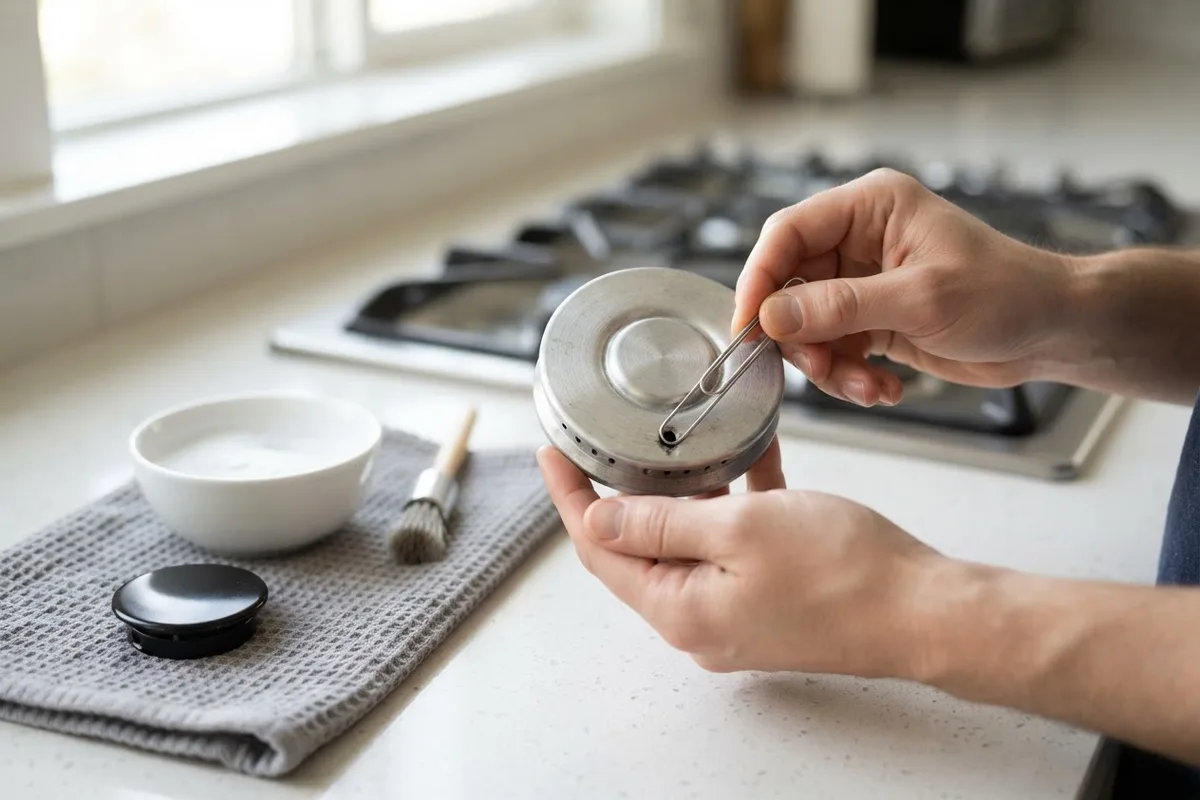
3. Clear Clogged Burner Ports and Orifices
Boiled-over pasta water, cooking grease, and baked-on crumbs regularly plug the tiny slots and holes around the burner head. Blocked ports starve part of the ring while forcing extra gas out neighboring holes, creating erratic yellow-tipped flames and uneven heating across your cookware.
- Unplug the range and remove the grates, burner caps, and lift-off burner heads.
- Soak the caps and heads in warm water mixed with a few drops of degreasing dish soap for 20 minutes.
- Scrub away softened residue with an old toothbrush and a paste of baking soda and water.
- Use a straightened metal paperclip or stiff sewing needle—never a wooden toothpick, which can snap off inside—to gently clear each flame slot around the burner head.
- Dry every piece thoroughly with a lint-free towel (trapped water droplets also cause temporary sputtering orange flames) before reassembling.
If you own a dual-fuel or glass-surface gas cooktop, wipe the surrounding surface carefully afterward using the safe methods in our guide on how to clean a glass stove top.
4. Wipe Grease Off Air Shutters (Older Ranges)
Gas burners need primary air drawn in beneath the cooktop before the gas ever reaches the burner head. Many older freestanding gas ranges and commercial-style stoves have adjustable metal sleeves—called air shutters—mounted along the burner venturi tubes under the lift-up top. Over years of frying and sautéing, sticky airborne grease and pet hair collect around those openings and choke off oxygen, turning a blue flame lazy, tall, and smoky yellow.
- Unplug the stove and make sure the gas shutoff valve behind the range is accessible.
- If your stove has a hinged cooktop deck, lift it carefully and prop it with its support rod (skip this step on sealed-burner modern cooktops that require disassembly).
- Shine a flashlight at the metal tubes leading from the front knobs to each burner.
- Wipe visible dust, lint, or grease off the exterior slots of the air shutters using a dry microfiber cloth or soft brush—do not loosen set screws or change factory shutter positions yourself.
Adjusting fuel-air shutters or gas manifold pressure requires combustion testing tools; leave mechanical adjustments to a technician.
5. Check Kitchen Ventilation and Drafts
Sometimes the burner is clean, yet flames turn orange-tipped after 15 minutes of simmering holiday stockpots or running the oven at the same time. Tight winter homes with closed windows, blocked make-up air vents, or grease-clogged range hood filters can subtly reduce fresh oxygen right above the cooktop or create cross-drafts that blow the flame sideways.
- Pop the metal mesh grease filters out of your over-the-range microwave or vent hood.
- Soak the filters in hot soapy water for 15 minutes, scrub clean, rinse, and let dry before reinstalling.
- Turn the exhaust fan to low or medium while cooking with multiple burners, and crack a nearby window half an inch if your kitchen feels stuffy.
- Re- redirect portable fans or HVAC floor registers that blow directly across the stove grates, which push flames off the burner ports and cause orange flickering.
Quick Reference: Gas Stove Flame Color Guide
| Flame Appearance | What It Means | Action to Take |
|---|---|---|
| Steady blue with tiny light-blue cones | Complete, efficient combustion | Normal—no action needed |
| Bright neon orange on all burners at once | Airborne minerals (usually a humidifier) or salt spill | Turn off ultrasonic humidifiers and air out room |
| Tall, lazy yellow flames leaving black soot | Incomplete combustion / starved airflow or wrong orifice | Stop using burner; clean ports or schedule service |
| Lifting or roaring blue/yellow flames | Too much air pressure or regulator issue | Shut off burner and have regulator inspected |
6. Verify Propane (LP) Conversion Setup
If your stove is brand-new, recently moved, or just hooked up to bottled propane in a rural home or cabin, continuous tall yellow flames that coat pots in heavy black soot almost always point to an unconverted natural gas setup. Ranges ship from the factory configured for lower-pressure natural gas. Running higher-pressure liquid propane (LP) through larger natural-gas brass orifices floods the burners with excess fuel.
- Stop using the stove immediately if a new propane installation produces sooty yellow flames.
- Check your installation manual and paperwork to see whether the manufacturer LP conversion kit (brass orifices and pressure regulator flip) was installed.
- Do not attempt DIY gas line, regulator, or orifice swaps—improper gas pressure creates serious carbon monoxide and fire hazards.
When to Call a Pro
Cleaning burner caps, soaking range hood filters, and switching off a cool-mist humidifier are safe, free homeowner fixes that solve most orange flames in under half an hour. However, stop DIY troubleshooting right away and shut off the burner if you see persistent lazy yellow flames leaving black soot after cleaning, smell raw gas or sharp exhaust fumes, hear popping inside the manifold, or suspect a faulty gas pressure regulator or missing LP conversion.
Typical US professional service for gas burner airflow tuning, orifice cleaning, or regulator replacement often ranges from roughly $125 to $325, though pricing varies widely by area, fuel type, and stove model. Working on gas valves, internal tubing, and pressure regulators requires specialized leak-detection and combustion equipment. When cleanups do not bring back a steady blue flame, True Appliance Repair can connect you with an independent local technician for professional oven and stove repair.
FAQ
Is it safe to cook on an orange or yellow gas stove flame?
Brief flecks of orange caused by salted pasta water splashing onto the burner or a nearby humidifier are harmless once confirmed. However, steady, lazy yellow flames that leave black soot on cookware indicate incomplete combustion, which can produce elevated carbon monoxide—turn the burner off, ventilate the kitchen, and fix the cause before cooking again.
Why did all my gas burners turn orange on the exact same day?
When every burner changes color simultaneously, the cause is almost always in your indoor air or main gas supply rather than a dirty burner cap. Check first for a cool-mist ultrasonic humidifier running with tap water, nearby painting or aerosol sprays, or dust stirred up by winter furnace startup.
Can cooking spills permanently ruin a gas burner?
Most food spills clean right off with warm dish soap, baking soda paste, and a paperclip for the flame slots. Just avoid soaking aluminum burner heads in harsh oven cleaner or running them through the dishwasher, which oxidizes and pits the metal and can warp how the cap seats.
How often should I clean gas stove burner heads and ports?
Wipe splatters off caps after heavy cooking sessions and give the removable burner heads and flame ports a deeper soak once a month—or right before big holiday baking weekends. Keeping ports clear maintains crisp blue flames, faster boil times, and cleaner cookware year-round.