
Baked-on grease rings, cloudy boil-overs, and scorched food splatters can make an otherwise spotless kitchen look tired, especially during busy fall and holiday cooking weeks. Standard dish soap rarely touches carbonized residue on an electric radiant range, and the wrong scrubber can permanently scratch the smooth ceramic-glass surface. With basic pantry staples and the right technique, you can lift stubborn stains safely and restore a mirror-like shine in under 30 minutes.
1. Cool the Burners and Shut Off Power First
Before touching your glass stove top with water or cleaners, make sure every burner knob is turned completely off and the hot-surface indicator light has gone dark. Spraying cool liquid or laying damp cloths across hot ceramic glass can cause thermal shock, bake cleaners onto the surface, or release harsh steam.
- Check that all surface burner dials are clicked firmly into the "Off" position.
- Unplug the range if the outlet is accessible, or engage the control-panel lock so wet cloths do not accidentally activate touch buttons.
- Hover your palm several inches above each heating zone to confirm zero residual warmth before starting.
If you notice any gas odor on a dual-fuel range or see exposed wiring around the console, stop immediately and leave gas or electrical panel work to a professional.
2. Wipe Loose Crumbs and Surface Grease Away
Scrubbing directly over dry toast crumbs, coarse salt crystals, or burnt food flakes acts like sandpaper against smooth glass. Clearing loose grit first prevents hairline swirl marks during deeper scrubbing steps.
- Sweep dry crumbs, charred flakes, and dust off the cool cooktop using a clean, dry microfiber cloth or soft paper towel.
- Fill a spray bottle with plain distilled white vinegar and mist the entire glass surface lightly to cut fresh cooking oil.
- Wipe the stove top from back to front with a damp microfiber cloth to lift light splatters and sticky fingerprints.
- Dry the edges around the metal trim or silicone perimeter seal so dirty water does not seep underneath the glass.
3. Steam Burnt Rings With Baking Soda and Towels
Radiant electric burners get much hotter directly on the glass than induction zones, baking pasta water and grease splatters into dark brown rings. Instead of muscling through burnt buildup, let gentle alkaline baking soda and warm steam break the bond for you.
- Sift a generous, even layer of plain baking soda directly over all burnt burner rings and darkened grease spots.
- Soak one or two clean terrycloth dish towels in hot tap water, then wring them out until damp rather than dripping wet.
- Lay the warm damp towels flat across the baking soda so the entire stained area is covered.
- Let the steamy towels sit undisturbed for 15 to 20 minutes to soften hardened food residue without harsh fumes.
4. Scrub in Gentle Circles Without Scratching
Once the steam soak loosens the crust, gentle friction lifts most discolored residue right off the glass. Never use steel wool, metal scouring pads, green heavy-duty abrasive sponges, or gritty powdered bleach cleansers, as all of them carve permanent dull patches into ceramic glass. Many of these same gentle habits apply when cleaning an induction cooktop, though electric radiant tops usually need slightly longer scrubbing over burner rings.
- Lift one corner of the damp dish towel and use the towel itself to rub the wet baking soda paste in small, overlapping circles.
- Switch to a damp, non-scratch cellulose sponge or dedicated cooktop scrub pad for darker grease spots.
- Apply steady fingertip pressure rather than leaning your full body weight onto the glass panel.
- Rinse your cloth in warm water and wipe away the gray baking soda slurry so you can inspect any remaining spots.
5. Scrape Baked-On Carbon at a 45-Degree Angle
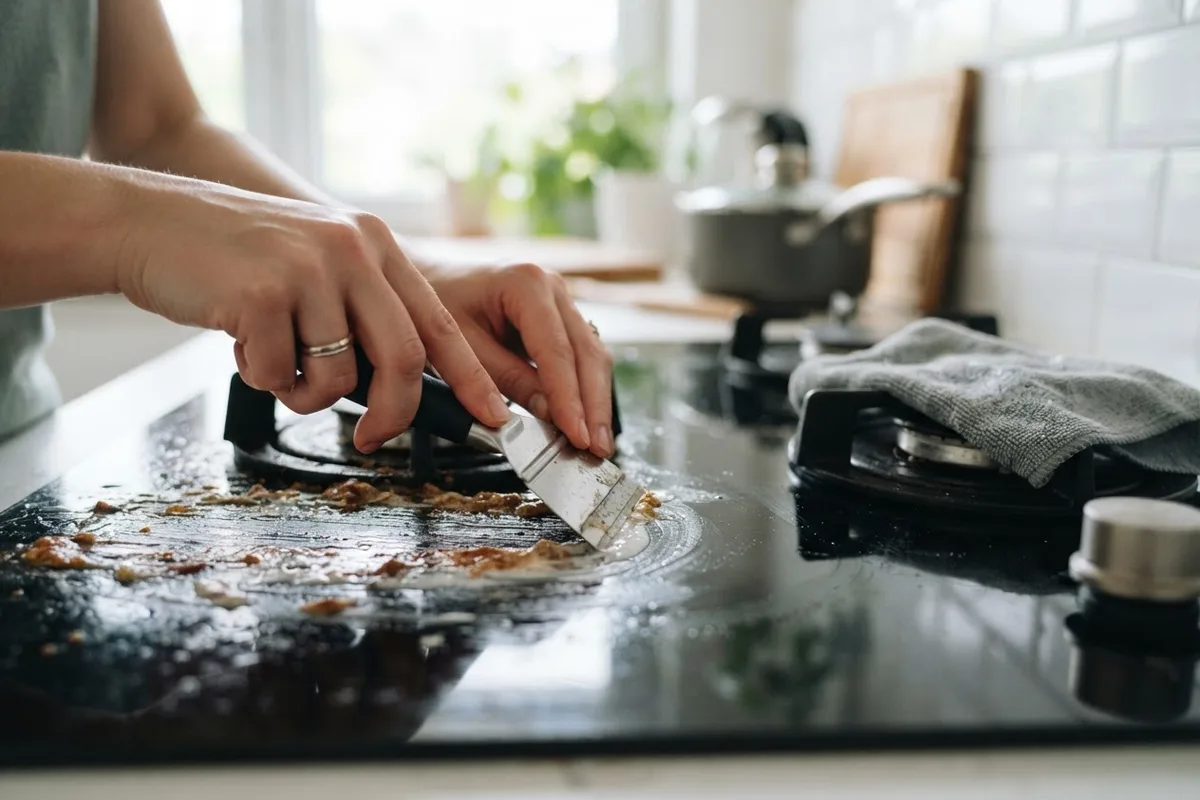
If dark carbonized rings or sugary boil-overs survive the baking soda soak, a single-edge cooktop razor scraper removes them safely when held at the proper angle. Never use an old, rusty, or nicked blade, and never poke at stains with the sharp metal corners.
- Insert a brand-new single-edge razor blade into a safety scraper holder.
- Mist the stubborn spot with white vinegar or warm soapy water first—never scrape completely dry glass.
- Hold the scraper at a low 30- to 45-degree angle so the flat edge glides smoothly across the lubricated surface.
- Push forward with short, controlled strokes until the burnt flakes lift free, wiping the blade clean between passes.
6. Buff With Vinegar for a Streak-Free Shine
Leftover baking soda film will dry into a chalky white haze the next time you turn on a burner. A quick vinegar rinse neutralizes alkaline residue and leaves your stove looking showroom-bright before your next big meal. While refreshing your range, it is also smart to check inside the cavity if you have been wondering why your oven is burning food on the bottom.
- Lightly mist the entire glass surface once more with distilled white vinegar—a brief fizz is normal if trace baking soda remains.
- Wipe thoroughly with a clean, damp microfiber cloth, rinsing the cloth once halfway through.
- Buff the glass completely dry in circular motions using a fresh, lint-free microfiber towel.
- Optional: Rub a dime-sized drop of specialized ceramic cooktop cream over the dry glass with a paper towel to add a protective barrier against future spills.
7. Treat Tough Stains Using Safe Pantry Fixes
Not every mark on a glass range comes from grease. Sugary pie fillings, aluminum pan marks, and hard-water mineral rings each respond best to a specific approach so you do not pit or cloud the surface. Keep sugary syrups, caramel, and melted plastic from cooling whenever possible; if hot sugar hardens undisturbed, it can bond to the ceramic glaze and pull tiny chips out of the glass.
| Stain Type | Best DIY Fix | What to Avoid |
|---|---|---|
| Dark burner grease rings | Baking soda steam soak + 45° wet razor | Steel wool or dry scraping |
| Sugary syrup or jam spills | Scrape immediately with razor while warm | Letting sugar cool completely |
| Cloudy white water marks | Undiluted white vinegar soak (5 mins) | Ammonia or window spray on warm zones |
| Gray metal pan scuffs | Ceramic cooktop cream + non-scratch pad | Abrasive scouring powders |
| Melted plastic wrap or bag | Cool fully, harden with ice cube, scrape | Heating the burner to melt it off |
When to Call a Pro
Routine surface staining is an easy weekend DIY project, but physical damage or heating malfunctions beneath the glass require professional attention. Stop using the stove immediately, turn off all burners, and disconnect power if you spot a hairline crack, deep chip, or pitting in the glass top—liquids can seep through cracks into live electrical components underneath and create a serious shock hazard. You should also skip DIY troubleshooting and call a technician if a radiant burner refuses to cycle off, heats unevenly, sparks beneath the glass, or involves electrical panel issues or gas connections on a dual-fuel range.
Depending on whether your range needs a new infinite burner switch, a radiant surface element, or a full glass-ceramic top assembly, typical US repair costs often fall between $150 and $600, though exact pricing varies widely by area and model. If your cooktop shows signs of electrical trouble or structural damage, True Appliance Repair can match you with an independent pro for local oven and stove repair services.
FAQ
Can baking soda and vinegar scratch a glass stove top?
No, plain household baking soda is much softer than ceramic cooktop glass and will not scratch the surface when dampened into a paste and rubbed with a microfiber cloth or non-scratch sponge. Scratches usually happen when dry grit, burnt crumbs, or abrasive green scrubbing pads get trapped underneath your cloth during cleaning. Always sweep away loose debris before scrubbing and rinse away all baking soda residue afterward.
Why should I avoid ammonia window cleaners on my stove?
Standard glass cleaners containing ammonia are too mild to dissolve carbonized cooking grease, and they often leave iridescent streaks or bake onto the surface the next time a burner heats up. Over time, harsh chemical residues can dull the glossy finish on electric radiant zones. Plain distilled white vinegar cuts light oil cleanly and evaporates without leaving heat-reactive streaks.
How do I keep pots and pans from leaving gray marks on my glass stove top?
Gray or silvery smudges usually transfer onto the cooktop when heavy cast-iron, copper, or rough-bottomed aluminum pans slide across the burners. Lift cookware straight up to move it rather than dragging or shaking pans back and forth across the glass. Wiping the bottoms of your skillets dry and grease-free before cooking also prevents burnt rings from forming underneath them.
Is it safe to run a high-heat bake right after polishing my glass cooktop?
Yes, as long as you have rinsed and buffed away every trace of baking soda, vinegar, or cooktop cream from the glass surface and perimeter trim first. High heat rising from the oven vent during a long holiday baking session can bake leftover cleaner residue into stubborn yellow streaks near the back of the stove.