
There is nothing more frustrating than pulling a batch of cookies or a homemade pizza out of the oven only to find the tops undercooked and the bottoms completely scorched. If your oven is burning food on the bottom, you do not necessarily need to replace it. Often, this common kitchen headache is caused by simple issues like improper rack placement, incorrect calibration, or a failing heating element.
Adjust Your Oven Rack Position
The position of your oven racks plays a massive role in how heat is distributed around your food. In most ovens, the primary heat source during baking comes from the bottom element. If your rack is placed on the lowest slot, your food sits too close to this intense heat source, causing the bottom to cook and burn much faster than the top. For the vast majority of baking tasks, including cookies, cakes, and casseroles, the middle rack is the ideal spot. It allows heat to circulate evenly around the bakeware.
How to fix it:
- Always ensure the oven is completely cool before attempting to move the racks.
- Gently slide the rack out of its current slot.
- Reframe the rack into the middle slot of the oven.
- If you are baking multiple items at once, rotate the pans halfway through the baking cycle to ensure even heat exposure. Avoiding overcrowding is key to preventing burnt bottoms and undercooked tops.
Check for a Failing Bake Element
Electric ovens typically rely on two heating elements: the bake element at the bottom and the broil element at the top. When you are baking, both elements should work in tandem, though the bottom element does most of the heavy lifting. If the top element has failed or is failing, the bottom element may have to work overtime to keep the oven at the set temperature. This causes an intense, direct heat from the bottom that easily scorches your food. Inspecting these elements can save your meals.
How to fix it:
- Unplug your oven from the wall or shut off the circuit breaker before performing any hands-on inspection.
- Open the oven door and locate the top (broil) and bottom (bake) elements.
- Inspect both elements visually. Look for any visible signs of damage, such as blisters, breaks, cracks, or rust.
- If the elements look visually intact, you can cautiously restore power and set the oven to bake. Carefully observe the elements. A healthy element should glow a consistent, bright orange. If you notice dark spots, uneven glowing, or no glow at all, the element likely needs replacement.
If your heating elements are damaged or failing, it is best to discontinue use. An oven & stove repair service can easily diagnose and replace these components for you.
Recalibrate Your Oven Thermostat
Even if you set your oven to 350 degrees Fahrenheit, it might actually be heating to 375 or even 400 degrees. An inaccurate thermostat is a frequent culprit when an oven is burning food on the bottom. Over time, an oven's internal thermostat can drift out of calibration. This means the temperature on the display does not match the actual temperature inside the oven cavity, leading to burnt bottoms and raw centers. If you suspect this is the case, you might notice other signs your oven thermostat is failing.
How to fix it:
- Purchase a separate, inexpensive ambient oven thermometer and place it on the center rack.
- Set your oven to 350 degrees Fahrenheit and let it preheat for at least 20 minutes.
- Check the reading on the ambient thermometer through the oven door glass. If the reading is more than 15 degrees off from the display, your oven needs recalibration.
- Consult your oven's manual for specific calibration steps. For older models with manual knobs, you can often adjust a small calibration screw on the back of the temperature knob. For modern digital models, you can usually enter a specific key sequence on the control pad to adjust the temperature offset.
Clean Away Spills and Burnt Food
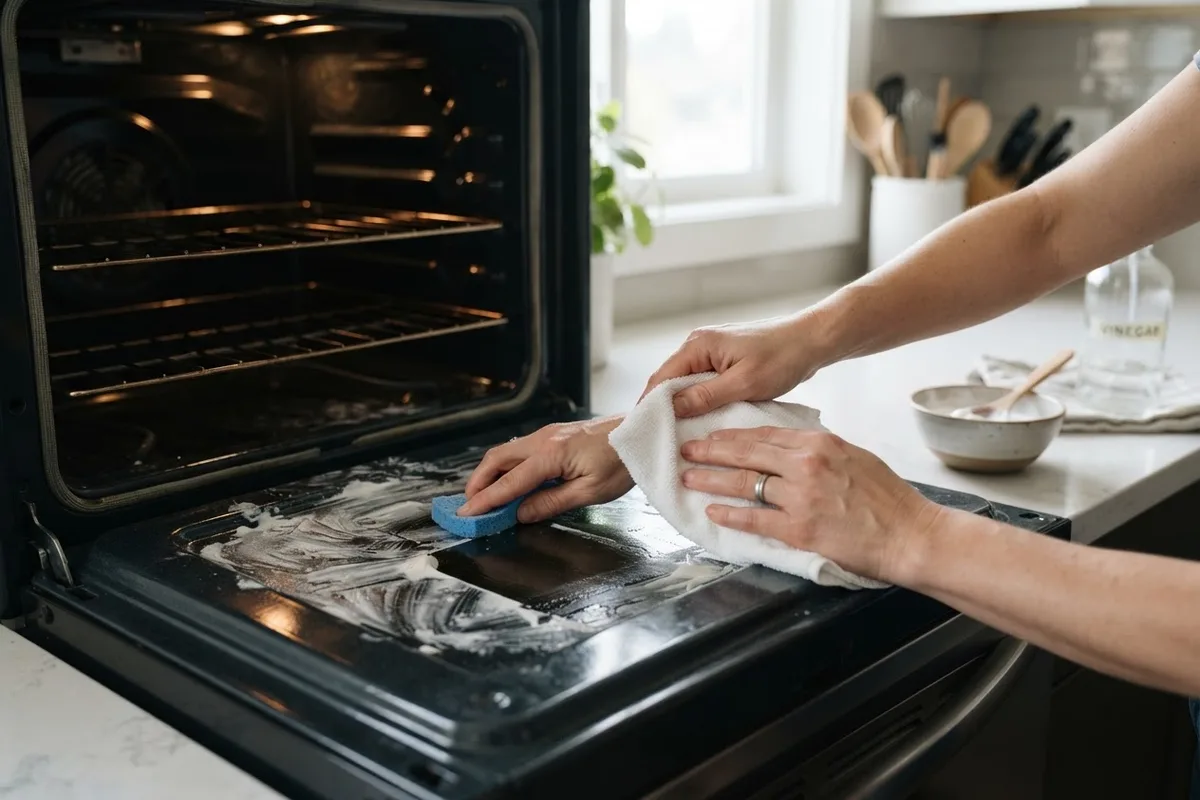
A clean oven is not just about aesthetics; it is also about performance. Over time, food spills, grease, and crumbs accumulate at the bottom of your oven. During the baking process, these leftover bits of food absorb the heat from the bottom element and continue to burn. This creates localized "hot spots" at the base of the oven, radiating extra heat directly onto your bakeware and scorching the bottom of your food. Furthermore, burnt food can produce smoke and unpleasant odors that ruin your meals.
How to fix it:
- Ensure the oven is completely cool and unplugged before cleaning.
- Remove all oven racks and accessories.
- Scrape away any loose, burnt debris from the bottom of the oven using a plastic scraper. Avoid using metal scrapers, as they can scratch the oven's porcelain finish.
- Apply a paste of baking soda and water to the greasy areas and let it sit overnight. In the morning, wipe it clean with a damp cloth and a gentle spray of vinegar. Regular cleaning prevents heat-absorbing residue from burning your food.
Stop Using Dark or Heavy Bakeware
The type of bakeware you use has a significant impact on how heat is transferred to your food. Dark-colored, dull, or very heavy metal pans absorb significantly more heat than light-colored or reflective pans. If you are using dark baking sheets, they will become extremely hot very quickly, transferring that intense heat directly to the bottom of your cookies, breads, or pizzas. This results in the bottom of your food burning before the top has a chance to bake through.
How to fix it:
- When possible, switch to light-colored, reflective aluminum baking sheets or glass and ceramic baking dishes. These materials distribute heat more slowly and evenly.
- If you must use dark or heavy bakeware, reduce your oven temperature by 25 degrees Fahrenheit and check your food a few minutes before the recipe's recommended baking time.
- For delicate items like cookies, consider using parchment paper or a silicone baking mat on your baking sheet. These provide a thin barrier that gently slows down heat transfer, helping to prevent the bottom from scorching.
Inspect the Oven Door Seal
Your oven relies on a tight seal to maintain a stable, consistent temperature. The oven door gasket, typically made of a heavy-duty fiberglass or rubberized material, prevents heat from escaping. If this seal is torn, frayed, or brittle, hot air will constantly escape from the top of the oven door. To compensate for this heat loss, the oven will continuously run the bottom heating element to maintain the set temperature. This results in a cycle where the bottom of the oven becomes excessively hot, leading to burnt bottoms on your food while heat escapes out the top.
How to fix it:
- Wait until the oven is completely cool.
- Open the oven door and carefully examine the gasket around the perimeter of the door or oven frame. Look for any visible tears, gaps, flattening, or brittle areas.
- Perform the "dollar bill test." Place a dollar bill across the seal, close the door, and try to pull the bill out. If it slides out easily without any resistance, your seal is weak and heat is escaping.
- If the seal is damaged, it needs to be replaced. You can often peel the old seal away and press a new, manufacturer-approved gasket into the same track.
Ensure Proper Air Circulation
For an oven to bake evenly, air must be able to circulate freely around the entire oven cavity. When air circulation is blocked, heat gets trapped in specific areas, usually at the bottom of the oven near the heat source. A very common mistake homeowners make is lining the bottom of the oven or the entire oven rack with aluminum foil to catch spills. While well-intentioned, this severely restricts airflow and reflects heat back down toward the bottom of your food. This trapped heat creates extreme temperatures at the base, increasing the likelihood of burnt bottoms on your baked goods. Restricting airflow is a major reason why you might find your oven baking unevenly.
How to fix it:
- Immediately remove any aluminum foil lining the bottom of your oven or your oven racks. Never use foil to line the bottom of the oven cavity.
- If you want to catch spills, place a separate baking sheet on a rack a few inches below the rack your food is on, but do not cover the entire rack with foil. Leave at least an inch of space around the edges of the baking sheet to allow air to rise.
- Avoid overcrowding your oven. Do not bake with too many pans at once, as this also limits air circulation and leads to uneven temperatures.
Quick Reference: Oven Fixes at a Glance
| Fix | Difficulty | Time Required | Tools Needed |
|---|---|---|---|
| Adjust Rack Position | Very Easy | 2 minutes | None |
| Check Bake Element | Easy | 10 minutes | Screwdriver, Multimeter (optional) |
| Recalibrate Thermostat | Medium | 30 minutes | Oven thermometer, Manual |
| Clean Oven Bottom | Easy | 20 minutes (plus overnight soak) | Baking soda, Vinegar, Scraper |
| Change Bakeware | Very Easy | 2 minutes | Light-colored pans, Parchment paper |
| Inspect Door Seal | Easy | 5 minutes | Dollar bill |
| Improve Airflow | Very Easy | 2 minutes | Remove aluminum foil |
When to Call a Pro
While many of the fixes for an oven burning food on the bottom are straightforward DIY tasks, some issues require advanced expertise. If you have inspected your oven and suspect a complex electrical issue, a failing control board, or problems with a gas supply line, it is time to step back. For your safety, always stop and call a professional for any work involving gas lines, complex internal wiring, or the electrical panel. True Appliance Repair can match you with a local appliance repair pro to get your oven working safely and efficiently. Attempting to repair complex components yourself can be dangerous and may lead to further damage. When you need reliable expertise, a local technician can properly diagnose the issue, safely replace any faulty components, and ensure your oven heats evenly once more. Keep in mind that typical oven repairs in the US can range from $150 to $400, though this varies significantly by your local area, the appliance model, and the exact parts required.
FAQ
Why is my oven burning the bottom of everything?
If your oven is consistently burning the bottom of your food, it is usually due to improper heat distribution. The most common culprits include placing the oven rack too low, using dark or heavy bakeware that absorbs too much heat, an inaccurate oven thermostat running too hot, or a failing heating element. In some cases, a dirty oven bottom or a damaged door seal can also cause localized hot spots that scorch your food.
Can a dirty oven cause food to burn on the bottom?
Yes, a dirty oven can absolutely cause your food to burn on the bottom. Over time, grease, food spills, and crumbs accumulate on the bottom of the oven cavity. As the oven heats up, these leftover food particles absorb the intense heat from the bottom element and continue to cook and burn. This creates localized "hot spots" that radiate extra heat directly toward your bakeware, scorching the bottom of your meals. Regular cleaning with baking soda and vinegar can prevent this issue.
How do I stop my oven from burning the bottom of cookies?
To stop your oven from burning the bottom of cookies, first make sure you are using the middle oven rack for baking. Next, switch from dark-colored baking sheets to light-colored, reflective aluminum sheets, as dark pans absorb too much heat. You should also line your baking sheets with parchment paper or a silicone baking mat to provide a gentle heat barrier. Finally, use an ambient oven thermometer to ensure your oven is not actually running hotter than the temperature you set.
Should I use aluminum foil on the bottom of my oven to catch drips?
No, you should never use aluminum foil to line the bottom of your oven cavity or your oven racks. While it seems like a convenient way to catch spills, aluminum foil severely restricts air circulation and reflects heat back down toward your food. This trapped, reflected heat creates extreme temperatures at the bottom of the oven, which will almost certainly cause the bottom of your food to burn before the top is cooked. Instead, place a separate baking sheet on a rack a few inches below your food to catch drips, leaving plenty of room for airflow.