
Opening your oven door only to be hit with an acrid, chemical smell can instantly stop dinner preparations in their tracks. A burning plastic odor usually points to a fallen utensil, leftover packing tape on a newer unit, or scorched electrical wiring behind the control console. You can identify the source and clear the air safely using this straightforward troubleshooting guide before your next baking project.
Scrape Melted Plastic from the Oven Floor
The most frequent cause of a chemical burning stench is an accidental run-in with food storage containers, plastic bread tags, or cutting boards placed inside a cooling oven. Once heated, plastic liquefies, pools around the porcelain floor, and bakes into a stubborn crust that releases fumes every time you preheat.
- Shut the oven off completely and allow it to cool down to room temperature. Never try to wipe liquid plastic, as it creates severe burn hazards and smears deeper into the enamel.
- Place a sealed zip-top bag filled with ice cubes directly over the hardened puddle for 20 to 30 minutes. Freezing the puddle makes the plastic brittle.
- Take a stiff plastic putty knife or a razor scraper held at a shallow 30-degree angle to carefully pry up the brittle plastic edges. Avoid gouging the porcelain coating.
- Vacuum out loose flakes with an upholstery attachment, then wash the surface using warm water and baking soda to lift lingering chemical film.
Remove Hidden Packaging and Zip Ties
If your stove or range was installed within the past few months, factory packing materials may still be lingering in unventilated gaps. Manufacturers secure heating components, wire harnesses, and oven racks with zip ties, foam spacers, and high-tack tape designed to withstand transit, not high temperatures.
- Disconnect the range from power by pulling the heavy-duty 240V plug or switching off the dedicated double-pole circuit breaker at the electrical panel. Shut off the gas shutoff valve behind the unit if working on a gas model.
- Remove all interior racks and look closely at the rack glides for clear plastic shipping strips that blend into the silver metal.
- Slide out the bottom storage or warming drawer and shine a bright flashlight underneath the oven chassis. Look for bright zip ties holding wire bundles too close to the bottom bake burner or heat shield.
- Snip away any stray ties using wire cutters, ensuring wires remain routed away from direct metal contact.
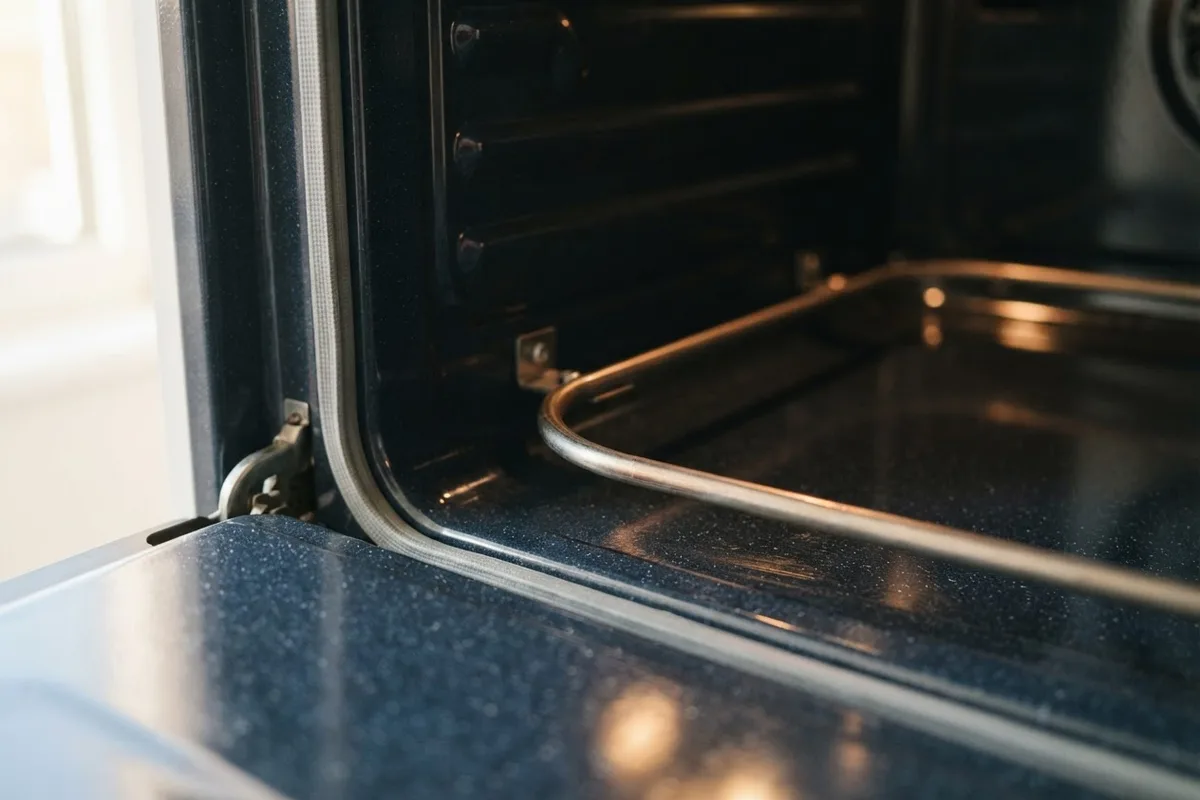
Inspect Wiring for Melted Insulation
When a plastic smell occurs during every bake cycle without any visible residue in the cavity, suspect scorched wiring inside the appliance body. Overheating wire harnesses, loose slip-on terminal spades, and degrading insulation on the rear bake element emit a sharp, pungent odor reminiscent of burning fish or hot electronics.
- Unplug the range cord from the wall outlet or flip the breaker off.
- Slide the range outward away from the wall to access the sheet metal back cover panel.
- Remove the hex-head screws securing the lower rear cover and set the panel aside.
- Examine the wire leads connecting to the back tips of the baking and broiling elements. Look for blistered plastic wire sheathing, brown heat discoloration, or melted plastic molex plugs.
- If insulation has melted down to bare copper, the wire harness must be replaced or cut back and repaired with high-temperature ceramic wire connectors.
Clean Burnt Food and Plastic Drips
Spilled sugar, fat drippings, and certain pre-packaged frozen pizza trays leave charred residue that mimics the smell of melting synthetic materials. When grease carbonizes directly onto heating coils, it vents noxious fumes that circulate throughout your kitchen.
- Wait until the oven interior is completely cold, then pull the racks out into the sink for soaking.
- Inspect the metal bake loop (or the hidden panel covering the bottom bake burner) for hard black bumps or sticky residues.
- Make a thick paste using three parts baking soda to one part water and spread it across soiled patches, taking care not to coat open gas igniters or electrical plug terminals.
- Let the paste rest overnight for 8 to 12 hours to break down caramelized binders without harsh store-bought sprays.
- Wipe away the dried paste with a damp microfiber cloth, followed by a light spritz of white distilled vinegar to lift any remaining chalky film.
Complete a Proper Burn-In Cycle
A brand-new range or newly installed heating element always produces a distinct chemical smell during its initial uses. Factory manufacturing leaves thin coatings of protective mineral oil on raw steel elements and insulation binders inside the oven walls to ward off moisture during shipping.
- Clear the entire interior of the oven, removing all racks, broiler pans, meat probes, and thermometer accessories.
- Open your kitchen windows wide and switch your overhead range hood exhaust fan to high speed to push odors outdoors.
- Set the oven to bake at 400 degrees Fahrenheit and let it run uninterrupted for 45 to 60 minutes.
- Turn the oven off and allow it to cool down naturally with the kitchen well ventilated.
- If you recently repaired a broken burner, check our guide on why your oven is not reaching temperature to confirm that the fresh element cycles normally after burn-in.
| Odor Source | Visual Signs | Typical Location | Difficulty to Fix |
|---|---|---|---|
| Melted Cookware | Hard, glossy patch on bottom pan | Oven floor beneath lower rack | Easy DIY (Ice & Scraper) |
| Leftover Shipping Tape | Blue or clear plastic shreds | Rack glides, drawer slides | Easy DIY (Peel & Wash) |
| Scorched Wire Harness | Blackened spade terminals, brittle wrap | Rear service panel, console | Moderate (Rewiring needed) |
| Factory Burn-In | Light smoke haze, no physical debris | Interior insulation & elements | Easy DIY (Run bake cycle) |
| Charred Grease Layer | Dark crust near heating loops | Lower element covers, base corners | Easy DIY (Baking soda soak) |
When to Call a Pro
Most plastic odors trace back to simple spills or factory burn-in that you can manage in an afternoon. However, you should stop immediately and seek professional assistance if you notice visible sparks, persistent acrid smoke escaping the rear electronic clock display, or melted plastic wire bundles inside the cabinet wall.
Repairing main control boards, gas supply valves, or main internal wire harnesses carries significant electrical and fire hazards. Typical diagnostic visits and minor wire repairs across the country usually range between $120 and $250, while full harness replacements can run from $200 to $400 depending on your appliance model and local labor rates. When in doubt, True Appliance Repair can match you with an independent local technician who can pinpoint electrical faults and replace damaged parts safely.
FAQ
Can breathing oven plastic fumes make you sick?
Yes, burning plastic releases toxic fumes including carbon monoxide, dioxins, and volatile organic compounds that irritate your lungs, eyes, and throat. Turn off the appliance immediately, open exterior doors and windows, and turn on exhaust fans until the odor dissipates entirely.
Is it safe to cook food while my oven smells like plastic?
No, food absorbs ambient chemical fumes quickly, which ruins the taste and creates a potential health concern. Address the source of the smell, clean the oven interior thoroughly, and perform a brief test preheat before baking or roasting meals again.
Will the self-clean cycle burn off melted plastic?
Never run the self-clean cycle to get rid of melted plastic. The extreme heat of a self-clean cycle—often reaching over 800 degrees Fahrenheit—can ignite the plastic, release heavy chemical fumes, and permanently fuse the plastic polymers into your oven cavity's porcelain finish.
Why does my oven smell like plastic on broil but not bake?
The broil element uses separate electrical wiring and generates intense direct radiant heat along the oven ceiling. If the odor only occurs while broiling, examine the upper element brackets and roof harness connections for melting wire clips or packaging tape stuck to the top wall.