
Most clogged kitchen sinks and jammed garbage disposals trace back to the same handful of everyday food scraps, especially during heavy holiday and winter cooking. Your disposal is built to grind tiny leftover particles—not replace your trash can. Follow these seven practical rules to protect the motor, keep your plumbing clear, and avoid messy breakdowns.
1. Keep Cooking Grease and Oils Out of the Drain
Liquid bacon fat, roast drippings, melted butter, and cooking oil look harmless while warm, so it is tempting to rinse them straight down the sink. Once that grease meets cool water inside the P-trap or drainpipe, it hardens into a waxy film that catches food bits and narrows the line. Over time, grease buildup also coats the disposal's spinning impellers and causes stubborn kitchen odors.
Handle greasy pans in three quick steps instead:
- Let hot oil or drippings cool in the skillet until safe to handle.
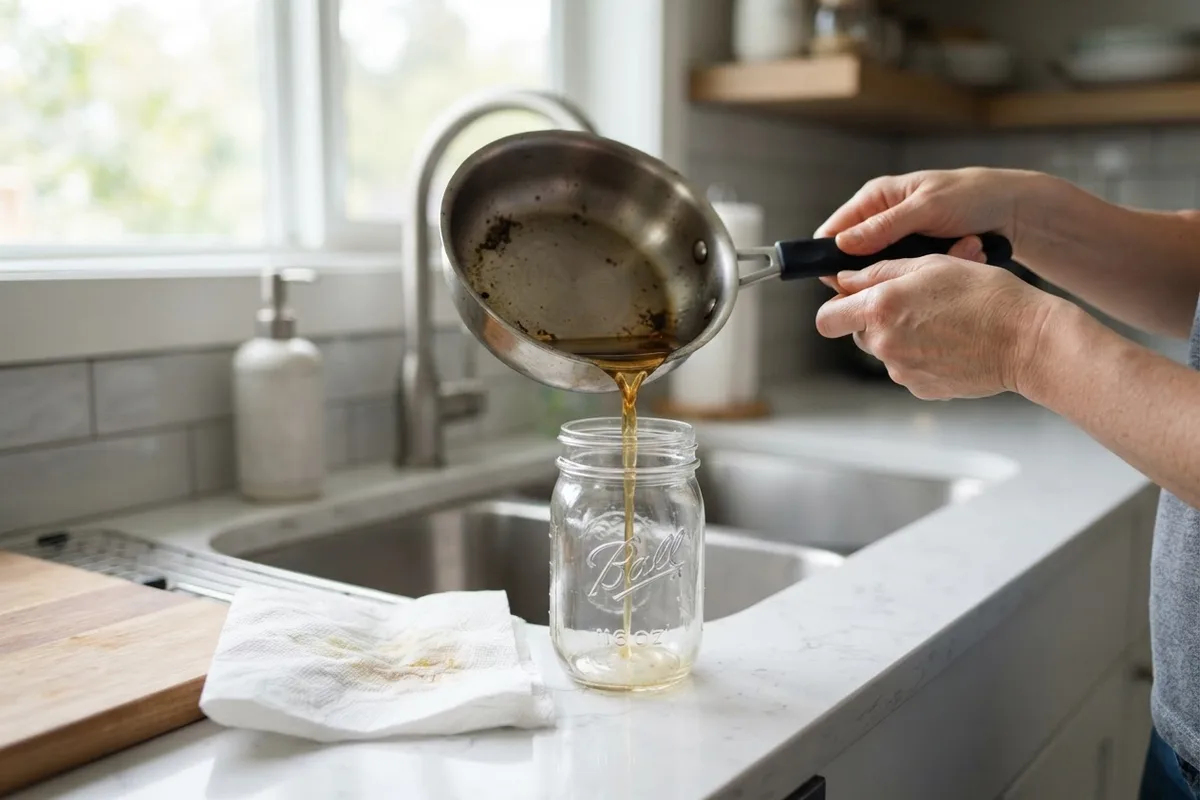
- Pour liquid grease into an empty jar, tin can, or lined disposable container and toss it in the trash.
- Wipe leftover fat out of pans and baking sheets with a paper towel before washing them in the sink.
2. Toss Fibrous Vegetables and Potato Peels in Trash
Stringy, high-fiber produce is one of the fastest ways to tangle a garbage disposal motor. Celery stalks, corn husks, onion skins, asparagus ends, and rhubarb fibers do not break into clean bits; instead, they wrap tightly around the spinning flywheel and stall the unit. Potato peels, carrot skins, and artichoke leaves create a different problem by turning into a thick, starchy paste that settles in the drain bend like wet glue.
Keep prep work mess-free with a simple countertop habit:
- Set a small scrap bowl or compost bin right beside your cutting board before peeling or chopping.
- Sweep peels, skins, and fibrous ends straight into the bin rather than pushing them into the sink.
- Place a fine mesh strainer over the drain while rinsing produce so stray onion skins never slip down.
3. Skip Starchy Foods Like Pasta, Rice, and Bread
Cooked pasta, rice, oatmeal, and bread scraps feel soft between your fingers, yet they act like sponges inside your kitchen drain. Starchy foods keep absorbing water after leaving the grinding chamber, swelling into a gummy plug that sticks to pipe walls and slows drainage. Large batches of mashed potatoes or flour-heavy batter create the exact same dense blockage.
Protect your pipes whenever you clear the table:
- Scrape leftover noodles, rice, and bread crusts into the garbage can before rinsing dishes.
- Use a silicone spatula to wipe thick sauces, gravies, or batters out of mixing bowls first.
- Rinse only the thin food film remaining on plates before stacking them—this also pairs with how to load a dishwasher properly so stray scraps do not clog your dishwasher filter.
4. Never Grind Coffee Grounds or Eggshells
Two persistent kitchen myths claim that eggshells sharpen disposal blades and coffee grounds freshen the drain. Neither is true. Garbage disposals do not use sharp knives; they rely on blunt metal impellers mounted on a spinning plate to throw scraps against a stationary grinding ring. Eggshells contain a tough inner membrane that can wrap around the impeller shaft, while finely crushed shell grit settles at the bottom of the drain trap.
Coffee grounds create similar trouble because wet grounds pack together into a heavy, muddy sediment that resists normal water flow. Once coffee sediment mixes with trace cooking grease, it forms a stubborn plug deep inside the drain line. Empty coffee filters straight into the trash or garden compost, and drop eggshells in the bin every time you crack them.
5. Keep Bones, Fruit Pits, and Hard Shells Out
Hard objects put heavy strain on a disposal's motor, flywheel, and watertight seals. Chicken and beef bones, peach or avocado pits, popcorn kernels, nutshells, and seafood shells are too dense for typical household units to break down. When hard scraps bounce around the chamber, they can jam the impellers, crack the grinding ring, or trip the internal overload switch.
Hard debris also scratches the chamber interior, leaving rough grooves where bacteria and food grime cling. Follow these quick safeguards during cleanup:
- Scrape bones, shells, and fruit pits directly from serving dishes into the trash before carrying plates to the sink.
- Keep a sink stopper or strainer basket in place while washing utensils so bottle caps, twist ties, and small silverware never drop in.
- Shut the unit off immediately if you hear a sharp metallic clatter—never try to force a hard item through.
6. Avoid Harsh Chemical Drain Cleaners
When a kitchen sink starts draining slowly, grabbing a bottle of liquid drain opener feels like the quickest fix. Inside a garbage disposal, however, caustic lye or acid-based drain chemicals can corrode metal grinding parts, dry out rubber splash guards, and degrade the seals holding water inside the housing. If the blockage does not clear, standing chemical water also creates a splash hazard whenever you or a technician opens the trap.
Use gentler routines to clear light residue and odors instead:
- Pour half a cup of baking soda into the drain, add one cup of plain white vinegar, and let it fizz for ten minutes.
- Flush the chamber thoroughly with cold running water for thirty seconds.
- Scrub the underside of the rubber splash guard with warm soapy water and a long-handled brush to remove trapped food film.
7. Run Cold Water and Clear Jams Safely
How you operate the disposal matters just as much as what stays out of it. Turn on a steady stream of cold water before flipping the switch, feed small scraps slowly, and let cold water run for 15 to 20 seconds afterward. Cold water keeps trace fats firm so they flush through cleanly instead of melting and coating the pipes.
If the motor hums without spinning, never put your hand inside the drain. Clear a simple jam safely:
- Turn off the wall switch, then unplug the unit under the sink—or shut off its dedicated circuit breaker if hardwired.
- Shine a flashlight into the chamber and lift out visible debris using long tongs or pliers.
- Insert a 1/4-inch hex wrench into the bottom center socket and work it back and forth to free the flywheel.
- Restore power, press the red reset button underneath, and test with cold water. For extra cord and shutoff checks, see our home appliance safety checklist.
Quick-Reference Cheat Sheet: Safe vs. Unsafe Items
| Kitchen Item | Safe for Disposal? | Better Alternative |
|---|---|---|
| Cooking oil, bacon grease, butter | No — hardens in pipes | Cool in a jar or can and toss in trash |
| Potato peels, celery, onion skins | No — tangles or forms paste | Put in trash or compost bin |
| Pasta, rice, bread, oatmeal | No — swells into clogs | Scrape plates into trash first |
| Coffee grounds and eggshells | No — creates heavy sediment | Compost or throw in trash |
| Bones, fruit pits, seafood shells | No — jams or damages motor | Toss straight into garbage |
| Chemical drain cleaners | No — corrodes seals and metal | Use baking soda, vinegar, or a mechanical snake |
| Small soft cooked food scraps | Yes — in small amounts | Run cold water before, during, and after grinding |
When to Call a Pro
Minor food jams and tripped reset buttons are usually safe to resolve once power is completely shut off, but several warning signs mean it is time to call a technician. Stop using the disposal and seek help if water leaks from the bottom seam of the housing, if you notice a burning electrical odor, or if the unit repeatedly trips your home's circuit breaker. Never attempt electrical panel repairs, hardwired junction box wiring, or complex under-sink re-piping yourself, and always turn off the sink's water supply valves if a leak starts near the plumbing connections.
Across the US, a typical garbage disposal repair visit often runs around $100 to $250, while replacing a failed unit with labor commonly falls around $250 to $550, though exact costs vary by area, model, and plumbing setup. If your disposal still leaks, trips the breaker, or refuses to run after a safe reset, True Appliance Repair can match you with a local appliance repair pro to inspect the unit safely.
FAQ
Can you put lemon peels in a garbage disposal?
Small pieces of citrus rind from a sliced lemon or orange can freshen odors occasionally when ground with plenty of cold water. Avoid stuffing whole peels or thick rinds into the chamber, since large chunks can wedge under the impellers and strain the motor.
Why should you run cold water instead of hot water?
Cold water keeps trace grease and food oils solid so the disposal can chop them up and flush them cleanly down the drain line. Hot water temporarily melts fats, letting them slip past the chamber and harden farther down your plumbing where clogs are much tougher to clear.
Do ice cubes really sharpen garbage disposal blades?
Garbage disposals do not have sharp blades to sharpen, so ice will not restore a worn grinding ring. Still, grinding a small handful of plain ice cubes with cold running water once a month helps knock stuck food film off the impellers and chamber walls.
How long should a garbage disposal last with good care?
Most household garbage disposals last roughly 8 to 12 years, depending on build quality, motor horsepower, and everyday habits. Keeping grease, fibrous produce, starches, and hard items out of the drain prevents premature motor wear and helps your unit reach the upper end of that lifespan.