
You load wet laundry into the drum, press start, and walk away expecting fresh, warm clothes in under an hour. Ten minutes later, you return to complete silence and a tub full of damp towels because your dryer unexpectedly shut down.
When a dryer stops running prematurely, it is rarely a random fluke. Most modern electric and gas dryers use built-in safety sensors that deliberately shut off power when internal temperatures spike, air circulation drops, or mechanical components stall.
Before you start shopping for a costly replacement, you can troubleshoot and resolve the underlying issue using basic household tools. Always prioritize safety: unplug electric dryers or turn off the gas supply line before attempting any hands-on inspection or repair. Here are five common reasons your dryer keeps shutting off and how to fix them.
Clean the Lint Screen and Exhaust Vent Tube
Restricted airflow is the single most common reason a clothes dryer shuts off shortly after starting. Modern dryers rely on a steady stream of air to move heat away from internal heating components. When lint accumulates inside the lint trap, housing duct, or exterior exhaust hose, heat builds up rapidly inside the cabinet.
To protect the appliance from reaching dangerous temperatures, an internal safety thermostat kicks in and cuts power to the motor or heating circuit. If the machine cools down and starts again 20 minutes later only to shut off again, restricted exhaust flow is almost certainly the culprit.
Start by pulling out the lint screen and washing it under warm water with a soft nylon brush to remove invisible fabric softener film. Next, disconnect the dryer from the electrical outlet and slide it away from the wall. Detach the rigid or semi-rigid metal exhaust duct from the back of the machine. Use a dryer vent cleaning brush kit attached to a drill to clear out trapped lint clusters across the entire length of the vent hose leading to the outer wall hood.
If your dryer has experienced prolonged overheating from clogged ducts, reviewing our guide on why your dryer is not getting hot can help you inspect secondary heating issues.
Reset or Replace a Tripped Thermal Fuse
A thermal fuse is a critical safety mechanism designed to blow or trip when internal temperatures exceed safe operating limits. Unlike a standard thermostat that resets after cooling down, a blown thermal fuse breaks the electrical circuit permanently to prevent house fires.
If your dryer shuts off abruptly and refuses to turn back on at all, a blown thermal fuse is a prime suspect. On electric models, a blown fuse usually stops the dryer from running entirely. On certain gas models, a faulty fuse may allow the drum to tumble while preventing the gas valve from igniting.
To locate the thermal fuse, disconnect power to the unit and remove the back panel or lower front access panel depending on your model. The fuse is typically a small white or silver plastic strip mounted directly on the blower housing or heat element duct. Using a digital multimeter set to continuity mode, place a probe on each terminal. If the meter does not beep or shows open loop (OL), the fuse has blown and requires replacement. Replacement fuses generally cost between $10 and $25, but remember to clear the exhaust duct clogging that caused the thermal fuse to overheat in the first place.
Inspect the Door Latch and Door Switch
Dryers feature a spring-loaded door switch that acts as an emergency stop when the door opens during operation. Over time, the plastic actuator peg on the door can wear down, or the internal contacts inside the switch frame can loosen due to vibration.
When a door switch fails, simple drum vibrations during a heavy wash cycle can break contact for a split second. The dryer interprets this tiny gap as an opened door and instantly cuts power to the motor.
Test the door mechanism by opening the dryer and pressing the plastic switch lever manually with your finger. You should hear a distinct, sharp clicking sound. If the switch feels soft, spongy, or fails to click, it likely needs replacement. Unplug the dryer, pop off the top main housing or front cabinet rim, and unclip the wiring harness connected to the switch assembly. You can confirm switch failure by testing continuity with a multimeter while depressing the lever manually.
Clean Residue Off the Moisture Sensor Strips
If your dryer turns off prematurely on automatic sensor dry cycles but runs continuously when set to timed manual dry, the culprit is rarely a mechanical defect. Instead, your moisture sensors are likely coated in a transparent film.
Automatic drying cycles rely on two curved, metallic sensor bars located inside the drum near the lint filter housing or rear baffle. These metal strips measure electrical conductivity between wet clothes touching them. As wet fabric bridges the gap, the sensors signal the control board that clothes are still damp. Liquid fabric softeners and dryer sheets leave a thin, invisible wax layer on these metal strips over time. This non-conductive film prevents damp clothes from completing the electrical circuit, fooling the control board into assuming the load is already bone dry.
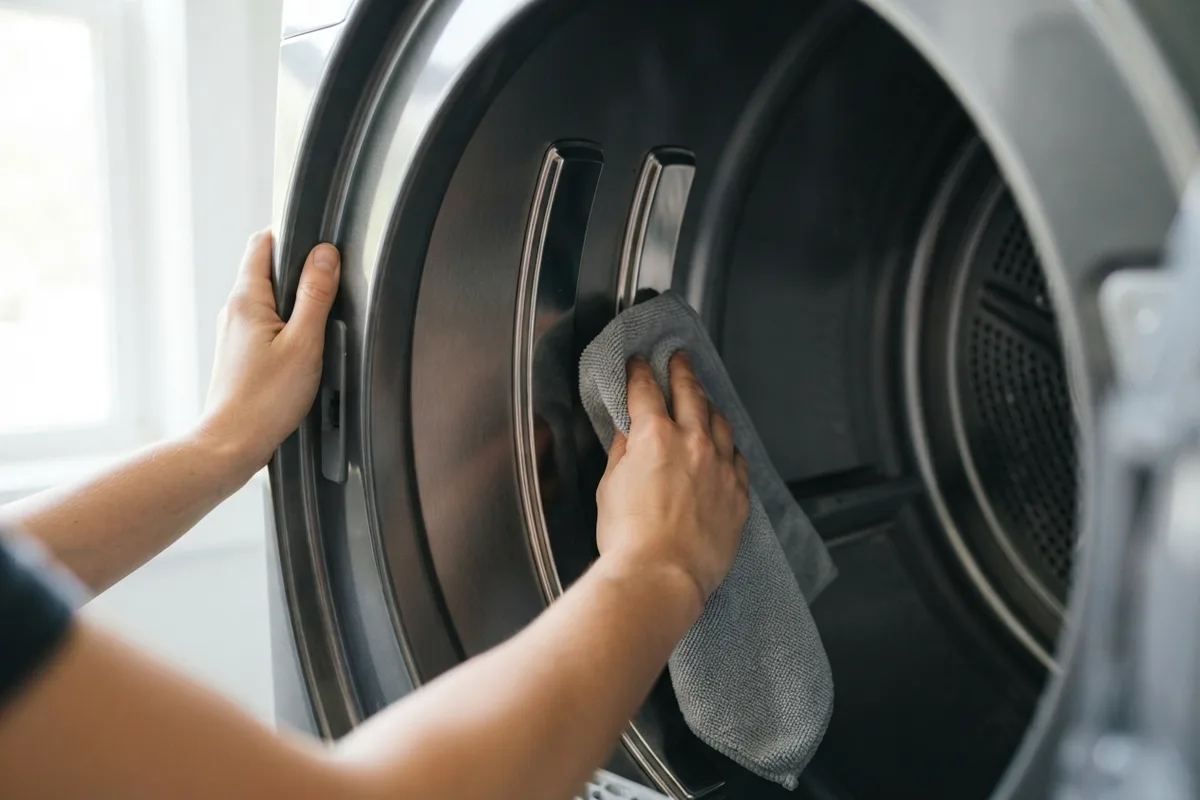
Cleaning the sensors takes less than five minutes. Unplug the dryer and locate the metal bars inside the drum rim. Dip a microfiber cloth in rubbing alcohol or warm soapy water and scrub the metal strips vigorously to dissolve stubborn wax buildup. Wipe the bars dry with a clean cloth, then run an automatic sensor cycle with damp towels to test performance.
Check for Motor Overheating and Centrifugal Switch Issues
Drive motors feature internal thermal overload protectors that shut down power when the motor windings overheat or draw excessive electrical current. If your dryer runs for 5 to 15 minutes, stops with a heavy humming or buzzing noise, and cannot be restarted until cooling for half an hour, the motor windings are reaching thermal capacity.
Excessive motor load usually stems from three main mechanical causes:
- A stretched, frayed, or misaligned drive belt causing binding.
- Worn drum support rollers or damaged idler pulleys forcing the motor to work too hard.
- A clogged blower wheel wrapped in stray threads, socks, or lint ball pockets.
Unplug the dryer and manually spin the drum by hand inside the cabinet. The drum should turn smoothly with slight, even resistance. If turning the drum feels stiff or produces grinding sounds, inspect the rollers, belt, and idler pulley. Clearing lint from the blower housing and lubricating support bearings can reduce motor strain. Incorporating these simple checks into a regular seasonal appliance maintenance checklist helps extend motor life and prevents unexpected shutoffs.
| Issue / Symptom | Primary Cause | Recommended Fix |
|---|---|---|
| Stops after 5-10 mins, turns back on after cooling | Airflow restriction / Thermal cutoff | Clean lint screen, clear vent pipe, check exterior wall cap |
| Stops mid-cycle, will not restart at all | Blown thermal fuse | Test with multimeter for continuity; replace fuse ($10-$25) |
| Shuts off on Auto Dry, works on Timed Dry | Wax film on moisture sensors | Scrub metallic drum sensor bars with rubbing alcohol |
| Stops suddenly with drum vibration or shaking | Worn door switch or latch | Test switch click, inspect door catch peg, test continuity |
| Stops with heavy buzzing or burning odor | Motor overheating / Worn drum bearings | Inspect drive belt, replace worn rollers, clear drum obstructions |
When to Call a Pro
While clearing vent lines and wiping down sensor strips are straightforward DIY projects, certain dryer repairs require professional diagnostic tools and technical skill. If your dryer still shuts down after clearing vents and replacing basic fuses, the issue may involve a failing electronic control board, complex wiring harness shorts, or motor winding failures.
Gas dryers demand additional caution. Issues involving gas burner coils, igniters, or gas valve solenoids should always be handled by an experienced professional to eliminate safety risks. If you are uncomfortable working around high-voltage 240V electrical connections or gas supply lines, calling a specialist is the safest choice.
When basic troubleshooting does not solve the problem, True Appliance Repair can connect you with a qualified local appliance repair professional in your area to diagnose and resolve complex dryer failures quickly.
FAQ
Why does my dryer stop running after 5 minutes and smell hot?
This is a classic sign of thermal overheating caused by blocked exhaust airflow. When lint restricts air from leaving the dryer, internal temperatures surge quickly. The safety thermostat trips to shut off the motor and burner to prevent fire hazards. Unplug the dryer and clean the entire exhaust vent pipe leading to the exterior of your home before using it again.
Can a bad outlet cause a dryer to shut off mid-cycle?
Yes. Electric dryers require a dedicated 240-volt electrical outlet powered by a double-pole breaker. If the circuit breaker trips partially or one leg of the electrical outlet drops voltage due to loose terminal screws, the dryer motor or control board will lose power suddenly. Inspect your home circuit panel for tripped breakers if the appliance shuts down without warning.
How much does it cost to fix a dryer that keeps shutting off?
DIY fixes like cleaning moisture sensors or clearing exhaust vents cost virtually nothing beyond basic household supplies. Replacement parts like thermal fuses, door switches, or drive belts typically cost between $10 and $45. If a professional service call is needed to replace a drive motor or main electronic control board, total repair costs generally range between $150 and $400 depending on your area and machine model.
Why does my dryer shut off only when drying heavy loads like blankets?
Heavy wet loads put significant stress on the drive belt, drum support rollers, and motor. If drum bearings are worn or the drive belt is slipping, the motor works much harder to turn the heavy drum, causing internal thermal overload protectors to shut the motor off. Overloading can also push wet fabric against the door, accidentally triggering a weak door latch switch.