
A burning smell coming from your clothes dryer during a cycle is a clear sign that something needs immediate attention. Whether the odor resembles burning dust, hot rubber, or scorched fabric, ignoring it can damage internal components or create serious safety hazards in your home. Fortunately, many burning smells stem from preventable maintenance issues like lint buildup or friction on rubber drive components.
Before performing any inspection or troubleshooting steps, safety must come first. Immediately stop the dryer cycle and unplug the machine from the electrical wall outlet. If you own a gas dryer, shut off the gas supply line valve before removing any access panels or exhaust hoses. Never run a dryer that is actively smoking or emitting an acrid electrical odor until the root cause is resolved.
Here are 5 common causes of a dryer burning smell and how to fix them step by step.
1. Clear Trapped Lint from the Trap and Housing
The most frequent cause of a burnt odor in the laundry room is trapped lint coming into contact with the heat source. While most homeowners clean the removable lint screen between loads, fine lint particles constantly slip past the screen and accumulate inside the lint filter housing, blower wheel chamber, and lower drum casing. Over time, these dry fibers bake under high operating temperatures, producing a distinct scorched cotton or toast-like smell.
To clean deep inside the lint assembly, follow these steps:
- Pull out the primary lint screen and wash it with warm soapy water to remove invisible fabric softener residue. Allow it to air-dry thoroughly.
- Insert a narrow, long-handled lint trap vacuum attachment into the chute where the screen sits. Vacuum out all loose debris.
- Use a flexible wire lint brush to gently scrape the sides of the inner housing, pulling trapped clumps upward.
- Wipe down the moisture sensor strips located inside the front drum opening with a damp microfiber cloth to ensure accurate dryness sensing.
Performing this quick task every few months prevents debris from migrating toward the heating element or burner box, keeping your appliance operating smoothly as part of your routine appliance maintenance tasks.
2. Clean the Exhaust Vent Pipe and Wall Cap
When a dryer exhaust vent becomes clogged with lint or restricted by a crushed duct, hot air cannot escape the cabinet effectively. This backpressure causes extreme internal heat buildup, singing lint inside the internal ductwork and creating a strong burning odor. Beyond causing smells, restricted airflow forces your appliance to run longer, drastically increasing energy consumption.
To clear a restricted exhaust system:
- Unplug the dryer and slide it away from the wall to access the rear exhaust connection.
- Disconnect the flexible metal duct from both the dryer back panel and the wall outlet pipe.
- Vacuum out both ends of the ducting. If you use foil or plastic flexible ductwork, replace it with rigid or semi-rigid aluminum ducting for improved safety and airflow.
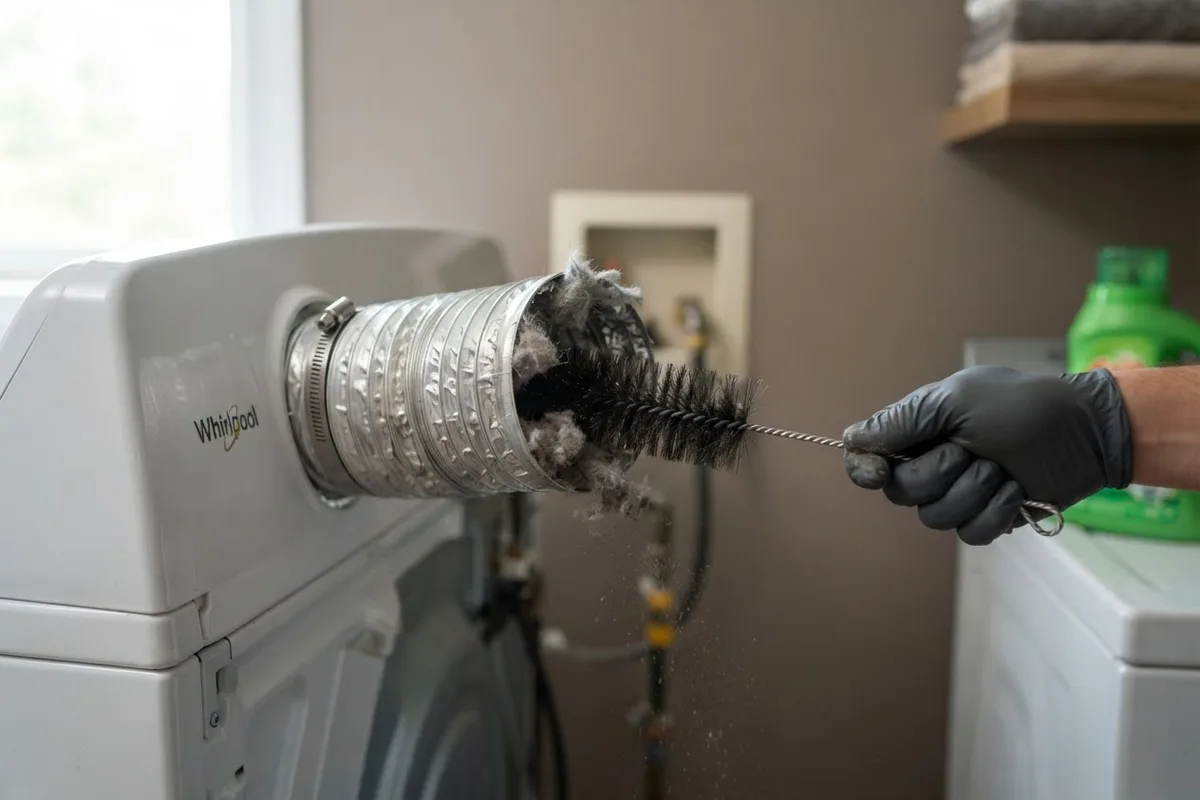
- Use a rotating dryer vent brush tool attached to a cordless drill to scrub the entire length of the duct leading to the outside of your home.
- Step outside and check the exterior wall hood or roof cap. Ensure the damper flap opens freely and is not blocked by lint, bird nests, or outdoor debris.
3. Inspect and Replace a Friction-Worn Drive Belt
If the odor smells strongly like burning rubber or scorched chemical compounds, the issue often points to the drum drive belt. The rubber belt wraps around the dryer drum, tension pulley, and motor shaft. If the drum becomes overloaded or the bearings begin to seize, the motor pulley continues to spin against a stationary belt, generating intense friction heat that melts the rubber.
To inspect the drive belt for thermal damage:
- Disconnect power to the appliance and remove the top main panel or front service panel using a nut driver or putty knife.
- Inspect the rubber belt wrapped around the perimeter of the drum. Look for frayed edges, thin spots, cracking, or dark rubber residue melted onto the metal motor pulley.
- Manually turn the drum by hand. If the drum feels stuck, grinds, or requires heavy effort to rotate, the belt or supporting rollers are slipping under stress.
- If the belt shows visible scorching or flat spots, unhook it from the idler pulley and replace it with a new belt matching your specific model number.
4. Remove Dust Buildup from the Heating Element
Electric dryers rely on exposed nickel-chromium heating coils housed inside a metal chamber to generate heat. If the dryer has sat idle for several weeks or if lint bypasses the filter, fine dust settles directly onto these bare heating elements. When you start a new cycle, the element reaches high temperatures almost instantly, incinerating the dust layer and producing an immediate burning smell.
To inspect and clean an electric heating element assembly:
- Ensure the dryer is completely unplugged from the wall electrical outlet.
- Remove the rear lower panel access cover to expose the heating element housing tube.
- Disconnect the wire harness terminals from the element housing (take a quick photograph first to remember wire placement).
- Inspect the heating coil inside the metal housing. Use a soft vacuum brush or compressed air to remove accumulated dust, pet hair, and lint from the chamber.
- Check the element wire coils for sagging, breaks, or dark hot-spot burns. If the coil wire is broken or cracked, the entire heating element assembly must be replaced.
5. Check for Slipping Motor Bearings or Pulley
An acrid, electrical, or metallic burning smell usually points to overheating mechanical components inside the drive system. The dryer motor turns the drum and blower wheel simultaneously. If the idler pulley wheel seizes or the internal motor bearings wear out, the motor draws excess electrical current and overheats, burning off internal wire insulation coatings.
To check mechanical components for friction failure:
- Unplug the appliance and open the lower cabinet housing.
- Locate the spring-loaded idler pulley arm near the drive motor.
- Spin the plastic idler pulley wheel by hand. It should spin smoothly without wobbling, squeaking, or binding. If the wheel is melted or stuck, replace the idler pulley assembly.
- Check the drum support rollers at the back of the cabinet. Worn rollers add extreme drag to the motor, causing electrical thermal buildup.
- Clean out any lint or dust trapped directly inside the drive motor housing using a vacuum nozzle.
Dryer Burning Smell Troubleshooting Guide
| Odor Characteristic | Primary Suspect | DIY Fix Difficulty | Estimated DIY Part Cost |
|---|---|---|---|
| Scorched Cotton / Toast | Lint buildup in screen or housing | Low (Cleaning) | $0 - $15 |
| Musty Burning / Hot Dust | Restrictive vent pipe buildup | Low to Moderate | $15 - $30 |
| Burning Rubber | Slipping drive belt or stuck drum | Moderate | $15 - $40 |
| Sharp Acrid / Electrical | Overheating motor or failing wiring | High | $40 - $120 |
| Metallic Friction Smell | Seized idler pulley or drum rollers | Moderate | $20 - $50 |
When to Call a Pro
While clearing lint traps, vacuuming ductwork, and changing a basic drive belt are manageable DIY tasks for many homeowners, certain electrical and mechanical issues require professional expertise. If you notice melted wire insulation, burnt terminal blocks, burnt electronic control boards, or persistent burning odors after thorough cleaning, stop using the appliance immediately.
Gas dryer repairs involving gas valve coils, igniters, or gas line supply connections should always be handled by trained technicians to avoid safety risks. Professional repair visits for complex component replacements generally range between $150 and $350 depending on your area, cabinet access difficulty, and the parts required.
When troubleshooting hits a dead end or requires working with internal electrical wiring and gas connections, True Appliance Repair can match you with a local appliance pro to evaluate your laundry setup safely.
FAQ
Why does my dryer smell like burning on its first use in the fall?
If your dryer has sat unused throughout the summer months, dust naturally settles on the heating element coils or gas burner tube. When turned on for the first time, this thin layer of dust burns off rapidly, creating a temporary odor that should dissipate within 5 to 10 minutes. If the smell persists past one cycle, stop the machine and inspect the lint chute and exhaust vent.
Is it safe to run a dryer if it has a slight burning smell?
No, you should never continue running a dryer that produces a burning smell. Even minor burnt odors indicate restricted airflow or excessive heat accumulation, which can damage internal sensors or escalate into a serious house fire. Always turn off the machine, disconnect power, and resolve the cause before resuming laundry cycles.
Can dryer sheets cause a burning smell in the appliance?
Dryer sheets do not typically catch fire, but they deposit a thin layer of wax and chemical fabric softeners onto the lint screen mesh and moisture sensor bars over time. This invisible coating reduces airflow through the screen, causing internal temperatures to rise and singe trapped lint. Clean your lint screen with warm water, soap, and a soft brush monthly if you regularly use dryer sheets.
How often should I clean my dryer exhaust vent system?
You should clean your entire dryer exhaust vent system from the back of the machine to the outside wall exit at least once per year. Households with large families, multiple pets, or heavy weekly laundry loads should inspect and sweep the vent ducting every 6 months to maintain peak efficiency and prevent overheating risks.