
Water pooling around that small metal cylinder next to your kitchen faucet is a clear sign that wastewater cannot exit your dishwasher smoothly. An overflowing air gap is not just messy—it can ruin quartz or laminate countertops and leak into the cabinetry below. Fortunately, this common kitchen nuisance is usually easy to clear in under twenty minutes with basic household tools.
Before working under your sink or handling any drain lines, safety comes first. Turn off the power switch to your garbage disposal, disconnect the dishwasher power cord or shut off its breaker at the main electrical panel, and turn off the hot water shutoff valve under the sink. Always let the appliance cool completely before touching drain lines.
Clear Food Debris from the Air Gap Cylinder
The most frequent cause of an air gap leak is a physical blockage right inside the top fitting. Grease, vegetable fibers, and soap scum accumulate under the decorative cap, preventing water from flowing downward into the disposal line.
- Pull off the decorative chrome or stainless cover: Grip the metal cylinder firmly and pull straight upward. Some models unscrew counterclockwise.
- Remove the plastic inner cap: Underneath the outer casing, you will find a plastic diverter. Depending on the design, pry up the locking tabs with a flathead screwdriver or unscrew the plastic top.
- Inspect and clean: Look down into both chambers. Use long tweezers or needle-nose pliers to pull out visible food chunks, paper label residue, or hair.
- Brush the passages: Insert a small bottle brush or an old toothbrush into both the narrow inlet and wide outlet ports, twisting to break up stubborn grease.
- Snap the cap back into place: Reinstall the plastic diverter firmly before testing the machine.
Clear the Drain Tubing Connected to the Disposal
The air gap features two hoses: a smaller 5/8-inch hose bringing dirty water up from the dishwasher, and a larger 7/8-inch hose carrying it down to the garbage disposal. When grease accumulates in the larger downward tube, water has nowhere to go and geysers out onto your counter.
- Locate the lower connection: Look under the sink and trace the thicker hose running from the bottom of the air gap to the side port of your garbage disposal unit.
- Loosen the hose clamp: Use a flathead screwdriver or nut driver to loosen the worm-gear clamp securing the hose to the disposal nipple.
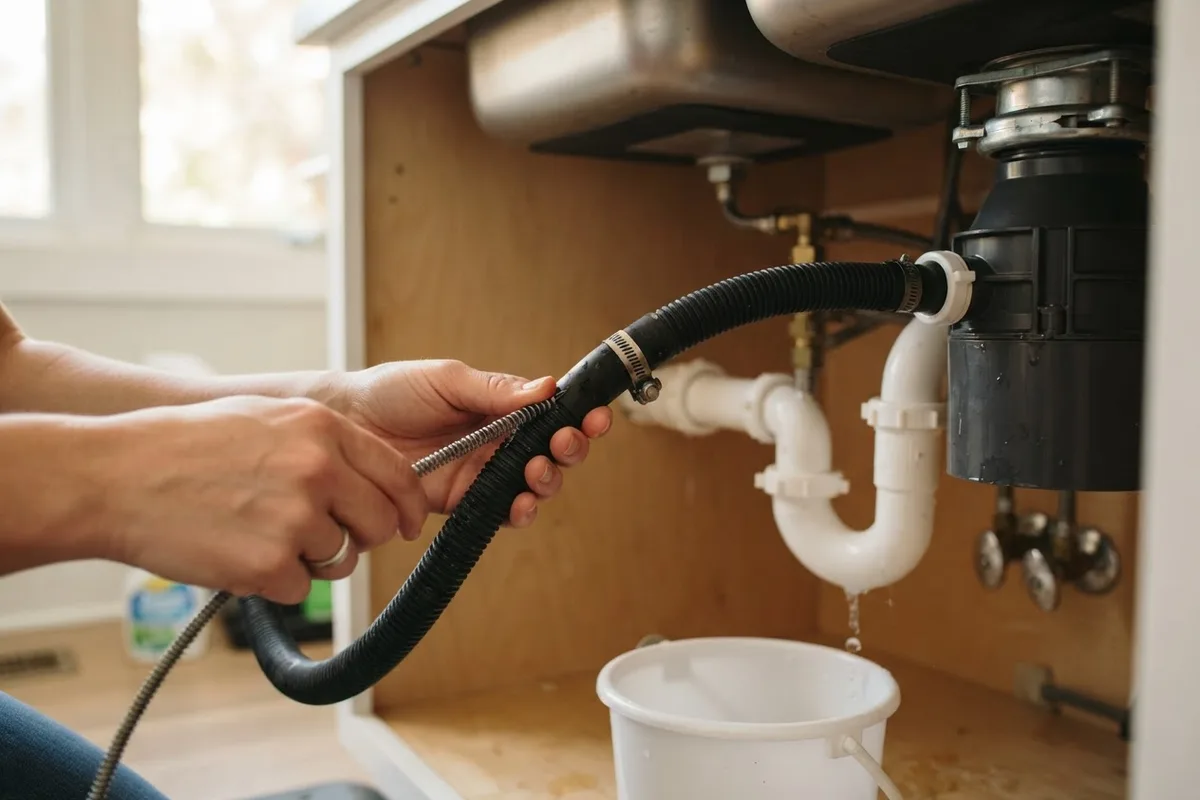
- Detach and clear: Slide the hose off the fitting. Place a small bucket underneath to catch residual liquid. Insert a flexible bottle brush or wire drain snake through the entire length of the tube to dislodge grease plugs.
- Flush with warm water: Run warm tap water through the top of the air gap to verify that water shoots cleanly out into your catch bucket under the sink.
- Reattach securely: Slide the hose back over the disposal nipple and tighten the clamp snugly to prevent under-sink leaks.
Knock Out the Garbage Disposal Plug on New Installs
If your air gap started overflowing immediately after installing a brand-new garbage disposal, the culprit is almost always the factory-installed drain plug. New disposals come from the factory with a molded plastic knockout plug sealing the dishwasher inlet.
- Disconnect the drain hose: Loosen the hose clamp connecting the air gap hose to the disposal inlet and pull the hose away.
- Check inside the nipple: Look inside the small metal or plastic inlet tube on the disposal. If you see a solid wall of plastic rather than an open hole, the plug was never removed.
- Punch out the plug: Place the tip of a sturdy flathead screwdriver against the plastic barrier. Tap the handle firmly with a hammer until the circular plug breaks loose into the grinding chamber.
- Retrieve the plastic piece: Reach inside the top of the garbage disposal (ensuring power is completely disconnected at the breaker first) and remove the loose plastic disk. Leaving it inside will damage the disposal impellers.
- Reconnect the hose: Reinstall the air gap hose and tighten the clamp.
Straighten Kinked or Sagging Dishwasher Drain Hose
The line running from your dishwasher pump up to the air gap must maintain a continuous, unobstructed path. If this corrugated hose is kinked behind the machine or sags in deep loops under the cabinet floor, flow velocity drops and wastewater backs up at the highest point.
- Inspect the hose route: Open the cabinet under your sink and use a flashlight to trace the smaller corrugated line from where it enters the cabinet wall up to the air gap base.
- Eliminate dips and low spots: The hose should rise directly to the air gap without dropping down to the cabinet floor first. Deep bellies in the line trap stagnant water and sludge.
- Check for sharp bends: Ensure cleaning supplies, trash bins, or stored cookware are not pressing against the line and creating sharp kinks.
- Secure with a pipe strap: If the hose sags, anchor it to the back wall of the cabinet with a plastic plumbing clamp to maintain a steady upward angle.
If you find damaged drain hardware or recurring pump pressure issues, a prompt dishwasher repair service can quickly replace brittle tubing before hidden water damage occurs.
Check for Main Sink Drain Line Backups
Sometimes the air gap is functioning properly, but a downstream blockage in your kitchen sink drain pipe forces disposal water backward through the vent.
- Run the faucet on full blast: Turn on your kitchen faucet hot water and let it run for two minutes. If water pools in the sink basin or drains slowly, the P-trap or wall drain is obstructed.
- Run the garbage disposal: If running the disposal causes water to spurt directly out of the air gap, the disposal is pushing wastewater faster than the restricted sink trap can swallow it.
- Clear the P-trap: Place a bucket under the curved pipe beneath the sink. Loosen the slip nuts by hand or with channel-lock pliers, remove the trap, and clean out accumulated food waste and grease.
- Reassemble and test: Reinstall the clean P-trap, tighten the slip nuts hand-tight plus a quarter turn with pliers, and run the dishwasher drain cycle again.
Air Gap Troubleshooting Quick Reference
| Symptom | Probable Cause | Best Fix |
|---|---|---|
| Steady trickle during every drain cycle | Sludge or seed in upper air gap chamber | Remove cap; clean with bottle brush |
| Water geyser right after new disposal install | Disposal knockout plug still intact | Punch out plug with screwdriver & hammer |
| Overflow happens only when sink is full | Clogged P-trap or sink branch line | Disassemble and clean the under-sink P-trap |
| Water spurts only when disposal runs | Blocked 7/8-inch lower disposal hose | Detach hose; clear with flexible snake |
| Gurgling sound with minor water sputtering | Minor lint or grease restriction in tube | Flush with warm water and a small brush |
When to Call a Pro
Most air gap leaks resolve within a few minutes of brushing out the cylinder or clearing the disposal line. However, some symptoms point to deeper mechanical failures inside the machine itself. If wastewater continues backing up despite clear hoses, the internal drain pump impeller may be cracked, an electrical solenoid may be failing to switch off, or an internal check valve may be stuck open.
If you notice persistent electrical hums, standing water inside the tub along with air gap overflow, or water pooling underneath the machine chassis, stop troubleshooting and have a technician evaluate the appliance. If your unit is older and having multiple component failures, review our guide on repair vs replace appliances to make a smart budget decision. When you need dependable help, True Appliance Repair can match you with a local appliance pro to diagnose complex drainage and pump issues safely. Typical service calls for dishwasher drainage troubleshooting generally run between $125 and $300 across the US, depending on your region and whether pump replacement parts are required.
FAQ
Can I just remove the dishwasher air gap entirely?
In many municipalities, building codes mandate an air gap to prevent contaminated sink water from siphoning back into your clean dishes. While some homeowners replace the air gap with a "high loop" drain line under the counter, you should always check local plumbing codes before modifying your sink setup.
Why does my air gap leak only when the garbage disposal is running?
This happens when the large 7/8-inch drain tube connecting the air gap to the disposal has a grease build-up, or the sink's main P-trap is partially clogged. The disposal pump creates high pressure, pushing water up the path of least resistance through the air gap.
How often should I clean my dishwasher air gap?
It is good practice to pop off the metal cover and rinse the plastic chamber every six months. Doing this alongside regular disposal maintenance prevents grease and hard water minerals from hardening into stubborn blockages.
Can a faulty float switch cause the air gap to overflow?
Indirectly, yes. If your unit takes in too much water because of a malfunctioning switch, the drain pump must push a massive volume of water at once, which can overwhelm the air gap. You can learn more about this in our guide on why a dishwasher float switch gets stuck.