
Opening your dishwasher to find standing water when it hasn't even been running is a frustrating surprise. Whether you spot a shallow puddle or a tub full of dirty sink water, this issue usually boils down to two main sources: backflow from your kitchen plumbing or a faulty inlet valve letting fresh water seep in. Fixing the underlying problem quickly prevents cabinet water damage and stops unpleasant kitchen odors before they take over.
Safety always comes first when working on home appliances. Before touching any internal components, turn off the electrical power to your dishwasher at the home breaker panel or unplug the unit from the wall outlet. Additionally, shut off the dedicated water supply valve located beneath your kitchen sink before attempting any mechanical repairs.
1. Inspect and Clear a Clogged Sink Drain or Disposal
When water fills the tub while your machine is powered off, the very first detail to check is the water clarity. If the pooled liquid is cloudy, greasy, or smells like dish soap and food debris, it is dirty sink wastewater flowing backward into your appliance. Because your dishwasher shares a drainage route with your kitchen sink, any restriction in your main sink drain or garbage disposal forces wastewater down the path of least resistance—straight into your dishwasher tub.
To resolve a drainage blockage in your kitchen line:
- Run your garbage disposal for 15 seconds with cold water to ensure the grinding chamber is completely clear.
- If your disposal hums without turning or seems blocked, clear the obstruction before running water again. You can reference our guide on why your garbage disposal is humming for safe steps to clear jammed impellers.
- Turn on the kitchen faucet and run hot water for 60 seconds while watching the sink basin. If water backs up into the sink, clear the trap under the sink using a plunger or a drain snake.
- Clean the disposal inlet nipple where the dishwasher drain hose connects. Food particles and mineral buildup often clog this narrow fitting.
2. Check the Drain Hose High Loop or Air Gap
If your sink drains properly but dirty water still migrates into your dishwasher, the drain hose installation itself is likely violating basic plumbing principles. Without a proper height elevation, gravity naturally pulls dirty water from your sink drain back down into your dishwasher basin.
Plumbing codes and appliance manufacturers require either a high loop or an air gap to prevent backflow:
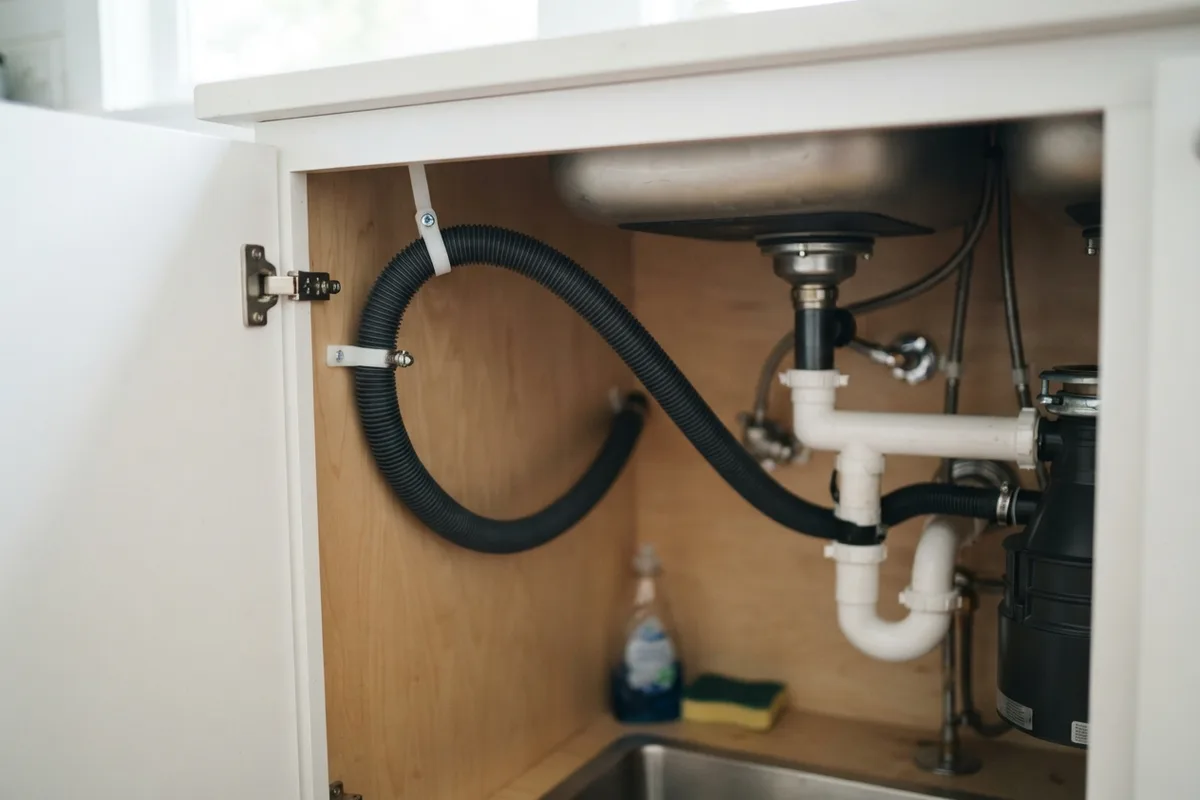
- Open the cabinet under your kitchen sink and trace the flexible corrugated hose running from your dishwasher to the disposal or sink tailpiece.
- Verify that the hose loops up as high as possible under the countertop—at least 32 inches above the cabinet floor—before sloping down to attach to the drain. Fasten the hose securely to the top wall of the cabinet using a pipe strap or zip tie.
- If your kitchen setup features a chrome air gap cylinder mounted on top of your sink ledge, unscrew the decorative cap. Inspect the internal plastic air gap slots for trapped food grease or seeds, and clear them out using a small bottle brush or a stiff wire.
3. Test and Replace the Water Inlet Valve
If the standing water in your idle dishwasher is completely clear, clean, and cold, the problem is not sink backflow. Instead, your dishwasher's water inlet valve is failing to seal tightly when the cycle ends. The water inlet valve is a solenoid-operated valve that opens to let fresh water into the tub and snaps shut when power is removed. Over time, sediment buildup or mechanical wear inside the valve prevents the internal diaphragm from closing completely, allowing home water pressure to slowly push clean water into the machine 24 hours a day.
To diagnose and replace a weeping inlet valve:
- Ensure the power is disconnected at the breaker and the water shutoff valve under the sink is completely closed.
- Unscrew and remove the lower toe kick access panel at the bottom front of the dishwasher.
- Locate the water inlet valve, which is usually positioned on the left side of the front bottom frame, connected to your braided copper or steel hot water supply line.
- Place a small towel under the valve, disconnect the water supply line using an adjustable wrench, and unplug the electrical wire harness.
- Unthread the mounting screws holding the valve to the frame, slide the old valve out, and install an exact replacement valve. Reconnect the water line and wiring securely.
4. Clean and Inspect the Check Valve Assembly
Dishwashers utilize a tiny rubber flapper valve—known as a check valve—positioned near the drain pump outlet or where the drain hose connects to the sump. This one-way flapper flexes open when the pump pushes water out, then snaps shut to stop dirty water from flowing backward into the tub when the pump stops. If a stray piece of bone, broken glass, or hard plastic gets jammed inside the check valve, the seal breaks and allows dirty drain water to return.
To service the check valve:
- Remove the bottom dish rack and pull out the main spray arm assembly.
- Twist and lift out the central cylindrical filter mesh.
- Sponge out any remaining water inside the lower sump basin.
- Look for the check valve near the drain pump inlet or at the base of the drain hose connection. On many modern models, this is a small black or red rubber duckbill valve or hinged flap.
- Carefully remove the valve, rinse it under warm tap water, and clean away lingering grease or foreign debris. If the rubber is stretched, torn, or warped, replace it with a new one.
5. Verify the Drain Impeller and Sump Region
If dirty water accumulates slowly after you run a cycle rather than overnight from the sink, the drain pump impeller may be slipping or partially clogged. When the drain pump cannot generate enough force during the final drain portion of the wash cycle, a significant volume of wash water remains trapped inside the internal pump housing and slowly trickles back up through the filter screen once the unit shuts off.
To clear the pump area:
- Unplug the unit or shut off the circuit breaker.
- Access the bottom sump region under the mesh filter inside the tub.
- Unscrew the small drain pump cover plate, which is usually secured with one or two Torx T15 screws.
- Inspect the drain pump impeller blades for wrapped hair, string, lemon seeds, or broken toothpicks.
- Spin the impeller gently by hand to ensure it turns freely without grinding. If the impeller blades are missing or cracked, replace the drain pump assembly.
Dishwasher Water Leakage Quick Reference Guide
| Water Condition | Primary Location | Probable Cause | Corrective Action |
|---|---|---|---|
| Clean, clear water filling tub while off | Lower front corner behind toe kick | Stuck open water inlet valve | Replace water inlet valve |
| Dirty, soapy water filling tub after sink use | Under sink cabinet / sink tailpiece | Missing drain hose high loop | Route hose above 32 inches and secure |
| Dirty water filling tub after sink use | Sink countertop air gap | Clogged air gap cylinder | Clean food debris out of air gap cap |
| Slow dirty water accumulation post-cycle | Bottom filter / sump housing | Debris stuck in rubber check valve | Remove check valve and clear debris |
| Residual dirty water left after cycle | Drain pump casing | Damaged or jammed pump impeller | Clear impeller obstruction or replace pump |
When to Call a Pro
Many causes of water pooling in an off dishwasher can be solved with basic household tools and careful inspection. However, if water continues to fill your appliance after replacing the inlet valve and verifying your plumbing high loop, you may be dealing with an electrical short sending continuous voltage to the valve or a failure in the main electronic control board.
Additionally, if you encounter corroded copper plumbing connections, cracked household drain pipes under the sink, or complex electrical wiring faults inside the door, it is best to step back. Working with live household voltage or high-pressure plumbing lines carries risks of flooding and electrical hazards. If you run into complex electrical panel issues or leaking plumbing connections, stop and contact a local professional. When you need expert help resolving stubborn appliance issues, True Appliance Repair can match you with a local appliance pro to diagnose and repair your unit quickly.
FAQ
Can dirty sink water back up into my dishwasher?
Yes, if your dishwasher drain hose lacks a high loop or a functional air gap, dirty wastewater from your sink or garbage disposal will flow directly into your dishwasher tub whenever you run the faucet or use the disposal.
Is it dangerous if my dishwasher fills with water while off?
Yes, continuous water entering an unattended appliance can eventually overflow the lower door tub gasket and cause severe water damage to your kitchen flooring, subfloor, and cabinetry. If water continues filling the unit, turn off the water shutoff valve beneath your sink immediately.
How much does it cost to fix a dishwasher filling when off?
If the fix is a simple DIY task like clearing a drain hose clog or adding a high loop strap under the sink, the cost is virtually zero. If you need to replace a failed water inlet valve or check valve yourself, parts typically cost between $25 and $75. Professional repair costs vary by area and machine model.
How high should a dishwasher drain hose high loop be?
The drain hose high loop should be mounted as high as possible under your kitchen countertop, reaching at least 32 inches above the cabinet floor before descending down to connect to your garbage disposal or sink drain pipe.