
Spotting orange stains on your dishwasher tines is frustrating, especially when metal flakes begin transferring onto clean plates and glassware. When the protective vinyl coating cracks or wears thin from daily contact with sharp utensils and heavy cookware, the steel wire underneath oxidizes rapidly in the hot, humid tub. Left unaddressed, corroded wire can snap, stain your dishware, and even shed abrasive particles that damage internal pumps.
Before taking hands-on steps to inspect or repair your racks, always disconnect electrical power to your dishwasher at the circuit breaker and shut off the water supply valve under the sink. Taking basic safety measures keeps your work area secure while you remove the racks and assess the damage.
Neutralize Active Rust with Mild Acid Prep
Before applying any protective coating or replacement caps, you must eliminate active oxidation. Painting directly over loose rust traps moisture against the core wire, causing the corrosion to spread underneath your repair patch.
- Pull the affected upper or lower dish rack out of the tub and place it on a clean drop cloth or old towel.
- Use fine-grit sandpaper (around 220-grit) or a small wire brush to gently scrape away flaky rust until you reach solid, bright bare metal.
- Wipe away the loose debris with a microfiber cloth dipped in distilled white vinegar or isopropyl alcohol. The mild acid in vinegar helps dissolve remaining microscopic rust particles while degreasing the surrounding vinyl.
- Dry the wire thoroughly with a clean rag or let it air-dry for at least 30 minutes. The surface must be completely moisture-free before applying any sealant.
Apply Liquid PVC Rack Touch-Up Paint
Liquid vinyl or PVC rack paint is specifically formulated to withstand the high temperatures, harsh detergents, and constant water jets inside a dishwasher. It bonds directly to exposed steel and blends into the surrounding factory coating.
- Select a dishwasher rack repair paint in a color matching your racks (typically white, light gray, or dark slate).
- Shake or stir the bottle thoroughly according to the packaging instructions.
- Use the built-in applicator brush to apply a generous dab over the prepared bare metal, overlapping the existing vinyl coating by at least 1/8 inch on all sides.
- Allow the first coat to dry for 30 minutes, then apply a second layer to build a thick, durable barrier.
- Let the coating cure completely for at least 24 to 48 hours before running a wash cycle. Running the appliance too early can wash away uncured PVC.
Cap Exposed Steel Tines with Vinyl Sleeves
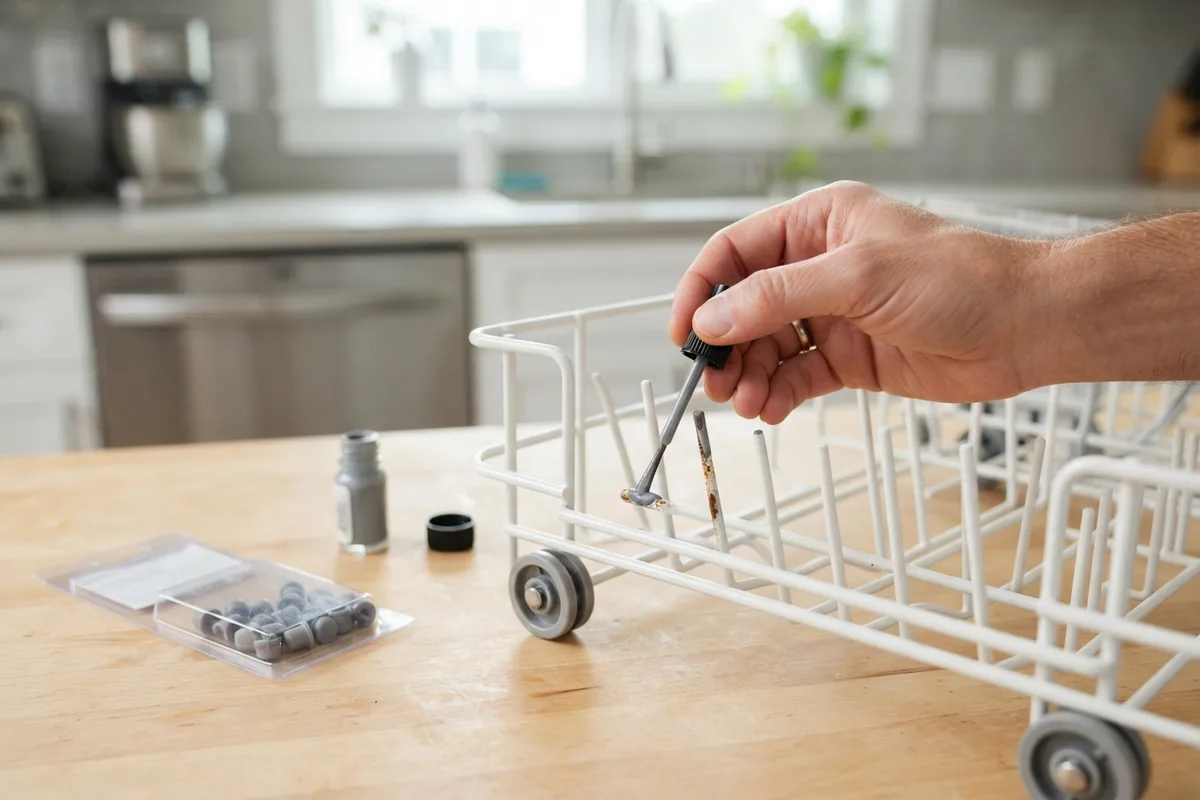
If the rust has eaten through the tips of the vertical tines, liquid paint alone might wear off quickly under friction from heavy plates. Flexible vinyl tine caps slip directly over the tips, providing a permanent cushion.
- Measure the damaged tine tips and purchase a pack of universal dishwasher tine repair caps made from heat-resistant PVC.
- Clean and sand the tine tips following the prep steps to remove flaking rust.
- Brush a small drop of liquid rack paint onto the bare metal tip to serve as both a rust inhibitor and an adhesive.
- While the liquid paint is still wet, push a vinyl cap firmly down over the tine until it covers at least 1/4 inch of the intact factory coating below the break.
- Wipe away any excess liquid that squeezes out around the bottom rim of the cap and let the assembly cure for a full 24 hours.
Inspect and Replace Corroded Rack Rollers
Rust does not always start on the tines; it frequently begins around the metal axles, clip pins, and wheel assemblies on the sides of the rack. When water collects in worn roller bearings, rust can bind the wheels and gouge the tub tracks, causing low washing performance or poor rack alignment.
- Slide the rack completely out of the tub and set it on a sturdy table.
- Inspect each wheel and mounting clip for brownish discoloration, cracking, or seized bearings.
- Depress the plastic release tabs on the roller assembly to unsnap damaged wheel brackets from the rack frame.
- If the metal frame behind the roller is rusty, sand and touch it up with PVC paint before installing replacement rollers.
- Snap new OEM-compatible roller assemblies into position until they click firmly onto the wire grid. If you notice structural issues like low water movement across the racks, check our guide on why dishwasher water pressure is low to ensure your spray arms operate smoothly.
Adjust Loading Habits to Prevent Vinyl Cracks
Most rack corrosion begins as mechanical damage caused by sharp metal items striking the vinyl coating during loading. Altering a few daily kitchen habits prevents new scratches from exposing raw steel.
- Load chef's knives, metal skewers, and sharp-tined carving forks with their pointed ends facing downward in the cutlery basket, or place them flat on the top utility tray.
- Avoid forcing large cast iron pans, heavy Dutch ovens, or wide baking sheets over tightly spaced tines. If an item does not slide easily between rows, fold down adjustable tines or hand-wash oversized cookware.
- Keep metal baking sheets from rubbing against the rack sidewalls during cycle vibration.
- Check the interior of your tub every few months to catch small nicks in the vinyl before moisture penetrates the steel core.
| Fix Method | Best For | Typical DIY Cost | Drying / Cure Time |
|---|---|---|---|
| Mild Acid Rust Removal | Surface oxidation prep | $3–$8 | 30 minutes |
| Liquid PVC Touch-Up | Scratches, gouges, flat wire | $10–$18 | 24–48 hours |
| Vinyl Tine Caps | Broken or rusted tine tips | $8–$15 | 24 hours |
| Roller Replacement | Corroded wheel assemblies | $15–$35 | None (instant) |
| Full Rack Replacement | Severe multi-wire structural rot | $120–$320 | None (instant) |
When to Call a Pro for Dishwasher Repairs
Small patches of rust on individual tines are easy to resolve with simple touch-up kits and tine caps. However, if multiple structural crossbars have rusted through, the rack may sag under heavy loads and block the spray arms, leading to motor strain and incomplete washing cycles. In such cases, purchasing a complete OEM replacement rack is often safer and more cost-effective than extensive DIY patching.
If you find rust spreading to the stainless steel tub, underneath heating element brackets, or around internal pump seals, you may be facing internal leaks or electrical component degradation. Review our guide on repair vs replace appliances rules to decide if an older machine is worth fixing. When electrical wiring, motor housings, or tub seals show signs of rust, True Appliance Repair can match you with a local appliance pro to inspect your system safely.
Frequently Asked Questions
Is rust from a dishwasher rack dangerous on dishes?
While small amounts of oxidized iron are not toxic in casual contact, rust flakes can adhere to ceramic glaze, silverware, and glassware, creating permanent blemishes. Flaking metal particles can also collect in the dishwasher filter or circulate through the impeller, causing premature wear to internal pump seals.
Can I use regular spray paint or enamel on dishwasher racks?
No, standard spray paints and household enamels are not designed to withstand high heat (often exceeding 140°F) or caustic dishwashing detergents. Standard paints will quickly bubble, peel off, and contaminate your wash water. Always use specialized liquid PVC or vinyl coatings formulated specifically for dishwasher racks.
How long do DIY dishwasher rack repairs last?
When the bare metal is properly cleaned, sanded, and allowed to cure for at least 24 to 48 hours, a liquid PVC patch or vinyl cap repair typically lasts 1 to 3 years under normal household use. Inspect repaired areas every few months to reapply touch-up liquid if wear reappears.
Why is only the bottom of my dishwasher rack rusting?
The lower rack is exposed to higher heat directly above the heating element and carries the heaviest pots, pans, and sharp utensils. This combination of mechanical friction, concentrated detergent residue, and heat causes the lower vinyl coating to degrade faster than the upper rack.