
When dishwasher water pressure drops, spray arms fail to spin properly, leaving dishes half-washed and cycles stalling mid-way. Low fill volume or weak water flow usually points to a restricted supply line, a faulty inlet valve, or a stuck float mechanism rather than a total motor failure. Follow this step-by-step troubleshooting guide to diagnose the cause, restore full water pressure to your unit, and get your kitchen running smoothly.
Before performing any hands-on inspections, safety comes first. Always unplug the appliance from the electrical wall outlet or switch off the dedicated circuit breaker in your home's breaker panel. Turn off the hot water shutoff valve located beneath your kitchen sink before disconnecting any hoses or valves.
| Issue | Common Cause | Quick DIY Fix |
|---|---|---|
| Partial Fill / Humming Valve | Clogged inlet valve mesh screen | Clean or replace the water inlet valve |
| Water Supply Weak at Sink Too | Low house water pressure or closed valve | Open shutoff valve fully; check house main |
| Spray Arms Barely Moving | Unseated upper feed tube | Realign and dock upper spray tube securely |
| Cycle Stops Early Without Water | Stuck overfill float switch | Free float assembly from debris or buildup |
| Water Hissing Without Fill | Kinked braided steel supply hose | Straighten line under sink cabinet |
Check the Under-Sink Water Supply Valve
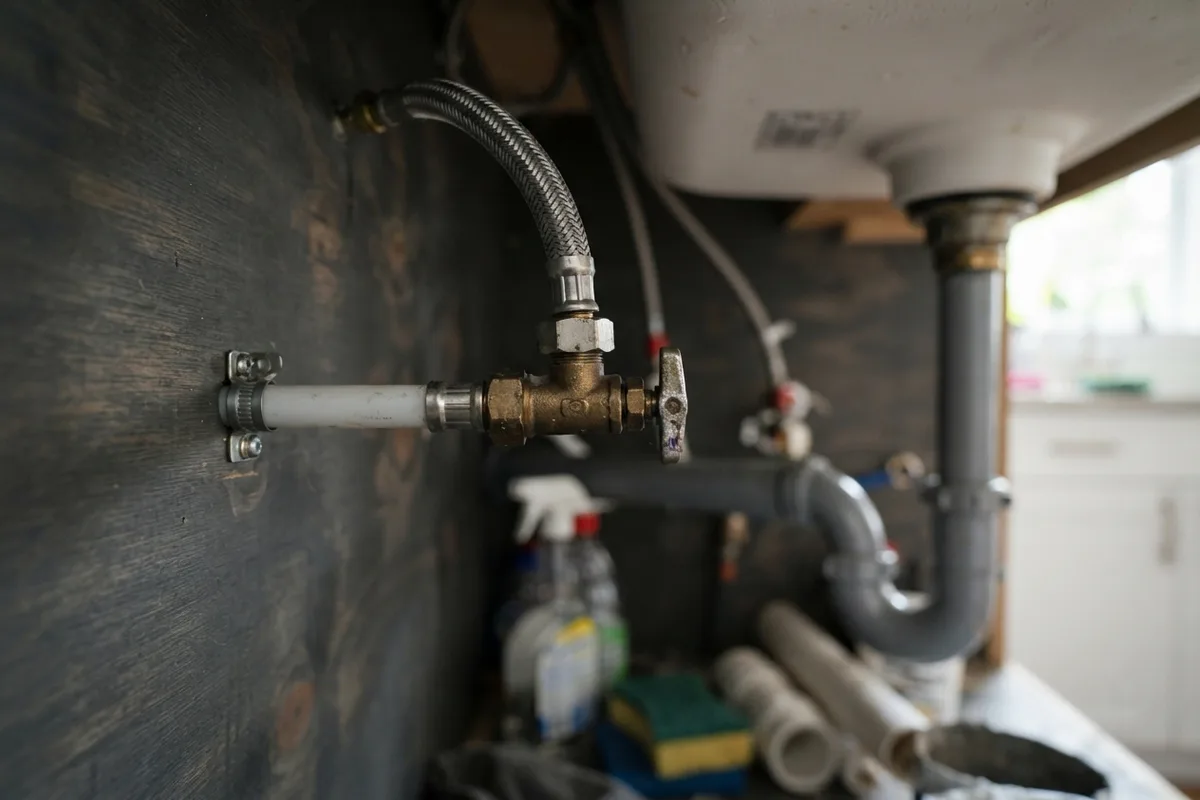
Dishwashers connect directly to your home's hot water line using a flexible braided hose under the kitchen sink. Over time, the dual-outlet valve or hot water shutoff handle beneath the sink can accidentally get bumped, partially closing the water supply line.
- Open your under-sink cabinet and clear away cleaning supplies to access the hot water valve.
- Locate the flexible metal or braided line heading directly to the dishwasher.
- Turn the valve knob counterclockwise until it rests fully in the open position. Quarter-turn ball valves should run parallel to the copper pipe.
- Inspect the flexible supply hose for sharp kinks or crushed bends where it passes through the cabinet sidewall.
- Realign the hose to allow smooth, unhindered water flow from the house supply line.
If you recently performed plumbing repairs under your sink, an improperly opened valve is often the primary reason water pressure suddenly drops during initial fill cycles.
Inspect the Water Inlet Valve Screen
The water inlet valve controls water entering the dishwasher tub during each fill cycle. Positioned behind the bottom toe kick plate, this valve contains a small internal mesh wire screen designed to catch sediment, mineral rust, and hard water deposits before they reach internal components.
- Disconnect power to the unit at the circuit breaker panel and shut off the water supply valve under the sink.
- Remove the lower access panel or toe kick by unscrewing the mounting fasteners near the floor.
- Locate the brass elbow fitting connected to the water inlet valve in the front-left or front-right corner.
- Disconnect the inlet supply line into a small tray to catch residual water.
- Look inside the valve inlet port using a flashlight to inspect the fine wire screen mesh.
- Carefully clean surface debris using a soft cotton swab, or replace the entire inlet valve assembly if sediment buildup is extensive or the valve solenoid hums without opening.
If you notice persistent water accumulation around the appliance floor after working near valves, consult our guide on why a dishwasher is filling with water when off to prevent under-counter leaks.
Verify Free Movement of the Float Assembly
The overfill float switch sits inside the front tub basin and acts as a safety mechanism to prevent water from overflowing the tub. When water reaches the appropriate height, the float rises and trips a microswitch underneath to cut off incoming water flow.
- Open the door fully and locate the small plastic dome or tower float in the front corner of the lower tub basin.
- Lift the float cap straight up and drop it several times to check for smooth mechanical movement.
- Clean around the stem base to remove hardened detergent residue or food particles that might cause the float stem to stick in a raised position.
- Gently press down on the float until you hear a distinct mechanical click from the microswitch below the tub floor.
If the switch remains engaged in the elevated position due to debris or mechanical failure, the electronic controller assumes the tub is already full, preventing the water inlet valve from opening fully during cycle fills.
Check Upper Spray Feed Tube Docking
Water travels from the bottom pump sump up through an internal water distribution manifold pipe attached along the back inner wall of the tub. If your upper rack feed tube disengages from this manifold, water pressure escapes into the open tub instead of pressurizing upper and lower spray arms.
- Pull the middle and upper dish racks forward along their support rails.
- Inspect the rubber or plastic receiver manifold mounted along the center rear panel inside the appliance tub.
- Check the rear nozzle on the upper rack feed tube to ensure it seats firmly into the manifold grommet when the rack pushes back.
- Look for cracked rubber seal gaskets, loose bracket screws, or misaligned rack height adjusters that prevent a tight hydraulic seal.
- Realignment restores localized water pressure to upper spray nozzles without needing replacement parts.
If your unit stops mid-wash during these pressurization phases, see our tips on why a dishwasher is stopping mid-cycle for additional electrical and sensor checks.
Test Household Water Line Pressure
A dishwasher requires incoming home water pressure between 20 and 120 pounds per square inch (PSI) to fill within timed cycle windows. If overall home water pressure drops, the timed fill valve cycle shuts off before sufficient water enters the tub basin.
- Turn on the kitchen sink hot water faucet completely and observe the volume and force of flow.
- Fill a one-gallon container at the sink. Strong household supply lines generally fill a gallon pitcher in under 30 seconds.
- Check if low water pressure occurs across other plumbing fixtures in the home, such as bathroom faucets or laundry fill valves.
- If municipal supply pressure drops significantly, contact your city water utility or check home pressure-reducing valves.
If electrical issues occur alongside water pressure fluctuations, learning how to reset home appliances can help clear control board logic glitches after pressure restores.
When to Call a Pro
While inspecting valves and straightening supply hoses fall well within standard home maintenance, complex plumbing modifications or electrical microswitch diagnostics require specialized equipment. If your unit experiences electrical shorting, persistent inlet valve solenoid failure, or hidden pipe corrosion behind cabinetry, calling a trained technician protects your kitchen from costly water damage.
Stop work immediately and call a professional if you observe active pipe leaks inside wall voids, corroded main brass shutoff valves, or damaged electrical wiring leading to the main pump assembly. True Appliance Repair can match you with a local appliance pro to diagnose complex water delivery and valve failures safely.
FAQ
How much water should be in the bottom of the dishwasher during a cycle?
During a normal wash cycle, water should completely cover the bottom sump basin below the heating element, sitting roughly 1 to 2 inches deep. If you only see a thin puddle or the pump makes a sucking, surging sound, water pressure or fill volume is inadequate.
Can hard water cause low dishwasher water pressure?
Yes. Hard water minerals like calcium and lime accumulate inside supply lines, shutoff valves, and the fine mesh screen of the water inlet valve. Over time, these chalky deposits restrict incoming water volume and drop working pressure inside internal spray manifolds.
Why does my dishwasher sound like it has low water pressure?
When a unit lacks sufficient water volume, the circulation pump sucks air alongside water, causing a loud cavitation or surging noise. Spray arms spin slowly or stop completely because there is not enough hydraulic force pushing through the nozzles.
How do I know if my dishwasher water inlet valve is bad?
If the under-sink shutoff valve is fully open and household water pressure is normal, but your machine barely fills or makes a buzz/hum sound during the fill cycle without taking on water, the inlet valve solenoid or mesh screen is likely clogged or defective.