
Opening your dishwasher after a cycle only to find warped food containers, a scorched smell, or melted plastic rack wheels is a major headache. Whether a tall lid fell onto the exposed heating coil or a faulty thermostat is pushing water temperatures too high, a dishwasher melting plastic is a clear sign that something in your loading routine or heating system needs attention. Use these six straightforward steps to clean up melted residue and stop your dishwasher from ruining plasticware.
Safety First: Before inspecting or touching the heating element, thermostat, or internal wiring, always unplug your dishwasher from the wall outlet or turn off its dedicated circuit breaker at your home's electrical panel. Wait at least 30 minutes after a cycle ends so the metal heating element can cool completely.
1. Scrape Melted Plastic Off a Cool Heating Element
When a lightweight container flips over and lands on the exposed metal ring at the bottom of the tub, it melts directly onto the sheath. If you leave that hardened plastic crust on the coil, it will smoke during the next cycle and create a hot spot that can burn out the element.
- Turn off power at the breaker and confirm the circular metal heating element at the bottom of the tub is completely cool to the touch.
- Pull out the lower dish rack to give yourself clear working room.
- Lay a warm, damp microfiber cloth over the melted plastic lump for 10 minutes to slightly soften the edges without using harsh chemicals.
- Use a wooden spatula, a plastic putty knife, or the edge of an old credit card to gently pry and flake off the hardened plastic. Never use a metal knife or steel wool, which can gouge the element's protective outer casing.
- Wipe away any remaining film with a damp sponge dipped in baking soda, then dry the coil before restoring power.
2. Keep Plastics on the Top Rack Only
In most standard American dishwashers, the exposed calrod heating element sits right on the floor of the tub, reaching blistering surface temperatures during the heated dry phase. Even items stamped "dishwasher safe" can warp or melt if placed in the bottom rack just inches above that radiant heat source.
- Check the bottom of every plastic cup, lid, and storage container for the dishwasher-safe symbol (usually plates with water droplets on top) before loading.
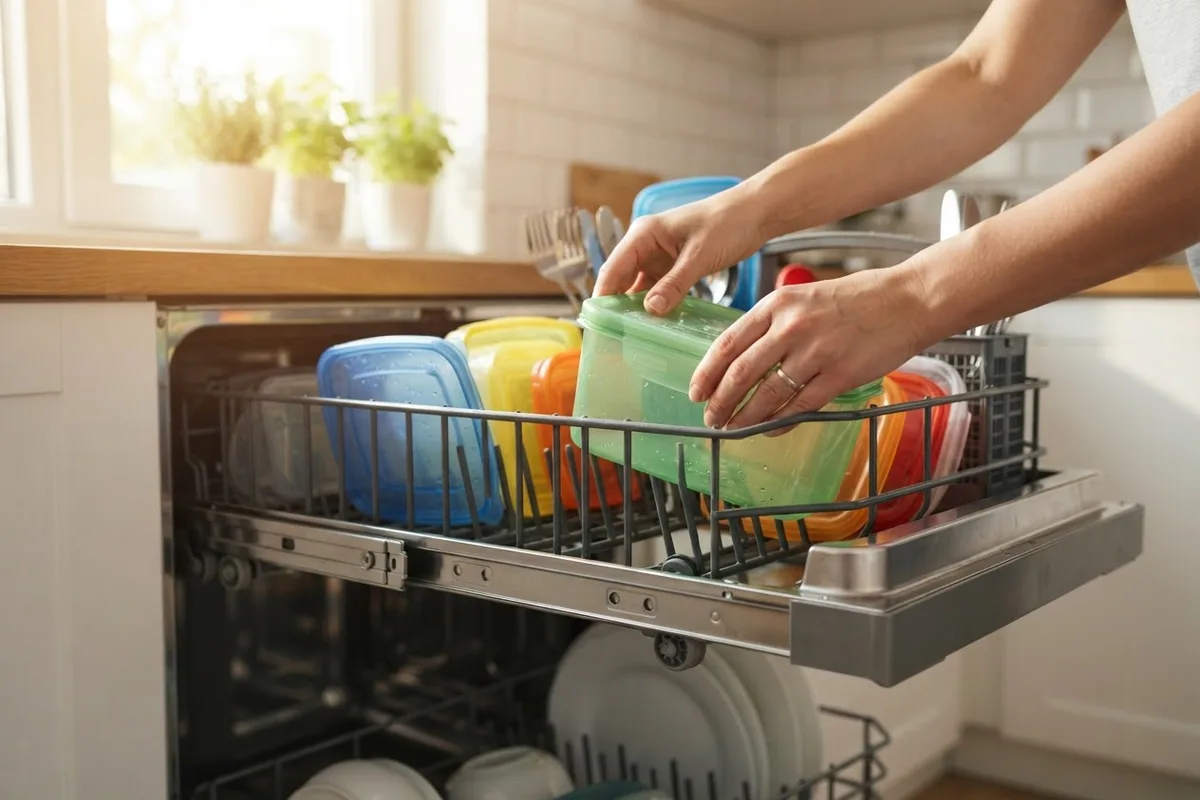
- Place all dishwasher-safe plastics strictly on the upper rack, where they stay several inches farther from the bottom heating coil.
- Wedge lightweight plastic lids and baby bottle parts between the tines and secure them with a mesh dishwasher basket or silicone tether so high-pressure water jets cannot flip them onto the floor of the tub.
- Keep thin takeaway containers, disposable water bottles, and #6 polystyrene plastics out of the machine entirely, as they warp even in normal hot wash water.
- If your upper rack sits unevenly or drops down closer to the lower spray arm, inspect the side adjusters to make sure the basket stays level and high.
3. Switch Off Heated Dry and Sanitize Settings
Your cycle selection directly controls how hot the interior of the dishwasher gets. A standard wash cycle heats water to around 120°F to 140°F, whereas a Sanitize rinse or High-Temp Wash pushes the water temperature up to 150°F or 165°F. Combined with an extended Heated Dry bake, those boosts easily deform softer plastics.
- Check the control panel before starting a load that contains plastic storage containers, toddler cups, or blender pitchers.
- Deselect the Heated Dry, Sanitize, High-Temp Wash, or Steam options.
- Choose a Normal, Eco, or Air Dry setting instead, which relies on residual heat from the final rinse and room air to dry the dishes safely.
- Once the cycle finishes, crack the dishwasher door open a few inches and pull out the top rack slightly so steam can escape.
- Give the top rack a gentle shake before unloading to knock pooled water off the concave bottoms of plastic mugs and bowls.
4. Unblock the Spray Arms and Check Water Levels
Water inside the dishwasher doesn't just clean your dishes—it also regulates the temperature inside the tub and cools the lower rack plastic wheels and spray arm. If the dishwasher underfills or the lower spray arm jams, the heating element bakes the dry air right underneath the lower plastic wash arm, often melting a hole straight through its underside.
- Remove the lower dish rack and spin the bottom plastic spray arm by hand to verify it rotates freely without wobbling or hitting the heating coil.
- Lift out the lower spray arm (most twist off counterclockwise or unclip) and rinse it under the kitchen faucet, using a toothpick to clear food seeds or glass shards from the spray nozzles.
- Inspect the underside of the plastic spray arm for heat blisters or melted holes; if it is warped or split, order a direct replacement part for your model so water pressure isn't lost. (If clogged jets have also been causing strange sounds during the wash cycle, check out our guide on why your dishwasher is making a whining noise.)
- Start a normal cycle, let the tub fill for two minutes, and open the door carefully to check the water level. Water should pool cleanly across the bottom of the sump.
- Check the float switch—a small plastic dome in the front corner of the tub floor—and lift it up and down to make sure it isn't stuck in the "full" position, which can trick the dishwasher into running dry with the heater on.
5. Inspect the High-Limit Thermostat for Overheating
Every dishwasher with a heating element uses a safety sensor called a high-limit thermostat, mounted underneath the tub, to cut power if temperatures climb dangerously high. If this thermostat sticks closed, the heating element can stay energized far too long, warping top-rack plastics and melting the plastic wheels right off the lower rack.
- Shut off the circuit breaker to the dishwasher and turn off the water supply valve under the sink.
- Unscrew and remove the lower kickplate access panel at the base of the dishwasher door.
- Locate the high-limit thermostat—a small, round metal disc held against the underside of the tub by a metal bracket, wired in line with the heating element terminals.
- Inspect the wires and terminals connected to the thermostat for burnt insulation, melted plastic connectors, or scorch marks.
- If you are comfortable using a multimeter, disconnect the two wire leads and test the thermostat for continuity at room temperature; it should show continuity when cool, but if its contacts are welded shut or visibly burnt, the part must be replaced.
6. Check for a Stuck Control Board Heating Relay
Sometimes the heating element never turns off because the electronic relay on the main control board has welded itself closed. When this happens, the coil may glow dull orange even during a cold rinse or air-dry cycle, filling the kitchen with a sharp plastic odor and melting anything nearby.
- Pay close attention at the end of an Air Dry cycle (with Heated Dry turned off). If the tub is still blistering hot and smells like scorched plastic, the heater is receiving constant power.
- Turn off the dishwasher breaker immediately so the element cannot keep heating while the machine is idle. 3.Wait for the unit to cool, then inspect the heating element terminals underneath the tub for signs of electrical arcing or heat damage.
- Because replacing a main electronic control board or diagnosing live relay voltage involves working inside the door panel wiring harness, stop here and bring in an experienced technician if you suspect a stuck relay.
Dishwasher Melting Plastic: Quick Troubleshooting Guide
| What Is Melting? | Most Likely Cause | Recommended Fix |
|---|---|---|
| Single lid or bowl on the floor | Item fell through the rack onto the coil | Scrape cool element clean; secure lids on top rack |
| Top-rack Tupperware warping | Sanitize or Heated Dry cycle running too hot | Switch to Normal wash and Air Dry |
| Underside of lower plastic spray arm | Spray arm jammed stationary over the heater | Clear clogged spray nozzles or replace warped arm |
| Lower rack plastic wheels melting | Low water level or failed high-limit thermostat | Check float switch and test high-limit thermostat |
| Plastics melting even on Air Dry | Control board heating relay stuck closed | Shut off breaker and have control board inspected |
When to Call a Pro
Scraping cooled plastic off a heating element, clearing a jammed spray arm, and adjusting your cycle settings are safe, zero-cost DIY fixes. However, if your dishwasher continues overheating on Air Dry, melts its own internal plastic components like the spray arm hub or rack rollers, or trips the breaker, the issue usually lies in the high-limit thermostat, thermistor, or main control board. Replacing a thermostat typically costs $120 to $220 including parts and labor, while a main control board replacement generally ranges from $250 to $450 (varies by area and model).
Whenever a repair involves electrical diagnostics, burnt wiring harnesses, or internal heating controls, it is safest to hand the job off to a specialist. True Appliance Repair can match you with an independent local appliance pro to test the heating circuit and get your dishwasher running safely again. You can also reach out through our contact page if you need help scheduling a visit.
FAQ
Is it safe to run my dishwasher after plastic melts on the heating element?
No, you should not run another cycle until you have turned off the power, allowed the coil to cool completely, and scraped off all melted plastic residue. Leaving plastic on the element will cause thick, acrid smoke in your kitchen and can insulate a section of the metal coil until it overheats and cracks.
How do I get the burnt plastic smell out of my dishwasher?
First, remove every trace of melted plastic from the heating element and tub floor. Next, place a dishwasher-safe glass bowl filled with two cups of white vinegar on the top rack and run a normal wash cycle with Heated Dry turned off. Once finished, sprinkle a cup of baking soda across the bottom of the tub and run a short hot rinse.
Why is my dishwasher melting dishwasher-safe plastic on the top rack?
"Dishwasher safe" plastics are generally engineered to handle water temperatures up to about 135°F to 140°F. If you run the Sanitize setting, High-Temp Wash, or an extended Heated Dry cycle, interior temperatures can spike past 155°F, which is hot enough to soften and warp thin polypropylene containers even on the upper rack.
Can a melted lower spray arm cause my dishwasher to leak?
Yes. When the bottom of a plastic spray arm melts open over the heating element, pressurized water shoots sideways or directly at the lower door seal instead of upward at the dishes. This misdirected spray frequently forces water past the bottom door gasket and onto your kitchen floor.