
A sudden, high-pitched whining sound coming from under the kitchen counter can turn a quiet evening into a headache. Unlike a sharp rattle or a rhythmic thump, a dishwasher making a whining noise usually signals friction inside a moving motor, a restricted water valve, or a tiny piece of debris pinching an impeller. Use the six safe, step-by-step fixes below to pinpoint the source of the whine and restore a quiet wash cycle before a minor part wears out completely.
Safety First: Before inspecting any internal components, removing kickplates, or touching wiring, always unplug the dishwasher from the wall outlet (commonly located under the kitchen sink) or switch off its dedicated circuit breaker at your home's main electrical panel. Also, turn the hot water shut-off valve under the sink clockwise until it stops before touching any water supply lines.
1. Fully Open a Restricted Water Supply Valve
If you only hear the whining noise during the first two minutes of the cycle while the tub is filling, the sound is likely coming from the water line rather than the motor. When the hot water shut-off valve under the sink is bumped by cleaning supplies and left only partially open, pressurized water squeezes through a narrow gap, creating a loud, steady whine.
- Open the cabinet doors beneath your kitchen sink and locate the hot water shut-off valve feeding the braided dishwasher supply line.
- Turn the valve handle fully counterclockwise until it stops to allow unrestricted water flow.
- Check that the flexible braided stainless steel supply line behind the cabinet wall is not kinked or crushed by heavy items stored under the sink.
- Turn the valve back a tiny fraction of a turn (about one-eighth of a turn clockwise) so the valve stem does not seize over time.
- Run a quick rinse cycle to see if the fill-stage whine has disappeared.
2. Clear the Water Inlet Valve Filter Screen
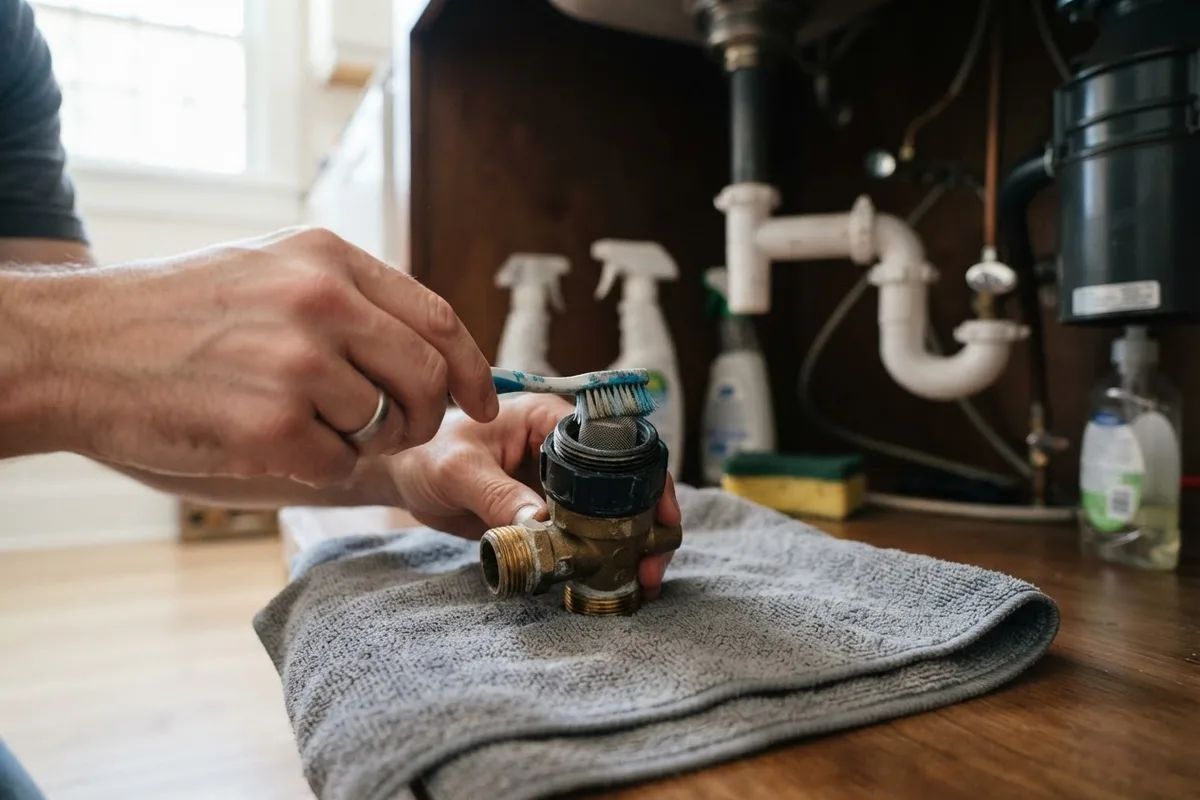
When the under-sink supply valve is wide open but the unit still whines loudly every time water enters, the dishwasher's electric water inlet valve is the prime suspect. Hard water scale, rust flakes, or sediment from your household plumbing can clog the tiny mesh screen inside the valve, forcing water to whistle and whine as it pushes through. Compare this steady fill tone to a dishwasher making a whooshing noise, which is normal water movement inside the tub.
- Shut off the circuit breaker and turn off the hot water supply valve under the sink.
- Use a screwdriver or nut driver to remove the lower access kickplate at the base of the dishwasher.
- Locate the water inlet valve (usually on the front left or right corner) and place a shallow towel underneath it to catch residual water.
- Use adjustable pliers to unscrew the threaded water supply elbow from the inlet valve.
- Inspect the small mesh screen inside the valve port. Gently brush away mineral grit using an old toothbrush and a little white vinegar, without puncturing the screen.
- If the valve continues to whine even when the screen is clean, the internal rubber diaphragm has stiffened with age and the inlet valve assembly will need to be replaced.
3. Free a Pinched Drain Pump Impeller
Does the whining noise only kick in when the dishwasher is pumping water out to the sink drain? The drain pump uses a small plastic fan blade called an impeller that spins at high speed. If a piece of plastic wrap, a fruit sticker, or a sliver of glass gets wedged against the impeller housing, it produces a shrill, mechanical whine during every drain phase. If the sound sounds more like loose hard items bouncing around, check our guide on fixing a dishwasher making a rattling noise.
- Confirm power is off at the breaker, then pull out the bottom dish rack.
- Sponge out any standing water sitting in the bottom sump basin.
- Remove the lower access kickplate at the floor level and locate the compact drain pump mounted to the side of the main sump.
- Disconnect the wire harness clip (take a quick smartphone photo first so you remember the orientation) and twist or unscrew the drain pump counterclockwise to detach it.
- Inspect the plastic impeller blades. Use needle-nose pliers to pull out any wrapped thread, dental floss, or broken plastic shards.
- Spin the impeller blade with your finger; it should move in smooth, magnetic steps without scraping the housing. Reinstall the pump firmly, making sure the rubber O-ring gasket sits flat.
4. Check the Circulation Pump Motor Bearings
When your dishwasher makes a whining noise continuously throughout the main wash cycle, the main circulation pump (wash motor) is working too hard. Over years of exposure to heat and detergent, the internal rubber seals can seep slightly, washing away the factory grease inside the motor bearings. Dry, worn motor bearings emit a distinct, rising metallic whine that gets louder every week.
- With the power off at the breaker, remove the bottom rack and twist out the lower spray arm.
- Unscrew or unclip the central sump cover to expose the upper edge of the circulation impeller.
- Reach in carefully (wear cut-resistant gloves in case of broken glass) and check for any foreign object rubbing against the center shaft.
- Try to gently wiggle the center impeller shaft side to side. If the shaft feels loose or wobbles, or if turning it by hand feels gritty and stiff, the motor bearings are failing.
- Because modern circulation pump bearings are sealed inside the motor assembly, you cannot oil them. Replacing the complete circulation pump or motor-and-sump assembly is the lasting fix.
5. Inspect the Blower Fan in the Door Vent
Many modern dishwashers use an active motorized vent fan inside the door to pull moist steam out during the heated dry cycle. If the whining sound starts only at the very end of the cycle after all washing and draining have finished, the tiny drying fan motor in the door is likely dry, dusty, or rubbing against its plastic shroud.
- Turn off power to the dishwasher at your home's breaker panel.
- Open the dishwasher door and locate the steam vent cover on the upper inner door panel.
- Unscrew the inner door panel perimeter Torx or Phillips screws so you can access the motorized vent assembly.
- Check the small fan blades for soap scum buildup, waxy rinse-aid residue, or warped plastic that causes the blade to graze the housing.
- Wipe the fan blades gently with a damp microfiber cloth and spin the fan by hand.
- If the tiny fan motor squeals or binds when spun by hand, order an exact replacement vent fan assembly for your model number.
6. Replace Stretched Door Springs and Friction Pulleys
Sometimes the whine happens before you even press the start button. If you hear a sharp, high-pitched whine every time you pull the dishwasher door open or push it shut, the heavy tension springs and plastic friction cables running along the lower sides of the tub are rubbing dry metal against plastic.
- Shut off the electrical breaker and turn off the water supply.
- Remove the lower access kickplate and unscrew the two top mounting brackets that secure the dishwasher to the underside of your countertop.
- Carefully slide the dishwasher out from under the counter just 4 to 6 inches so you can see the side frame rails.
- Inspect the metal extension springs and the plastic link cables that glide over the stationary nylon pulleys on both sides.
- Look for grooves worn deep into the plastic pulleys or rusted spring hooks. Never use heavy petroleum grease here, as it attracts grit; instead, replace worn pulleys and stretched door balance springs in pairs so both sides pull evenly.
Quick-Reference Guide: Matching the Whine to the Part
| When the Whine Happens | How It Sounds | Most Likely Culprit | Typical DIY Difficulty |
|---|---|---|---|
| First 1–2 minutes (Fill stage) | High-pitched whistle or steady hiss-whine | Partially closed shut-off valve or clogged inlet valve screen | Easy (15–30 minutes) |
| Throughout the main wash (30–60 mins) | Loud, continuous electric motor whine | Worn circulation pump bearings or rubbing wash impeller | Moderate to Pro |
| During the 2-minute drain intervals | Sharp, whirring mechanical whine | Debris pinching the drain pump impeller | Moderate (30–45 minutes) |
| During the final drying phase only | Soft, high-pitched electronic whir | Dry or obstructed door vent blower fan | Moderate (45 minutes) |
| Only when opening or closing the door | Brief metallic or plastic friction whine | Worn door cable pulleys or dry balance springs | Easy (30 minutes) |
When to Call a Pro
Cleaning an inlet valve screen, opening a supply valve, or pulling a fruit label out of a drain pump are rewarding weekend projects that cost next to nothing. However, if your troubleshooting points to a failing circulation pump motor, a leaking sump seal, or burnt wiring inside the door panel, the repair involves laying the appliance on its back and disconnecting pressurized water seals and main electrical harnesses.
A replacement water inlet valve or drain pump typically costs between $85 and $220 for parts and labor, while replacing a full circulation pump motor assembly generally ranges from $220 to $400+, though exact prices vary by area and dishwasher model. If you would rather skip pulling the entire unit out from under the cabinets, True Appliance Repair can match you with a local appliance pro who can diagnose the noise and swap out the worn motor or valve safely.
FAQ
Is it safe to run my dishwasher if it is making a whining noise?
If the whine is just a partially closed water valve under the sink, opening the valve solves it immediately. However, if the whine comes from the wash motor or drain pump, stop using the dishwasher until you inspect it. Running a pinched pump or a motor with dry bearings can overheat the motor windings and cause a water leak at the shaft seal.
Why does my dishwasher whine and smell like hot rubber?
A high-pitched whine paired with a hot rubber or electrical smell means a pump motor is stalling or rubbing hard against its housing. Turn off the dishwasher immediately and flip off its circuit breaker. Once it cools down, inspect the drain pump and circulation pump for jammed debris, or schedule a professional appliance repair check before running another load.
Can hard water make a dishwasher whine?
Yes. Hard water mineral deposits build up inside the narrow ports of the water inlet valve and along the seals of the circulation pump. Over time, calcium scale restricts water flow—causing the valve to whistle during filling—and accelerates wear on the rubber motor seals.
How long should a dishwasher circulation pump last?
In a typical American household running four to five loads a week, a dishwasher circulation pump usually lasts between 7 and 10 years. Keeping the bottom filter clean and scraping hard food pits or bones off plates before loading helps prevent premature wear on the pump bearings and impellers.