
A sudden clattering sound from your kitchen mid-cycle is hard to ignore, especially with holiday hosting and heavy family meals right around the corner. When you have a dishwasher making a rattling noise, the culprit is usually a loose rack wheel, a wobbling spray arm, or a small piece of hard debris like a fruit pit or glass shard bouncing inside the pump housing. By running through a few methodical, tool-free checks, you can track down the vibration, quiet the machine in under 30 minutes, and prevent a minor annoyance from turning into a broken motor.
Safety First: Before inspecting internal components, removing the lower access kickplate, or reaching near the sump area, always unplug the dishwasher from its under-sink outlet or switch off the dedicated circuit breaker at your home's electrical panel. Turn off the hot water supply valve under the sink before touching any plumbing connections.
1. Space Out Knocking Dishes and Silverware
Before disassembling anything, check how the racks are loaded. High-pressure water jets push light items around with surprising force, and a rhythmic clatter often comes from bowls, pot lids, or long utensils striking each other or the stainless steel tub walls.
- Open the door and spin both the upper and lower spray arms by hand to ensure tall plates, cutting boards, or pan handles are not blocking their rotation.
- Separate nesting spoons and forks in the cutlery basket, and make sure thin knives or skewers have not slipped through the bottom plastic grid.
- Secure lightweight plastic food containers and silicone lids on the top rack using fold-down tines or clips so water jets cannot flip them upside down.
- Angle glass bowls and ceramic mugs slightly so they do not rock back and forth on the wire prongs when the main wash pump surges.
2. Tighten a Loose or Wobbling Spray Arm
If the dishes are clear of the path but you still hear a hollow plastic clanking sound every couple of seconds, inspect the upper and lower spray arms. When the center retaining nut loosens or the plastic bearing ring wears thin, the arm tilts and slaps against the bottom of the rack.
- Pull out the bottom rack and grasp the lower spray arm firmly at its center hub.
- Wiggle the arm up and down to check for excessive play; it should spin freely with very little vertical wobble.
- Twist the central locking nut or retaining cap clockwise (or counter-clockwise on certain twist-lock models—check the arrow molded into the plastic) until it clicks snugly into place.
- Inspect the thin plastic washer or bearing ring underneath the hub for cracks, and snap a replacement ring in place if it looks flattened or split.
- Repeat the check on the middle spray arm attached to the underside of the upper rack.
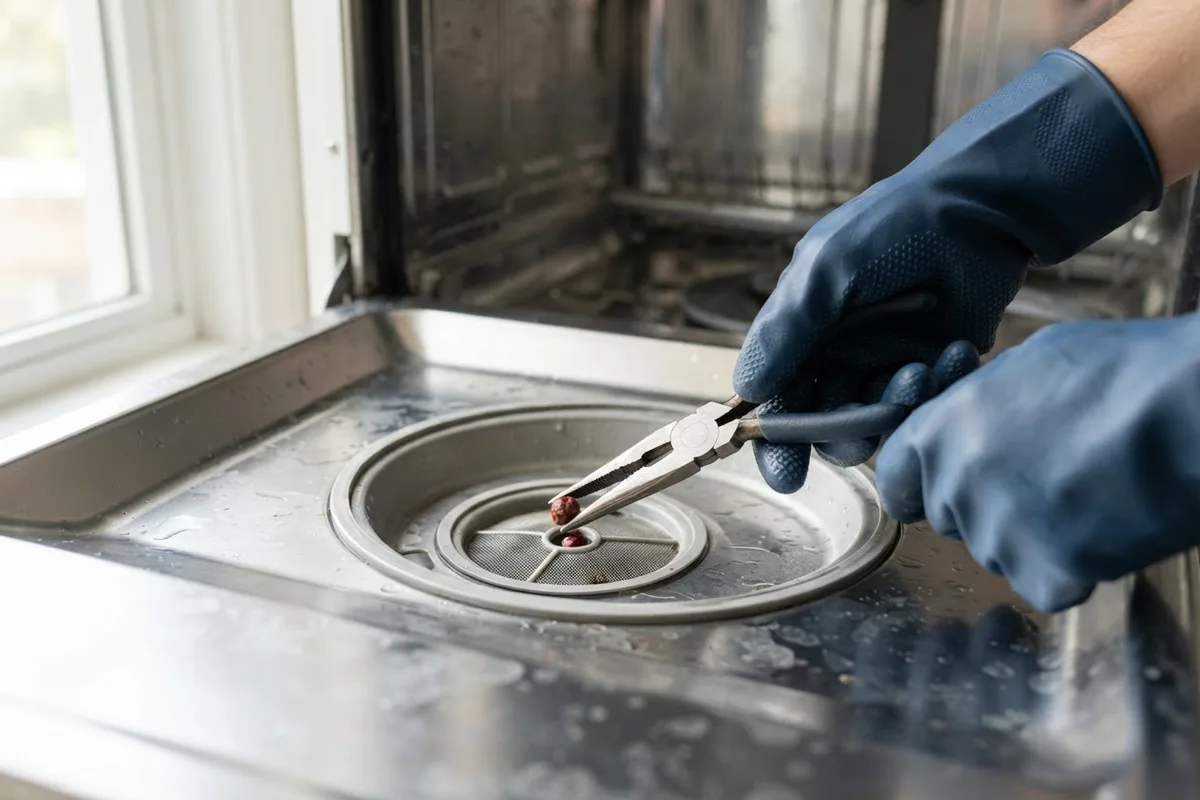
3. Clear Hard Debris From the Sump and Chopper Area
When a rattling sound resembles pebbles spinning in a blender, a hard object—such as a cherry pit, popcorn kernel, lemon seed, or broken glass fragment—has likely slipped past the bottom screen into the sump basin. If your machine makes a higher-pitched whine instead of a rattle, read our guide on why your dishwasher is making a squealing noise.
- Confirm the circuit breaker is switched off, then remove the bottom dish rack.
- Twist and lift out the cylindrical bottom assembly at the base of the tub to expose the shallow sump well.
- Put on thick cut-resistant utility gloves—broken wine glass stems frequently hide in standing water at the bottom of the sump.
- Use a flashlight and needle-nose pliers or a wet/dry shop vacuum to extract any seeds, bone fragments, twist ties, or plastic bread clips sitting in the basin.
- Check the small plastic cover over the chopper blade or impeller inlet to make sure it is snapped down tightly and not vibrating loose.
4. Replace Cracked Rack Wheels and Loose End Caps
Upper and lower dish racks glide on small plastic rollers and snap-in track stops. Years of high heat cause these plastic fittings to become brittle. When a wheel splits or an adjustable rack clip pops half-off, the metal rack vibrates noisily against the side rails whenever water surges through the tub.
- Slide the bottom rack all the way out onto the open door and flip it over to inspect each wheel axle.
- Tug gently on every roller; replace any wheel that is missing a chunk of plastic or slides loosely off its mounting pin.
- Pull the upper rack forward and examine the plastic rail end caps and the side height-adjuster mechanisms.
- Press any unclipped adjuster tabs firmly until both sides sit level and lock with an audible click.
- Check the water feed tube docking port at the back of the tub to ensure the rubber grommet is intact and holding the manifold steady.
5. Inspect the Drain Pump Impeller for Foreign Objects
If you only hear the dishwasher making a rattling noise during the first 60 seconds of the cycle or right at the end when water empties into the sink pipe, the sound is coming from the drain pump. A small shard of glass or a metal twist tie caught against the plastic drain impeller will clatter loudly whenever the pump motor spins up. (If the sound turns into an electrical hum, check our steps for a dishwasher making a buzzing noise.)
- Turn off power at the breaker box and shut off the under-sink water supply valve.
- Unscrew and remove the lower metal toe-kick access panel below the dishwasher door.
- Place a shallow baking sheet and an old towel underneath the compact drain pump mounted on the side of the main sump housing.
- Release the locking tab on the drain pump body and twist it counter-clockwise a quarter turn to pull it free from the rubber seal.
- Shine a light inside the impeller chamber, remove any trapped debris, and spin the plastic vanes with your finger to verify they are not chipped or loose on the shaft.
6. Secure Vibrating Water Lines and Mounting Brackets
Sometimes the rattle is not inside the wash tub at all. As the circulation pump pulses water and the inlet valve snaps open and closed, an unclipped copper or braided stainless steel water line underneath the machine can vibrate rapidly against the metal frame or subfloor.
- With the power off and the lower kickplate removed, lie on a folded towel and look underneath the dishwasher frame with a flashlight.
- Gently tap the hot water supply line and the corrugated plastic drain hose to see if either knocks against the sheet-metal base, cabinet wall, or floor.
- Wrap a piece of foam pipe insulation around any section of supply line that touches metal or wood framing, and secure slack drain hose loops with a plastic zip tie.
- Open the dishwasher door and check the two metal mounting brackets screwed into the underside of the countertop or side cabinets; tighten any loose Phillips screws.
- Place a carpenter's level on the front tub frame and adjust the front leveling legs with a wrench so all four feet press firmly against the floor.
Dishwasher Rattle Diagnostic & Cost Guide
Use this quick-reference chart to match when the noise happens to the most likely cause and typical US part ranges (actual costs vary by area and model).
| When the Rattle Happens | What It Sounds Like | Likely Culprit | Typical DIY Part Cost | Typical Pro Repair Range |
|---|---|---|---|---|
| Throughout the main wash | Rhythmic clinking or dull thud | Touching dishes or loose spray arm | $0 – $35 | $110 – $180 |
| Continuous during wash | Pebbles or marbles in a blender | Seed, bone, or glass in sump | $0 (cleaning only) | $120 – $220 |
| Only when draining water | Fast plastic clicking or buzzing rattle | Debris or chipped vane in drain pump | $35 – $85 | $150 – $275 |
| When water fills or surges | Metallic buzzing against floor/wall | Loose inlet pipe or mounting bracket | $0 – $15 | $100 – $175 |
| Constant loud roar + rattle | Heavy mechanical clanking | Failing wash motor bearing or impeller | $120 – $250 | $250 – $450 |
When to Call a Pro
Most rattling noises come down to stray debris, loose plastic hardware, or minor leveling tweaks you can handle in one afternoon. However, you should stop DIY troubleshooting and bring in a technician if the rattle is accompanied by a burning rubber smell, water leaking onto the subfloor, or a loud metallic grinding coming directly from the main circulation motor assembly. Replacing a main wash pump motor or repairing wiring harnesses beneath the tub involves tight clearances and water-seal tolerances that can easily lead to leaks if misaligned.
If you have cleared the sump and checked the spray arms but the noise persists, True Appliance Repair can match you with an independent local pro for reliable dishwasher repair in your neighborhood.
FAQ
Is it safe to run my dishwasher if it is making a rattling noise?
It is best to pause the cycle and investigate before running another load. If a piece of broken glass or a hard fruit pit is rattling inside the sump or drain pump, continuing to run the machine can snap the plastic impeller blades or puncture an internal rubber hose, turning a free five-minute cleanout into an expensive part replacement.
Why does my dishwasher rattle only at the very end of the cycle?
A rattle that happens exclusively during the final minutes of a cycle—or right at the very beginning—almost always points to the drain pump. The drain pump activates at the start to purge old water and again at the end of the wash and rinse phases, so any small object trapped in its housing will only make noise during those short draining intervals.
How much does it cost to fix a rattling dishwasher?
If the rattle is caused by a worn spray arm bearing, broken rack roller, or loose mounting bracket, DIY replacement parts typically cost between $10 and $40. If a technician needs to extract deep pump debris or replace a damaged drain or circulation pump, total repair costs across the US generally range from $150 to $350, though exact pricing varies by area and model.
Can a loose garbage disposal cause my dishwasher to rattle?
Yes, because the dishwasher drain hoseusually connects directly to the side inlet of your sink's garbage disposal. Vibrations can travel between the two appliances, or a piece of debris can wash back and forth in the shared drain line; if the sound is actually coming from under the sink basin, check our troubleshooting guide on why your garbage disposal is making a grinding noise.