
A sudden, sharp squeal coming from your kitchen during the wash or drain cycle is difficult to ignore. When your dishwasher starts making a squealing noise, it usually points to friction in a moving part—such as a dry spray arm bearing, a vibrating water inlet valve, or a worn pump seal. By pinpointing when the sound happens and running through these six targeted checks, you can quiet the machine down and prevent a minor wear issue from turning into a major breakdown.
Safety First: Before inspecting internal components, removing the lower kickplate, or reaching underneath the tub, always unplug your dishwasher or shut off its circuit breaker at the electrical panel. Also, turn off the hot water supply valve under the sink before touching any water line connections.
1. Check the Water Inlet Valve During Fill
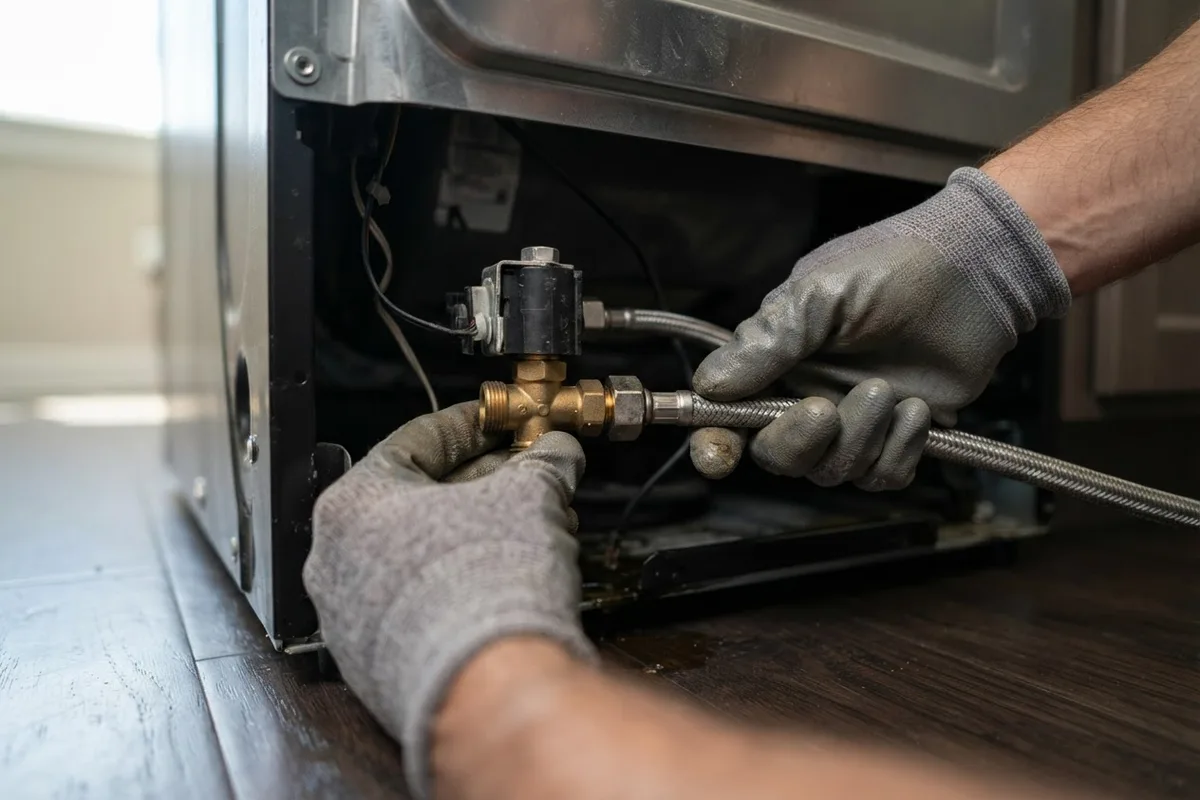
If the squealing noise happens solely during the first two minutes of the cycle while water is entering the tub, the water inlet valve is the prime suspect. Inside this valve, a small rubber diaphragm opens and closes to regulate water flow. Over time, mineral deposits or changes in household water pressure can cause that diaphragm to vibrate rapidly as water rushes past, producing a loud squeal or whistle—much like a tea kettle.
- Turn off the circuit breaker and shut off the hot water valve under your sink.
- Unscrew the metal toe kick panel at the bottom front of the dishwasher.
- Locate the water inlet valve on the bottom left or right corner where the braided water supply line attaches.
- Check the supply line for sharp kinks and ensure your under-sink shut-off valve is opened all the way (a partially closed valve creates high-pitched pressure squeals).
- Disconnect the supply hose (keep a towel handy for drips) and inspect the small mesh screen inside the valve port. If it is crusted with scale, gently brush it clean or replace the valve.
2. Inspect Spray Arm Bushings and Bearings
Once the tub fills and the wash cycle begins, pressurized water spins the upper and lower spray arms. These plastic or metal arms rotate on nylon bushings or plastic bearing rings. If a piece of grit, a fruit seed, or hard water scale gets trapped between the arm and its mount, the arm will squeal rhythmically every time it spins around.
- Open the dishwasher door and slide out the lower dish rack.
- Twist the locking nut at the center of the lower spray arm counterclockwise and lift the arm off its base.
- Inspect the underside of the arm and the plastic support ring for scored plastic, trapped grit, or melted spots from touching the heating element.
- Rinse the bearing surfaces under warm tap water and wipe the central hub clean with a damp cloth.
- Unclip the middle spray arm attached to the underside of the upper rack and check its rotation ring the same way. If a plastic bushing is worn thin or lopsided, snapping in a replacement spray arm takes less than two minutes.
3. Examine the Circulation Pump Motor Bearings
If your dishwasher emits a continuous, metallic squeal throughout the entire wash portion of the cycle, the circulation pump motor bearings are likely wearing out. Located beneath the tub, the circulation pump pushes water through the spray arms. Over years of heat and moisture, the internal shaft seal can seep slightly, washing away the factory grease inside the motor bearings.
- Listen closely near the bottom center of the door during the main wash phase. Bearing squeals often start softly and grow louder as the motor heats up.
- With the power off at the breaker, remove the lower spray arm and the cylindrical sump cover inside the tub floor.
- Reach cautiously into the sump Housing (wear heavy work gloves in case of broken glass) to feel the circulation impeller.
- Try turning the impeller fins gently by hand. It should turn with smooth magnetic resistance. If it feels gritty, wobbles side to side, or squeaks when turned manually, the motor bearings or shaft seal are failing. If the sound sounds deeper or more resonant, check our guide on why a dishwasher makes a buzzing noise.
4. Clear the Drain Pump Impeller
Does the high-pitched squeal only show up when the dishwasher is pumping dirty water out to the sink drain? That narrows the issue down to the drain pump. Unlike the larger wash motor, the smaller drain pump runs for just a minute or two between rinses. If a thin piece of plastic film, a twist-tie, or a shard of glass slips past the sump screen, it can rub tightly against the high-speed impeller shaft or pump housing, creating a screeching or squealing sound.
- Shut off power at the breaker and bail out any standing water in the bottom of the tub with a cup and sponge.
- Remove the lower access kickplate beneath the door.
- Locate the drain pump mounted to the side of the main sump (follow the corrugated drain hose back to the pump body).
- Twist or unscrew the drain pump housing (place a shallow baking pan underneath to catch residual water).
- Inspect the plastic impeller blades and the space behind them for wrapped string, labels, or debris. Clean the chamber out, verify the rubber O-ring is intact, and twist the pump back into place.
5. Lubricate Dry Door Pulleys and Springs
Not every dishwasher squeal happens while the machine is running. If you hear a sharp squeak or squeal every time you pull the dishwasher door open or push it shut, the friction is coming from the door counterbalance mechanism. Most dishwashers use two heavy tension springs connected to nylon cables that glide over plastic pulley wheels along the bottom sides of the frame.
- Turn off the breaker and turn off the water supply.
- Unscrew the top or side mounting brackets securing the dishwasher to your kitchen cabinets, and carefully slide the unit forward just 4 to 6 inches.
- Look along the lower left and right exterior sides of the tub to find the metal springs and plastic pulley wheels.
- Check whether the friction cord has frayed or jumped off the pulley track, rubbing against bare sheet metal.
- If a pulley wheel is cracked or flat-spotted, replace the door link kit. You can apply a tiny dab of food-grade silicone grease to the pulley axle pin—never use standard petroleum spray lubricants, which degrade nylon cords and plastic wheels.
6. Test the Vent Fan Motor Assembly
Many modern dishwashers use a small motorized fan inside the upper door or side wall to vent moist air out of the tub at the end of the cycle. Because this fan sits right in the path of hot, humid steam during every load, its tiny internal sleeve bearings can dry out or corrode over time. When they do, you will hear a steady, high-pitched squeal or whine starting right when the wash cycle ends and the drying phase begins.
- Note the exact timing on your cycle timer. If the water has completely drained and the machine is completely still except for a persistent squeal from the upper door panel, the vent fan is the culprit.
- Open the door slowly during the drying cycle. If the sound originates right behind the interior vent louver on the inner door panel, the fan bearings are dry.
- Turn off the circuit breaker and remove the Torx or Phillips screws lining the inner door perimeter to separate the outer door panel.
- Inspect the vent fan housing for moisture intrusion or stuck blades. Because these small fan motors are sealed units, replacing the vent assembly is the standard fix.
Dishwasher Squealing Noise Quick Diagnostic Guide
| When the Squeal Happens | Likely Culprit | Sound Profile | Typical Repair Level |
|---|---|---|---|
| First 1–2 minutes (Filling) | Water inlet valve | Tea-kettle whistle or high squeal | Easy DIY |
| Rhythmically during wash | Spray arm bearing ring | Repeating chirp every 2 seconds | Very Easy DIY |
| Constantly during wash | Circulation pump bearings | Loud, steady metallic friction | Moderate / Pro |
| Only when draining water | Drain pump impeller | Sharp screech for 60 seconds | Moderate DIY |
| Opening or closing door | Door springs and pulleys | Short mechanical squeak | Easy DIY |
| Only during drying phase | Active vent fan motor | High, quiet whine from top door | Moderate / Pro |
If you also hear thumping from your plumbing pipes when the water valve snaps shut, take a look at our troubleshooting steps for fixing a dishwasher knocking noise.
When to Call a Pro
Cleaning a spray arm hub, opening a restricted under-sink valve, or replacing a worn door pulley are straightforward projects that most homeowners can wrap up in under an hour with basic hand tools. However, if your diagnostic checks point to seized circulation pump motor bearings or an internal wiring issue inside the door panel, the repair is much more involved. Swapping out a main wash motor assembly requires disconnecting the electrical harness, detaching the sump seals, and often pulling the entire dishwasher out from under the countertop.
Typical US repair costs for a professional to replace a dishwasher water inlet valve or drain pump generally range from $150 to $280, while replacing a complete circulation pump and motor assembly typically runs between $250 and $450, though exact pricing varies by area and model. If you want to skip the heavy lifting and avoid potential water leaks under your kitchen cabinets, True Appliance Repair can connect you with a local pro for dependable dishwasher repair. You can also reach out through our contact page to get matched with an experienced technician near you.
FAQ
Why is my dishwasher making a high-pitched squealing noise when filling with water?
A squealing or whistling noise that only occurs while the dishwasher is taking in water is almost always caused by the water inlet valve. Mineral buildup inside the valve body or a partially closed shut-off valve under the sink forces water through a narrow opening, making the internal rubber diaphragm vibrate at a high frequency.
Is it safe to run my dishwasher if the circulation motor is squealing?
It is best to stop using the dishwasher until the motor is inspected or replaced. Squealing motor bearings mean the internal shaft seal has likely begun to leak water into the motor housing; continuing to run the unit can cause the motor to overheat, seize up, or drip water onto your kitchen floor.
Can I put WD-40 inside my dishwasher to stop a squeak?
No, never spray WD-40 or petroleum-based lubricants inside your dishwasher tub, on spray arms, or on rubber seals. Petroleum products break down rubber gaskets, degrade plastic bearings, and leave toxic chemical residues on your dishes. Inside the tub, water itself acts as the lubricant for nylon spray arm rings.
How much does it cost to fix a squealing dishwasher?
If you do it yourself, a replacement spray arm or door pulley kit usually costs between $20 and $50 for the part. If the circulation pump motor or vent fan assembly needs professional replacement, total parts and labor typically range from $200 to $450 depending on your dishwasher brand and local labor rates.