
Hearing a rhythmic thudding or loud clunking from the kitchen right after starting a wash cycle is enough to make any homeowner nervous. When you have a dishwasher making a knocking noise, the culprit is usually a physical obstruction inside the tub, a loose mechanical mount, or a plumbing pressure issue behind the kickplate. Before assuming the motor is failing, walk through these six practical DIY fixes to silence the racket and protect your dishes from chipping.
Safety First: Always turn off the power to your dishwasher at the home circuit breaker or unplug the unit beneath the sink, and shut off the hot water supply valve before reaching under the machine or inspecting internal parts.
1. Clear Obstructed Spray Arms
The most common cause of a steady, rhythmic thumping sound is a rotating spray arm hitting a tall item on the racks. As water pressure spins the lower or upper arm, even a single misplaced pan handle or tall cutting board will cause a loud knock on every rotation.
- Pause the cycle, unlatch the door slowly to let steam escape, and pull out the bottom rack.
- Spin the lower spray arm by hand through a full 360-degree turn to see if it taps against baking sheets, pot handles, or silverware tips poking through the basket.
- Pull out the upper rack and manually spin the middle spray arm attached to its underside, checking for collisions with tall glasses or ladles.
- Rearrange any oversized cookware so both arms spin freely without resistance.
- Inspect the spray arm hub; if the plastic center nut has loosened, tighten it clockwise by hand so the arm does not wobble upward into the rack.
2. Rearrange Rattling Dishes and Pots
High-pressure water jets push light bowls, glass lids, and metal pans with surprising force. When items are stacked too closely or nested together, the water stream causes them to knock repeatedly against each other or against the stainless steel tub wall.
- Open the dishwasher and look for lightweight plastic containers that may have flipped over and landed on the spinning wash arm.
- Separate glass bowls, coffee mugs, and pot lids by placing each one between its own dedicated rack tines rather than leaning them against one another.
- Angle soiled surfaces inward toward the center of the tub, leaving at least half an inch of clearance between heavy ceramic plates.
- Secure small utensils and baby bottle parts inside a covered cutlery basket so the water jets cannot toss them around the floor of the tub.
- Check that cookie sheets and cutting boards on the outer edges are resting securely inside the side grooves so they cannot tip inward against the door liner.
3. Tighten a Loose Water Inlet Valve
If the knocking sound happens right when the dishwasher starts filling with water—or right as the fill cycle stops—the water inlet valve behind the lower access panel may have vibrated loose from its mounting bracket. When water rushes through an unsecured valve, the valve body slams against the metal frame.
- Switch off the dishwasher circuit breaker at your electrical panel and turn off the hot water shutoff valve under the kitchen sink.
- Use a Phillips screwdriver or nut driver to remove the two to four screws holding the bottom kickplate (toe panel) beneath the dishwasher door.
- Shine a flashlight into the front-left or front-right corner to locate the water inlet valve, where the braided steel water supply line connects.
- Gently wiggle the valve bracket by hand to see if the mounting screws have backed out of the frame.
- Tighten the bracket screws firmly with a screwdriver, ensuring the copper or braided water line is not resting directly against the sheet metal floor pan.
- Restore power and water, then run a quick rinse cycle to confirm the knocking has stopped.
4. Secure a Flapping Drain Hose
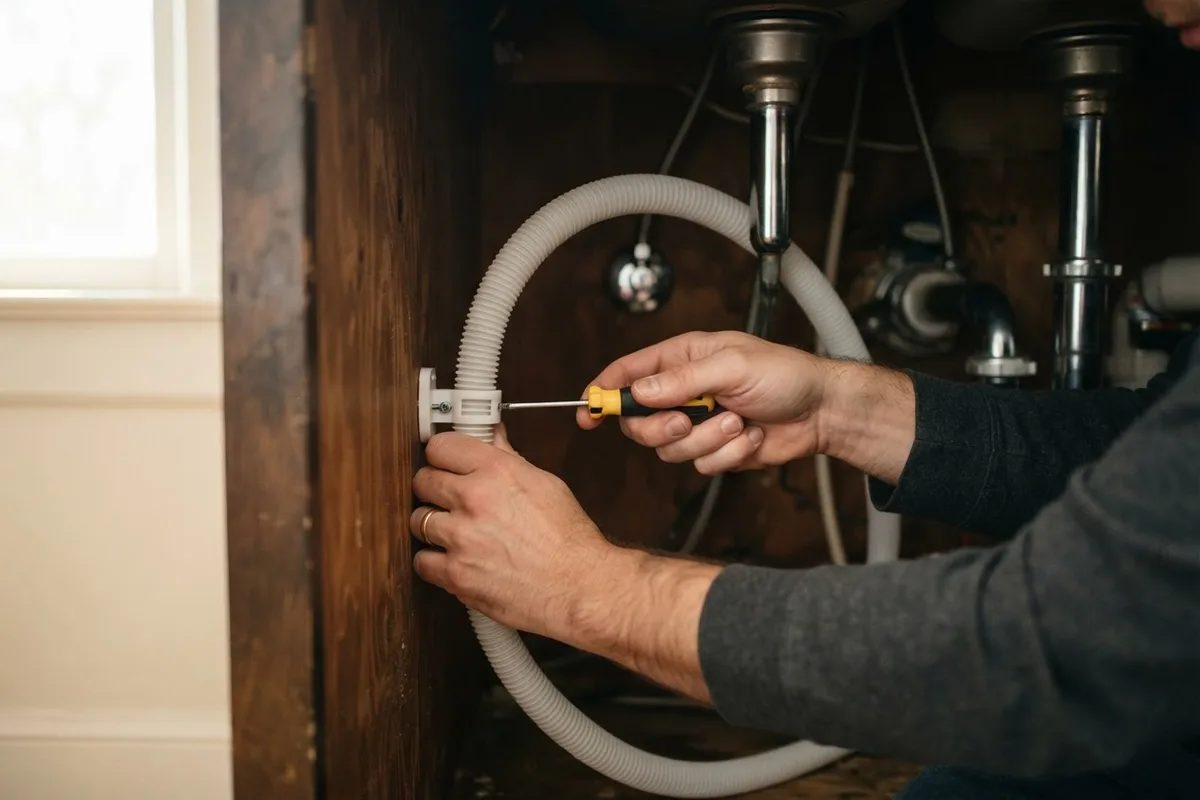
During the drain phase of the cycle, the drain pump pushes wastewater out in strong surges. If the corrugated plastic drain hose has slipped out of its plastic clips behind the dishwasher or inside the sink cabinet, it will whip back and forth and knock loudly against the wooden cabinet wall.
- Open the cabinet doors beneath your kitchen sink and clear out cleaning supplies so you can see the path of the ribbed dishwasher drain hose.
- Follow the hose from where it exits the side of the dishwasher cabinet up to the air gap or garbage disposal inlet.
- Check whether the hose is hanging loosely and resting against the thin wood divider wall or copper water pipes.
- Secure the top of the hose to the underside of the countertop using a plastic mounting strap or heavy-duty zip tie to maintain a proper high loop.
- Wrap a piece of foam pipe insulation around any section of the hose that passes through a narrow cabinet hole to cushion vibrations during draining.
5. cushion Water Hammer at the Supply Line
Modern dishwashers use fast-acting electronic solenoid valves that snap shut in a fraction of a second once the tub has enough water. That sudden stop sends a shockwave through your home's plumbing—known as water hammer—producing a loud single bang or series of knocks inside the wall.
- Listen closely when the dishwasher fills; if the loud knock comes from behind the drywall or under the floor right as the water stops running, water hammer is the culprit.
- Turn off the hot water supply valve under the sink and place a shallow towel beneath the connection point.
- Partially close the hot water shutoff valve by turning it clockwise about a quarter turn; slightly reducing the flow velocity can soften the pressure spike on some models without starving the machine.
- Check the copper pipes under the sink and secure any loose pipe straps with a screwdriver.
- For a lasting fix, install a mini screw-on water hammer arrestor (typically $15 to $25 at hardware stores, varies by area/model) directly between the hot water shutoff valve and the dishwasher supply line.
6. Replace Worn Spray Arm Bearings
Over years of exposure to hot water and detergent, the nylon ring bearing or plastic bushing that allows the lower spray arm to glide smoothly can wear flat or crack. When that bearing degrades, the spray arm tilts at an angle and knocks loudly against the bottom of the tub or the heating element on every turn.
- Pull out the bottom rack to expose the lower spray arm assembly.
- Twist the central locking cap counterclockwise (or release the retaining tab, depending on your model) and lift the spray arm straight up and out.
- Flip the spray arm over and inspect the white or gray plastic ring seated around the center opening for deep grooves, flat spots, or missing tabs.
- Check the matching support hub on the floor of the dishwasher tub for worn plastic teeth or heat damage.
- Order an exact replacement bearing ring or spray arm assembly for your model number (usually $15 to $45, varies by area/model) and snap the new part into place.
If the noise sounds more like a screech or crunch than a dull knock, check out our guides on why a dishwasher makes a high-pitched noise or fixing a dishwasher grinding noise.
Quick Reference: Knocking Sound Diagnosis
| When the Knock Happens | What It Sounds Like | Most Likely Cause | Typical DIY vs. Pro Path |
|---|---|---|---|
| Continuously during wash | Rhythmic plastic thud every 2 seconds | Spray arm hitting a tall dish or pan | DIY: Rearrange racks |
| Continuously during wash | Clattering or dull metallic clunk | Loose bowls or pans bumping together | DIY: Space out cookware |
| Right when water stops filling | Single loud bang or rapid pipe knocking | Water hammer or loose inlet valve | DIY: Tighten valve or add arrestor |
| Only during drain cycle | Rapid tapping inside the sink cabinet | Loose drain hose hitting cabinet wall | DIY: Strap hose in a high loop |
| Throughout the wash cycle | Heavy, irregular mechanical thumping | Failing circulation pump impeller | Pro: Replace motor assembly |
When to Call a Pro
If you have cleared the spray arms, cushioned the drain line, and checked the inlet valve, yet the knocking noise persists from deep beneath the tub, the issue likely lies inside the circulation pump motor or chopper assembly. A broken motor mount or a cracked impeller blade inside the sealed pump housing can create a heavy knocking sound whenever the motor spins at full speed.
Because replacing a circulation pump requires pulling the dishwasher out from under the countertop, disconnecting electrical wiring, and breaking factory water seals, this is a job best left to an experienced technician. Typical professional pump or valve repairs range from $180 to $350 depending on your location and dishwasher brand. If you want a thorough diagnosis without the guesswork, True Appliance Repair can match you with a local pro for dependable dishwasher repair.
FAQ
Is it safe to run my dishwasher if it is making a knocking noise?
If the knocking is caused by a spray arm hitting a tall plate or pot, running the cycle can chip your dishes, crack the plastic spray arm, or strip the hub gears. Pause the cycle immediately and check the racks so a minor loading issue does not turn into a broken part.
Why does my dishwasher knock only when filling with water?
A knocking or banging sound during the fill stage is almost always caused by water hammer in your household plumbing or a loose water inlet valve vibrating against the dishwasher frame. Tightening the valve mounting bracket or installing a mini water hammer arrestor under the sink usually solves the problem.
How much does it cost to fix a knocking dishwasher?
Most knocking noises cost nothing to fix because they simply require rearranging dishes or securing a loose hose with a zip tie. If you need a replacement spray arm bearing ($15 to $45) or a professional circulation pump repair ($180 to $350, varies by area/model), costs will depend on your specific machine.
Can a clogged filter cause a knocking sound in a dishwasher?
A clogged filter itself does not knock, but if hard debris like an olive pit, bone fragment, or broken glass gets past the filter screen and enters the drain or circulation pump, it will rattle and knock loudly against the plastic impeller blades until removed.