
Few kitchen sounds are as grating as a dishwasher making a high-pitched noise right in the middle of dinner cleanup. Whether it sounds like a sharp whistle as water fills the tub, a steady electric whine during the wash cycle, or a metallic squeal while draining, that noise points to a specific mechanical or water-flow restriction. By matching the sound to the cycle stage and working through the six practical checks below, you can often quiet the machine yourself in under an hour.
Safety First: Before inspecting internal components, removing the lower kickplate, or reaching near the pump area, always unplug your dishwasher or flip its dedicated circuit breaker to the OFF position at your main electrical panel. Shut off the hot water supply valve under the sink before loosening any water line connections. If you encounter frayed wiring, scorched connectors, or an electrical panel issue, stop immediately and call a professional.
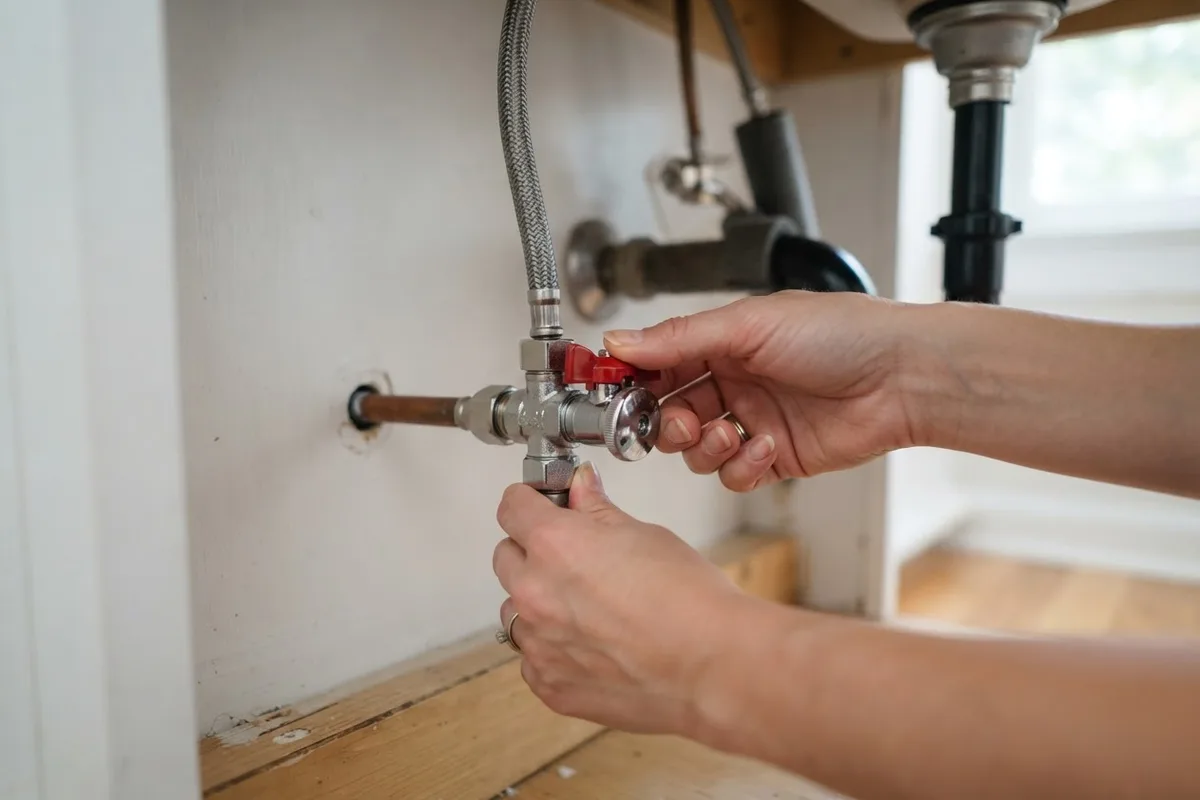
1. Fully Open the Under-Sink Water Shutoff Valve
If the high-pitched whistle or squeal only happens during the first two minutes of a cycle while the tub is filling, restricted water pressure is the prime suspect. Just like pinching a garden hose creates a sharp hiss, a partially closed supply valve forces hot water through a narrow gap at high velocity, vibrating the valve seat and copper or braided line.
- Open the cabinet underneath your kitchen sink and locate the hot water shutoff valve feeding the dishwasher supply hose.
- Check if heavy cleaning bottles, trash bins, or plumbing items have bumped the handle slightly closed.
- Turn the valve handle counterclockwise until it is fully open, then turn it back clockwise just a quarter-turn to prevent the valve stem from seizing over time.
- Inspect the braided stainless steel or copper supply line behind the cabinet wall to make sure it is not kinked or pinched behind a drawer.
- Run a quick rinse cycle to see if the filling whistle disappears.
2. Clean a Clogged Water Inlet Valve Screen
When the under-sink valve is wide open but the dishwasher still whistles or whines loudly while filling, sediment buildup inside the water inlet valve is usually to blame. Over time, tiny calcium flakes, rust particles, and municipal water grit collect on the fine mesh filter screen inside the inlet valve, restricting water flow and forcing the solenoid to buzz or squeal.
- Shut off the circuit breaker to the dishwasher and turn off the hot water supply valve under the sink.
- Unscrew the two metal fasteners holding the bottom toe-kick access panel at the floor line of the dishwasher and set the panel aside.
- Locate the water inlet valve at the front left or right corner, place a shallow towel underneath to catch residual drips, and use adjustable pliers to unscrew the water supply hose.
- Peer inside the threaded inlet port on the valve to inspect the small mesh screen for mineral scale or debris.
- Gently brush the screen clean using an old toothbrush dipped in white vinegar—never poke or remove the screen, as it protects the valve from flooding your kitchen.
- If the screen is permanently crusted over or the solenoid coil continues whining, replacing the inlet valve assembly typically costs $25 to $65 for the part (varies by model) and takes about 30 minutes.
3. Clear Debris From the Wash Pump Impeller
A loud, continuous high-pitched whine or screech that runs throughout the main wash cycle almost always comes from the circulation pump underneath the tub. Sometimes a stray fruit seed, toothpick, glass shard, or twist-tie slips past the bottom sump area and rubs against the spinning plastic impeller blades at high speed. If the sound has more of a crunching edge, check out our guide on why a dishwasher makes a grinding noise for deeper sump troubleshooting.
- Confirm power is off at the breaker, pull out the bottom dish rack, and twist out the lower cylindrical assembly in the floor of the tub.
- Sponge out any standing water sitting in the bottom sump basin so you have a clear view.
- Shine a flashlight into the side ports of the sump well and put on heavy cut-resistant work gloves before reaching inside.
- Remove the small plastic impeller cover or chopper guard (many snap out or use a single Torx screw) to expose the wash impeller fins.
- Carefully extract any wedged cherry pits, bone fragments, plastic bread tags, or broken glass, then spin the impeller blade with your fingertip to make sure it turns smoothly without scraping.
4. Check the Diverter Motor and Seal for Squealing
Modern dishwashers save water by alternating spray pressure between the lower and upper racks using a small mechanism called a diverter valve. As the diverter disc rotates into position, a worn rubber shaft seal or dry plastic gears can emit a distinct, periodic high-pitched squeak or robotic whine every few minutes. If your machine clicks instead of squealing during rack switching, see our steps for fixing a dishwasher making a clicking noise.
- With the lower rack and bottom spray arm removed, inspect the flat circular diverter disc cover located right next to the central sump opening.
- Look for calcium buildup, hard water crust, or melted plastic debris trapped around the edges of the rotating diverter disc.
- Pour two cups of warm white vinegar into the bottom of the dry sump basin and let it sit for 20 minutes to dissolve mineral friction around the diverter shaft.
- Scrub around the disc perimeter with a soft nylon brush and wipe away any loosened grit.
- Inspect the floor underneath the dishwasher (with the kickplate off) around the small diverter motor housing; if you see white crusty water trails leaking through the diverter shaft seal onto the motor bearings, the diverter motor and seal will need replacement.
5. Inspect the Drain Pump for High-Speed Whining
If the high-pitched whine only kicks in when the dishwasher purges dirty water at the end of a wash or rinse stage, the smaller drain pump motor is working overtime. Because the drain pump spins at very high RPMs, even a partial blockage in the drain impeller or a dry internal bearing will produce an ear-piercing whine.
- Turn off power at the breaker and remove the lower kickplate to locate the compact drain pump mounted to the side of the main sump housing.
- Place a shallow baking sheet and towel under the pump to catch trapped water.
- Pinch the spring clamps on the corrugated drain hose or twist the drain pump body a quarter-turn counterclockwise (depending on your brand) to detach it from the sump.
- Check the small impeller blades inside the pump housing for dental floss, rubber bands, or broken toothpicks wrapped around the central shaft.
- Flick the impeller blades with your finger: they should move with slight magnetic resistance from the motor coils, not wobble loosely side-to-side or screech against the plastic housing.
6. Replace Worn Circulation Motor Bearings
When you have cleared all debris from the sump and verified full water flow, a piercing metallic squeal or jet-engine whine during the wash cycle points to failing bearings inside the main circulation motor. Over years of exposure to heat and humidity—or a tiny leak from the pump shaft seal—the factory grease inside the motor bearings dries out, causing metal-on-metal friction.
- Keep the lower kickplate off, restore power briefly, and start a normal cycle while watching and listening from a safe distance with a flashlight (never reach under the unit while power is on).
- Confirm whether the high-pitched metallic scream radiates directly from the heavy cylindrical circulation motor body rather than the water valve or drain pump.
- Turn the breaker back off immediately once you pinpoint the sound; running a seized motor can overheat the windings.
- Decide between replacing just the circulation motor or the complete pre-assembled sump-and-motor module.
- Most homeowners and technicians opt for the complete sump-and-motor assembly because it includes fresh rubber seals, a new diverter motor, and the wash pump already seated, preventing tricky water leaks after installation.
Quick-Reference Guide: Matching the Noise to the Cause
| When the Noise Happens | What It Sounds Like | Most Likely Culprit | Typical DIY Part Cost* |
|---|---|---|---|
| First 1–2 minutes (Filling) | Sharp whistle, hiss, or pipe squeal | Partially closed shutoff valve or clogged inlet valve screen | $0 – $65 |
| Main wash cycle (Continuous) | Steady high-pitched whine or buzz | Foreign object rubbing wash impeller or worn motor bearings | $0 – $180 |
| Every few minutes in wash | Brief robotic squeak or periodic whine | Mineral buildup or failing seal on the diverter valve motor | $35 – $85 |
| End of cycle (Draining) | High-RPM screech or loud electric hum | String or debris wrapped around drain pump impeller shaft | $30 – $75 |
| Drying cycle only | Faint, steady high-pitched whistle | Fan-assisted vent blade rubbing or steam escaping door seal | $20 – $60 |
Note: Part costs are broad US ranges for standard residential models and vary by brand, region, and model.
When to Call a Pro
Cleaning an inlet valve screen, adjusting an under-sink shutoff valve, or pulling a cherry pit out of a pump impeller are straightforward Saturday morning tasks that require only basic hand tools. However, if the high-pitched squeal is coming from failed circulation motor bearings, a leaking diverter shaft seal, or an electrical control board issue, the repair involves pulling the dishwasher out from under the countertop and disconnecting the main sump assembly.
Replacing a full pump-and-motor assembly typically runs between $220 and $400 including parts and labor (varies by area and dishwasher model). If you would rather skip wrestling with tight under-counter water seals and wiring harnesses, True Appliance Repair can connect you with a local pro for dependable dishwasher repair. You can also reach out through our contact page to get matched with an independent technician in your neighborhood.
FAQ
Is it safe to run my dishwasher if it is making a high-pitched whining noise?
It is best to pause the cycle and investigate before running another full load. If the high-pitched sound is caused by a restricted water inlet valve or a worn motor bearing, continuing to run the appliance can cause the solenoid coil or circulation motor to overheat, turning a simple part swap into a much costlier failure.
Why does my dishwasher whistle only when hot water is filling?
A whistling sound during the fill stage is caused by high water pressure squeezing through a narrow opening. This almost always happens because the hot water shutoff valve under the sink was bumped partially closed, or because hard water mineral sediment has partially blocked the fine mesh screen inside the dishwasher's water inlet valve.
Why is my brand-new dishwasher making a faint high-pitched whine?
Many newer energy-efficient dishwashers use variable-speed inverter motors and fan-assisted drying vents that naturally produce a quiet, high-frequency electronic hum compared to older motors. However, if the sound is loud enough to hear clearly in the next room, double-check that the installer opened the under-sink water supply valve all the way and did not kink the supply hose when sliding the unit into the cabinet.
How much does it cost to fix a high-pitched noise in a dishwasher?
If the culprit is a partially closed valve, hard water scale on the inlet screen, or a seed stuck in the impeller, the DIY fix is completely free. If you need a professional to replace a failing water inlet valve, drain pump, or main circulation motor assembly, total repair costs generally range from $150 to $400 depending on your location and dishwasher brand.