
Hearing your dishwasher suddenly erupt into an electrical buzz can stop you in your tracks right after dinner. While a soft mechanical whir is normal, a sharp or loud buzzing noise usually points to a strained solenoid, a blocked impeller, or a vibrating component that needs attention. With a few basic tools and a methodical check of when the sound happens, you can pinpoint the culprit and resolve most causes yourself before a minor issue turns into a costly breakdown.
Safety First: Before inspecting any internal components, removing kickplates, or reaching into the sump area, always unplug the dishwasher from the wall outlet (typically located under the adjacent kitchen sink) or switch off its dedicated circuit breaker at your home's electrical panel. Turn off the hot water supply valve under the sink as well. Never attempt repairs involving your home's main electrical panel—leave high-voltage wiring to a professional.
1. Clear Debris From the Drain Pump Impeller
If the dishwasher making a buzzing noise happens right at the start of a cycle or during the drain phase, a small piece of hard debris is likely jamming the drain pump impeller. When a fruit pit, bone fragment, or shard of glass wedges against the plastic blades, the small electric motor buzzes loudly as it struggles to spin.
- Disconnect power to the unit and bail out any standing water at the bottom of the tub using a cup and a towel.
- Twist and lift out the lower cylindrical filter and remove the flat mesh plate beneath it.
- Locate the small sump cover or check-valve flapper inside the basin and pop it loose according to your owner's manual.
- Shine a flashlight into the pump opening and wear thick work gloves to protect your fingers from broken glass.
- Remove any foreign objects lodged around the small plastic impeller blades, then spin the blades gently with your finger to confirm they move freely.
- Reinstall the cover and filters before restoring power.
2. Clean or Replace the Water Inlet Valve
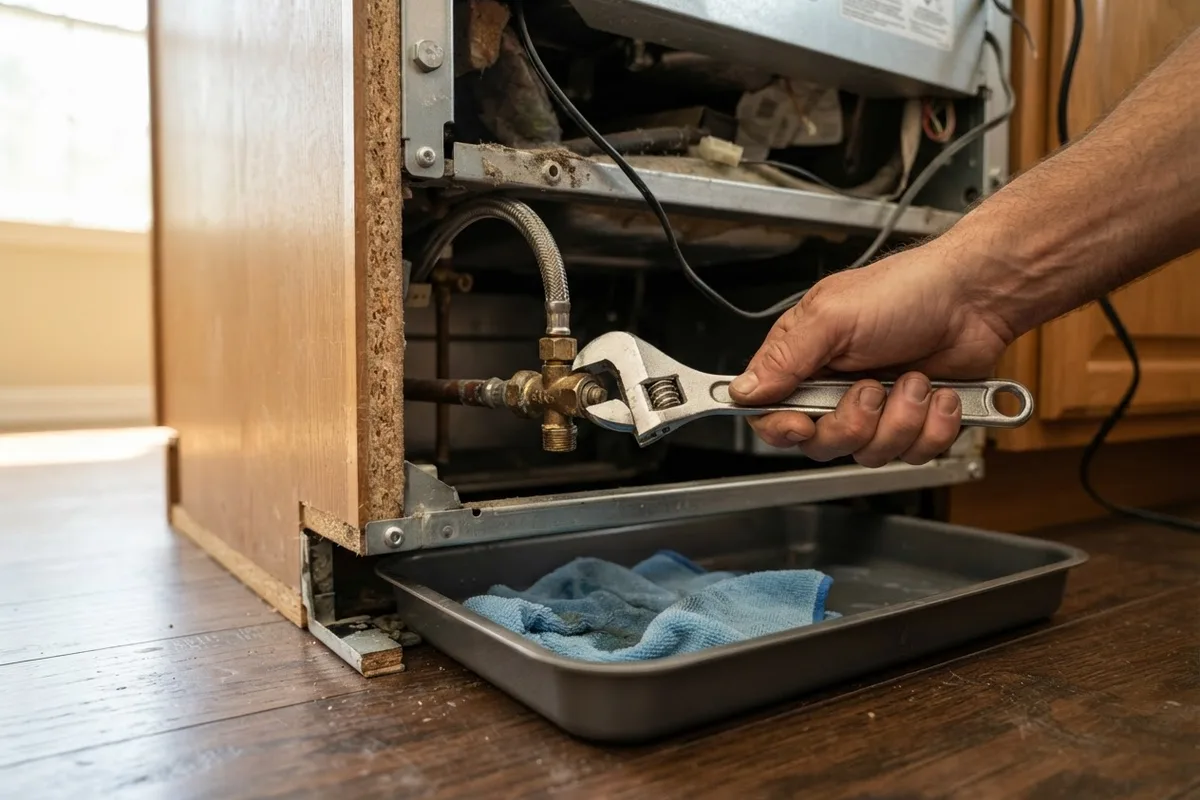
A loud buzzing sound during the first two minutes of a cycle—right when water should be entering the tub—almost always comes from the water inlet valve. Situated behind the bottom access panel, this valve uses an electromagnetic solenoid to open a port. If household water pressure is too low or the valve's tiny inlet screen is clogged with sediment, the solenoid vibrates rapidly and buzzes.
- Shut off the electrical breaker and turn the hot water shutoff valve under the sink clockwise until it stops.
- Unscrew and remove the lower metal toe-kick panel beneath the dishwasher door.
- Locate the brass or plastic water inlet valve at the front corner where the braided water supply line attaches.
- Place a shallow pan and towel underneath to catch residual water, then use an adjustable wrench to unthread the water supply line.
- Inspect the small mesh screen inside the valve port. If it is crusted with mineral scale or rust sediment, gently brush it clean with an old toothbrush and white vinegar.
- If the screen is clean and water pressure is strong, the solenoid coil itself is failing and the inlet valve assembly will need to be replaced.
3. Free a Stuck Circulation Pump Motor
When the buzzing noise starts right after the tub fills with water and the main wash sprays should begin, the circulation pump motor is likely struggling to turn over. This often happens if a dishwasher sits unused for weeks and the motor seal dries out, or if the motor bearings are wearing down. (If the sound is more of a sharp whine than a buzz, check our guide on why a dishwasher makes a high-pitched noise.)
- Turn off the power at the breaker and remove the lower dish rack.
- Take out the bottom spray arm and filter assembly so you can see straight down into the central sump.
- Check for any stringy food fibers, twist ties, or lemon seeds wrapped around the main chopper blade or circulation intake.
- If nothing is blocking the intake and the motor still buzzes without spraying water, the motor start relay or the circulation pump assembly is likely failing.
- Check the underside of the dishwasher behind the access panel for any white crusty residue around the motor housing, which indicates a leaking shaft seal that has seized the bearings.
4. Check the Detergent Dispenser Solenoid
Midway through the wash cycle, an electric mechanism triggers the detergent cup door to pop open. On many models, an AC wax motor or magnetic solenoid powers this latch. If a tall cutting board, baking sheet, or oversized dinner plate blocks the door from springing open, or if crusty detergent gums up the hinge, the actuator can get stuck energized and emit a steady electrical buzz.
- Open the dishwasher door (with the appliance turned off) and inspect the soap dispenser on the inner panel.
- Wipe away any hardened detergent buildup or gummy rinse aid residue around the sliding latch and spring hinge using warm water and a stiff brush.
- Close the dispenser lid and press the release button manually to verify it snaps open smoothly without sticking.
- When loading the lower rack, always place tall platters and cutting boards along the back or far sides so they never press against the dispenser door during the cycle.
- If the door opens freely and isn't blocked by dishes, the internal solenoid coil behind the inner door panel may be worn out.
5. Inspect the Drying Fan at the End of the Cycle
Many modern dishwashers use a small motorized vent fan inside the door to pull moist air out of the tub during the heated dry phase. If your dishwasher only buzzes during the final 30 minutes of the cycle, the fan blades may be rubbing against warped plastic housing, or moisture may have corroded the tiny fan motor bearings.
- Open the dishwasher door and locate the steam vent grill, usually situated on the upper corner of the inner door panel.
- Shine a flashlight through the louvers to look for grease buildup, warped plastic vents, or debris inside the fan shroud.
- Disconnect power to the appliance and remove the inner door Torx screws if you need closer access to the vent fan assembly.
- Spin the small fan blade gently with a cotton swab to see if it catches against the housing or feels gritty when turning.
- Clean away any residue or tighten loose mounting screws so the fan sits flush and spins without hitting the shroud.
6. Secure Vibrating Toe-Kick Panels and Water Lines
Sometimes what sounds like an electrical buzz is actually rapid sheet-metal vibration. As the dishwasher pumps water, a slightly loose toe-kick panel, an unanchored mounting bracket, or a copper water line resting against the metal frame can buzz at a 60-hertz hum. If the sound leans more toward a rhythmic thud, see our tips on fixing a dishwasher making a knocking noise.
- While the buzzing sound is happening, gently press your hand against the front door and the bottom kickplate to see if the noise immediately stops.
- Turn off power to the unit and tighten the two or four screws holding the lower access panel against the frame.
- Look underneath the unit with a flashlight to ensure the braided water supply line and corrugated drain hose aren't resting directly against the sheet-metal base or motor housing.
- Slip a piece of foam pipe insulation around any line that touches the frame or cabinet wall to absorb vibration.
- Verify that all four leveling legs are planted firmly on the kitchen floor so the frame cannot chatter during heavy pump operation.
Dishwasher Buzzing Noise Quick Reference
| When the Buzzing Happens | Most Likely Culprit | Typical DIY Fix | Typical Part & Pro Cost Range* |
|---|---|---|---|
| First 1–2 minutes (Filling) | Water inlet valve | Clean sediment screen or replace valve | $120 – $230 |
| Start or end of cycle (Draining) | Drain pump impeller | Clear glass, pits, or seeds from sump | $150 – $280 |
| Main wash cycle (Spraying) | Circulation pump motor | Clear intake or replace seized motor | $220 – $400 |
| Mid-wash (Soap release) | Dispenser solenoid | Unblock tall dishes; clean latch hinge | $110 – $200 |
| Final 30 minutes (Drying) | Vent drying fan | Clean fan shroud or replace fan motor | $130 – $250 |
| Throughout the entire cycle | Loose panel or supply line | Tighten kickplate screws; pad water line | $0 – $100 |
Prices are broad US averages combining parts and labor; actual costs vary by area, brand, and model.
When to Call a Pro
Cleaning out a jammed drain pump or flushing a clogged inlet valve screen are rewarding DIY tasks that take less than an hour. However, you should stop and call an experienced technician if you smell overheated electrical insulation, see water pooling around live wiring underneath the tub, or determine that the main circulation pump motor needs to be swapped out. Replacing a circulation assembly requires pulling the dishwasher out from under the counter and disconnecting main plumbing and wiring harnesses.
If you've checked the accessible parts and the buzzing persists, True Appliance Repair can match you with a local dishwasher repair pro to diagnose the electrical components safely and get your kitchen back to normal.
FAQ
Is it safe to run my dishwasher if it is making a buzzing noise?
No, it is best to cancel the cycle and turn the unit off until you find the source. A loud buzz often means a motor or solenoid is jammed and drawing excess electrical current, which can overheat the component, burn out the main control board, or cause a water leak.
Why is my dishwasher buzzing even when it is turned off?
If your dishwasher buzzes while the power button is off, check the drain pump and float switch first. If the float switch gets stuck in the "up" flood-protection position, it will continuously run the drain pump even with the door open to prevent an overflow. Disconnect power at the breaker and check the float dome inside the tub.
How much does it cost to fix a buzzing dishwasher?
If the noise is caused by a trapped piece of glass or a dirty inlet screen, you can fix it yourself for free. If a component has failed, typical professional repairs range from $120 to $250 for a new water inlet valve or drain pump, and $220 to $400 for a circulation motor replacement, though prices vary by area and model.
Why does my dishwasher buzz and then stop without filling with water?
This symptom points directly to the water inlet valve or a closed water shutoff valve under the sink. When the dishwasher calls for water, the inlet solenoid buzzes as it opens; if no water flows through to cool and lubricate the valve, the machine will time out and halt the cycle.