
A garbage disposal is supposed to hum smoothly as it pulverizes soft food scraps, not sound like it is chewing on a handful of gravel. When you flip the wall switch and hear a harsh, metallic clatter or a loud garbage disposal grinding noise, turning it off immediately is the best way to prevent a burned-out motor or cracked flywheel. Follow these six safe, step-by-step checks to find the culprit and restore quiet operation to your kitchen sink.
1. Cut the Power and Extract Trapped Foreign Objects
The most common cause of a sudden, violent grinding or clattering sound is a hard object that accidentally fell past the rubber splash guard. Fruit pits, poultry bones, metal bottle caps, and even smallmeasuring spoons can bounce around on top of the spinning flywheel, scraping loudly against the shredder ring.
- Turn the wall switch off and unplug the garbage disposal directly from the outlet underneath the sink. If the unit is hardwired, flip the dedicated breaker off at your home electrical panel.
- Never put your bare hand inside the grinding chamber, even when the power is disconnected.
- Peel back the black rubber splash guard flaps and shine a bright flashlight straight down into the sink drain.
- Use long-handled kitchen tongs or needle-nose pliers to grip and pull out any visible metal, glass, hard plastic, or bone fragments.
- Sweep a telescoping magnetic pickup tool around the perimeter of the chamber to catch small steel items like paperclips, screws, or twist ties hiding along the outer edge.
2. Free a Jammed Flywheel Using an Allen Wrench
Sometimes a piece of gravel, a cherry pit, or a tough stalk becomes wedged tightly between the rotating turntable and the stationary outer shredder ring. When the motor tries to spin against this partial blockage, it produces a harsh, stuttering grind before the overload protector pops out. If your garbage disposal reset button keeps popping out right after the noise starts, the flywheel needs to be manually worked back and forth.
- Confirm the unit is still unplugged underneath the sink.
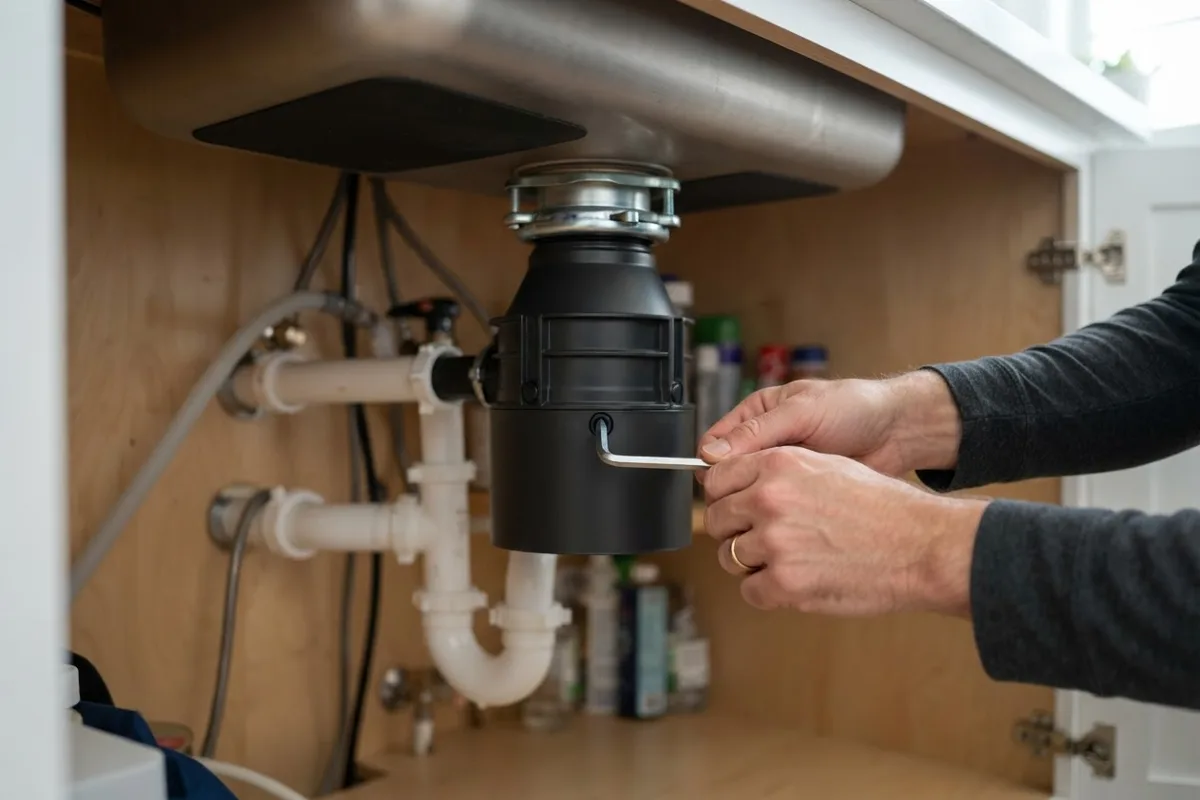
- Locate the small hexagonal hole in the very center of the bottom casing of the disposal.
- Insert a 1/4-inch Allen wrench (often called a jam-buster wrench) into that bottom socket.
- Crank the wrench clockwise and counterclockwise several times with firm, steady pressure until the internal flywheel rotates a full 360 degrees without catching.
- Reach down through the sink opening with long-handled tongs to remove the dislodged fragment that was causing the bind.
- Remove the Allen wrench from the bottom socket before restoring power, then press the red reset button if it has popped down.
3. Inspect and Tighten Loose Impeller Blades
Contrary to popular belief, garbage disposals do not have sharp knife blades like a blender. Instead, they use two blunt metal lugs—called impellers—mounted on swiveling rivets near the edge of the flywheel. These lugs use centrifugal force to fling food against the sharp outer shredder ring. Over time, a worn mounting rivet can cause an impeller lug to wobble excessively and scrape loudly against the chamber wall.
- With the power disconnected, shine your flashlight down into the clean, dry chamber.
- Use a long wooden spoon handle to push each of the two swivel lugs back and forth.
- Note how they move: each impeller should swing freely side-to-side on its pivot pin, but it should not rock wildly up and down or touch the outer stationary teeth.
- Check for tiny fragments of bone or metal wire wrapped directly underneath the swivel plate of the lug, which can hold the metal arm at an awkward, noisy angle.
- Pry away any debris trapped beneath the lugs with needle-nose pliers. If a pivot rivet itself is sheared or severely loose, the internal flywheel assembly is worn out and the unit will likely need replacement.
4. Clear Slivered Debris from the Shredder Ring
Even after you pull out the main obstruction, tiny shards of glass, eggshell buildup, or fruit pit splinters can remain wedged inside the vertical slots of the stationary shredder ring. Every time the impeller lugs pass by those clogged slots, they strike the protruding fragments and create a rapid, rhythmic ticking or grinding noise.
- Verify the disposal is unplugged and the cold water faucet is turned off.
- Look closely at the vertical metal teeth lining the lower interior wall of the grinding chamber.
- Use an old, stiff-bristled dish brush or a wooden skewer to scrape vertically along the shredder slots and dislodge impacted grit.
- Drop two cups of ice cubes and a half-cup of coarse rock salt into the chamber.
- Plug the disposal back in, turn on a strong stream of cold water, and flip the switch on for 15 to 20 seconds.
- The hard ice and salt crystals help scour stuck mineral scale and tiny organic splinters out of the shredder teeth so they flush cleanly down the drainpipe.
5. Secure a Loose Sink Mounting Ring
Not every metallic grinding or rattling sound comes from inside the grinding chamber. When a disposal runs at high speed, torque and vibration transfer straight up to the sink flange. If the mounting screws or the lower snap ring work loose over the years, the entire heavy housing can shift and rub metal-on-metal against the collar, mimicking an internal grind.
- Unplug the power cord underneath the sink and clear out cleaning supplies so you have room to work.
- Grasp the body of the disposal with both hands and gently try to wiggle it side to side.
- If the entire unit shifts or rotates easily on its collar, inspect the three mounting bolts pointing upward against the metal mounting plate.
- Use a screwdriver to tighten each of the three mounting screws evenly until the plate sits flat and snug.
- Insert a screwdriver tip into the ears of the rotating lower mounting ring and nudge it clockwise to lock the disposal collar firmly against the upper flange.
- Check that the rubber splash guard is seated properly in the throat of the sink, as a misaligned baffle can amplify normal operating sounds.
6. Diagnose Worn Motor Bearings and Internal Rust
If the chamber is completely empty, the flywheel turns smoothly by hand, and the mounting collar is rock-solid, a persistent loud grinding or roaring noise usually points to failing motor bearings. Moisture slowly seeps past aging internal seals over years of daily use, corroding the lower spin bearings and causing rough, dry friction whenever the motor shaft turns.
- Unplug the unit and place a dry towel or shallow pan underneath the disposal.
- Inspect the bottom plastic or metal casing around the reset button and the center hex hole for brown rust stains or water droplets. If you notice moisture pooling here, check our guide on why a garbage disposal leaks from the bottom to confirm whether the internal seal has failed.
- Insert your 1/4-inch Allen wrench into the bottom socket and slowly rotate the shaft by hand while listening closely.
- If you feel a gritty, gravelly resistance through the wrench—even when the top chamber is completely spotless—the internal motor bearings are rusted.
- Because lower motor bearings and internal water seals are permanently pressed into the housing on residential units, replacing the entire garbage disposal is typically more cost-effective than attempting an internal rebuild.
Quick Reference: Garbage Disposal Noise Guide
| Sound Type | Most Likely Cause | Typical DIY Fix or Outcome |
|---|---|---|
| Loud metallic clattering | Silverware, bottle cap, or bone bouncing on the flywheel | Unplug unit and remove object with long tongs |
| Harsh stalling grind + hum | Hard pit or gravel wedged between impeller and shredder ring | Work bottom hex socket back and forth with a 1/4-inch Allen wrench |
| Rhythmic clicking or scraping | Loose impeller lug or small shard stuck in shredder teeth | Inspect impeller rivets; flush chamber with ice cubes and rock salt |
| Hollow rattling at sink collar | Loose mounting screws or unlocked lower mounting ring | Tighten the three flange bolts and lock the lower collar |
| Deep, constant roaring grind | Corroded lower motor bearings from a worn internal seal | Unit has reached the end of its lifespan; replace disposal |
When to Call a Pro
Removing a stray spoon, clearing a jammed fruit pit with an Allen wrench, and tightening mounting bolts are safe, straightforward tasks for any homeowner. However, you should stop and call an experienced technician if the disposal is hardwired into a faulty wall switch, if water is actively dripping onto electrical connections beneath the sink, or if the motor bearings have seized and you are not comfortable disconnecting plumbing traps and wiring a replacement unit.
Replacing a residential garbage disposal typically costs between $150 and $400 including parts and labor, though exact pricing varies by area, horsepower rating, and under-sink plumbing configuration. If your unit needs professional attention or a clean swap, True Appliance Repair can connect you with a local appliance repair pro to handle the heavy lifting safely.
FAQ
Why is my garbage disposal making a grinding noise when nothing is in it?
Even when the chamber looks empty from above, a small shard of glass, a fruit seed, or a twist tie can hide underneath the perimeter of the rubber splash guard or stay wedged inside the outer shredder slots. Alternatively, a broken impeller rivet or worn-out lower motor bearings will produce a continuous metallic grind with zero food present.
Can I run ice through a noisy garbage disposal to fix it?
Running two cups of ice cubes with cold water is great for knocking loose small food fragments and mineral buildup stuck in the shredder ring. However, never use ice to clear a loud metallic clatter before inspecting the chamber with a flashlight—if a metal screw or piece of glass is inside, running the motor will only damage the teeth further.
How do I know if my garbage disposal blades are broken?
Garbage disposals use blunt rotating lugs (impellers) rather than sharp blades. You can check them by unplugging the disposal and pushing each of the two metal lugs on the turntable with a long wooden spoon. They should swivel smoothly side-to-side; if one flops up and down loosely or is cracked, the flywheel assembly is damaged.
Is it cheaper to repair or replace a noisy garbage disposal?
If the grinding noise is caused by a jammed object or a loose mounting ring, the DIY fix costs nothing. However, if the noise comes from a broken impeller rivet, a cracked flywheel, or rusted motor bearings, replacing the entire unit is almost always more economical than buying individual internal parts and paying for disassembly labor.