
Flipping the wall switch only to hear a dead click—or finding that little red button underneath the sink popped out again—usually means the internal overload protector is doing its job to stop the motor from burning up. Most of the time, the culprit is a hidden jam, an overheated motor from a heavy holiday prep session, or a simple electrical connection problem. Work through these six safe DIY checks to find out why your garbage disposal reset button keeps popping out and get your sink running again.
1. Let an Overheated Motor Cool for 15 Minutes
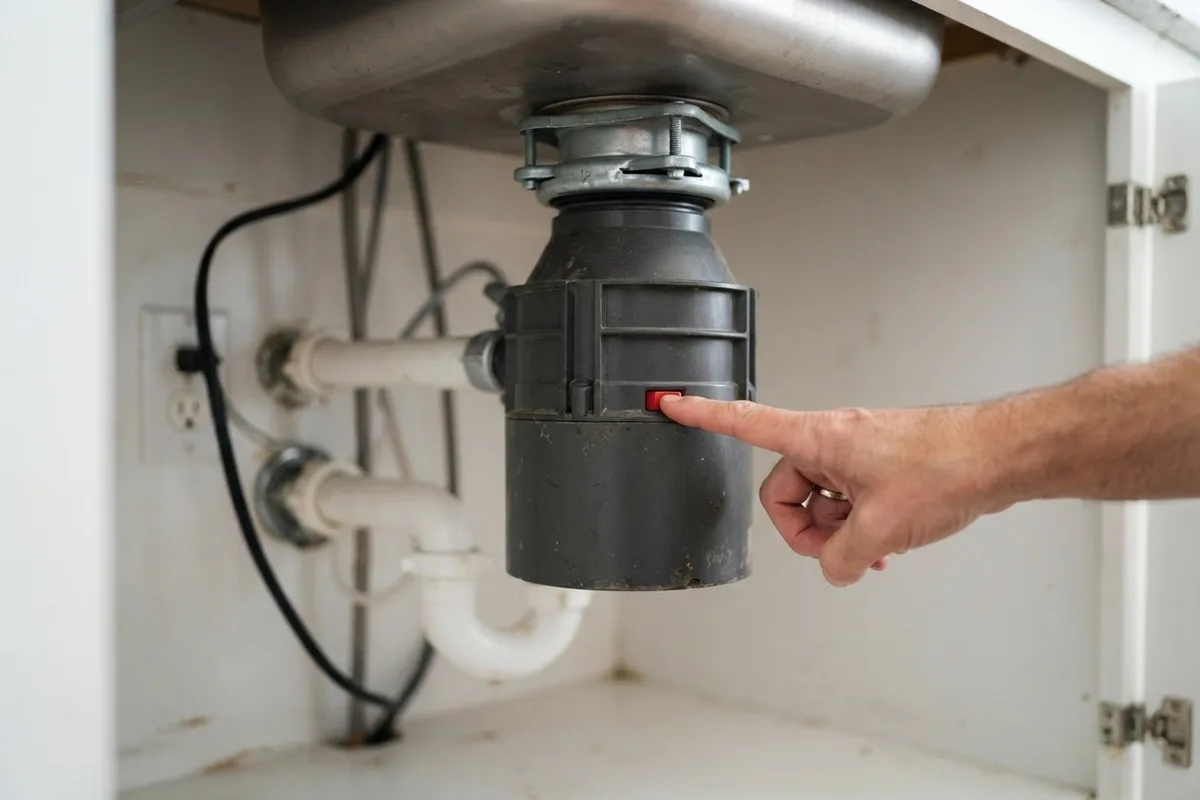
That small red button on the bottom casing is a thermal overload switch. When you run a large batch of potato peels, celery stalks, or cooked pasta without enough cold water, friction heats the motor windings until the internal bi-metal strip snaps open and pushes the button out. Trying to force the button back in while the housing is still hot will just make it pop right back out.
- Turn the wall switch to the OFF position and unplug the disposal power cord under the sink (or switch off the circuit breaker at your main panel).
- Feel the side of the disposal cylinder briefly with the back of your hand. If it feels warm or hot, stop and wait a full 15 to 20 minutes.
- Once the casing feels cool to the touch, plug the unit back in.
- Press the red reset button firmly upward with your finger until it clicks and stays flush.
- Run a strong stream of cold tap water and flip the switch on for 10 seconds to test.
2. Free a Jammed Flywheel With an Allen Wrench
If the reset button clicks in when cool but pops back out two seconds after you flip the switch—usually right after a low humming sound—the impeller plate (flywheel) is locked by a fruit pit, bone fragment, or silverware tip. Because the rotor cannot spin, electrical current spikes and trips the overload protector instantly.
- Unplug the disposal beneath the sink or shut off its circuit breaker. Never put your hands or tools inside a disposal while power is connected.
- Locate the hexagonal hole in the very center of the bottom panel, right next to the reset button.
- Insert a 1/4-inch Allen wrench (often called a disposer wrench) into that center hole.
- Crank the wrench back and forth clockwise and counterclockwise several times until you feel the internal flywheel break free and spin smoothly through a full 360-degree rotation.
- Shine a flashlight down the sink throat and use long needle-nose pliers or kitchen tongs to pull out whatever object caused the jam.
- Plug the unit back in, press the reset button, run cold water, and test.
3. Pry Loose a Stuck Impeller From Above
Some older or budget garbage disposals do not have a hex wrench slot on the bottom, or a flat piece of bone may be wedged so tightly against the shredder ring that a small hex key cannot budge it. In that case, you can apply gentle leverage from the top while the power is completely disconnected.
- Confirm the wall switch is off and the power cord is unplugged from the under-sink outlet.
- Lift out the removable rubber splash guard (or fold back the rubber flaps) and shine a bright flashlight into the grinding chamber.
- Wedge the end of a sturdy wooden broom handle or long wooden spoon against one of the raised metal lugs on the rotating turntable.
- Push the wooden handle firmly backward against the normal direction of rotation until the turntable shifts and releases the trapped debris.
- Remove all loose bone, glass, or fibrous scraps using long-handled tongs—never your bare fingers.
- Remove the wooden handle, replace the splash guard, plug the unit in, press the reset button, and run cold water to test.
4. Flush Out a Clogged Drain Trap and Discharge Tube
When food sludge backs up inside the horizontal discharge pipe or P-trap, dirty water stays trapped inside the grinding chamber. Starting the disposal under a standing column of thick waste puts heavy drag on the motor and causes the thermal switch to trip partway through a cycle. If the unit also shakes heavily while draining, check our guide on why your garbage disposal is vibrating.
- Unplug the disposal and place a shallow bucket and old towel directly beneath the U-shaped P-trap under the sink.
- Unscrew the two slip nuts holding the curved P-trap section by hand (or with channel-lock pliers) and lower the trap into the bucket.
- Clean out any packed coffee grounds, eggshell grit, or grease buildup inside the trap and inspect the short elbow where it bolts to the side of the disposal.
- Reinstall the P-trap and tighten the slip nuts snug by hand plus a quarter turn.
- Plug the disposal in, press the reset button, fill the sink halfway with cool water and a drop of dish soap, then pull the stopper while running the disposal to flush the line clean.
5. Check the Under-Sink Outlet and Cord Connection
A loose plug, corroded receptacle, or failing GFCI outlet under the sink can create high electrical resistance. That resistance drops the voltage reaching the motor, which causes the motor to draw higher amperage, overheat rapidly, and trip the internal overload button even when the grinding chamber is completely empty.
- Unplug the disposal cord and inspect the three metal prongs for dark burn marks, green corrosion, or bent blades.
- Check the under-sink outlet face for cracks, moisture from slow faucet drips, or a loose fit when you plug a small lamp or phone charger into it.
- If the outlet is protected by a GFCI button on the receptacle itself (or upstream on the kitchen counter), press TEST and then RESET firmly to make sure the contacts engage cleanly.
- Gently tug along the black power cord where it enters the bottom of the disposal housing to verify the strain-relief clamp is tight and no inner wires are exposed.
- If the outlet feels loose, warm, or shows scorch marks, stop and have a qualified professional replace the receptacle before running the disposal again.
6. Spot a Weak Reset Switch or Failing Motor Winding
Every time the thermal overload trips, the tiny spring-loaded contact inside the reset switch wears down slightly. On a unit that is 8 to 12 years old, the switch itself can lose tension so the red button refuses to stay latched, or the motor windings can develop an internal short. If you notice several of these symptoms together, review our checklist of 7 signs your garbage disposal is dying to decide whether a replacement makes more sense than a repair.
- Unplug the disposal and make sure the housing is completely cool.
- Press the red reset button upward. If it feels mushy, flops around loosely, or drops right back down before you even restore power, the internal overload switch assembly has failed.
- Sniff near the bottom housing while unplugged. A sharp, acrid smell of burnt varnish or melted insulation points to shorted motor windings.
- Turn the bottom hex wrench by hand; if the flywheel spins freely with zero obstruction yet the reset button still pops out within three seconds of turning the power on, the motor start winding or centrifugal switch is likely bad.
Quick-Reference: Reset Button Symptom Guide
| What the Reset Button Does | Most Likely Cause | First DIY Fix to Try | Typical US Repair or Part Cost* |
|---|---|---|---|
| Pops out immediately with a loud hum | Jammed flywheel / foreign object | Crank bottom hex hole with 1/4-inch Allen wrench | $0 (DIY) or $90–$160 service call |
| Pops out after 1–2 minutes of grinding | Overloaded chamber or warm water use | Cool for 15 minutes; use cold water and smaller batches | $0 (DIY habit change) |
| Won't click in or stay up when cool | Still hot inside, or worn overload switch | Wait 20 minutes; if still mushy, replace switch or unit | $15–$35 switch part; $150–$350 new unit |
| Pops out + trips main breaker panel | Shorted motor winding or wet wiring | Unplug immediately; stop DIY and call a pro | $175–$400+ installed replacement |
Prices are broad US averages and vary by local labor rates, horsepower rating, and model.
When to Call a Pro
Clearing a fruit pit with a hex wrench or letting an overworked motor cool down are safe, five-minute jobs for any homeowner. However, you should stop DIY troubleshooting and call a professional if the reset button trips your main electrical panel breaker at the same time, if you see sparks or smell burning insulation under the sink, if water is dripping out of the bottom motor seam onto the power cord, or if your disposal is hardwired directly into metal conduit without a standard wall plug.
Because a mid-range replacement disposal typically costs $120 to $280 for the unit plus $150 to $250 for professional installation (varying by area and model), replacing an older unit with a dead motor is often more practical than rebuilding it. When you want a fast diagnosis or clean installation without crawling under the sink cabinet, True Appliance Repair can match you with an independent local appliance pro.
FAQ
Why won't my garbage disposal reset button stay in?
Nine times out of ten, the motor inside is still too hot for the bi-metal thermal strip to latch back into place. Leave the disposal unplugged for a full 15 to 20 minutes so the internal windings cool down, then press the button firmly until it clicks. If the unit is cold and the button still drops right back out with no tension, the internal overload switch itself is worn out.
Should the red reset button on a garbage disposal be in or out?
During normal operation, the red reset button should sit nearly flush (in) against the bottom of the disposal casing. It only pops downward (out) by about a quarter of an inch when the overload protector trips due to heat or a jam.
Can I hold the reset button in to make the disposal run?
Never hold or tape the reset button in while the disposal is powered on. The button is a critical safety cutoff designed to prevent overheated motor windings from catching fire or shocking you under a wet sink. Always clear the underlying jam or let the motor cool first.
Why does my garbage disposal hum and then pop the reset button?
A loud hum followed a couple of seconds later by a click and a popped reset button is the classic sign of a locked rotor. Something hard—like a peach pit, poultry bone, or rogue teaspoon—is wedged between the spinning impeller plate and the stationary shredder ring, preventing the motor from turning until the safety switch cuts the power.