
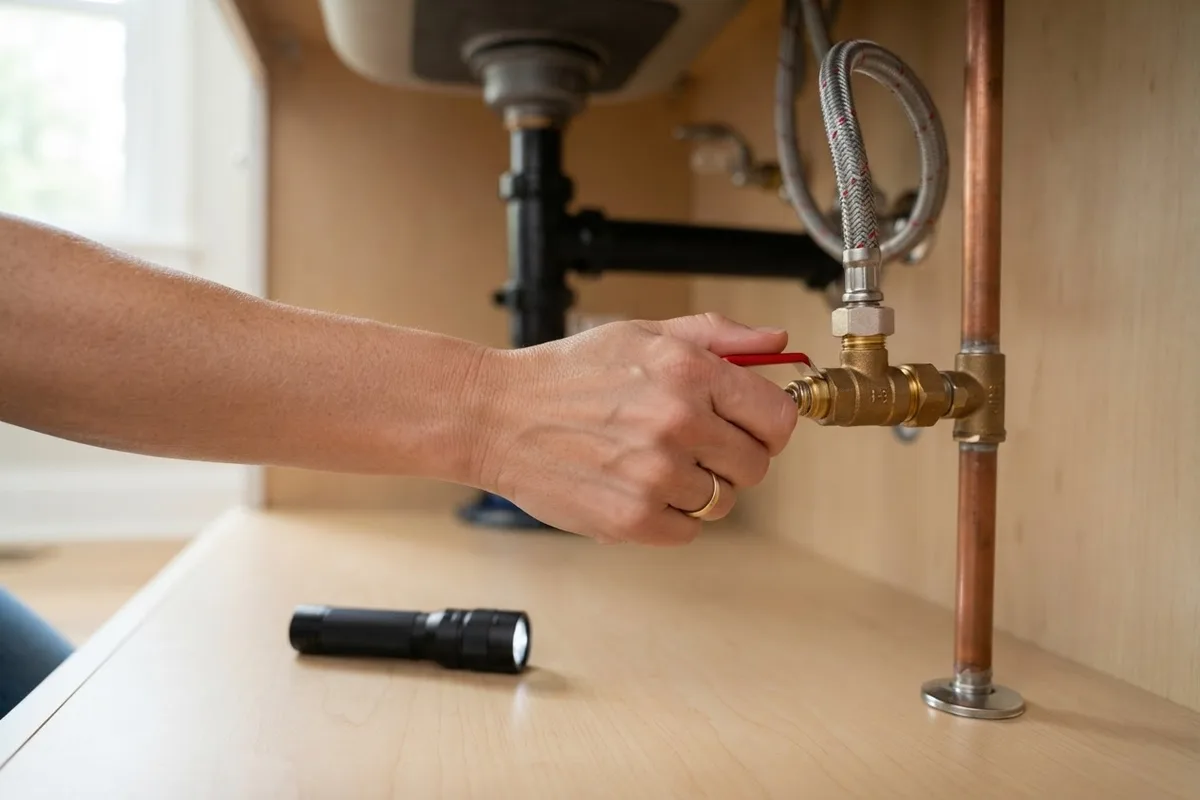
Finding water spilling past your dishwasher door onto the kitchen floor is stressful any day of the year—and even worse when you are running back-to-back loads during busy holiday hosting. When a dishwasher takes in too much water, the problem almost always traces back to a fill-control component that failed to shut off on time. Before you remove a single panel or touch any part, shut off the hot water supply valve under your kitchen sink and unplug the dishwasher or flip its circuit breaker off. Work through these six safe DIY checks to pinpoint the cause and protect your cabinets and flooring.
1. Free a Stuck Float Dome Inside the Tub
Most dishwashers regulate water height with a small, inverted plastic dome sitting near the front corner of the tub floor. As water fills the basin, the dome floats upward and lifts a thin rod that trips a shutoff switch underneath. If a fallen utensil, chip of dishware, or crust of mineral scale pins that dome down, the machine never receives the signal to stop filling.
- Confirm the circuit breaker is off and the hot water shutoff valve under the sink is closed.
- Roll the lower dish rack completely out of the tub so you have a clear view of the floor.
- Lift the float dome straight up and down about half an inch—it should move freely and produce a faint click underneath.
- Pull the cap straight off if your model allows removal, and check beneath it for lodged debris or mineral grit.
- Wipe the plastic stem with a damp cloth, reseat the dome, and confirm it drops back down smoothly.
2. Test the Float Switch Under the Tub
Even when the float dome moves effortlessly inside the tub, the microswitch mounted directly below it can wear out or pop loose from its bracket. Once that switch stops opening the circuit, the water inlet valve stays energized far past the normal fill mark.
- Double-check that power is shut off at the breaker and the under-sink hot water valve is closed.
- Lay a folded towel across the floor, then remove the hex or Phillips screws securing the lower kickplate panel beneath the door.
- Shine a flashlight directly beneath the corner where the float sits to locate the small rectangular switch and its thin actuator lever.
- Check that the switch body is clipped firmly in place and that its wire connectors look clean, snug, and dry.
- If you have a multimeter, slip the wire leads off and check continuity while pressing and releasing the lever; a failed switch will not change readings. Replacement float switches typically cost $15–$45 for parts, depending on your area and model.
3. Inspect the Water Inlet Valve for Sticking
One quick observation tells you whether your water inlet valve is failing: towel the tub dry, leave the dishwasher completely powered off, and check inside 30 minutes later. If water steadily pools in the bottom while the machine is off, the solenoid valve on your hot water line is mechanically stuck open. Hard-water mineral deposits are a common culprit, which is why learning how to descale home appliances can help protect water valves across your home.
- Close the under-sink hot water shutoff valve right away to stop incoming water, and keep the breaker switched off.
- Look behind the left or right corner of the lower kickplate where the braided stainless-steel supply line threads into the dishwasher.
- Inspect the valve housing for white mineral crust, moisture drips, or hairline cracks.
- Place a shallow pan under the fitting, disconnect the supply line, and look for grit packed against the tiny inlet mesh screen.
- Never try to pry a jammed valve closed—replace the complete water inlet valve assembly ($25–$65 for parts, varying by area and model).
4. Check Dishwasher Leveling and Front Tilt
Sometimes a dishwasher is not actually overfilling—it is leaning forward. Dishwasher door gaskets are built as splash guards rather than pressurized watertight seals, so even a slight forward lean lets normal fill water slosh over the front sill before the float ever reaches shutoff height.
- Open the door and remove the lower rack so the interior tub tracks are uncovered.
- Place a carpenter's bubble level front-to-back along the tub rim, then side-to-side across the front opening.
- Check whether the bubble drifts toward the back of the machine, which indicates the front sits lower than the rear.
- Remove the lower kickplate and turn the front leveling legs clockwise with a wrench or pliers to raise the front edge until the tub is level or tilted very slightly backward.
- Confirm the upper mounting brackets under your countertop stay tight, then run a short test fill while keeping an eye on the front sill.
5. Clear the Water-Level Pressure Sensor Tube
Many newer dishwashers skip the plastic float dome altogether and measure water depth using a pressure switch connected to the sump by a narrow air tube. As water rises, trapped air inside that hose pushes against an internal diaphragm to cut off the fill cycle. A kinked, cracked, or blocked tube stops the switch from reading the true water depth.
- Make sure power is off at the breaker and the hot water supply valve under the sink is shut.
- Remove the lower kickplate and look near the side of the sump housing for a small round pressure switch with a thin hose attached.
- Trace the entire length of the clear or black rubber tubing for sharp bends, pinholes, or loose clamps.
- Gently pull the hose off the pressure switch fitting and blow air through the hose toward the tub to clear any trapped buildup.
- Never blow directly into the pressure switch port itself, because sharp air pressure can tear the delicate diaphragm inside.
6. Reset a Glitched Control Board Relay
A brief power flicker or sticking electronic relay on the main control board can keep sending voltage to the water inlet valve longer than the programmed fill window. A full power reset clears temporary logic freezes and helps you tell a one-time glitch apart from a failing board.
- Switch off the dishwasher's dedicated circuit breaker at your electrical panel (or unplug the cord beneath the sink) and wait a full five minutes.
- Restore power and start a short rinse cycle while standing next to the front door.
- Listen carefully to the steady rush of incoming water; on most US residential models, filling stops after roughly one to three minutes before the wash pump engages.
- If incoming water keeps running nonstop past four minutes, press Cancel and immediately close the hot water shutoff valve under the sink.
- Continuous filling after a hard reset usually signals a welded control-board relay that needs professional diagnosis.
Overfilling Symptoms at a Glance
| Symptom | Most Likely Cause | First Safe Action | DIY or Pro? |
|---|---|---|---|
| Tub fills while dishwasher is off | Stuck-open water inlet valve | Close under-sink hot water valve | DIY or Pro |
| Float dome feels stiff or pinned down | Debris or scale under float | Cut power; free and rinse float | DIY |
| Water spills only at front door corners | Forward-tilted dishwasher | Check level; raise front legs | DIY |
| Fill runs nonstop past 4 minutes | Failed float switch or board relay | Cancel cycle; shut off breaker and water | Pro for board |
| No float dome; overflows mid-cycle | Blocked or cracked pressure hose | Cut power; inspect air tube | DIY or Pro |
When to Call a Pro
Freeing a stuck float dome, adjusting leveling legs, or running a five-minute breaker reset are quick, approachable checks for most homeowners. Stop and bring in a technician if your dishwasher is hardwired and testing requires working around live voltage, if water has leaked onto the lower wiring harness or circulation motor, or if the issue involves your home's electrical panel or a failed control board. Corroded copper supply fittings or tight under-counter clearances are also best left to a pro so a routine valve swap does not turn into a plumbing leak.
Across the United States, having a technician replace a float switch, pressure sensor, or water inlet valve typically runs $150–$350 for parts and labor, while a main control board replacement generally falls between $250 and $500 (costs vary by area and model). If you would rather not pull the unit out from beneath your cabinets, True Appliance Repair can match you with an independent local technician for dishwasher repair. If other kitchen units are acting up at the same time, our appliance repair matching service can help you get connected quickly.
FAQ
How much water is supposed to be in the bottom of a dishwasher?
During a normal wash fill, water should sit roughly one to two inches deep in the bottom of the tub—just below the heating element and well under the front door lip. Once a full cycle ends, only a small pool tucked down inside the sump well is normal.
Can a dishwasher overfill even when it is turned off?
Yes. When the internal plunger in the water inlet valve sticks open from wear or mineral buildup, household water pressure pushes water into the tub even with the power completely off. Close the hot water valve under your kitchen sink immediately until the inlet valve is replaced.
Why does an overfilling dishwasher leak out the front door first?
Dishwasher door seals are engineered to deflect spray jets rather than hold back a deep tank of standing water. As soon as water rises higher than the front tub sill, it spills past the lower gasket onto surrounding cabinets and kitchen flooring.
Is it safe to keep using a dishwasher that overfills occasionally?
No—stop running the machine until the fill-control issue is fixed. Even small repeat overflows can swell wood cabinetry, damage subflooring, and drip onto electrical connections tucked underneath the tub.