
Chalky white film on glassware, sluggish water dispensers, and longer cycle times all point to the same hidden culprit: hard-water mineral scale. Left unchecked, calcium and magnesium deposits coat heating elements, clog narrow valves, and force your machines to work harder. These six safe steps show you how to descale home appliances across your kitchen and laundry room using simple pantry staples.
1. Flush Hard-Water Buildup From Your Dishwasher
Dishwashers heat water repeatedly, which speeds up mineral scale inside spray arms, sump screens, and heating coils. Before starting, verify that no bleach-based cleaner is inside the tub—mixing acids like vinegar or citric acid with chlorine bleach creates hazardous fumes.
- Empty both racks completely so the cleaning solution reaches every corner.
- Place a dishwasher-safe glass bowl holding one cup of distilled white vinegar upright on the top rack, or add two tablespoons of food-grade citric acid powder to the detergent cup.
- Run a full hot-water wash cycle without heated dry.
- Once the cycle ends and the interior cools, turn off the unit at the control panel, remove the bottom filter, and rinse away loosened grit under warm tap water.
- Wipe the door perimeter with a damp microfiber cloth and clear any crusted spray-arm holes using a wooden toothpick.
Avoid dumping undiluted vinegar straight into the bottom sump too often, as frequent acid contact can dry out rubber seals over time.
2. Descale Your Washing Machine Drum and Lines
Hard water leaves stiff towels, chalky streaks on dark fabrics, and crusty buildup around the detergent drawer and inner tub. If you already spot flakes or powder on freshly washed laundry, pairing a descaling run with our guide on why a washer leaves white residue on clothes can resolve the buildup quickly.
- Confirm the drum is empty and check your owner's manual to see whether the manufacturer recommends citric acid, white vinegar, or a commercial washing machine cleaner.
- Pour two cups of white vinegar—or half a cup of citric acid dissolved in warm water—into the empty drum or detergent tray. Never combine acid cleaners with bleach.
- Run the hottest, longest tub-clean or heavy-duty cycle available.
- Unplug the washer after the cycle finishes, remove the detergent drawer, and soak it in warm soapy water to dissolve stubborn mineral paste.
- Wipe the rubber door gasket dry and leave the door ajar so trapped moisture evaporates.
3. Clear Mineral Scale From Fridge Water Dispensers
Refrigerator water dispensers and ice makers collect crusty rings around nozzles and suffer weak water flow when calcium deposits build up in the spout and supply line. Regular descaling keeps drinking water tasting clean and reduces strain on the inlet valve.
- Lock the dispenser controls or unplug the refrigerator before working near dispenser switches.
- Soak a clean cloth or paper towel in equal parts warm water and white vinegar, then wrap it snugly around the dispenser nozzle for 15 minutes to soften scale.
- Scrub the nozzle tip gently with a soft toothbrush and wipe the drip tray clean with the same diluted solution.
- Restore power and flush at least two quarts of fresh water through the dispenser to clear any lingering vinegar taste.
- Replace the water filter on schedule, and check our steps for cleaning home appliance filters to keep airflow and water lines clear across every machine.
4. Descale Countertop Coffee Makers and Kettles
Small water-heating appliances accumulate thick white scale faster than almost anything else in the kitchen, causing slow brewing, off flavors, and noisy boiling.
- Unplug the coffee maker or electric kettle and let all heating surfaces cool completely before emptying old grounds or standing water.
- Fill the reservoir or kettle halfway with equal parts distilled white vinegar and cool water—or dissolve one tablespoon of citric acid per two cups of water for an odor-free option.
- Plug the unit back in. For drip coffee makers, brew half the carafe, turn the machine off, and let the warm solution sit for 30 minutes before finishing the cycle. For kettles, bring the solution to a boil, switch off, and soak for 20 minutes.
- Discard the descaling liquid and rinse the carafe or kettle thoroughly.
- Run two to three full cycles with fresh water until no tang or mineral flakes remain.
5. Clean Steam Appliance Reservoirs and Vents
Steam irons, garment steamers, steam-cycle dryers, and countertop steam ovens rely on narrow internal channels that clog easily with mineral crust, causing white spots on fabrics or weak steam output.
- Always unplug the appliance and allow it to cool completely before opening any water cap or drain plug.
- Check the owner's manual first—many steam irons and steam ovens advise against vinegar because acid can corrode internal brass or coated boilers.
- When your manual approves descaling, fill the tank with the recommended diluted citric acid or commercial descaler, then run the self-clean or steam-purge function over a sink or heat-safe basin.
- Empty the reservoir completely, refill with plain distilled water, and purge steam for two minutes to flush away loosened scale.
- Going forward, empty tanks after every session and use distilled water whenever your manual recommends it.
6. Inspect and Clean Appliance Water Inlet Screens
Washing machines, dishwashers, and refrigerators with water lines use tiny mesh screens inside their inlet valves to trap mineral grit and pipe sediment. When those screens cake over, machines fill slowly or display water-supply error codes.
- Unplug the appliance from the wall outlet—or switch off its dedicated breaker if hardwired—and turn off the water supply shutoff valves behind or beneath the unit.
- Set a shallow pan and old towels beneath the hose fittings to catch residual water.
- Unscrew the supply hoses carefully by hand or with pliers wrapped in a cloth.
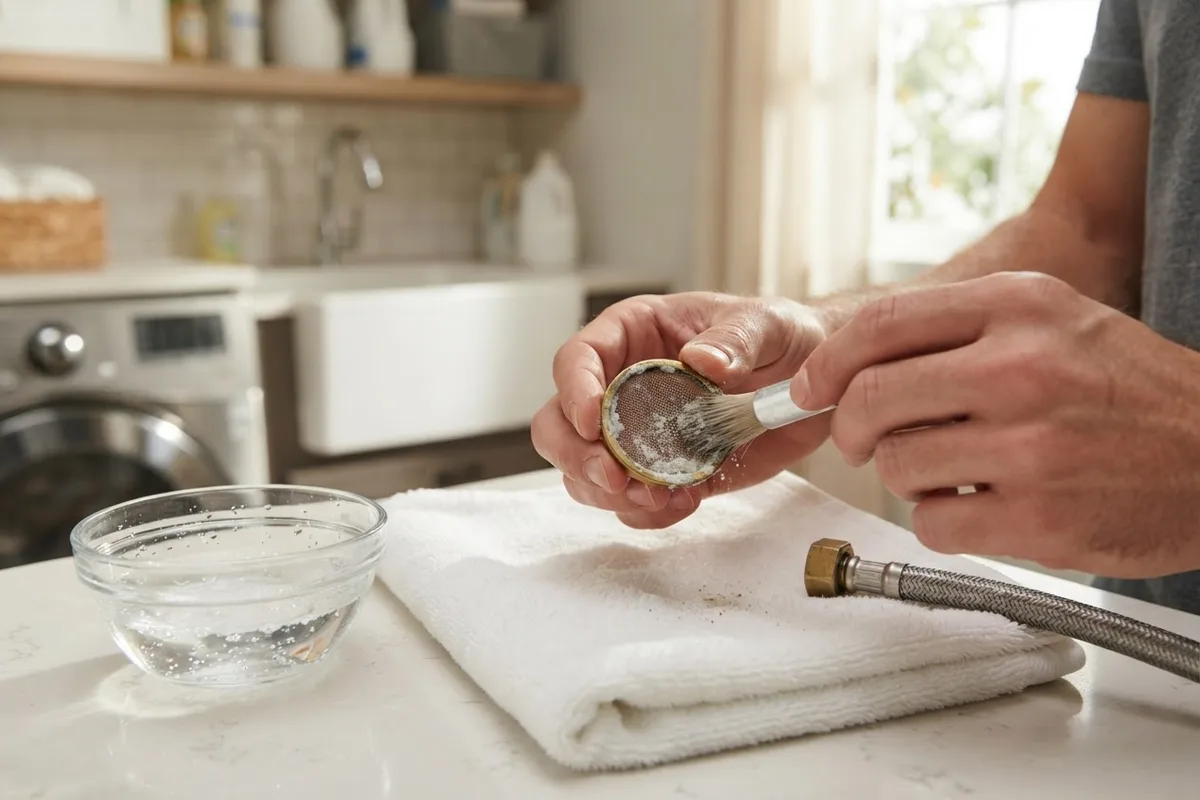
- Look inside the threaded inlet port for the small plastic or metal mesh screen. If removable, lift it out gently with needle-nose pliers without tearing the mesh.
- Soak the screen in warm diluted vinegar for 15 minutes, brush gently with a soft toothbrush, rinse clean, and reassemble snugly without cross-threading before restoring water and power.
Quick-Reference Appliance Descaling Schedule
Use this chart as a baseline and clean slightly more often if your home has noticeable hard water without a water softener.
| Appliance | Recommended Solution | Typical Frequency | Key Safety Note |
|---|---|---|---|
| Dishwasher | 1 cup white vinegar or 2 tbsp citric acid | Every 1–2 months | Never mix with chlorine bleach |
| Washing machine | 2 cups white vinegar or 1/2 cup citric acid | Every 1–3 months | Check manual to protect rubber seals |
| Fridge dispenser | 1:1 warm water and white vinegar | Every 2–3 months | Lock controls or unplug before wiping |
| Coffee maker / kettle | 1:1 vinegar-water or citric acid solution | Every 1–2 months | Run 2–3 fresh-water rinse cycles |
| Steam appliances | Distilled water or manual-approved descaler | Every 1–3 months | Unplug and cool fully before draining |
| Water inlet screens | Diluted vinegar soak and soft brush | Every 6–12 months | Shut off power and water valves first |
When to Call a Pro
Routine descaling handles mild to moderate mineral crust, but stop and call a technician if water still barely trickles after cleaning inlet screens, if a machine leaks underneath after reattaching hoses, or if water still fails to heat properly. Never open electrical panels, alter gas connections, or disturb a refrigerator's sealed cooling system—those repairs require specialized tools and training.
Replacing a calcified water inlet valve, circulation pump, or heating element in a major appliance typically runs roughly $150 to $400 in the US for parts and labor, though exact costs vary by area and model. If stubborn scale has already worn out an internal valve or heating coil, True Appliance Repair can match you with a local appliance pro to diagnose the fault safely and help you decide whether repair makes financial sense.
FAQ
Is white vinegar or citric acid better to descale home appliances?
Both dissolve calcium and magnesium deposits well, but food-grade citric acid is often gentler on rubber gaskets and leaves no sharp odor behind. Plain white vinegar works reliably for occasional glass, nozzle, and coffee-maker descaling when diluted. Always verify your appliance manual before picking a descaler.
Can descaling with vinegar damage my washing machine or dishwasher?
Occasional diluted use is safe for most modern machines, but running strong vinegar every week can gradually dry out or swell rubber hoses and door seals. Stick to a one-to-three-month schedule, rinse with fresh water afterward, and switch to citric acid or a commercial cleaner if your manual advises against vinegar.
How do I know if hard water is damaging my appliances?
Watch for chalky white crust around dispenser nozzles, cloudy film on glassware, stiff laundry, slower fill times, and cycles that take longer to heat up. Spotting these early signs lets you flush mineral buildup before it seizes internal valves or insulates heating elements.
Should I add a water softener or inline filter to prevent mineral scale?
If chalky buildup returns within a few weeks of cleaning, adding a point-of-use sediment filter or a whole-house water softener slows scale formation across every water-using machine. Even with softened water, inspecting inlet screens and running a periodic maintenance flush keeps parts running smoothly.