
Pulling freshly washed black jeans or a dark winter sweater out of the drum only to spot chalky white streaks is one of the most frustrating laundry surprises. White residue usually happens when detergent cannot dissolve fully, rinse water cannot move freely through packed fabric, or hidden soap scum flakes loose inside the tub. These six practical fixes will help you clear the buildup, prevent repeat streaks, and get clean rinses from every cycle.
1. Cut Back on Excess Laundry Detergent
Modern high-efficiency washers use far less water than older machines, which means extra detergent has nowhere to rinse away. Instead of making clothes cleaner, leftover soap settles right back onto dark cotton, fleece, and activewear as chalky smudges.
- Check the bottle label for the HE symbol if you own a front-loader or a top-loader without a tall center agitator.
- Measure liquid detergent to line one or two on the cap—usually just one to two tablespoons for a regular eight-pound load.
- Avoid pouring directly onto dry clothes; use the dispenser drawer so incoming water dilutes the soap first.
- Stick to a single detergent pod for standard loads rather than tossing in two.
Cutting your dose in half for one week is often the fastest way to tell whether oversudsing is causing the streaks.
2. Switch to Warm Water for Cold-Weather Loads
Colder incoming tap water in late fall and winter makes powdered detergents and dissolvable laundry pods much slower to break down. When water drops near forty or fifty degrees Fahrenheit, clumps of undissolved powder or sticky pod casing can stick directly to dark fabrics.
- Select the warm wash setting for dark everyday clothes and heavily soiled loads during colder months, checking garment care tags first.
- If you prefer powder detergent, stir your measured scoop into a cup of warm tap water until fully dissolved before pouring it into the drum or dispenser.
- Always drop laundry pods into the back bottom of an empty drum before adding clothes so the water jet hits them right away.
- Keep boxes of powder detergent tightly sealed away from laundry-room humidity so they do not cake into hard lumps.
3. Give Bulky Laundry Room to Rinse
Cramming heavy sweaters, hoodies, towels, and denim into a single wash cycle traps detergent between folded layers. Clothes need space to tumble or agitate so fresh rinse water can flush soap completely out of the fibers.
- Load clothes loosely without pushing them down, leaving at least a palm's width of open space between the top of the laundry and the rim of the drum.
- Shake out bunched-up sleeves, pockets, and bedsheets before loading so detergent cannot get caught in tight knots.
- Turn on the Extra Rinse option for dark loads, heavy winter bedding, or sportswear that holds onto suds.
- To rescue clothes that already have chalky marks, run them through a warm rinse-and-spin cycle with no detergent and half a cup of distilled white vinegar poured into the fabric softener compartment.
4. Run a Hot Tub-Clean Cycle to Strip Soap Scum
Even when you measure soap carefully today, months of past detergent, liquid fabric softener, and body oils can form a waxy film—often called scrud—behind the inner basket. As the drum spins, pieces of that buildup break loose and land on wet clothes as gray-white specks or smears.
- Empty the drum completely and pull out the removable detergent dispenser drawer.
- Soak the drawer in warm soapy water, scrub away hardened soap crust with an old toothbrush, and wipe inside the drawer cavity.
- Wipe along the folds of a front-load rubber door gasket with a damp microfiber cloth to clear trapped lint and sludge.
- Run the Tub Clean cycle—or your hottest, longest wash cycle—using a washing machine cleaner tablet or two cups of plain white vinegar directly in the empty drum.
- Wipe the interior dry and leave the door or lid cracked open between washes.
5. Clean the Drain Filter and Water Inlet Screens
Weak incoming water pressure or a sluggish drain prevents your machine from flushing soapy water away before the final spin. Before touching any hoses or access panels, unplug the washing machine from the wall outlet and turn both the hot and cold water supply valves off.
- Pull the washer forward gently, lay down towels, and place a shallow pan beneath the back connections.
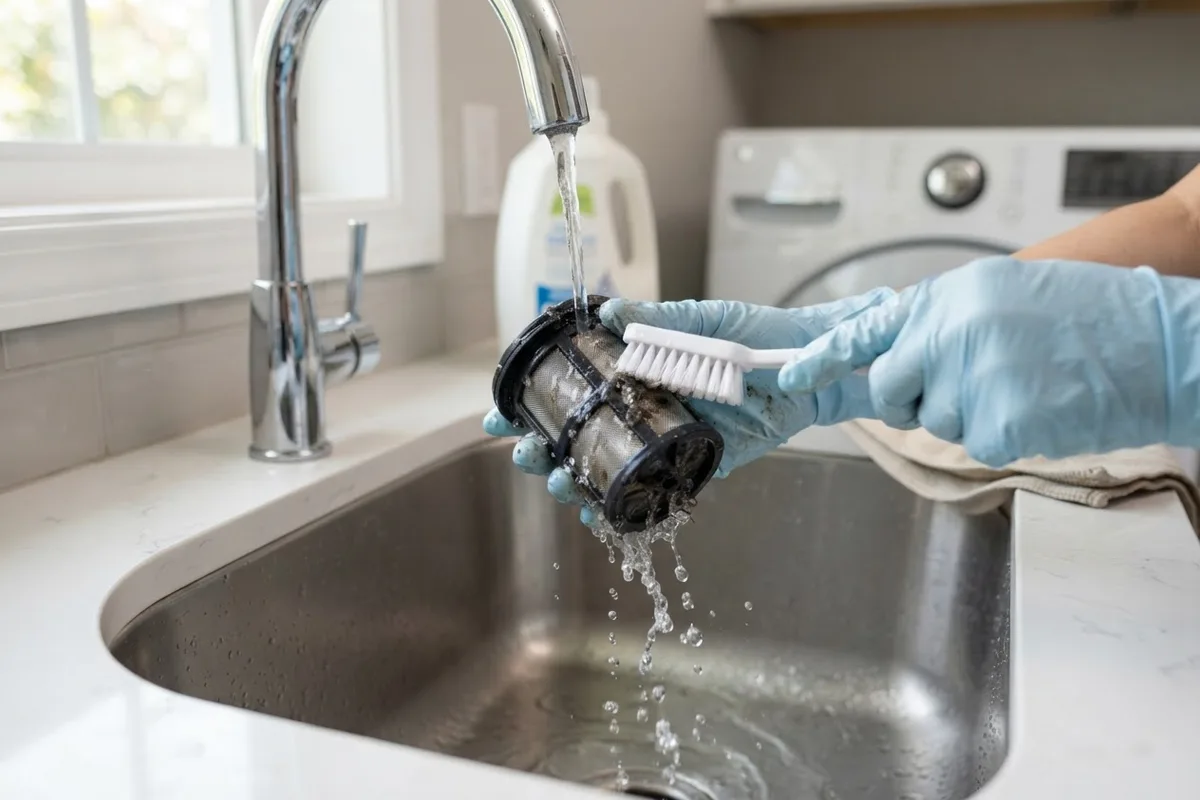
- Unscrew both fill hoses and inspect the small mesh inlet screens inside the valve ports for sand or mineral grit; brush them gently clean without puncturing the mesh.
- On front-load models, open the lower-front access door, drain standing water into a pan, and unscrew the drain pump filter to clear lint, coins, and soap sludge.
- Use our appliance filter cleaning checklist to keep screens clear every few months.
- Reconnect hoses snugly, restore water and power, and check for drips on a short rinse.
6. Counteract Hard Water Mineral Buildup
If your home has hard water, dissolved calcium and magnesium react with laundry detergent to create insoluble white soap curds that cling to clothes and coat the washer tub. Hard water residue often makes dark fabrics look dull or feel stiff even after an extra rinse.
- Test your tap water with an inexpensive home hardness test strip to confirm whether mineral levels are high.
- Switch from powder to a quality liquid HE detergent, which resists forming mineral curds better in hard water.
- Add a laundry water-conditioning booster such as washing soda or borax according to the package directions to bind minerals before they react with soap.
- Schedule a monthly hot cleaning cycle with a descaling washer cleaner to dissolve chalky mineral scale inside the drum and hoses.
Quick Guide to White Residue Types
Looking closely at the texture of the marks on your laundry helps pinpoint the fastest fix.
| What the Residue Looks Like | Most Likely Cause | First Step to Try |
|---|---|---|
| Chalky white streaks on dark clothes | Excess detergent or overloaded drum | Re-rinse without soap; cut detergent dose in half |
| Sticky or gummy white clumps | Undissolved pod casing or cold-water powder | Place pod in empty drum first; use warm water |
| Flaky gray-white specks or waxy film | Soap scum buildup inside the outer tub | Scrub dispenser drawer and run a hot tub-clean cycle |
| Powdery dullness and stiff fabric | Hard water minerals reacting with soap | Switch to liquid HE soap and add a water booster |
| Soapy film left on wet clothes | Low fill pressure or partial drain clog | Unplug washer, shut off water, clean screens and filter |
When to Call a Pro
If you still see white residue after cutting detergent, running a hot cleaning cycle, and clearing the filters, a worn internal component may be limiting water flow or agitation. Common mechanical culprits include a clogged or failing water inlet valve that restricts rinse pressure, a weak drain pump that leaves dirty water in the tub, a faulty water temperature sensor, or a worn washplate or agitator that no longer moves clothes freely.
Stop DIY checks right away and call a technician if you notice burning smells, tripped breakers, water leaking under the cabinet, or recurring error codes—never open the electrical control panel or work on live wiring yourself. Typical US washer repairs for inlet valves, pumps, or sensors generally run around $150 to $350, though exact costs vary by area and appliance model; see our washing machine repair cost guide for a closer breakdown. When troubleshooting points to a broken part, True Appliance Repair can match you with a local appliance pro through our washer and dryer repair service.
FAQ
How do I get white detergent streaks off dark clothes right away?
Avoid putting streaked garments into the dryer, since heat can set soap and mineral marks deeper into the fibers. Run the affected clothes through a warm rinse-and-spin cycle with no detergent and half a cup of distilled white vinegar in the softener tray. For a single small smudge, dab the spot gently with a clean damp cloth before air-drying.
Does cold water cause white residue on laundry?
Yes, very cold tap water—especially during fall and winter—slows down how quickly powder detergents and laundry pod films dissolve. Switching to a warm wash cycle for darks, pre-dissolving powder in warm water, or using a liquid HE detergent designed for cold-water washing usually solves the problem right away.
Can too much fabric softener leave white marks on clothes?
Liquid fabric softener coats fibers with waxy conditioning agents that build up inside both your clothes and the washer's outer tub. Over time, that buildup traps lint and flakes off as pale streaks or gray-white spots. Diluting softener as directed, using less per load, or swapping it for a splash of white vinegar in the rinse tray helps prevent residue.
How often should I clean my washing machine to prevent residue?
Plan to run a hot tub-clean cycle once a month, especially if you wash heavy loads, use cold water often, or live in a hard-water area. Wipe the door gasket and rinse the detergent drawer every two to four weeks, and check the drain pump filter every two to three months so lint and soap never have a chance to build up.