
A broken washing machine leaves wet laundry piling up fast, and guessing what the repair bill might look like only adds stress. Most common breakdowns fall into predictable price bands, though every washing machine repair cost varies by area, brand, and whether you own a top-load or front-load model. Before checking hoses, filters, or switches yourself, always unplug the washer and shut off both the hot and cold water supply valves.
1. Fix a Drain Pump Failure ($150–$350)
When a washer stops with a tub full of soapy water or hums loudly during the drain cycle, the drain pump is a prime suspect. Replacing a failed pump typically runs $150 to $350 for parts and labor in the US, depending on your region and how tightly the cabinet is built. Many pump failures, however, are simply coins, hairpins, or small socks jamming the plastic impeller.
Try these safe checks before paying for a new part:
- Unplug the washer from the wall and turn off both water supply valves.
- Lay down thick towels and a shallow pan, then slowly open the lower front-load filter door to drain trapped water and pull out debris.
- Inspect the rear drain hose for sharp kinks or thick lint clogs.
- Plug the machine back in, reopen the water valves, and run a short rinse-and-spin test.
2. Replace a Door Latch or Lid Switch ($120–$275)
If the control panel lights up normally yet the washer refuses to fill or spin, a faulty safety switch may be blocking the cycle. Top-load lid switches usually sit near the lower end of the $120 to $275 range, while motorized front-load door lock assemblies cost more and vary by area and model. Dried detergent crust and misaligned strike tabs often mimic a broken switch.
Run through four quick checks before scheduling service:
- Unplug the machine and shut off both hot and cold water valves.
- Wipe built-up soap residue off the door latch hook and the slot on the cabinet frame with a damp microfiber cloth.
- Inspect the plastic strike tab for hairline cracks or loose mounting screws.
- Restore power and wait two full minutes to see if a stuck lock releases and resets.
3. Swap Out a Leaking Gasket or Hose ($150–$375)
Puddles around the base of a washer can damage subfloors quickly, especially during heavy winter and holiday laundry weeks. Replacing a torn front-load rubber door boot usually falls between $150 and $375 for parts and labor, varying by area and brand, because removing and reinstalling the tension spring clamps takes time. Rear fill hoses are far less expensive to replace yourself if caught early.
Check the leak source safely with these steps:
- Unplug the washer and turn both wall shutoff valves fully clockwise.
- Slide the unit forward—a practical moment for cleaning behind your home appliances—and inspect the rear hoses for blisters, rust, or weeping fittings.
- Fold back the front rubber door gasket and look for tiny punctures, trapped coins, or mildew tears.
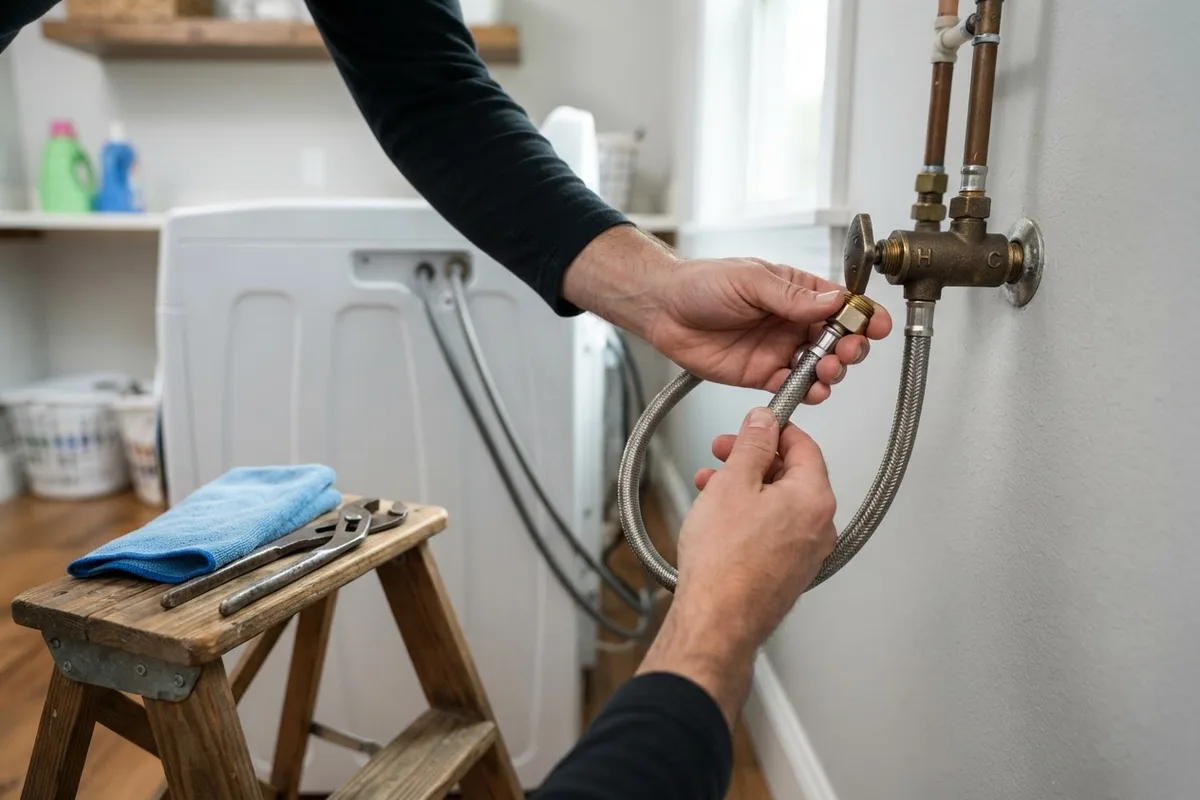
- Hand-tighten any slightly loose hose collars, then add a gentle quarter turn with pliers without stripping the threads.
4. Repair a Drive Belt or Coupler ($150–$325)
A washer that fills and drains cleanly while the basket refuses to turn usually points to a worn drive belt, stripped motor coupler, or worn agitator dogs. Professional replacement typically ranges from $150 to $325 across most US markets, depending on local labor rates and whether your washer uses a belt-drive or direct-drive layout. Overloading heavy blankets is one of the fastest ways to snap these parts.
Check the basics safely before booking a technician:
- Unplug the washer and pull out half of an oversized or tangled load to see if an imbalance sensor paused the spin.
- Rotate the empty inner tub slowly by hand; a completely free-wheeling drum with zero resistance can signal a slipped belt.
- Shine a flashlight underneath the cabinet to look for black rubber dust or a fallen belt.
- Stop immediately if you notice a burnt rubber smell or electrical odor.
5. Replace a Water Inlet Valve ($150–$300)
When your washer trickles water slowly, refuses to fill with hot water, or keeps dripping into the drum while turned off, the water inlet valve is likely wearing out. Having a pro install a new valve generally costs $150 to $300 in the US, though pricing varies by area and model. Before assuming the valve solenoids are dead, check for mineral sediment choking the intake screens.
Follow these steps to rule out a simple blockage:
- Unplug the washer and shut off both hot and cold water supply valves tightly.
- Place a bucket underneath and unscrew the fill hoses from the back of the machine.
- Inspect the small mesh screens inside the valve ports and gently brush away rust flakes or hard-water scale.
- Reattach the hoses, reopen the valves, and confirm there are no drips.
Soap buildup can also restrict water entering the drum; cleaning a washing machine detergent drawer removes stubborn clogs safely.
6. Price Control Board or Bearing Fixes ($250–$650)
The steepest washing machine repair bills involve main electronic control boards and rear drum bearings. Control board replacements generally fall between $250 and $500 installed, while rear tub bearings can run $350 to $650 or more because technicians often must dismantle the entire outer tub assembly. Both ranges vary widely by area, model, and part availability.
Before approving a major repair, gather clear facts:
- Unplug the washer for five full minutes to rule out a temporary control-board glitch.
- Write down any flashing error codes and record roaring or grinding spin noises on your phone for the technician.
- Check the serial plate inside the door frame to confirm the washer's age.
- Ask for an itemized written estimate covering parts, labor, and diagnostic fees before authorizing work.
Quick-Reference Washer Repair Cost Table
| Common Washer Repair | Typical US Cost Range* | Common Symptom | Safe First Check |
|---|---|---|---|
| Drain pump replacement | $150–$350 | Standing water, humming sound | Clear drain filter and check hose |
| Door latch or lid switch | $120–$275 | Powers on, won't start or spin | Clean latch and inspect strike tab |
| Door gasket or fill hose | $150–$375 | Water pooling at front or rear | Check gasket folds and hose fittings |
| Drive belt or coupler | $150–$325 | Motor runs, drum won't turn | Rebalance load and inspect under unit |
| Water inlet valve | $150–$300 | Slow fill or fills when off | Rinse sediment from inlet screens |
| Control board or bearing | $250–$650+ | Dead display or roaring spin | Power-cycle and note error codes |
Typical US parts-and-labor ranges vary by area, brand, and washer model.
When to Call a Pro
Basic upkeep—clearing a drain trap, rinsing inlet mesh screens, leveling cabinet feet, and inspecting external supply hoses—is safe for most homeowners once the power cord is unplugged and both water valves are shut off. Stop and call an appliance repair pro whenever a fix involves opening sealed tub assemblies, testing live electrical wiring, or troubleshooting a repeatedly tripping breaker. Never work inside an electrical panel yourself, and if a nearby gas dryer smells like gas or needs gas-line service, shut off the supply valve if safe and leave the home before calling for help.
Most local technicians charge a diagnostic trip fee of $75 to $125, which varies by area and is often applied toward the repair if you move forward. If you want an accurate quote from an independent technician, True Appliance Repair can match you with a pro for local washer and dryer repair near you.
FAQ
How much is a typical washing machine diagnostic fee?
In most US markets, an in-home appliance diagnostic visit costs between $75 and $125, though pricing varies by area and travel distance. Many independent technicians credit part or all of that visit fee toward the final bill if you approve the repair. Ask how the diagnostic fee is handled before confirming your appointment.
Are front-load washers more expensive to repair than top-load washers?
Often, yes. Front-load models use additional rubber bellows seals, motorized door locks, and tighter internal layouts that take longer to take apart and reassemble. Because labor represents a large portion of any washing machine repair cost, complex front-load units usually land toward the higher end of typical price ranges.
When is it better to replace a washing machine instead of repairing it?
A practical guideline is to weigh the repair quote against the price of a comparable new washer and the machine's age. If a washer is more than 8 to 10 years old and needs a repair costing roughly half or more of a replacement unit—such as rear bearings or a main control board—replacing it often makes better financial sense.
How can I lower future washing machine repair costs?
Simple laundry habits prevent many expensive breakdowns. Empty pockets before every load, measure high-efficiency detergent carefully, avoid stuffing heavy bedding past the drum limit, and swap rubber supply hoses for braided stainless-steel lines every five years. Leaving the door slightly open between cycles also helps rubber gaskets last longer.