
Opening the detergent tray and spotting slimy black buildup or crusty blue soap residue is frustrating, especially when musty odors transfer onto freshly washed clothes. Learning how to clean a washing machine detergent drawer takes less than thirty minutes and requires only basic supplies from your kitchen pantry. Follow these six simple steps to clear hidden mold, restore smooth water flow, and keep bulky winter bedding and everyday laundry smelling fresh.
1. Unplug the Washer and Remove the Drawer
Before reaching into the dispenser housing or inspecting any part of the machine, unplug the washing machine from the wall outlet and turn off both the hot and cold water supply valves behind the unit. Cutting power and water prevents accidental startup and keeps water from leaking if a hose loosens while you work.
- Pull the detergent drawer straight out until it hits the built-in stop.
- Look inside the fabric softener compartment or along the back center edge for a small colored plastic release tab, often marked with a push arrow.
- Press the tab down firmly with one hand while sliding the entire tray smoothly toward you with the other.
- Set an old bath towel under the open slot to catch any trapped water dripping from the drawer rails.
Some top-load washers have a recessed dispenser tray near the drum rim that lifts straight up. If the tray resists, check your owner's manual instead of forcing the plastic tracks.
2. Disassemble Inserts and Soak in Vinegar Water
Once the tray is out, breaking it down into separate pieces exposes the narrow channels where liquid detergent and fabric softener harden into gluey slime. Most modern front-load trays include removable siphon caps, liquid detergent dividers, and bleach inserts that pop straight out with gentle finger pressure.
- Snap out every removable insert and take a quick photo on your phone so reassembly is effortless later.
- Fill a utility sink or large basin with hot tap water—hot enough to dissolve greasy softener film, but not boiling water that can warp thin plastic.
- Stir in one cup of distilled white vinegar to break down mineral scale and soap residue naturally.
- Submerge the main drawer and all smaller pieces completely, letting them soak for 20 to 30 minutes.
Never add chlorine bleach to a vinegar bath; mixing the two creates dangerous chlorine gas fumes. Stick to one cleaning agent at a time and rinse thoroughly between products.
3. Scrub the Drawer Corners and Siphon Tubes
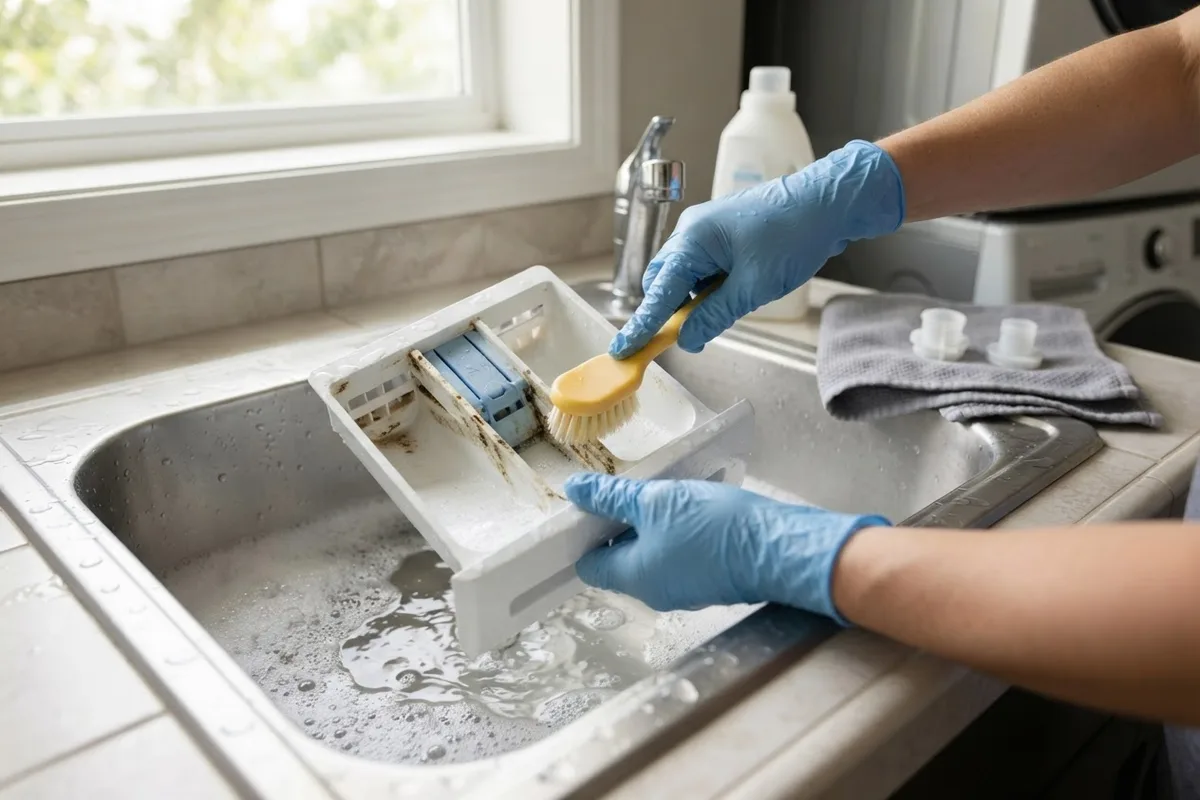
After soaking, stubborn residue softens enough to lift away without metal scrapers that scratch plastic surfaces and give mold new grooves to grip. Pull each component out of the sink and inspect the underside of the tray, where damp splashes often hide dark mildew spots.
- Sprinkle a light dusting of baking soda onto an old toothbrush or narrow bottle brush for gentle scrubbing grit.
- Brush along every seam, hinge track, and divider corner until no slick film remains.
- Push a pipe cleaner or small straw brush through the narrow siphon tubes inside the fabric softener and bleach wells—clogs here are the main reason water stays trapped after a cycle.
- Rinse every piece under warm running water and verify that water flows freely through each drain hole.
If thick detergent clumps stay stuck inside a tight corner, let that piece soak in fresh warm soapy water for another ten minutes before brushing again.
4. Clean Mold Inside the Dispenser Cavity
Scrubbing the removable tray solves only half the odor problem. The recessed housing inside the washing machine stays dark and damp between loads, and the upper ceiling of that slot contains dozens of tiny water-jet nozzles that collect black grime over time.
- Shine a flashlight into the empty cavity to locate buildup along the bottom track, back wall, and top spray nozzles.
- Lightly spray the interior walls and upper ceiling with distilled white vinegar or a mild dish soap solution—avoid drenching the slot so liquid does not seep toward wiring behind the control panel.
- Wrap a microfiber cloth over a wooden spoon handle or use a clean toothbrush to scrub the upper jets and side rails thoroughly.
- Wipe out loosened sludge with a damp rag, then follow with a clean, dry cloth until the cavity feels completely smooth.
When tackling seasonal laundry upkeep, pair this quick scrub with our Winter Washer & Dryer Checklist to keep hoses and vents clear during heavy cold-weather washing.
5. Dry Every Part and Reinstall the Tray
Putting wet parts straight back into a closed compartment traps fresh moisture and invites mildew right back within a week. Taking five extra minutes to dry every surface thoroughly makes your cleaning effort last much longer.
- Shake excess water out of the hollow siphon caps and drain channels over the sink.
- Pat the main drawer and every removable divider dry with a clean lint-free towel, paying close attention to small locking tabs and grooves.
- Let the pieces air-dry on a towel for 10 to 15 minutes while the empty cavity stays open to the room air.
- Snap the dry inserts back into their original slots using your reference photo, then slide the tray straight into the housing until the release tab clicks smoothly into place.
Turn both water supply valves back on slowly, check behind the machine for any drips, and plug the washer back into the wall outlet.
6. Run a Hot Flush Cycle and Prevent Buildup
Once power and water are restored, flushing the internal dispenser hose clears any loosened soap flakes before they land on your next load of towels or clothes.
- Run an empty hot wash cycle—or your machine's built-in Tub Clean setting—with two cups of distilled white vinegar poured directly into the drum.
- When the cycle ends, pull the detergent drawer open two to three inches and leave the washer door ajar so trapped humidity evaporates.
- Switch to high-efficiency (HE) detergent if your washer requires it, and measure carefully; using more than one to two tablespoons for a normal load leaves unwashed slime behind.
- Wipe the dispenser tray dry once a week, especially when washing bulky winter comforters and heavy sweatshirts that tempt you to overpour detergent.
While refreshing your laundry room, learning how to clean a dryer drum helps eliminate stubborn residue across both machines.
Quick-Reference: Safe Drawer Cleaning Solutions
| Cleaning Option | Best For | Safety & Surface Notes |
|---|---|---|
| Distilled white vinegar | Hard water scale and mild soap scum | Rinse thoroughly; never mix with chlorine bleach |
| Baking soda paste | Scrubbing stuck corners and odors | Gentle abrasive that will not scratch plastic |
| Mild liquid dish soap | Greasy fabric softener film | Works well in warm water; rinse all suds away |
| Oxygen bleach powder | Deep mildew stains on white plastic | Dissolve fully in warm water and wear gloves |
| Chlorine bleach | Heavy stubborn mold only | Use alone diluted in water; never combine with vinegar or ammonia |
When to Call a Pro
Most dirty dispenser trays respond completely to a thorough soak and brush, so you rarely need replacement parts for routine grime. However, stop DIY troubleshooting and schedule a repair visit if you notice symptoms pointing to a deeper mechanical or electrical fault:
- Water leaks down the front of the washer from the dispenser slot even after the drawer and upper spray nozzles are spotless.
- Detergent or fabric softener never flushes out of the tray during a cycle, which often signals a failing water inlet valve or clogged internal dispenser hose.
- Water continues trickling into the drawer when the machine is turned off.
- The plastic drawer tracks inside the cabinet are cracked, or you notice a burning smell near the control board.
Never open the electrical panel, splice wiring, or attempt sealed-system or gas-line repairs yourself. Typical US service visits to replace a washing machine water inlet valve or dispenser housing run roughly $150 to $350, though actual pricing varies by area and model. If your dispenser still malfunctions after cleaning, True Appliance Repair can match you with a local appliance pro through our washer and dryer repair service.
FAQ
How often should I clean my washing machine detergent drawer?
Give the detergent drawer a quick rinse and wipe once a month if you do several loads each week, and perform a full vinegar soak and cavity scrub every two to three months. Households using liquid fabric softener or hard well water build up residue faster and benefit from monthly deep cleanings.
Can I put a washing machine detergent drawer in the dishwasher?
Hand-washing in warm sink water is safer than using the dishwasher. High-heat drying cycles can warp thin plastic rails or loosen small locking tabs, which prevents the tray from sliding smoothly back into the washing machine.
Why is there standing water left in my fabric softener compartment?
A small amount of clean water at the bottom of the softener well can be normal, because dispensers rely on a siphon effect to pull liquid down. When the compartment stays full after a wash, thick fabric softener has usually clogged the narrow siphon tube or the removable cap needs a thorough scrubbing.
Can I mix bleach and vinegar to kill detergent drawer mold?
No—never mix chlorine bleach and vinegar in a sink, spray bottle, or washing machine. Combining an acid with bleach releases toxic chlorine gas that irritates your lungs and eyes; choose one cleaner, ventilate the room well, and rinse thoroughly with plain water.