
Winter pushes your laundry room harder than any other season. Heavy comforters, thick fleece, wet coats, and freezing outdoor temperatures strain water lines, drain pumps, and dryer vents all at once. Running through this simple six-step checklist now helps you prevent burst hoses, slow drying times, and mid-winter laundry breakdowns.
1. Inspect Water Hoses for Cold-Weather Cracks
Cold incoming water and chilly utility rooms make aging rubber supply hoses stiff and prone to splitting. Before touching any plumbing connections, unplug your washing machine and turn both the hot and cold water shut-off valves clockwise until they stop.
- Pull the washer forward slowly, laying an old towel beneath the back panel to catch stray drips.
- Run your fingers along both hoses from top to bottom, feeling for bulges, blisters, brittle spots, or hairline cracks.
- Check the metal or plastic couplings at the wall and washer back for green corrosion, white mineral crust, or slow weeping.
- Gently tighten any slightly loose fittings with pliers, taking care not to cross-thread plastic inlets.
- Replace plain rubber hoses that are over five years old with burst-resistant braided stainless steel lines.
2. Protect Laundry Pipes From Freezing Temps
Washers located in basements, garages, or along uninsulated exterior walls face real freeze risks during sharp cold snaps. Ice expanding inside a valve or supply line can split plastic parts before you ever notice a leak. Keep all electrical cords dry, and never place space heaters directly against hoses or lint-prone areas.
- Slide foam pipe insulation sleeves over exposed hot and cold copper or PEX lines behind the washer.
- Seal cold drafts around exterior dryer vent hoods, utility doors, and sill plates using exterior silicone caulk or weatherstripping.
- Leave laundry closet or cabinet doors open overnight during sub-freezing weather so warm household air circulates around the pipes.
- If your washer sits in an unheated space that drops below freezing, shut off the water, disconnect and drain the hoses into a bucket, and run a brief spin cycle to clear standing pump water.
3. Deep-Clean the Dryer Vent and Lint Trap
Winter fabrics like wool sweaters, flannel sheets, and sherpa blankets shed far more lint than lightweight summer clothes. Restricted airflow forces your heating element to run hotter and longer, driving up energy bills and creating a serious fire hazard. Always unplug an electric dryer—or unplug the cord and shut off the gas valve on a gas model—before disconnecting any exhaust ducting.
- Pull out the lint screen and wash it with warm dish soap and a soft nylon brush to strip away invisible dryer-sheet residue, then let it dry completely.
- Vacuum deep inside the lint trap slot using a narrow crevice attachment.
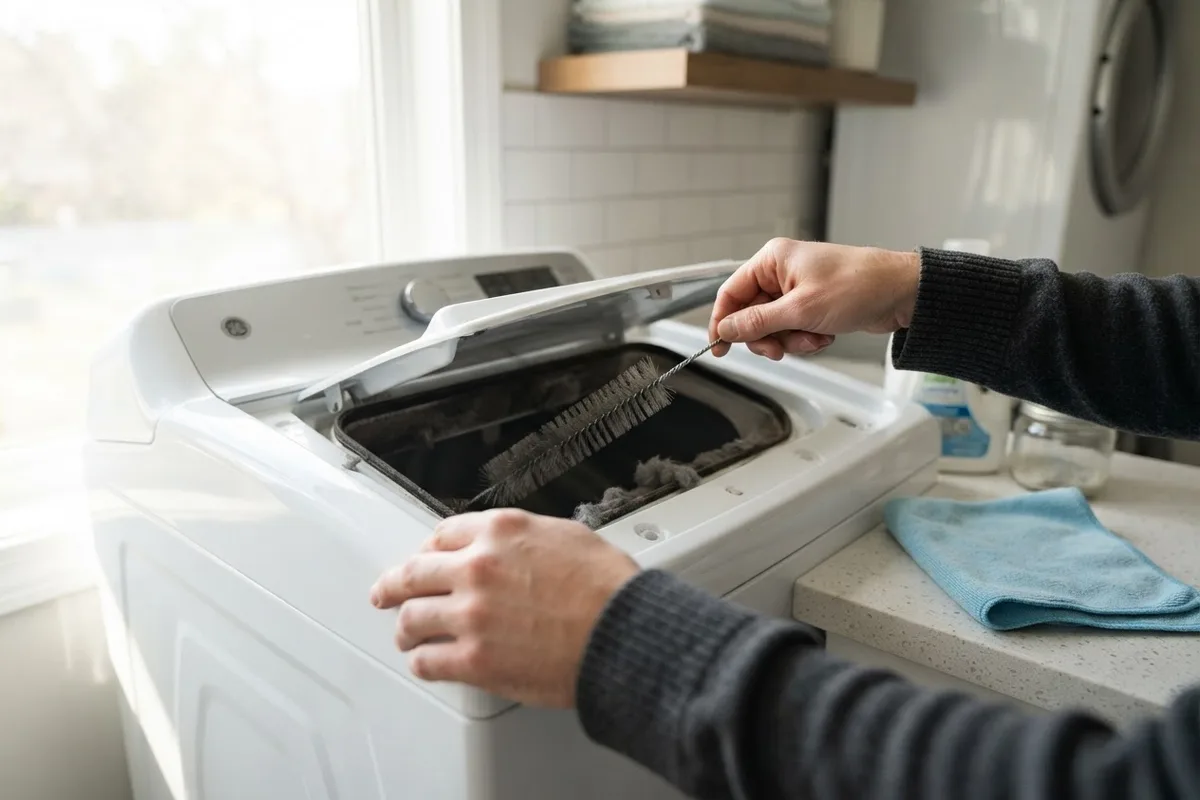
- Slide the dryer away from the wall, loosen the duct clamp, and clear packed lint from both the transition hose and the wall pipe with a flexible vent brush.
- Step outside and make sure the exterior exhaust flap opens smoothly and is free of snow, ice, or lint buildup.
4. Flush the Washer Drain Pump Filter
Heavy winter laundry brings stray tissues, coins, glove liners, and pet hair that quickly collect in the drain pump filter. When that trap clogs, water backs up in the drum and leaves heavy loads soaking wet. Unplug the washing machine and close both water supply valves before opening the lower service panel.
- Locate the small rectangular access door near the bottom front of your front-load washer (most top-load models do not have a front-access trap, so check your owner's manual first).
- Slide a shallow baking sheet and thick towels underneath the opening to catch trapped water.
- Unclip the thin emergency drain tube, pull out the plug over your pan, and let the water drain out slowly.
- Twist the filter cap counterclockwise, rinse off lint and debris under warm tap water, wipe the inside housing clean, and screw the cap back in snugly.
5. Balance Heavy Winter Blanket Loads
Saturated quilts, puffer jackets, and thick bathrobes weigh dramatically more than everyday clothes. Repeatedly spinning off-balance loads batters the washer's suspension rods, shock absorbers, and drum bearings. Unplug the machine before adjusting its feet or tilting the cabinet.
- Set a bubble level across the top of the washer; if the machine rocks corner to corner, turn the front leveling feet with an open-end wrench until it sits solid, then tighten the locknuts.
- Wash bulky comforters one at a time, or place two heavy towels opposite a single blanket to balance the drum weight.
- Choose the bulky or bedding cycle, which uses gentler spin ramps to prevent loud banging.
- Keep the drum no more than three-quarters full so water and detergent can move freely through thick fabrics.
6. Clean Dryer Moisture Sensors and Door Seals
Static-fighting dryer sheets leave a waxy film on moisture sensor bars, tricking your dryer into shutting off while thick denim and hoodies are still damp. At the same time, cool indoor air slows evaporation inside front-load washers, feeding musty odors along the door boot. Unplug both appliances before wiping inside the drum or near electrical door latches.
- Open the dryer door and find the two thin metal sensor strips mounted just below the lint filter housing.
- Wet a microfiber cloth with rubbing alcohol and scrub the metal strips until shiny, then wipe dry.
- Pull back the folds of your washer's rubber door gasket to wipe away trapped hair, soap scum, and puddles—see our full guide on cleaning appliance seals and gaskets if dark spots remain.
- Leave the washer door ajar for a few hours after finishing laundry so the interior dries thoroughly.
Quick Winter Laundry Maintenance Schedule
| Maintenance Task | Recommended Timing | Key Warning Sign | Safety Step |
|---|---|---|---|
| Inspect water hoses | Every 3–6 months | Bulges, cracks, green corrosion | Shut off water & unplug washer |
| Clean dryer vent & hood | Pre-winter & mid-season | Clothes need 2+ dry cycles | Unplug & shut off gas valve |
| Flush drain pump filter | Every 1–2 months | Musty smell or slow drain | Unplug & place drain pan |
| Wipe moisture sensors | Monthly | Auto-dry stops too early | Unplug before wiping drum |
| Check leveling feet | Before bulky bedding | Loud banging during spin | Unplug before adjusting feet |
When to Call a Pro
Basic hose checks, lint cleaning, and filter flushing are safe weekend tasks, but certain warning signs require professional tools and training. Stop right away and call a technician if you smell gas near a gas dryer, spot scorch marks around an outlet, or have a circuit breaker that trips whenever your washer or dryer starts. Never open gas valves, high-voltage electrical panels, or internal dryer heating assemblies on your own.
You should also book service if your washer leaks underneath after verifying the external hoses, or if your dryer tumbles with zero heat even after clearing the vent path. Typical US washer and dryer repair visits generally range from $150 to $400 for common parts and labor, though final pricing varies by area and model. If your unit is over ten years old and faces a major motor or control board failure, check our guide on deciding whether to repair or replace an older washer before investing in a big fix. When you need reliable help, True Appliance Repair can connect you with a local pro for washer and dryer repair.
FAQ
Can freezing temperatures damage a washing machine in an unheated garage?
Yes. Water left inside inlet valves, drain pumps, or supply hoses expands as it freezes, which can crack plastic parts and split lines. If your laundry area regularly drops below 32°F, insulate exposed plumbing, drain the hoses between washes, or keep the space safely heated above freezing.
How often should I clean my dryer vent in the winter?
Empty the lint screen after every single load, and inspect the rigid exhaust duct before winter starts and again mid-season if your household runs frequent heavy loads. Thick sweaters, fleece, and pet blankets shed noticeably more lint than light summer clothing. If your laundry room feels unusually humid or clothes stay damp, check the outside vent flap immediately for snow or lint clogs.
Why does my washer struggle with heavy winter comforters?
A waterlogged comforter can easily outweigh a normal mixed load, making it difficult for the washer drum to balance before high-speed spin. When sensors detect strong wobbling, the machine slows down or cancels the final spin to protect itself. Wash one bulky item at a time on the bedding setting so water extracts evenly.
Should I leave my washer door open between winter loads?
Yes, leaving a front-load door or top-load lid propped open slightly after laundry day lets lingering moisture evaporate. Even in dry winter air, warm dampness sealed inside a rubber gasket encourages mildew and stale smells. Just keep the door safely out of reach if you have curious pets or small children.