
Standing in front of a broken washer with a pile of dirty laundry makes every repair quote feel urgent. Guessing blindly can leave you dumping hundreds of dollars into a failing machine or replacing a unit that only needed a minor fix. Use these seven practical rules to compare repair costs, age, and performance before you spend.
1. Check the 50% Repair Cost Rule First
The quickest way to evaluate washing machine repair or replace choices is the classic 50% rule. If a repair estimate comes close to half the price of a comparable new washer, replacing the machine usually makes better financial sense—especially if your current unit is past its midpoint in age.
Follow these steps to run the numbers accurately:
- Find the current retail price of a similar replacement model, including delivery and haul-away fees.
- Get a realistic repair estimate that includes diagnostic fees, parts, and labor.
- Divide the repair total by the replacement price.
In the US, most standard washing machine repairs typically fall between $150 and $450, though prices vary by area and model. Basic new top-load washers often range from $550 to $900, while mid-range front-load machines typically cost $800 to $1,300, depending on features and retailer pricing.
2. Weigh Your Washer's Age and Lifespan
Age changes how much value a repair actually buys you. A $300 repair on a two-year-old washer can give you many more years of service, while that same $300 bill on a nine-year-old machine may only delay the next breakdown by a few months.
Most residential washing machines last roughly 8 to 12 years with regular household use, though heavy daily laundry loads or hard water can shorten that timeline. Check the serial tag inside the door frame, under the lid, or on the back panel to confirm the manufacture year before deciding.
Use this simple age benchmark:
- Under 5 years old: Repair is almost always worth it unless the tub or frame is severely damaged.
- 5 to 8 years old: Repair makes sense for minor or moderate parts under $300.
- Over 8 years old: Lean toward replacement for any major mechanical or electronic repair.
3. Rule Out Simple DIY Fixes Before Paying
Before assuming your washer is doomed, make sure the issue is not a quick homeowner fix. Clogged drain filters, kinked hoses, and door latch obstructions frequently mimic expensive failures.
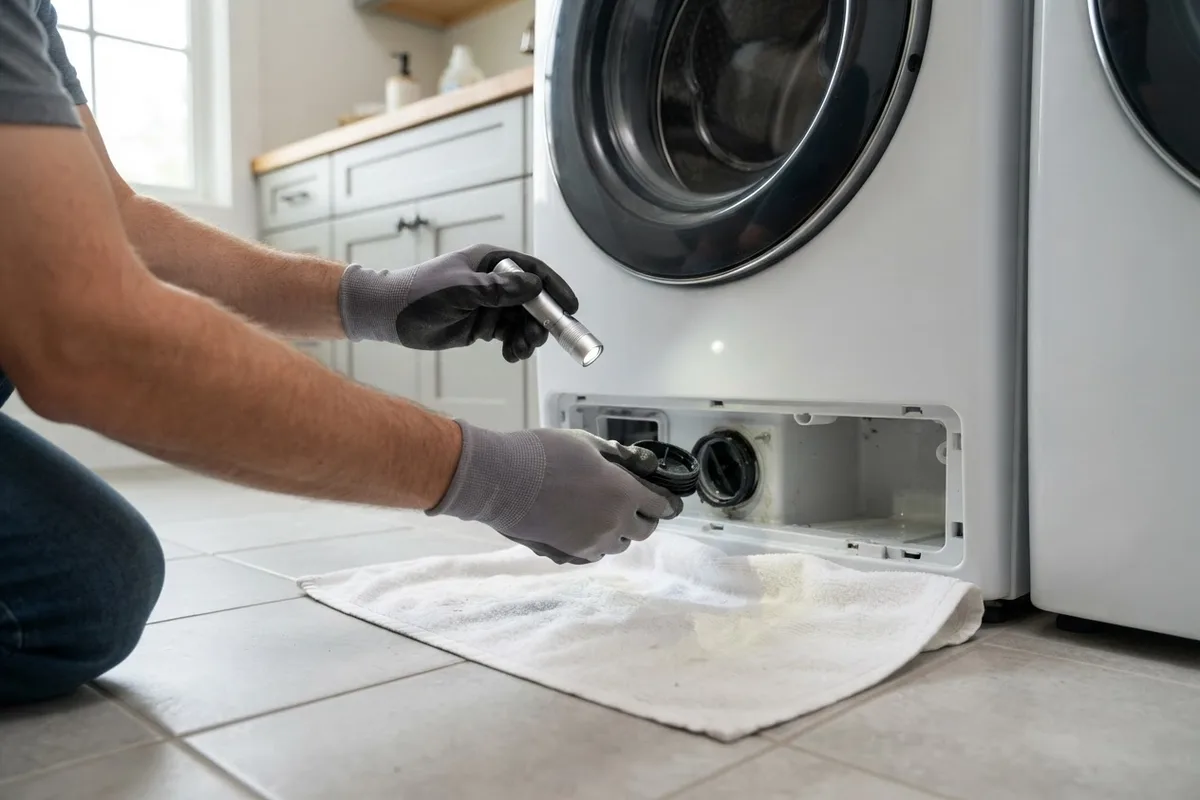
Before touching any hoses, panels, or filters, unplug the washing machine from the wall outlet and shut off both the hot and cold water supply valves behind the unit. Place a shallow pan and old towels underneath to catch standing water.
Work through these safe checks first:
- Inspect the drain pump filter (usually behind a small lower front access door on front-loaders) for coins, hairpins, or lint.
- Check the drain hose for kinks or clogs where it enters the wall standpipe.
- Wipe the rubber door boot and latch if the cycle will not start or you notice puddles, following our guide to fixing a door leak.
- Try a hard reset by leaving the unit unplugged for five minutes before restoring power.
If the breaker trips repeatedly or you smell burning wiring, stop immediately and call a local repair pro or electrician.
4. Spot Expensive Core Part Failures
Not all broken washer parts cost the same to replace. Knowing which repairs stay budget-friendly and which signal an end-of-life breakdown helps you avoid throwing good money after bad.
| Issue or Part | Typical US Repair Range* | Common Verdict |
|---|---|---|
| Door latch or lid switch | $120 – $250 | Usually repair |
| Water inlet valve or drain pump | $175 – $350 | Repair if under 8 years |
| Drive belt or shock absorbers | $150 – $325 | Usually repair |
| Main control board | $250 – $550 | Case-by-case |
| Drum bearings or outer tub | $400 – $850+ | Usually replace |
| Transmission or direct-drive motor | $350 – $700 | Replace if over 6 years |
*Typical US ranges include parts and labor and vary by area, brand, and model.
Rear drum bearings are the classic dealbreaker. Because replacing bearings often requires disassembling the entire inner and outer tub, labor costs climb fast. If you hear a loud roaring sound like a jet engine during the spin cycle, get a diagnostic quote before buying parts.
5. Factor In Water and Energy Waste
An older top-load agitator washer can use noticeably more water and electricity per load than a newer high-efficiency machine, especially if it runs several times a week for a large family. When comparing washing machine repair or replace totals, factor in ongoing utility bills alongside the upfront quote.
Look for these efficiency clues around your laundry area:
- Check whether clothes feel soaking wet after the final spin, which forces your dryer to run longer and burn extra energy.
- Notice if the washer frequently refills or struggles to maintain water temperature.
- Track how many loads your household runs weekly—homes doing eight or more loads a week see bigger utility savings from upgrading an aging model.
Pairing smart replacement timing with routine upkeep from our monthly appliance maintenance checklist keeps utility costs down no matter which route you choose.
6. Compare Front-Load vs. Top-Load Costs
Your machine's design affects both repair prices and long-term maintenance costs. Front-load washers typically clean gently and spin water out faster, yet their door boots, drain pumps, and electronic boards can cost more to service. Traditional top-load washers often have simpler mechanical parts, though older models use more water.
Keep these practical differences in mind before spending:
- Front-load units with torn rubber door bellows or rusted spider arms often carry higher labor bills.
- Impeller top-load models rely on washplate hubs and shift actuators that are moderately priced to replace.
- Stacked laundry centers or tight closet installs may require two technicians to pull the unit out, adding to total labor charges.
Also check whether you still have an active manufacturer coverage period or retail protection plan on a newer purchase, as covered parts can swing the math straight toward repair.
7. Watch for Repeat Breakdown Patterns
One isolated repair is normal wear and tear. Two or three service calls within 18 months usually mean multiple components are wearing out together.
Review your machine's recent track record before approving another invoice:
- List every part replaced over the past two years and add up what you have already spent.
- Check for secondary damage like rust spots around the tub lip, flaking paint near the detergent drawer, or persistent mold odor inside the outer tub.
- Confirm replacement parts are still easy to source—discontinued control boards or trim pieces on models over 10 years old can stall repairs for weeks.
If your washer keeps stalling mid-load or locking up between cycles, double-check the drain filter and door latch first, then weigh repeat downtime against the relief of a reliable new machine.
When to Call a Pro
Stop DIY troubleshooting and bring in a technician whenever a repair involves internal wiring, the electrical panel, persistent water leaks behind the wall, or disassembling the drum and motor assembly. Attempting complex electrical or pressurized water repairs without the right tools risks shock, flooding, or cracked internal housings.
A diagnostic visit is especially smart when you are on the fence—for instance, a five-year-old front-loader showing an error code that could be either a $180 drain pump or a $450 control board. Knowing the exact failed part takes the guesswork out of your budget. If you want a clear diagnosis before deciding, True Appliance Repair can match you with an independent local washer and dryer pro in your area.
FAQ
Is it worth fixing an 8-year-old washing machine?
It depends on the exact repair and how heavily you use the machine. Paying $150 to $250 for a drain pump, door latch, or inlet valve on an otherwise clean 8-year-old washer is often worthwhile. Paying $400 or more for bearings, a transmission, or a control board usually points toward replacement.
What is the most expensive part to repair on a washer?
Rear drum bearings, outer tub assemblies, transmissions, and main electronic control boards are typically the priciest repairs. Because tub and bearing work takes extensive disassembly time, labor makes up a large share of the $400 to $850+ US price range, which varies by area and model.
How much does a washing machine diagnostic visit cost?
In most US cities, an appliance diagnostic service call typically runs $75 to $130, though rates vary by area and model. Many local repair pros apply part or all of that diagnostic fee toward the repair if you approve the work.
Should I replace my washer and dryer at the same time?
You do not need to replace both unless you have a stacked unitized tower or both appliances are over 10 years old with ongoing problems. If your dryer still heats well and tumbles smoothly, keeping it while replacing only the washer saves substantial money.