
Spotting a puddle in front of your front-load washer mid-cycle is frustrating, especially when bulky winter blankets and heavy sweaters mean extra laundry loads. The good news is that a washing machine leaking from the door rarely points to a catastrophic failure—most drips come from trapped lint, clogged drain channels, or simple detergent buildup.
Before reaching inside the drum or inspecting mechanical parts, always unplug your washer from the wall outlet and turn off both hot and cold water supply valves behind the machine. Keep a shallow pan and a few old towels nearby to catch residual water.
1. Wipe Hair and Lint Off the Door Gasket
Pet hair, sweater fuzz, and soap scum love to collect along the rubber door boot and the curved glass window of the washer door. Even a single tangled strand of hair or a thin film of dried detergent can break the watertight seal and let water trickle down the front cabinet during wash and rinse cycles.
- Unplug the machine and open the door fully.
- Dampen a microfiber cloth with warm water and a splash of white vinegar.
- Wipe the entire inner glass dome of the door, focusing on the outer rim where glass meets rubber.
- Pull back the folds of the gray rubber gasket gently with your fingers and scrub away gray slime, hair, and lint.
- Dry the gasket completely with a clean towel.
If musty odors linger alongside the grime, you can follow these extra steps to deodorize home appliances safely before running your next load.
2. Clear the Rubber Boot Drain Weep Holes
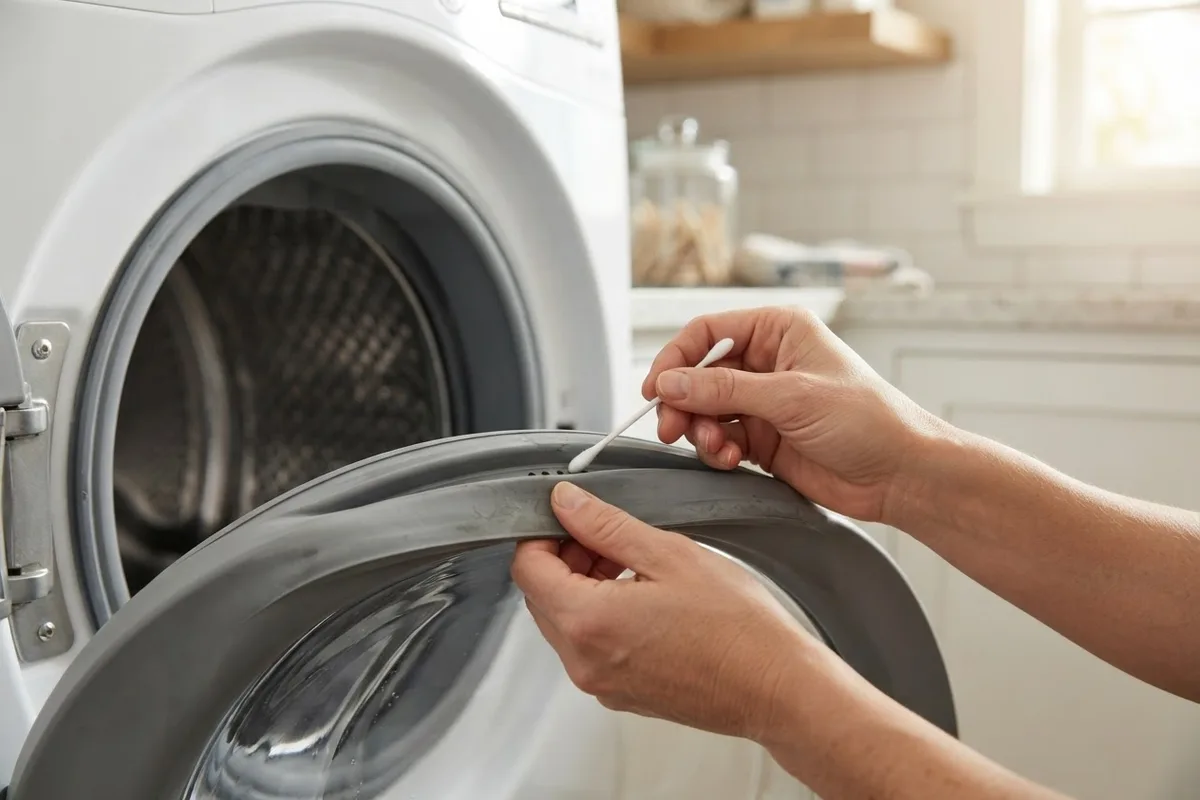
Look closely inside the bottom fold of your washer's rubber door gasket. Most front-load models have two or three small drainage holes—often called weep holes—designed to channel trapped water back into the outer tub. When lint, coins, or hardened fabric softener plug those tiny openings, water pools in the rubber lip and spills right over the threshold.
- Verify the washer is unplugged and the water supply is off.
- Gently peel back the bottom lip of the door boot using one hand while holding a flashlight.
- Locate the small drain holes along the lowest curve of the rubber channel.
- Use a cotton swab, soft bottle brush, or wooden toothpick to clear out wet lint and sludge without poking or tearing the rubber.
- Pour half a cup of warm water into the gasket groove to confirm it drains straight down into the tub.
3. Cut Back on Detergent to Stop Oversudsing
If your washer only leaks foamy water from the door area—especially partway through agitation or spin—detergent buildup is often the culprit. High-efficiency front-load washers use very little water compared to older top-load tubs. Using regular detergent instead of HE formula, or pouring past the lowest fill line for small loads, creates dense suds that force their way past the door seal and overflow port.
- Check your detergent bottle for the official HE symbol.
- Measure two teaspoons to two tablespoons of liquid HE detergent for most standard loads, or just one pod when recommended for large loads.
- Skip liquid fabric softener for a few washes to see if buildup eases.
- Run an empty hot tub-clean cycle with no detergent at all to flush trapped soap residue from the drum and hoses.
4. Check for Small Items Trapped in the Seal
Baby socks, stray collar stays, dryer sheets, and pocket tissues frequently wedge themselves between the stainless steel drum lip and the door boot during a cycle. When a small piece of fabric gets pinched right where the glass door closes against the rubber gasket, water wicks straight out onto your floor.
- Unplug the machine and check the lower edge of the door glass.
- Run your fingers carefully all the way around the gap between the metal drum rim and the rubber boot.
- Pull out any trapped socks, bobby pins, coins, or buttons.
- Inspect the plastic lip on the bottom of the door frame to make sure no cloth fibers are caught on the latch hook.
- Always zip jackets, fasten bra hooks, and wash tiny items inside mesh laundry bags so they cannot slip into the gasket gap again.
5. Inspect the Door Boot for Tears or Punctures
Sharp items left in pockets—like screws, keys, or belt buckles—can slice or nick the flexible rubber boot as the drum tumbles at high speed. Over time, rubber gaskets also dry out, crack, or warp from harsh bleach splashes. Once the rubber itself is torn, wiping it clean will not stop a leak.
- With the washer unplugged, pull each section of the rubber gasket outward inch by inch under bright light.
- Check closely along the bottom six-o'clock position and inside the deep folds where tears hide.
- Feel for stiff, brittle patches or small pinholes.
- If you spot a minor tear above the waterline, replacing the whole door boot is the only reliable long-term fix—glues and patch kits rarely hold up to hot water, spinning, and detergent.
6. Test the Door Latch and Level the Washer
A door that shuts loosely or sits slightly crooked cannot compress the rubber gasket evenly. Likewise, if your washer leans forward on uneven flooring, water sloshes heavily against the front glass instead of staying centered in the drum. Note that if the latch mechanism itself sticks or jams, review our guide on what to do when a washing machine door won't open safely before forcing the handle.
- Close the door and gently tug the handle—there should be zero play or rattling.
- Unplug the unit and inspect the metal strike tab on the door for bending or loose screws, tightening gently if needed.
- Place a carpenter's level across the top of the washer front-to-back and side-to-side.
- Adjust the front leveling feet with an open-end wrench until the bubble sits centered, then tighten the locknuts firmly against the cabinet.
Quick Leak Diagnosis Guide
| What You See | Likely Cause | Best Next Step | Typical US Pro Repair Range* | | :--- | :--- | :--- | :--- | :--- | | Clear water dripping slowly down front | Hair, lint, or grime on glass and gasket | Wipe glass dome and rubber folds clean | DIY ($0) | | Water pooling inside bottom gasket lip | Blocked gasket weep holes | Clear holes gently with cotton swab | DIY ($0) | | Foamy suds spilling from door edge | Too much or non-HE detergent | Switch to HE soap and flush drum | DIY ($0) | | Steady stream near bottom of door | Torn rubber boot or pinched sock | Remove item or replace damaged boot | $200–$400 (varies by area/model) | | Door rattles or leaks during heavy spin | Loose latch strike or tilted washer | Tighten strike screws and level feet | $130–$275 (varies by area/model) |
*Estimated US repair ranges include typical parts and labor; exact pricing varies by area and model.
When to Call a Pro
Cleaning the gasket, clearing weep holes, adjusting detergent habits, and leveling washer feet are safe DIY tasks for most homeowners. Stop and call a repair technician, however, if you find a torn door boot and are uncomfortable removing the outer front panel and high-tension spring retaining clamps, or if water still leaks after confirming the seal is spotless and intact.
You should also bring in a pro immediately if you notice water pooling near internal wiring, if the door lock switches fail to engage electrically, or if your circuit breaker trips. Never attempt electrical panel repairs or live wiring diagnostics yourself. Replacement door boots or latch assemblies typically cost between $150 and $400 installed, though exact rates vary by area and model. If you want fast help finding someone nearby, True Appliance Repair can match you with a local pro through our washer and dryer repair service.
FAQ
Why is my washing machine leaking from the door only during the spin cycle?
High-speed spinning forces trapped water and suds outward against the front glass and gasket folds. When weep holes are clogged or excess detergent creates heavy foam, the pressure pushes water past the rubber lip right as the drum ramps up.
Can I patch a torn washing machine door gasket with silicone sealant?
No, silicone or rubber patch kits rarely survive repeated exposure to hot water, laundry detergent, and flexing during high-speed spins. A torn door boot almost always needs a full replacement seal to prevent sudden floor flooding.
How often should I clean a front-load washer door seal to prevent leaks?
Wiping the glass rim and inside the rubber folds once a week—or at least every two weeks in busy households—keeps pet hair and soap scum from building up. Leaving the door cracked open an inch or two after each wash also helps the rubber dry out between loads.
Could a clogged drain pump filter cause my washer door to leak?
Yes, indirectly. When a clogged drain pump filter slows down draining, extra standing water stays sloshing against the lower half of the door seal longer than intended, increasing pressure on any tiny gap along the gasket or latch.